
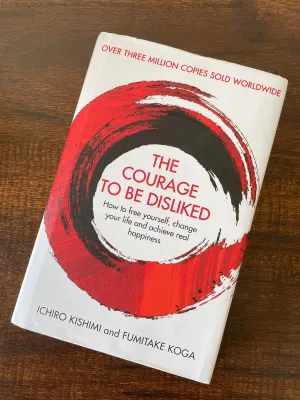
The book The Courage to Be Disliked by Ichiro Kishimi and Fumitaka Koga has become a staple on bookshelves across Singapore, promising a path to lasting freedom and happiness through the teachings of Alfred Adler. If you are struggling with the constant pressure to conform, manage overwhelming family expectations, or please everyone in a competitive workplace, this book offers a refreshing, albeit challenging, perspective. However, it is not a magic cure-all, and its unconventional format and provocative claims mean it is not suitable for every reader.
Quick Verdict: Who Should Read 'The Courage to Be Disliked'?
This book is highly recommended for readers who feel emotionally exhausted by people-pleasing habits or find themselves constantly seeking validation from colleagues, friends, and family. It is particularly valuable for those who want to break free from the invisible social scripts that dictate how they should live their lives.
Conversely, you should skip this book if you are looking for a quick-fix motivational guide filled with actionable checklists, daily habits, or step-by-step clinical therapy exercises. The book demands deep reflection and a willingness to challenge your existing beliefs about personal responsibility. Its core value lies in shifting your mindset from a victim of circumstance to an active author of your own life, rather than providing a simple manual for daily routines.
Products mentioned in this guide

![EBOOK The Courage to be Disliked [Full Version]](https://img.lazcdn.com/g/p/8fcc74d691deb23252e9ce0dc0a961d4.jpg_400x400q80.jpg_.webp)


Prices are valid at publication and may change. Please refer to the product page for the latest price.
Core Philosophy vs. Marketing Hype: What the Book Actually Teaches
At the heart of the book is Adlerian psychology, which stands in stark contrast to more widely known Freudian theories. The authors introduce the concept of the “separation of tasks” as the ultimate solution to interpersonal friction. This principle suggests that almost all interpersonal relationship troubles stem from intruding on other people’s tasks, or having others intrude on yours. By clearly defining what lies within your control—such as your own choices and reactions—and letting go of what does not, you can experience a profound sense of mental freedom.

One of the most polarizing aspects of the book is its stance on trauma, known as teleology. While traditional psychology often looks at past causes to explain present behavior, Adlerian psychology argues that we use past experiences to serve a current purpose. This claim can feel incredibly harsh to readers who have experienced genuine hardship, as it suggests that we choose our current emotional states to avoid taking difficult actions in the present.
It is crucial to understand what the book does not advocate. Having the courage to be disliked is not an invitation to be intentionally rude, selfish, or isolated from society. Instead, it is the willingness to accept that other people’s opinions of you are their tasks, not yours. True freedom means living in accordance with your own values, even if that path occasionally invites disapproval from others.
Readability and Format: Is the Dialogue Style Effective?
Unlike standard self-help books that rely on chapters of expository writing, this text is structured entirely as a Socratic dialogue. The narrative unfolds over five nights of intense conversation between an older, patient Philosopher and a cynical, defensive Youth. This format can be highly engaging because the Youth voices the exact objections, frustrations, and doubts that you are likely to feel as you read.
The pacing of these conversations allows complex philosophical ideas to be broken down into digestible arguments. As the Youth challenges the Philosopher’s idealistic claims, the dialogue forces you to actively think through the concepts rather than passively consuming them.
However, this format has its drawbacks. Some readers may find the dialogue style repetitive, as the Youth frequently repeats his objections or reacts with exaggerated disbelief. Additionally, because the book is translated from Japanese, some of the phrasing can feel abstract or overly formal. If you prefer direct, concise, and highly structured chapters, the conversational flow of this book may require more patience and stamina than you expect.
Real-World Applicability: Does Adlerian Psychology Work in Daily Life?
Applying Adlerian psychology in a high-pressure society like Singapore requires careful navigation. In demanding corporate environments where performance is closely tied to peer perception and managerial approval, practicing the separation of tasks can significantly reduce burnout. Recognizing that your job is to perform your duties diligently, while your manager’s evaluation is their task, helps detach your self-worth from workplace politics.
Similarly, in close-knit family structures where traditional expectations run deep, setting boundaries is often met with resistance. The book provides the conceptual tools to understand that choosing a career path or lifestyle that deviates from family expectations is your task. While this mental shift can prevent you from living a life to satisfy others, implementing it without appearing entirely indifferent to your loved ones requires tact and emotional maturity.
There are clear boundaries to where this philosophy falls short. The book’s radical emphasis on individual agency can overlook systemic challenges, such as workplace discrimination or socio-economic barriers. Furthermore, Adlerian principles should not be misapplied to clinical mental health conditions or abusive environments, where professional intervention and physical safety must always take priority over philosophical mindset shifts.
Purchasing Options and Alternatives for Readers in Singapore
When deciding how to experience this book, consider your daily routine and lifestyle. A physical paperback is highly portable and easy to read during your daily MRT or bus commute, allowing you to highlight key passages. If you prefer a clutter-free home or want to adjust font sizes for comfortable reading, the e-book edition is an excellent alternative. For those with busy schedules who prefer listening during walks or household chores, the audiobook format offers an immersive way to experience the dialogue.
Before making a purchase, always verify the edition, language, and publisher. Ensure you are buying from authorized local retail chains or reputable online bookstores to guarantee you receive a complete, high-quality printing. Prices typically range from S$18 to S$28 depending on the format and retailer, making it a relatively low-cost investment for personal growth.
If you find that the philosophical, dialogue-heavy style of this book does not align with your learning preferences, other self-improvement approaches may suit you better. For readers who prefer highly structured, habit-focused guides with immediate action steps, books like Atomic Habits by James Clear offer practical frameworks without the heavy philosophical debate.
Frequently Asked Questions (FAQ)
Do I need to read the sequel, 'The Courage to Be Happy'?
The first book focuses primarily on establishing the theoretical framework of Adlerian psychology and shifting your mindset regarding interpersonal relationships. The sequel, The Courage to Be Happy, acts as a practical guide that explores how to implement these concepts in daily life, focusing heavily on themes of education, leadership, and developing a genuine sense of community.
If you finish the first book and feel you have a strong grasp of the concepts but struggle with how to apply them in your career or community, the sequel is a worthwhile addition. However, if you find the core philosophy of the first book unconvincing or too abstract, the sequel is unlikely to change your mind, and you can safely skip it.
Is this book a replacement for professional therapy?
No, this book is a philosophical self-help text and should never be used as a replacement for professional clinical therapy or medical treatment. While Adlerian psychology offers valuable frameworks for personal development and relationship management, it does not address clinical conditions such as severe anxiety, depression, or complex trauma.
If you are experiencing persistent mental health challenges or dealing with deep-seated trauma, it is essential to seek support from qualified mental health professionals. Self-help literature can complement personal growth, but professional clinical guidance remains irreplaceable for mental healthcare.
Community discussion
Share your experience or ask a question. Comments are reviewed before publication.