
Finding a self-improvement book that fits seamlessly into a busy routine can be a challenge. With countless titles promising life-altering transformations, it is easy to accumulate half-read volumes on your nightstand. Ryan Holiday’s The Daily Stoic offers a distinct approach to personal growth, structuring ancient wisdom into bite-sized daily reflections. Before purchasing a copy, evaluating how this specific format, philosophy, and style align with your daily habits and personal goals will help you determine if it is a valuable addition to your reading list.
Assess Your Reading Style and Daily Commitment
The most defining feature of The Daily Stoic is its highly structured, page-a-day format. Spanning 366 days, including leap years, each entry is designed to be read in just a few minutes. If you prefer to consume books in long, immersive sessions or enjoy deep-dive chapters that build complex narratives, this micro-reading structure might feel fragmented. Conversely, if you struggle to find time for reading, a single-page layout offers an approachable entry point to build a consistent daily habit.
Each page follows a consistent three-part formula: a direct quote from a classical Stoic philosopher, a brief historical context or anecdote, and a modern interpretation or application. This blend aims to make ancient texts accessible, but it requires a specific type of learning style. Readers who appreciate concise, punchy insights will find this format highly efficient. However, if you prefer academic depth, exhaustive historical analysis, or extensive philosophical debates, you may find the brief explanations somewhat simplified.
Products mentioned in this guide
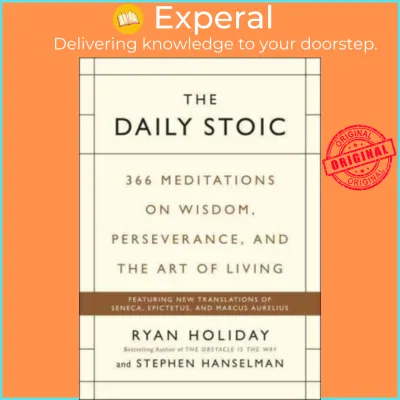
![The Daily Stoic: 366 Meditations on Wisdom Perseverance and the Art of Living [Hardcover] Holiday Ryan and Hanselman Stephen - 9780735211735](https://img.lazcdn.com/g/p/20bf9798287bc13232b7d71d3788034d.jpg_400x400q80.jpg_.webp)
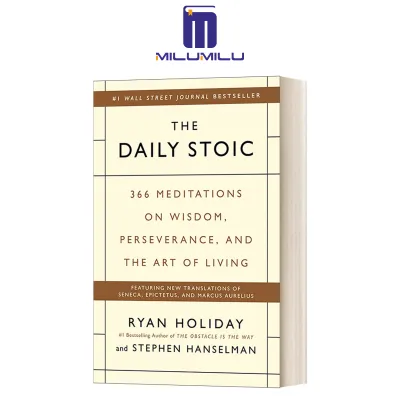
Prices are valid at publication and may change. Please refer to the product page for the latest price.
Your success with this book largely depends on your willingness to establish a daily routine. The book functions best as a morning or evening prompt, serving as a quiet moment of reflection before starting your day or going to sleep. If you find structured daily prompts restrictive or easily lose momentum with calendar-based habits, the format might feel like a chore. Assessing whether you want a long-term daily companion or a standard book you can finish in a weekend is the first step in your decision.
Match the Book to Your Self-Improvement Goals
Stoicism is an ancient philosophy centered on practical virtue, emotional resilience, and a clear boundary between what you can and cannot control. If your personal growth goals involve managing stress, developing mental toughness, and learning to accept external circumstances with grace, the core themes of this book will align closely with your objectives. The teachings encourage readers to look inward for stability rather than relying on external circumstances or validation.

It is equally important to recognize what Stoic philosophy does not offer. If you are seeking a guide for rapid financial success, career hacks, or immediate external achievements, this book will likely feel mismatched. Stoicism focuses heavily on character development, self-discipline, and ethical living, which often require slow, deliberate effort rather than quick fixes. It does not promise effortless abundance or validate desires for status and material wealth.
Furthermore, the tone of classical Stoicism is notoriously pragmatic and occasionally blunt. Unlike many modern self-help books that rely on high-energy motivational tropes or toxic positivity, this text confronts difficult realities like mortality, failure, and adversity head-on. If you prefer comforting, highly encouraging language that focuses entirely on positive visualization, the uncompromising realism of Stoic philosophy might feel jarring. If you appreciate direct, actionable wisdom that challenges you to face discomfort, the book’s perspective will be highly refreshing.
Evaluate Your Current Life Challenges and Stressors
The practical utility of The Daily Stoic often depends on the specific nature of your current life challenges. The book is particularly well-suited for individuals navigating high-stress environments, major career transitions, leadership responsibilities, or general periods of uncertainty. By focusing on the dichotomy of control—distinguishing between your own actions and external events—the daily readings can help reduce anxiety and prevent decision fatigue in demanding situations.
However, it is crucial to recognize the boundaries of philosophical literature. While daily reflections can support general well-being and cognitive reframing, they are not a substitute for professional mental health treatment, clinical therapy, or medical advice. If you are experiencing severe anxiety, clinical depression, or deep-seated trauma, a philosophical guide should only be viewed as a supplementary tool rather than a primary solution.
Additionally, consider whether you need a daily mental anchor or a highly specific, technical manual. The Daily Stoic provides broad, thematic principles meant to be applied generally to life’s challenges. It does not offer step-by-step instructions for specific technical problems, such as managing personal finances, resolving complex workplace disputes, or learning a new technical skill. If you require concrete, specialized strategies for a highly technical issue, you may need to pair this book with more targeted resources.
How to Sample the Book and Choose the Right Format
Before committing to a purchase, sampling the content is an excellent way to gauge if the author’s tone resonates with you. You can often preview the introduction and a few random daily entries through online marketplaces or by visiting a local bookstore. Reading entries from different months will give you a clear sense of how the thematic structure evolves and whether the writing style remains engaging over time.
Choosing the right format is also essential for integrating the book into your daily routine. A physical hardcover or paperback is ideal if you prefer a tactile experience, allowing you to highlight passages, write notes in the margins, and physically turn a page each morning. For those who travel frequently or prefer a clutter-free space, the e-book version offers portability and searchability. If you have a busy commute, an audiobook format allows you to listen to the daily entries during your morning drive or walk, though it may require more effort to pause and reflect. A daily tear-off calendar is another alternative, providing a physical reminder on your desk without the commitment of a full volume.
When you are ready to buy, verify the edition details to ensure you receive a complete and authorized copy. Check the language, translation quality, and publisher information, especially when browsing online marketplaces or independent bookshops. Ensuring you purchase from reputable, authorized sellers guarantees that you receive the complete text with all 366 entries, formatted correctly for your preferred reading device or physical bookshelf.
Frequently Asked Questions (FAQ)
Do I need prior knowledge of philosophy to understand this book?
You do not need any prior background in classical philosophy to read or appreciate this book. The text is specifically designed to translate complex, ancient Greek and Roman concepts into clear, modern English. The author provides the necessary context for each quote, making the wisdom of figures like Marcus Aurelius, Seneca, and Epictetus highly accessible to absolute beginners without academic jargon.
Can I read the entries out of order or skip days?
While the book is organized chronologically by date, you can certainly read the entries out of order or skip days if needed. The content is structured into monthly themes—such as clarity, problem-solving, and right action—which provides some thematic continuity. However, because each page stands alone as an independent lesson, skipping a day or flipping to a random page for timely advice will not disrupt your understanding of the philosophy.
Community discussion
Share your experience or ask a question. Comments are reviewed before publication.