
Deciding whether to purchase a personal finance book often comes down to whether its core message matches your current lifestyle goals and financial reality. Bill Perkins’ Die With Zero challenges conventional wealth accumulation by suggesting that the ultimate goal of life is to maximize experiences rather than your bank balance. If you are tired of traditional retirement advice that encourages endless saving at the expense of your youth and health, this book offers a compelling alternative framework. However, if you find comfort in financial preservation or have complex legacy goals, the book’s radical approach might clash with your personal values.
Before spending your money and time, it is highly beneficial to assess how this philosophy fits into your life. This guide breaks down the book’s central arguments, helps you evaluate your financial psychology, and examines how your current life stage impacts the usefulness of its advice.
The Core Premise: What the Die With Zero Book Actually Proposes
At its heart, the book argues that the optimal financial path is to spend your wealth down to zero by the time you pass away. Perkins suggests that any money left over at death represents wasted life energy—hours spent working for funds that you ultimately never enjoyed. The book encourages readers to view money not as an end goal, but as a tool to facilitate meaningful life experiences.
Products mentioned in this guide
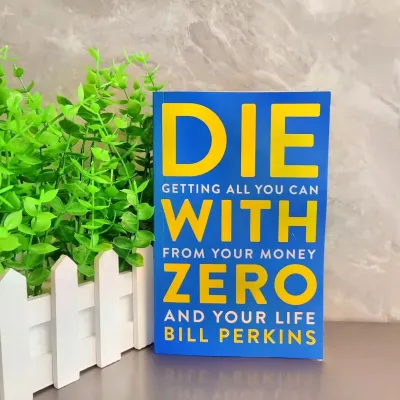
Prices are valid at publication and may change. Please refer to the product page for the latest price.
A cornerstone of this philosophy is the concept of “memory dividends.” When you invest in an experience early in life, such as a memorable trip or a shared activity with family, that experience continues to pay mental and emotional dividends for decades. The memories you create continue to bring joy long after the event has ended, meaning that early investments in experiences actually yield higher lifetime returns than those delayed until old age.
Traditional retirement planning often focuses on accumulating a massive nest egg to support a lifestyle that your physical health may no longer allow you to enjoy at age 70 or 80. Perkins critiques this model, pointing out that our physical capacity to enjoy certain activities declines predictably over time. The book urges readers to align their spending with their health phases, ensuring that high-energy activities are funded while physical vitality is at its peak.
Ultimately, the book draws a sharp distinction between dying with zero dollars and dying with zero regrets. It does not advocate for reckless spending or immediate gratification. Instead, it presents a systematic approach to planning your life and finances so that you intentionally utilize your resources to live the most fulfilling life possible.
Self-Assessment: Does Your Financial Mindset Align?
To determine if this book is a valuable addition to your library, you must first identify where you sit on the spectrum between an experience maximizer and a wealth accumulator. Wealth accumulators find deep psychological safety in watching their net worth grow, often viewing a high bank balance as the ultimate shield against uncertainty. If you fall into this category, the book’s call to systematically draw down your assets might trigger anxiety, though it could also provide the exact paradigm shift you need to start enjoying your hard-earned money.

Your attitude toward legacy and inheritance is another critical factor in this self-assessment. Traditional financial planning assumes you will leave your remaining wealth to your children or favorite charities upon your death. Perkins challenges this by suggesting that leaving an inheritance at death is highly inefficient, as your heirs are often middle-aged by the time they receive it. If you prefer the idea of giving money to your children or supporting charitable causes while you are still alive—allowing you to see the impact of your wealth—the book’s philosophy will resonate strongly with you.
Finally, you must evaluate your risk tolerance regarding the fear of outliving your money. The idea of spending down assets requires a high degree of trust in your financial planning and an ability to manage longevity risk. If the thought of depleting your capital in your later years keeps you awake at night, you may find the practical application of this book difficult to stomach without significant adjustments to your safety net.
Life Stage and Timing: Evaluating Your Current Phase
Your current life stage heavily influences how actionable the book’s advice will be for you. For young adults and those in the early stages of their careers, the concept of investing in experiences must be carefully balanced with the necessity of building foundational savings. While the idea of accumulating memory dividends is highly appealing, overspending too early can derail your long-term financial stability. For this demographic, the book serves as a preventative guide against falling into the trap of mindless wealth accumulation later in life.
Those in their mid-career and peak earning years often face a complex web of family obligations, housing commitments, and peak daily expenses. In a high-cost environment like Singapore, balancing school fees, mortgage payments, and insurance can make the idea of spending down assets feel highly impractical. However, this is also the phase where intentional experience planning is most critical, as children are at the ideal age for family travel and parents still possess the physical health to participate actively.
For pre-retirees and current retirees, the book offers immediate, practical relevance. Shifting your mindset from accumulation to decumulation is one of the most difficult psychological transitions in personal finance. If you are approaching retirement with a healthy nest egg but find yourself hesitant to spend it on the experiences you always promised yourself, this book can provide the structural framework and emotional permission needed to start enjoying your wealth.
Practical Considerations Before You Buy
Before purchasing a copy, consider which format best suits your learning style and daily routine. If you enjoy highlighting key passages, taking notes in the margins, and treating personal development books as active workbooks, a physical copy is highly recommended. For those who prefer to read during daily commutes on public transport, an e-book offers convenience and portability. If you have a long commute or prefer absorbing concepts passively while exercising, the audiobook format narrated with the author’s personal energy can make the philosophical arguments highly engaging.
It is also worth evaluating whether you need to buy the book at all. The core concepts of the book’s philosophy have been discussed extensively by the author in various long-form podcasts, public interviews, and online summaries. If you are simply looking for a high-level overview of the main ideas, spending a few hours listening to these free resources might provide all the insight you need without the financial investment.
Additionally, keep in mind that the book is written primarily from a Western financial perspective, referencing specific tax structures, retirement accounts, and insurance products. Readers in Singapore will need to translate these concepts to fit local systems, such as integrating the drawdown strategy with Central Provident Fund (CPF) payouts, local healthcare safety nets, and unique housing asset dynamics. If you require a highly localized, step-by-step tactical guide, you will need to supplement this book with local financial planning resources.
Frequently Asked Questions (FAQ)
Is the Die With Zero philosophy only for the wealthy?
No, the core philosophy is designed to scale across different income levels and budget constraints. While the book uses examples that may seem more accessible to high earners, the fundamental principle of optimizing your time and health applies regardless of your net worth. The focus is on maximizing fulfillment relative to your resources, whether that means planning a modest local outing with family or funding an expensive international trip. It is about making intentional choices with whatever capital you have, rather than waiting for a level of wealth you may never reach.
Does the book provide specific investment advice or stock picks?
No, this is a philosophical and conceptual guide rather than a technical investing manual. You will not find stock recommendations, portfolio allocation models, or specific tax-saving strategies within its pages. The book is designed to help you redefine your relationship with money and time. If you are looking for hard financial data, tactical investment advice, or step-by-step instructions on how to build an investment portfolio, you should look for specialized financial planning literature to pair alongside this book.
Community discussion
Share your experience or ask a question. Comments are reviewed before publication.