
Starting your musical journey with a highly compact instrument like the enya cyber g pocket presents a unique set of opportunities and challenges. For complete beginners, this ultra-portable guitar offers an accessible entry point due to its reduced physical footprint and integrated digital features, making it highly convenient for casual practice in small living spaces or during travel. However, whether it serves as a suitable primary learning tool depends heavily on your physical hand size, your willingness to adapt to a non-traditional scale length, and your long-term musical goals. While the compact design lowers the physical barrier to holding the instrument, it also introduces specific ergonomic trade-offs that can influence how you develop fundamental fretting and strumming techniques.
Assessing the "Pocket" Design for Beginner Hands
The physical dimensions of a guitar dictate how comfortably a beginner can form chords and transition between frets. The enya cyber g pocket features a significantly shorter scale length than a standard dreadnought or concert-sized acoustic guitar. This shorter distance between the nut and the bridge reduces the overall tension of the strings, making them easier to press down for untrained fingers. For beginners who often struggle with finger soreness during their first few weeks of practice, this lower tension can be a welcome relief that encourages longer practice sessions. Additionally, the frets are spaced closer together, which minimizes the physical stretch required to reach complex chord shapes, a common hurdle for players with smaller hands.
However, this compact layout comes with distinct trade-offs regarding fretboard spacing and acoustic resonance. Because the frets are positioned closer together, players with larger hands or thicker fingers may find the upper register of the fretboard cramped, leading to accidental string muting or buzzing. Furthermore, the highly reduced body size inherently limits the natural acoustic projection and resonance of the instrument. Unlike a traditional hollow-body wooden guitar that relies on a large soundboard to amplify vibrations, a pocket-sized guitar produces a much quieter, thinner unplugged sound.
Products mentioned in this guide
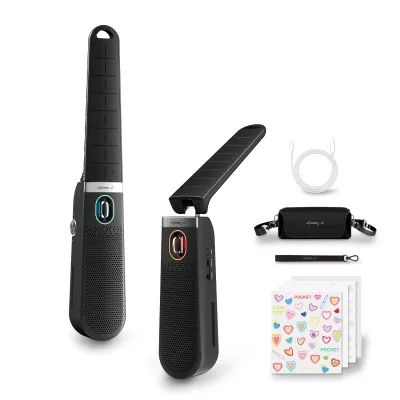
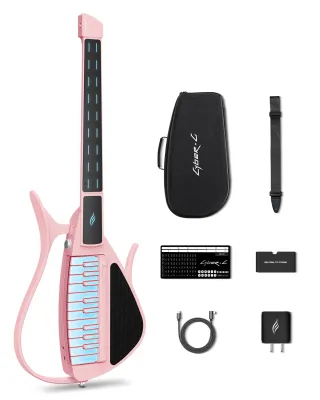
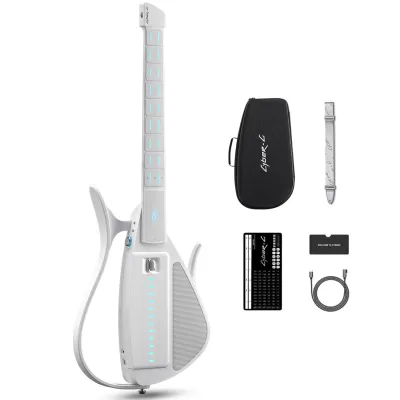
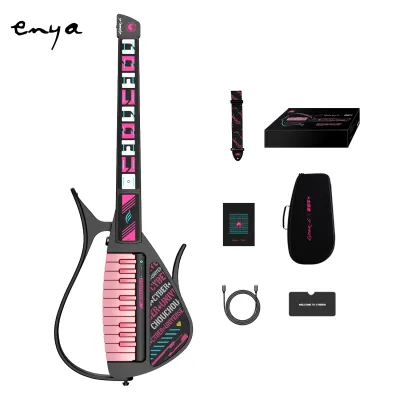
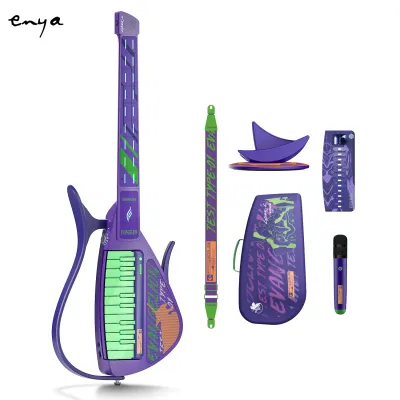
Prices are valid at publication and may change. Please refer to the product page for the latest price.
Before making a purchase, it is essential to verify the exact scale length and nut width specifications provided by the manufacturer. You can measure your own hand span—from the tip of your thumb to the tip of your pinky finger when fully extended—and compare it to the neck dimensions of the instrument. If possible, visiting a local showroom in Singapore to physically hold a guitar of similar dimensions will help you determine if your fingers can comfortably crowd into the narrow fret spaces without compromising your hand posture.
Evaluating Playability and Setup Requirements
A guitar’s playability is largely determined by its setup, which refers to how the strings are aligned relative to the fretboard. For a beginner, a poorly set up instrument can cause immediate frustration and lead to early abandonment of the hobby. Two critical factors to evaluate are string action—the height of the strings above the frets—and neck relief, which is the slight curvature of the neck. If the action is too high, you will need to exert excessive force to press the strings down, causing rapid finger fatigue. Conversely, if the action is too low, the strings will vibrate against the frets, producing an irritating metallic rattle known as fret buzz.

To check a short-scale instrument for these issues, perform a visual and physical inspection. Hold the guitar at eye level and look down the edge of the neck from the headstock to the body to ensure there is no severe warping or twisting. Press down a string at the first fret and the fret where the neck meets the body; there should be a tiny, paper-thin gap between the string and the middle frets. Play each note individually up and down the fretboard to listen for dead spots or persistent buzzing. On shorter scale lengths, even minor deviations in string height or neck straightness can severely impact intonation, meaning the guitar may sound out of tune as you play higher up the neck.
If you detect playability issues upon unboxing, consult the manufacturer’s official user manual before attempting any adjustments. Many modern compact guitars include a truss rod adjustment tool for correcting neck relief. However, beginners should only perform minor, reversible adjustments under direct guidance. If the bridge saddle or nut slots require filing to correct the string action, it is highly recommended to seek a professional setup from a qualified guitar technician at a local Singapore music workshop to avoid permanently damaging the instrument.
Do Built-in Features Help or Distract New Players?
The integration of digital electronics and built-in effects is a defining characteristic of the enya cyber g pocket. For a beginner, these features can be highly motivating, offering immediate access to headphone outputs, onboard delay or reverb effects, and direct connectivity to external devices. The ability to plug in a pair of headphones allows for silent practice at any hour, which is particularly valuable for those living in high-density apartments in Singapore where acoustic noise can disturb family members or neighbors. Furthermore, being able to stream backing tracks directly through the instrument can make repetitive scale and chord drills feel much more engaging.
Despite these conveniences, relying too heavily on digital enhancements during the initial stages of learning carries certain risks. Built-in effects like reverb and delay can mask poor fretting technique, muted strings, and inconsistent strumming dynamics by smoothing over mistakes with artificial sustain. To build proper finger strength, calluses, and clean articulation, a new player must learn to control the raw, unamplified vibration of the strings. If you only practice with heavy digital processing, you may struggle to produce a clear, resonant tone when transitioning to a traditional acoustic guitar.
To ensure you are developing solid foundational habits, make a conscious effort to isolate the unplugged acoustic sound of the instrument during your practice routine. Spend at least half of your practice time playing without headphones or active digital effects. Listen closely to the natural decay of each note, ensuring that every string in a chord rings out clearly and that your transition between chords is smooth and silent. This balanced approach allows you to enjoy the modern conveniences of the instrument while still mastering the physical mechanics of traditional guitar playing.
Pre-Purchase Verification and Value Check
When purchasing a specialized instrument like the enya cyber g pocket, conducting a thorough pre-purchase verification is crucial to ensuring you receive a genuine product with all intended functionality. Start by cross-referencing the seller’s product listing with the manufacturer’s official specifications. Ensure that the package includes all standard accessories, such as the proprietary charging cable, gig bag, adjustment tools, and user documentation. Missing accessories can be difficult to source individually, especially for proprietary electronic components.
It is highly advisable to purchase through an authorized local dealer in Singapore rather than unverified online marketplaces. Buying from an authorized source ensures that your instrument is covered by a valid local warranty, which is essential for troubleshooting any potential electronic failures, battery degradation, or structural defects. When budgeting, verify the retail price in S$ and compare it across reputable local music stores to ensure you are paying a fair market rate. A local warranty provides peace of mind, allowing you to easily return or service the guitar without dealing with expensive international shipping fees.
Upon receiving the guitar, perform a meticulous physical inspection before discarding any packaging. Check the body for finish cracks, scratches, or loose joints, particularly around the neck joint and the bridge. Test all physical buttons, knobs, and input jacks to confirm they operate smoothly without crackling or loose connections. Charge the internal battery fully and test the headphone output to verify that the onboard preamplifier functions correctly and quiet practice is fully operational.
When to Consider Alternative Beginner Guitars
While a pocket-sized guitar offers exceptional portability, it may not be the ideal starting point for every aspiring musician. If your primary learning goal is to master classical fingerstyle guitar, you will likely find the narrow nut width and close string spacing of a compact instrument highly restrictive. Classical guitar technique requires precise finger placement and wide string separation to execute complex polyphonic pieces cleanly. In this scenario, a standard-sized classical guitar with a wider nylon-string fretboard is a far more appropriate tool for building the necessary muscle memory.
Budget is another important consideration when choosing your first instrument. If you have no immediate need for silent headphone practice, built-in digital effects, or frequent travel portability, a significant portion of the price of a digital pocket guitar goes toward features you may not use. For a similar budget in S$, you could acquire a high-quality, traditional solid-top acoustic guitar. A standard dreadnought, concert, or parlor guitar will provide a much richer, more resonant natural acoustic tone, helping you develop a deeper appreciation for the acoustic properties of wood and string vibration.
Finally, consider your long-term progression as a player. If you start on an ultra-compact scale, you will eventually need to transition to a standard-sized instrument as your skills advance. This transition can require a period of physical adjustment as your hands adapt to the wider fret spacing and higher string tension of a full-sized guitar. If your ultimate goal is to play traditional acoustic music in social settings or perform live without amplification, starting directly on a standard concert or dreadnought body can streamline your learning curve and save you the cost of upgrading later on.
Frequently Asked Questions (FAQ)
Can a young child learn on a pocket-sized guitar?
Yes, a pocket-sized guitar can be highly suitable for young children due to its compact scale length and lightweight body. The shorter distance between frets accommodates smaller hand spans, and the reduced body size allows for a more natural, comfortable seated practice posture without straining the child’s arms or shoulders.
Does it require an external amplifier to be heard clearly?
No, it does not strictly require an external amplifier for personal practice. While its unplugged acoustic volume is naturally quiet due to the compact body, the instrument features a built-in preamplifier that allows you to listen directly through headphones or connect to a standard guitar amplifier when more volume is desired.
How does the string tension compare to a standard acoustic guitar?
The string tension is generally lower than that of a standard acoustic guitar because of the shorter scale length. This lower tension makes the strings easier to press down, reducing finger soreness for beginners. To maintain proper neck relief and playability, always use the manufacturer’s recommended string gauge when replacing strings.
Community discussion
Share your experience or ask a question. Comments are reviewed before publication.