
Selecting your very first musical instrument can feel like a balancing act between managing your budget and ensuring you get a quality tool that does not hinder your learning. The Kala Makala ukulele series is widely regarded as one of the most practical and reliable entry-level options available for complete beginners. Designed specifically to offer a low-friction introduction to music, this series provides a functional, highly playable instrument without requiring a significant financial commitment.
However, whether a Makala is the absolute right choice for you depends on your personal goals, your budget, and where you plan to play. If you are looking for an ultra-durable, weather-resistant instrument to take outdoors, the plastic composite models in this line are highly suitable. If you prefer a traditional, warm acoustic sound for practicing at home, the laminated wood models are a better fit. Understanding the structural differences and limitations of these budget-friendly instruments will help you make an informed decision before spending your money.
What Defines the Kala Makala Series?
To evaluate the Makala line, it helps to understand its origin and position in the market. Makala is the dedicated budget sub-brand of the Kala Brand Music Co., a highly respected manufacturer in the ukulele industry. While Kala produces mid-range and premium instruments, the Makala line was created specifically to serve students, schools, and casual players who need a dependable instrument at an accessible price point.
Products mentioned in this guide
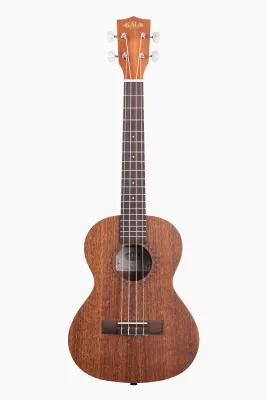
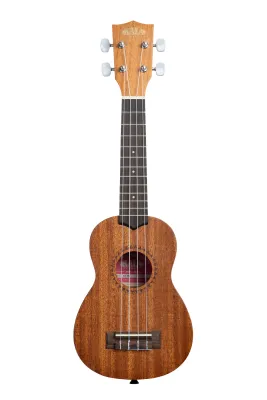
Prices are valid at publication and may change. Please refer to the product page for the latest price.
These instruments are mass-produced, allowing the manufacturer to keep costs low while maintaining consistent quality control. The Makala series is generally divided into three primary sizes, each catering to different physical needs and tonal preferences:
- Soprano: The traditional and smallest size (approximately 53 cm in length). It produces the classic, bright, and punchy ukulele sound, making it highly portable and excellent for players with smaller hands.
- Concert: A slightly larger model (around 58 cm) with a longer neck and wider fret spacing. It offers a slightly deeper tone and more room for finger placement, which many adults find easier to navigate.
- Tenor: The largest of the three standard sizes (about 66 cm). It provides the deepest resonance, maximum volume, and the longest fretboard, making it a favorite for solo players who want a fuller sound.
Within these sizes, the Makala series offers two distinct material choices. The first is traditional laminated wood, which typically utilizes Agathis (a lightweight softwood) or Mahogany laminates. The second is the “Waterman” series, which is constructed almost entirely from injection-molded ABS composite plastic. Neither of these categories is designed for professional-grade concert performances, but both serve as excellent, highly functional tools for learning the basics of chords, strumming, and rhythm.
How Makala Ukuleles Match Beginner Needs
When you are learning to play, the physical construction of your instrument directly impacts how quickly you progress and how much you enjoy your practice sessions. A poorly made ukulele can cause physical discomfort, fail to stay in tune, or sound so thin that it discourages you from playing. The Makala series is engineered to address these common beginner pain points while keeping production costs low.

Playability and Factory Setup
For an absolute beginner, playability is the single most important factor. If the strings are too difficult to press down, your fingers will tire quickly, and you may struggle to form clean chords. The playability of any stringed instrument is largely determined by its “action,” which is the height of the strings above the fretboard.
- Neck Profile: Makala ukuleles feature a slim, comfortable C-shaped neck profile. This shape is highly ergonomic, allowing players of all ages—including children and adults with smaller hands—to wrap their fingers around the neck without straining.
- Factory Action: Because these are mass-produced budget instruments, the factory string action can occasionally vary. While they are generally set up to be playable right out of the box, some instruments may arrive with strings that sit slightly high, particularly near the first fret. This can make chords like F major or B-flat major feel stiff.
- Fret Finishing: When unboxing a new Makala, always run your fingers gently along the edges of the neck. The metal fret wires should be smooth and flush with the fingerboard. In some budget instruments, rough or sharp fret edges can slip through quality control, which can cause finger irritation during extended practice sessions. Checking this immediately allows you to address any minor finish issues early on.
Tonal Differences: Wood vs. Plastic
The material of your ukulele dictates its acoustic voice. Beginners often underestimate how much the tone of an instrument influences their motivation to practice. Choosing between a wood Makala and a plastic Waterman model requires balancing your sound preferences against your lifestyle.
- Laminated Wood Models: Ukuleles like the Makala MK-S (Soprano) use laminated Agathis or Mahogany. Because wood naturally absorbs and reflects sound waves with a degree of warmth, these models produce a traditional, sweet, and mellow acoustic tone. This organic resonance is highly satisfying for indoor practice, as it sounds like a classic acoustic instrument.
- Plastic Waterman Models: The Waterman series is made of ABS plastic, which is much denser and stiffer than wood. As a result, these models produce a very bright, sharp, and highly focused sound. While they lack the warm overtones and deep resonance of wood, they offer surprising volume and projection. The tone can sound slightly metallic or thin to discerning ears, but it is highly functional for casual strumming and outdoor sing-alongs.
Durability and Climate Care
Your physical environment plays a massive role in how well your instrument holds up over time. This is especially true in tropical regions like Singapore, where high relative humidity (often exceeding 80% indoors) and consistent warmth can easily damage delicate musical instruments.
- The Resilience of Plastic: The Makala Waterman series is virtually indestructible under normal use. Because ABS plastic is entirely non-porous, it is completely immune to humidity fluctuations, rain, and temperature changes. It will not warp, crack, or suffer from lifting bridges, making it the ultimate choice for beach trips, camping, or humid rooms where air conditioning is not constantly running.
- The Sensitivity of Wood: Laminated wood models are significantly more stable than solid-wood instruments, but they are still susceptible to environmental stress. High humidity can soften the glues holding the bridge and internal bracing together, while sudden dryness (such as leaving the instrument directly under an air-conditioning vent) can cause the wood to shrink and crack. To protect a wood Makala, you must avoid leaving it in direct sunlight, inside hot cars, or in areas with extreme humidity swings.
When Should You Consider Alternatives?
While the Makala series is a highly capable starting point, it is not the perfect fit for every aspiring musician. Recognizing when to skip this entry-level tier can save you from buyer’s remorse and help you align your purchase with your long-term musical goals.
If you already have experience playing another stringed instrument, such as the acoustic guitar, you likely already possess developed finger strength and ear training. In this scenario, you may find that you outgrow a budget laminate or plastic ukulele within a matter of weeks. Players with a higher initial budget and a strong, proven commitment to learning should consider stepping up to Kala’s main line (such as the KA-15S or KA-C) or exploring intermediate brands that offer instruments with a solid wood top. Solid wood vibrates much more freely than laminate or plastic, producing a richer, more complex tone that actually improves and matures as the wood ages.
Furthermore, the standard Makala models are strictly acoustic. They do not feature built-in electronics, such as a piezo pickup or an onboard preamp. If your goal is to perform live on a stage, plug into an amplifier, or record directly into an audio interface, you will need an acoustic-electric model. While you can install an aftermarket pickup on a Makala, the cost of the hardware and professional installation will easily exceed the value of the instrument itself. If amplification is a priority, looking for a model with factory-installed electronics is a much more economical path.
Finally, the Makala series prioritizes utility over luxury. If you are drawn to the visual beauty of musical instruments—such as intricate abalone purfling, gloss finishes, or the exotic, swirling grain patterns of Hawaiian Koa wood—the plain, satin-finished Agathis of the Makala line may feel underwhelming. If aesthetic appeal is highly important to your sense of ownership, investing in a mid-range instrument with premium visual appointments is a valid alternative.
Pre-Purchase Checklist for Your First Ukulele
Before you complete your purchase, whether you are shopping at a local music store in Singapore or ordering from an online retailer, using a systematic checklist will ensure you receive a reliable, playable instrument.
- Verify the Tuners: Look closely at the headstock of the ukulele. Ensure the instrument is equipped with geared tuning machines (which have visible metal gears on the back) rather than friction tuners (which stick straight out the back of the headstock). Geared tuners offer a much higher gear ratio, making precise tuning significantly easier and helping the instrument hold its pitch far better over time.
- Inspect the Bridge: On wood models, carefully inspect the area where the wooden bridge is glued to the body. There should be no visible gaps, lifting edges, or messy glue squeeze-out. A lifting bridge is a serious structural defect that will eventually cause the bridge to tear off under string tension.
- Check the Nut and Saddle: Ensure the strings sit securely in their slots at the nut (the plastic piece near the headstock) and pass cleanly over the saddle (the plastic strip on the bridge). If the slots are cut too shallow, the strings will sit too high, making the instrument difficult to play. If they are cut too deep, the strings will buzz against the frets when strummed.
- Budget for String Upgrades: Most budget ukuleles, including the Makala series, ship with basic black nylon strings. These strings can feel stiff and often sound somewhat dull. Budgeting an additional S$10 to S$15 for a set of high-quality fluorocarbon strings (such as Aquila Nylgut or D'Addario) is one of the most cost-effective upgrades you can make. High-quality strings instantly improve the volume, clarity, and overall playability of a budget instrument.
- Understand String Stretching: When you first tune your new ukulele, you will notice that it falls out of tune almost immediately. This is completely normal and is not a product defect. New synthetic strings are highly elastic and require several days of regular tuning and playing to stretch fully and settle into their tension. To make this break-in period manageable, ensure you have a reliable clip-on digital tuner or a tuning app on your smartphone to help you tune up before every practice session.
Community discussion
Share your experience or ask a question. Comments are reviewed before publication.