
Deciding whether to purchase a self-help book like The Mountain Is You by Brianna Wiest requires a clear understanding of your personal growth style and current challenges. If you find yourself repeatedly hitting a wall in your career, relationships, or personal habits, this book offers a deeply introspective, emotional framework designed to help you identify and dismantle subconscious patterns of self-sabotage. However, because its approach is highly philosophical and reflective, it may not suit readers who are looking for clinical, data-driven, or highly structured step-by-step action plans. Evaluating how the book defines internal resistance and comparing it to your specific roadblocks will help you determine if it is the right investment for your personal development journey.
Understanding How 'The Mountain Is You' Defines Self-Sabotage
In The Mountain Is You, Brianna Wiest shifts the traditional perspective on what holds us back in life. Rather than viewing obstacles as external forces—such as a difficult job market, a demanding environment, or challenging life circumstances—the book posits that the “mountain” we must climb is entirely internal. This mountain represents our accumulated trauma, unexpressed emotions, and subconscious resistance to change. Scaling this mountain is not about conquering external challenges, but about doing the deep, often uncomfortable work of self-mastery and emotional healing.
A core premise of the book is that self-sabotage is not a random act of self-destruction or a sign of inherent weakness. Instead, Wiest frames self-sabotage as a misguided protective mechanism. Your subconscious mind triggers these behaviors to keep you within your familiar comfort zone, even when that zone is stagnant or harmful. For example, procrastinating on an important project or pushing away a supportive partner are behaviors designed to shield you from the perceived risks of failure, vulnerability, or the unfamiliar responsibilities that come with success.
Products mentioned in this guide
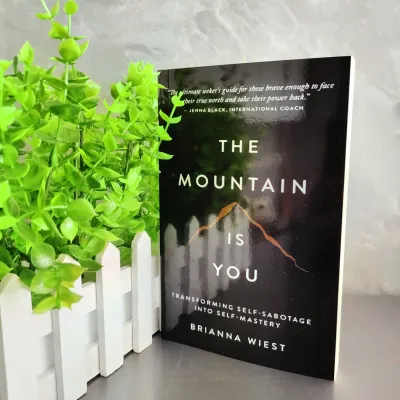
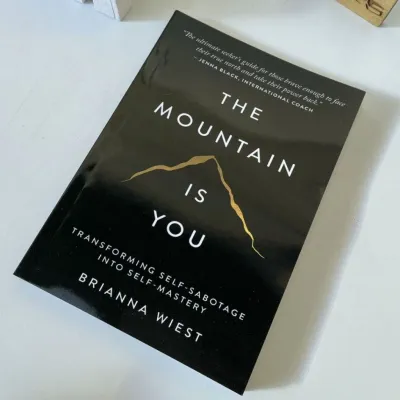

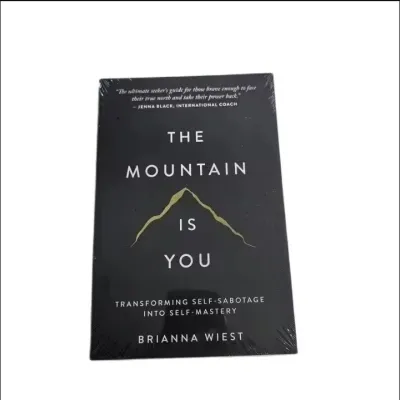
![[ebook]The mountain is you](https://img.lazcdn.com/g/p/4cb24f5bf4ab3257b4cccc88359511dd.jpg_400x400q80.jpg_.webp)
![[ebook] Brianna Wiest 5 IN 1 | 101 Essays That Will Change The Way You Think | The Mountain Is You | I Am The Hero | Salt Water](https://img.lazcdn.com/g/p/a5cb61e40e0bf66e28b46bad2fbe92bb.jpg_400x400q80.jpg_.webp)
Prices are valid at publication and may change. Please refer to the product page for the latest price.
Furthermore, the book draws a sharp distinction between superficial habit tracking and deep emotional processing. Many popular productivity guides suggest that overcoming procrastination or building discipline is simply a matter of downloading the right app, setting rigid morning routines, or tracking daily habits. Wiest argues that these external adjustments are merely temporary fixes. To achieve lasting change, you must address the underlying emotional triggers and unmet needs that drive your self-sabotaging behaviors in the first place, allowing you to release the emotional weight that keeps you stuck.
Signs This Book Aligns With Your Personal Roadblocks
You are likely to find this book highly relevant if you recognize a pattern of starting new endeavors with immense enthusiasm, only to abandon them when they require deeper commitment or vulnerability. This cycle of starting strong and quitting early is a classic manifestation of self-sabotage. It often peaks just as you are on the verge of a breakthrough, whether that means a promotion at work, a healthier lifestyle, or a deeper emotional connection in a relationship, because the proximity to real change triggers an unconscious urge to retreat to safety.

Another sign that this book aligns with your needs is the feeling of being stuck despite possessing all the practical knowledge and resources required to move forward. This state of stagnation is often maintained by what psychologists call “secondary gains”—the hidden benefits of remaining in an unhappy or unfulfilled state. For instance, staying in a stagnant job might protect you from the fear of high-stakes responsibility or the potential embarrassment of failing in a more prominent role. Wiest’s framework helps you identify these hidden payoffs so you can consciously choose growth over comfort.
Additionally, this book is well-suited for individuals who recognize a need for internal emotional regulation rather than just external productivity hacks. If you have tried numerous planners, calendars, and organizational systems but still find yourself unable to take action, your roadblock is likely emotional rather than structural. The Mountain Is You focuses on helping you build emotional resilience, learn to sit with discomfort, and shift your mindset, providing the internal foundation necessary for any external routine or habit to actually stick.
When to Look for Alternative Self-Help Resources
While the book’s introspective approach is powerful for many, it is not a universal solution for every reader. If you are seeking a highly structured, step-by-step manual complete with worksheets, daily checklists, or clinical cognitive-behavioral therapy (CBT) exercises, you may find The Mountain Is You to be too abstract or poetic. The book relies heavily on metaphorical language, essays, and philosophical reflections rather than concrete, actionable templates that tell you exactly what to do hour by hour.
It is also critical to recognize the boundaries of self-guided reading when dealing with mental health. If you are experiencing severe trauma, clinical depression, anxiety disorders, or acute mental health crises, a self-help book cannot replace professional care. In Singapore, consulting a licensed therapist, counselor, or clinical psychologist is essential for addressing deep-seated psychological conditions safely and effectively. Self-help literature should only be used as a supplementary tool to support, rather than replace, professional clinical intervention.
Finally, readers who prefer data-driven, scientific, or neurobiological explanations of human behavior might find the book’s narrative style unsatisfying. If you want to understand the brain chemistry behind procrastination, the evolutionary psychology of fear, or peer-reviewed clinical studies on behavioral change, you would be better served by books written by neuroscientists or clinical researchers. Wiest’s work is deeply intuitive and emotional, which may not resonate with those who require empirical evidence and scientific data to feel motivated.
How to Preview the Book Before Committing to a Purchase
Before committing to a purchase—which typically ranges from S$20 to S$30 depending on the format and retailer—it is highly beneficial to preview the content to ensure the writing style resonates with you. You can easily access free digital samples, such as the introduction and first chapter, on major online book platforms. Alternatively, if you are in Singapore, you can check for digital copies or audiobooks through the National Library Board (NLB) mobile app, allowing you to explore the text without any upfront financial commitment.
When previewing the book, take a close look at the table of contents to see if the specific personal roadblocks or behavioral loops you struggle with are explicitly addressed. The chapters are organized around key themes such as emotional intelligence, releasing past trauma, and building gut-level resilience. Ensuring that these topics align with your current life stage and personal goals will give you confidence that the book will provide genuine value rather than repetitive advice.
Lastly, evaluating the pacing and delivery through available audiobook samples can help you decide which format is best for your learning style. Because the book’s impact relies heavily on its reflective, poetic, and sometimes intense tone, hearing the author’s or narrator’s voice can make a significant difference in how well you absorb and integrate the material. If you find the spoken delivery soothing and engaging, the audiobook might be a more effective medium for your personal growth journey than a physical copy.
Frequently Asked Questions (FAQ)
Is 'The Mountain Is You' a Standalone Read?
Yes, The Mountain Is You is designed as a completely standalone book. You do not need to have read any of Brianna Wiest’s previous essays, poetry, or articles to fully comprehend the concepts and frameworks presented. However, readers who enjoy her writing style may find thematic overlaps with her other popular works, which also explore emotional intelligence, self-reflection, and personal growth.
Can This Book Replace Professional Therapy?
No, this book is not a substitute for professional therapy or medical treatment. It serves as a supplementary tool for self-reflection, personal development, and general emotional awareness. If you are experiencing persistent mental health challenges, severe emotional distress, or symptoms of a clinical disorder, you should seek guidance from a qualified healthcare professional or licensed therapist.
Community discussion
Share your experience or ask a question. Comments are reviewed before publication.