
Deciding whether to purchase a Murphy’s Law English book in 2026 depends entirely on what you hope to gain from its pages. If you are searching for a rigorous, data-backed psychological study or a step-by-step productivity blueprint, you will likely find these compilations lacking. However, if you seek a witty, philosophical perspective on human error, system design, and the unpredictable nature of daily life, a well-chosen volume can be an incredibly refreshing read. The enduring appeal of the concept lies not in promoting absolute pessimism, but in encouraging a healthy, humorous acceptance of life’s inevitable hiccups.
In an era dominated by hyper-optimized schedules and high-pressure self-improvement trends, revisiting this classic adage offers a unique form of cognitive relief. It serves as a gentle reminder that despite our best efforts, perfection is an illusion. By understanding what these books actually offer, how to select a high-quality edition, and how to apply their core philosophy constructively, you can transform a seemingly cynical premise into a practical tool for building personal resilience.
What to Expect from a Murphy's Law English Book
When browsing online marketplaces or local bookstores, you will quickly notice that books bearing this title vary significantly in tone, structure, and intent. The original concept, named after aerospace engineer Edward A. Murphy, Jr., began as a technical observation about system safety and human error during rocket sled experiments. Over the decades, however, this singular observation blossomed into a vast collection of humorous aphorisms, corollaries, and laws compiled by various authors and editors.
Products mentioned in this guide
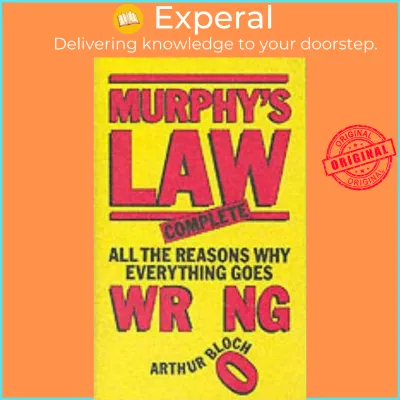


Prices are valid at publication and may change. Please refer to the product page for the latest price.
To manage your expectations before buying, it is crucial to distinguish between classic compilations of witty adages and modern self-help or business adaptations. Classic editions are typically structured as anthologies of short, punchy quotes, laws, and humorous observations categorized by theme, such as workplace dynamics, technology, or domestic life. These books do not offer deep, analytical chapters or academic research; instead, they rely on brief anecdotes and sharp, satirical prose that highlight the absurdity of everyday frustrations.
Conversely, modern adaptations often attempt to repackage these classic adages into structured business guides or personal development frameworks. These versions take the core premise—that systems are inherently prone to failure—and attempt to build actionable strategies around it. Regardless of the specific edition you choose, the underlying theme remains consistent: preparing for inevitable failures and system flaws rather than trying to predict or prevent every specific disaster. Reading these texts helps you realize that failure is often a design characteristic of complex systems rather than a personal shortcoming.
Who Will Benefit from Reading It (and Who Should Skip)
A Murphy’s Law English book is highly beneficial for readers who appreciate cognitive reframing and stress relief through humor. If you tend to take minor setbacks too seriously or find yourself constantly frustrated by daily inconveniences, the satirical tone of these laws can help you laugh at your misfortunes. It introduces a basic level of risk awareness, encouraging you to expect the unexpected and accept that some variables are simply beyond your control.

However, this book is not recommended for individuals seeking rigorous academic psychology, data-driven risk management, or highly structured productivity systems. If you are looking for statistical models, formal probability theories, or clinical advice on managing anxiety, you will find these compilations far too superficial. The content is designed to be observational and philosophical rather than scientific, making it a poor fit for academic research or professional engineering risk assessments.
Before purchasing, it is also wise to evaluate your current mindset and emotional state. For some readers, constantly reading about how things can and will go wrong can trigger unnecessary anxiety or reinforce a defeatist attitude. If you are already prone to catastrophic thinking, a book filled with pessimistic adages might not be the healthiest choice. On the other hand, if you can view these laws through a lens of humorous detachment, they can motivate you to build practical contingencies and approach life’s challenges with greater equanimity.
How to Verify the Edition and Format Before Buying
Because the term “Murphy’s Law” is in the public domain and widely used, there are countless editions available, ranging from high-quality editorial compilations to poorly formatted self-published ebooks. To ensure you receive a book that is actually worth your time and money, you must verify the edition, authorship, and format before making a purchase.
First, check the author, editor, and publication history. Classic compilations, such as those edited by Arthur Bloch, are widely regarded for their sharp wit and historical relevance. Modern reinterpretations may offer more contemporary examples, but they can sometimes lose the concise, punchy charm of the original collections. Checking the publisher and reading the book’s introduction can help you determine whether you are buying a respected, curated anthology or a hasty cash-in on a famous phrase.
Second, take advantage of online preview features to review the table of contents and sample pages. This allows you to assess the balance between humor and practical advice. Some readers prefer a book that is purely comedic, while others want a volume that attempts to bridge the gap between satire and real-world application. Reading a few sample pages will give you a clear sense of the writing style and whether the humor resonates with your personal taste.
Finally, consider how the book’s format aligns with your reading habits. Because these books are often quote-heavy and structured around short, independent snippets, they do not always translate well to standard e-book layouts, where formatting errors can disrupt the reading flow. If you prefer digital reading, check customer reviews specifically for e-book formatting issues. Alternatively, if you are considering an audiobook, listen to the sample narration carefully; a dry, deadpan delivery can enhance the humor, whereas an overly dramatic reading might make the content feel tedious.
Translating the Concept into Daily Risk Management
To get the most value out of a Murphy’s Law book, you should aim to translate its satirical concepts into practical, daily risk management strategies. The most constructive shift you can make is moving from passive pessimism—simply expecting things to fail and giving up—to proactive contingency planning. Instead of viewing the law as a curse, view it as a design constraint that requires you to build buffers into your daily life.
For example, if you know that transport delays, technical glitches, or scheduling conflicts are statistically inevitable over a long enough timeline, you can start building time and resource buffers into your routines. If you have an important meeting, leaving fifteen minutes earlier than necessary is a simple, practical application of the philosophy. Similarly, keeping digital backups of your critical documents or maintaining a small financial emergency fund are ways of acknowledging that systems occasionally fail, without letting those failures derail your life.
Furthermore, embracing this philosophy can significantly reduce your daily frustration and help you maintain emotional equilibrium. When a minor disaster strikes—such as a sudden downpour when you do not have an umbrella—you can recognize it as a classic manifestation of the law rather than a personal conspiracy by the universe. This shift in perspective allows you to normalize setbacks, laugh at the absurdity of the timing, and transition quickly from emotional frustration to structured, practical problem-solving.
Alternative Books for Serious Self-Improvement
If you realize that a Murphy’s Law book is too lighthearted or lacks the academic depth you require, several alternative genres can better support your self-improvement journey. For readers who struggle with chronic pessimism, catastrophic thinking, or anxiety, a cognitive behavioral therapy (CBT) workbook is a far more practical investment. These workbooks offer evidence-based exercises designed to help you identify negative thought patterns, challenge irrational fears, and build healthier mental habits.
For those who want to build emotional fortitude and resilience against unpredictable events without the satirical edge, classic Stoic philosophy is an excellent alternative. Books on Stoicism teach readers how to distinguish between what is within their control and what is not, offering a profound framework for maintaining tranquility in the face of adversity. These texts provide a deeper, more structured philosophical foundation than a collection of humorous adages.
Finally, if you are a professional looking to actively prevent errors, manage risks, or optimize complex workflows, you should look toward systems-thinking or project management literature. Books focusing on quality control, human factors engineering, or agile project management offer formal methodologies for identifying system vulnerabilities and building robust, fail-safe processes. These resources provide the actionable, data-driven strategies that general self-help books often omit.
Frequently Asked Questions (FAQ)
Is the original Murphy's Law book considered a serious psychology text?
No, books compiled under this title are not academic psychology texts. They are philosophical, observational, and humorous compilations of human behavior and system errors. While they touch on real cognitive biases—such as confirmation bias, where we only remember the times things went wrong—they do so through satire and anecdote rather than scientific research or clinical data.
Can reading about Murphy's Law increase anxiety or pessimism?
It can if the reader approaches the material with a literal, fatalistic mindset. To prevent this, view the laws as humorous exaggerations of daily life rather than absolute truths. Using the concepts to build practical contingency plans, rather than worrying about unavoidable disasters, helps transform potential pessimism into constructive preparation and emotional resilience.
Community discussion
Share your experience or ask a question. Comments are reviewed before publication.