
Ryland Grace wakes up in a sterile, automated medical bay, attached to life-support tubes, with no memory of his own name, his profession, or why he is there. Beside him lie the mummified remains of his two crewmates. This gripping, high-stakes opening sets the stage for the project hail mary book, Andy Weir’s highly acclaimed science fiction novel. As Grace’s memory slowly returns, he realizes he is the sole survivor of a desperate, last-ditch interstellar mission to save Earth from an astronomical catastrophe: a strange, solar-energy-absorbing organism called Astrophage that is rapidly dimming the sun and threatening global extinction.
For readers deciding whether to invest their time and money, this book represents a triumphant return to the hyper-focused, optimistic problem-solving that made the author’s debut novel a global phenomenon. It is a story that celebrates human ingenuity, scientific curiosity, and the power of cooperation against seemingly impossible odds. However, while the narrative is undeniably gripping, its appeal is not entirely universal. It is highly recommended for those who enjoy scientifically grounded, process-driven stories, but it may not fully satisfy readers seeking dark, cynical themes or deeply philosophical space operas.
The Verdict: Does the Project Hail Mary Book Deliver on the Hype?
Evaluating a highly publicized bestseller requires looking past the marketing campaigns to analyze the core reading experience. The project hail mary book largely delivers on its lofty promises by refining the survival-narrative formula that the author established in his earlier work. Instead of feeling like a simple retread of a lone astronaut stranded in space, this novel expands the scope of the crisis to a global scale, raising the stakes and giving the protagonist’s actions a profound sense of urgency.
Products mentioned in this guide
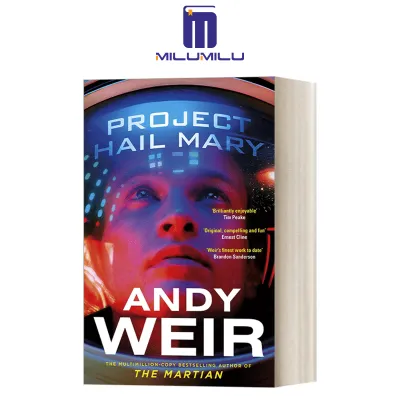

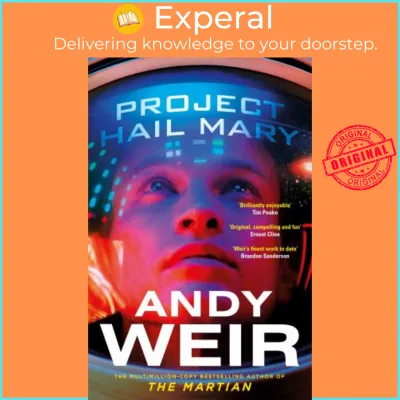
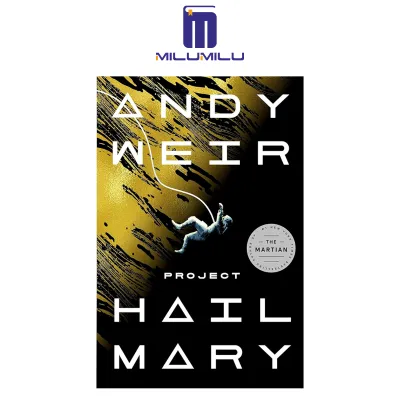


Prices are valid at publication and may change. Please refer to the product page for the latest price.
The execution of the plot relies on a delicate balance between tense, real-time crisis management and a slowly unfolding backstory. As the protagonist pieces together his past through a series of flashbacks, the reader is treated to a dual narrative that explains how humanity united to build a starship under an impossibly tight deadline. This structure ensures that even when the present-day action slows down for scientific analysis, the overarching mystery of how the mission came to be keeps the pages turning.
Ultimately, the book’s value proposition lies in its infectious optimism. In a literary landscape often dominated by bleak, dystopian futures, this novel offers a refreshing perspective where science, rationality, and international collaboration are the ultimate tools for survival. It is a comforting, intellectually stimulating read that leaves you feeling genuinely inspired by the potential of scientific discovery, making it well worth the acquisition for anyone who appreciates hopeful speculative fiction.
Hard Science and Pacing: Navigating the Technical Details
One of the most distinctive elements of this novel is its unapologetic embrace of what is often called “competence porn.” This subgenre derives its narrative tension and satisfaction from watching an exceptionally capable, intelligent protagonist systematically dismantle complex, life-threatening crises using the scientific method. Rather than relying on convenient sci-fi tropes or unexplained technology, the plot progresses through the practical application of physics, chemistry, biology, and math.

For some readers, the sheer volume of technical details might seem intimidating, but the author manages accessibility with remarkable skill. Because the protagonist is a former researcher turned junior high school science teacher, his internal monologue naturally translates complex scientific concepts into digestible, layman-friendly analogies. Whether he is calculating the orbital trajectory of a spacecraft, analyzing the cellular structure of an alien microbe, or measuring relativistic time dilation, the explanations are designed to make the reader feel like an active participant in the discovery process.
Despite this accessibility, the pacing does experience occasional friction points that potential readers should consider. The narrative structure relies heavily on a cycle of problem, experimentation, failure, adjustment, and eventual triumph. While this realistic depiction of scientific inquiry is thrilling for enthusiasts, readers who prefer fast-paced, action-driven plots or soft science fiction might find the detailed descriptions of laboratory procedures and mathematical calculations somewhat repetitive. The alternating timeline also means that just as a present-day crisis reaches a boiling point, the story sometimes cuts away to a historical flashback, which can occasionally disrupt the immediate narrative momentum.
Character Dynamics: The Emotional Core of the Mission
While the scientific puzzles provide the intellectual framework of the story, the emotional resonance of the novel is driven entirely by its character dynamics. Ryland Grace is an incredibly relatable protagonist whose voice is defined by a blend of self-deprecating humor, genuine enthusiasm for teaching, and a very human vulnerability. He is not a fearless, highly trained military astronaut; he is a civilian scientist who is frequently terrified by his circumstances, making his courage and resourcefulness feel earned rather than assumed.
As the mission progresses, the narrative introduces a secondary character that completely transforms the dynamic of the book. Without revealing key plot points or spoiling the nature of this companion, their introduction shifts the story from a solitary survival struggle into a profound exploration of communication, empathy, and partnership. The relationship that develops between these two isolated individuals is built entirely on mutual trust, shared scientific curiosity, and the slow, painstaking process of learning to communicate across a massive evolutionary divide.
This interpersonal connection elevates the novel, providing a warm, emotional anchor that balances the dense scientific exposition. The dialogue between the companions is snappy, heartwarming, and frequently humorous, offering a stark contrast to the cold, hostile vacuum of space. It is this bond that gives the final third of the book its immense stakes, transforming a cold calculation about saving humanity into a deeply personal quest to protect a friend, leading to an ending that delivers a powerful and memorable emotional payoff.
Reader Profiling: Who Will Love It and Who Should Skip It
Ideal Readers for This Sci-Fi Adventure
This book is a perfect match for enthusiasts of hard science fiction who appreciate stories where the laws of physics are respected and treated as active narrative elements. If you thoroughly enjoyed the resourcefulness displayed in The Martian, or if you appreciate the detailed, realistic space environments found in hard sci-fi series, this novel will align closely with your tastes. It is also highly recommended for readers who crave uplifting, positive narratives that celebrate cooperation, intellectual curiosity, and the triumph of rational thinking over despair.
Additionally, those who are fascinated by the mechanics of first-contact scenarios—specifically the linguistic, cultural, and scientific challenges of communicating with an entirely alien intelligence—will find this book exceptionally rewarding. The story details the step-by-step process of building a shared vocabulary and understanding from scratch, making it a standout entry in the subgenre of cooperative first-contact literature.
When to Look for Alternatives
Conversely, readers who prefer dark, cynical, or highly political speculative fiction may find this book’s tone a bit too simplistic or overly optimistic. If your preferred reading list consists of dense, morally ambiguous space operas with complex political intrigue, or if you prefer literary science fiction with poetic, highly stylized prose, the straightforward and functional writing style of this novel might feel underwhelming.
Furthermore, if you find yourself easily bored by detailed explanations of scientific experiments, or if you dislike stories that feature frequent mathematical calculations as plot points, the narrative style may cause frustration. The plot is driven almost entirely by scientific problem-solving, meaning that those looking for character-driven psychological dramas or action-heavy space battles should look elsewhere for their next read.
Formats and Access Options for Readers in Singapore
For readers in Singapore looking to experience this modern sci-fi classic, there are several convenient formats and acquisition channels to consider. Before making a purchase, it is highly recommended to verify the specific book edition, publisher (typically Del Rey for the US edition or Hodder & Stoughton for the UK edition), medium, and regional compatibility to ensure you receive the version that best suits your preferences.
- Physical Books: If you prefer the tactile experience of reading a physical copy or wish to add a beautifully designed volume to your personal library, major local brick-and-mortar bookstores like Books Kinokuniya (especially the flagship store at Ngee Ann City) and Popular carry various paperback and hardcover editions. Be sure to check the physical quality and cover design in-store, as different printings may feature varying paper stock and cover art.
- E-Books: For daily commuters traveling on the MRT or buses, the digital e-book format offers unparalleled portability. Reading on a Kindle, Kobo, or mobile device makes it easy to enjoy the story during a crowded transit without carrying a bulky volume. When purchasing digitally, verify that the file format is compatible with your specific e-reader and that there are no regional digital rights management (DRM) restrictions associated with your Singapore-based account.
- Audiobooks: The audiobook version, narrated by Ray Porter, is widely considered one of the finest audio productions in modern science fiction. Porter's dynamic performance perfectly captures the protagonist's dry humor and panic, and the production utilizes creative audio effects to represent the unique, musical language of the alien companion. This format is highly recommended for multitasking during a workout or a walk along East Coast Park. Ensure your preferred audiobook platform is fully accessible in Singapore before purchasing.
- National Library Board (NLB): For a completely risk-free option, Singapore residents can leverage the extensive resources of the National Library Board. You can search the online catalog to reserve a physical copy at your nearest regional library, or use the NLB Mobile app (integrated with Libby) to borrow the e-book or audiobook instantly. This is an excellent way to sample the book's scientific tone before deciding to purchase a permanent copy for your collection.
Frequently Asked Questions (FAQ)
Do I need to read The Martian before reading Project Hail Mary?
No, you do not need to read any prior works. This novel is a completely standalone story featuring an entirely new cast of characters, a unique setting, and a self-contained plot. While it shares the same witty, scientifically grounded tone and survival-focused themes as the author’s debut novel, it requires no background knowledge to fully enjoy.
Is the science in Project Hail Mary too difficult to understand?
While the novel incorporates real concepts from physics, chemistry, and biology, the science is highly accessible. The protagonist is a former schoolteacher who naturally explains complex ideas using simple, everyday analogies. This narrative approach ensures that readers without a background in science, technology, engineering, or mathematics can easily follow and enjoy the plot.
Is the Project Hail Mary book appropriate for younger teen readers?
Yes, the book is generally very appropriate for young adult and teenage readers. It features high-stakes peril and some mild profanity, but it lacks explicit violence, gore, or mature romantic content. Its strong emphasis on scientific curiosity, critical thinking, and cross-cultural friendship makes it an inspiring and educational read for younger audiences.
Community discussion
Share your experience or ask a question. Comments are reviewed before publication.