
Quick Assessment: The DD-75 in Singapore Apartment Living
Living in a high-density Singapore apartment, such as a Housing & Development Board (HDB) flat or a modern condominium, requires a careful balance between pursuing musical hobbies and respecting shared residential spaces. The Yamaha DD-75 presents itself as a highly portable, tabletop digital drum kit designed to offer a compact alternative to full-sized electronic or acoustic drum sets. However, determining whether this instrument is truly suitable for your apartment involves evaluating both its physical footprint and its acoustic footprint.
While the digital nature of the instrument allows you to control the volume of the drum samples or route them entirely through headphones, the physical act of striking the pads still produces mechanical noise. This distinction is critical for apartment dwellers; while your family or neighbors will not hear the synthesized drum sounds, they may still hear the rhythmic tapping of wooden sticks hitting the rubberized pads. Successful integration of this instrument into your home depends on understanding these physical realities, managing the vibrations that travel through concrete floors, and setting up your practice space with appropriate sound-dampening accessories.
Measuring the Physical Footprint and Storage Needs
One of the primary advantages of a tabletop drum controller is its space-saving design, but you must still verify the exact physical dimensions against your available room layout before purchasing. Unlike a traditional electronic drum kit that requires a dedicated metal rack, this unit is designed to sit on a desk, a specialized snare stand, or even your lap. You should consult the manufacturer’s official specifications sheet to confirm the width, depth, and weight of the main console to ensure it fits securely on your intended surface without overhang.
Products mentioned in this guide
![Yamaha DD75 Digital Percussion Set DD-75 Portable Musical Electronic Instrument DD 75 [PREORDER]](https://img.lazcdn.com/g/p/c2c5758c27b7e76ef28a58fa17673cb1.jpg_400x400q80.jpg_.webp)
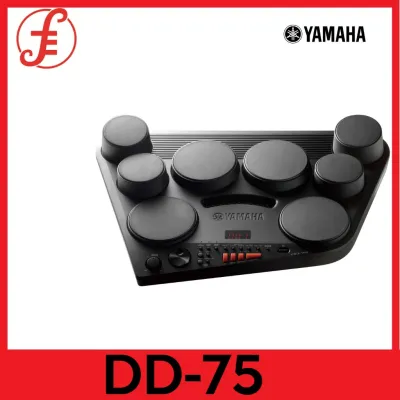
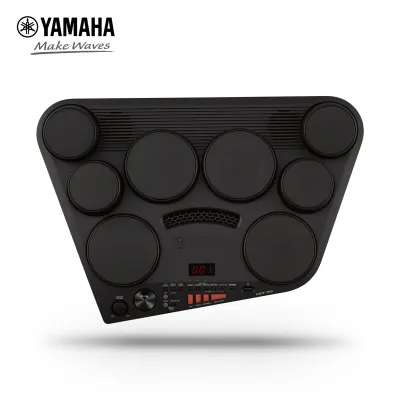
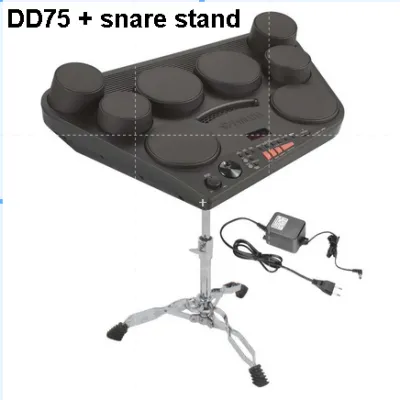
Prices are valid at publication and may change. Please refer to the product page for the latest price.

Beyond the main unit itself, you must account for the auxiliary components that complete the playing setup. The kit includes two foot pedals—one for the kick drum and one for the hi-hat controller—which require dedicated floor space directly beneath your seating position. You will also need to manage several cables, including the power adapter, pedal connectors, and headphone lines, which can clutter a small bedroom if not properly organized. When planning your layout, measure not just the tabletop surface, but also the floor space required for your drum throne or chair, ensuring you have enough clearance to sit comfortably with your legs extended to reach the pedals.
Storage and portability are major considerations for those living in cozy HDB rooms where multi-functional spaces are common. When you finish practicing, the tabletop design allows you to quickly unplug the cables, pack the pedals, and slide the main unit into a wardrobe, under a bed, or onto a shelf. This ease of disassembly makes it highly attractive compared to full-sized electronic kits, which often remain permanent fixtures in a room due to the complexity of folding or dismantling their frames. If you plan to move the kit frequently, verify the weight of the unit to ensure you can lift and transport it safely without straining.
Managing Acoustic Tapping and Headphone Practice
The ability to practice silently is the main reason apartment players choose digital percussion, but “silent” is a relative term in the world of drumming. When you plug headphones into the instrument, the internal speakers are muted, allowing you to hear the high-fidelity drum kits privately. However, the physical impact of your drumsticks hitting the eight touch-sensitive pads still generates an audible acoustic tapping sound. In a quiet apartment, especially during late-night hours, this repetitive tapping can easily penetrate thin bedroom doors or travel through open windows.
To optimize your private practice experience, you must pay close attention to the headphone jack specifications on the instrument’s interface. Check the user manual to determine whether the output is a standard 3.5mm mini-jack or a larger 6.35mm stereo jack, as you may need to purchase a dedicated adapter to connect your preferred headphones. Additionally, verify the impedance requirements of the audio output; using high-impedance studio headphones without an external amplifier may result in low volume levels or distorted sound, whereas low-impedance consumer headphones are generally easier to drive directly from the unit.
The volume of the physical tapping noise is heavily influenced by your playing technique, your choice of drumsticks, and the material of the pads. The pads are made of a firm rubber compound designed to provide realistic rebound, but this firmness also means that heavy strikes will produce louder acoustic thuds. To minimize this noise, you can practice using lighter wooden sticks, such as 7A models, or switch to specialty sticks with nylon or tapered tips designed for electronic percussion. Adjusting your striking intensity not only keeps the ambient noise low but also helps you develop a more controlled and nuanced playing technique.
Preventing Structure-Borne Noise and Floor Vibration
In multi-story residential buildings like HDB flats and condominiums, structure-borne noise is often a greater concern than airborne sound. When you step on the kick and hi-hat pedals, or when you strike the pads mounted on a stand, the physical impact creates low-frequency vibrations. These vibrations travel directly down through the legs of your stand or your feet, entering the concrete floor slab of the building. Once inside the structure, these vibrations can radiate into the ceiling of the apartment below as a dull, repetitive thumping noise that is highly distracting to neighbors.
To prevent these vibrations from traveling through the floor, you should implement a reliable isolation barrier beneath your entire setup. Standard thin yoga mats or decorative rugs offer minimal vibration dampening; instead, look for dense, high-impact rubber mats specifically designed for fitness equipment or acoustic isolation. For more robust protection, many apartment players construct a DIY riser using interlocking foam tiles, MDF boards, or even tennis balls cut in half to create an air gap that decouples the drum setup from the concrete floor. Before purchasing or building a riser, verify its weight capacity, thickness, and slip resistance to ensure your setup remains stable while playing.
You can also mitigate structure-borne noise by adjusting the internal settings of the instrument and refining your physical playing style. Many digital drum modules allow you to adjust the trigger sensitivity of the pads and pedals; by increasing the sensitivity, you can achieve a full volume digital sound with much lighter physical strikes. Additionally, practice a controlled pedal technique where you avoid stomping or burying the beater, focusing instead on smooth, ankle-driven movements that minimize the downward force exerted on the floor.
Frequently Asked Questions (FAQ)
Can I use the Yamaha DD-75 with any standard headphones?
Yes, you can use most standard headphones, but you must verify the connector type and impedance compatibility. The instrument typically features a 6.35mm (one-quarter inch) stereo headphone jack, meaning if your headphones use a standard 3.5mm plug, you will need a gold-plated adapter to establish a secure connection. For the best audio quality, choose headphones with a relatively low impedance (typically under 50 ohms) so the built-in amplifier can deliver sufficient volume and dynamic range without requiring an external headphone amp.
Do I need a special mat or riser for HDB floors?
While not strictly mandatory for the tabletop unit itself, using a specialized dampening mat or riser is highly recommended for HDB and condo floors to prevent neighbor complaints. The physical impact from the foot pedals and stand transfers directly into the concrete structure of high-rise buildings. A dense acoustic mat, heavy-duty utility rug, or a custom-built tennis ball riser helps absorb these low-frequency vibrations before they can travel downstairs, ensuring you can practice without causing structural noise issues.
Is the included pedal setup suitable for small bedrooms?
The included foot pedals are highly compact and space-efficient, but they do require careful placement in small bedrooms. Because these pedals are free-floating units connected by cables, you must position them at a comfortable distance from your seat to maintain proper playing posture. Before setting up, measure the total depth from the back of your chair to the front of the tabletop surface, ensuring you have at least one to 1.2 meters of clear floor space to accommodate your leg extension and the pedal units safely.
Community discussion
Share your experience or ask a question. Comments are reviewed before publication.