
Purchasing a high-end musical instrument is a significant milestone, but choosing one that aligns with your current skill level is crucial for long-term success. The Yamaha PSR-SX920 is an exceptionally capable, professional-grade arranger workstation designed for live performers, composers, and solo entertainers. For the vast majority of beginners, however, it is not the most practical or effective tool for learning the basics of keyboard playing.
While the instrument boasts pristine sound engines and an extensive library of backing styles, its sheer complexity and high price tag can easily overwhelm a novice. Instead of focusing on fundamental physical techniques like finger independence, posture, and reading sheet music, beginners on a professional arranger often find themselves distracted by deep system menus and complex production settings. However, there is a very specific profile of beginner—such as those focused on immediate music production or those working under the close guidance of an experienced mentor—who may find this keyboard to be a highly rewarding, future-proof investment. Understanding how this instrument aligns with your personal learning goals will help you make an informed decision before committing your time and budget.
Understanding the Yamaha PSR-SX920's True Positioning
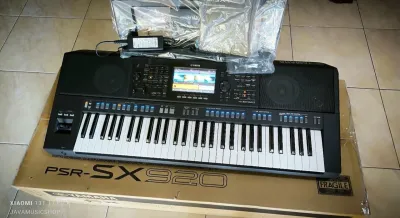
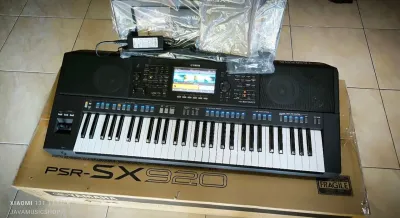
To evaluate whether the Yamaha PSR-SX920 is appropriate for a beginner, it is essential to look at its design intent. Yamaha engineered the PSR-SX920 as a professional arranger keyboard, positioning it just below their flagship Genos series. It is built to function as a complete “one-man band” workstation, allowing a single performer to recreate the sound of a full backing band in real time.
Products mentioned in this guide
![Yamaha PSR-SX920 Portable Digital Arranger Workstation Keyboard 61 Keys PSR-SX Series PSRSX920 PSR SX900 SX920 [LIMITED STOCK]](https://img.lazcdn.com/g/p/6fac5e6e07e23c92e4bd6c87b9ff560a.jpg_400x400q80.jpg_.webp)
![Yamaha PSR-SX920 PSR-SX720 PSR-SX600 Arranger Workstation Digital Keyboard 61 Keys PSR SX600 SX700 SX720 PSRSX900 SX920 [LIMITED STOCK]](https://img.lazcdn.com/g/p/d8ffb0f50b31d5ee246652fe49cede61.jpg_400x400q80.jpg_.webp)
Prices are valid at publication and may change. Please refer to the product page for the latest price.
The core capabilities of the PSR-SX920 revolve around complex live manipulation and music creation. It features an advanced style engine that generates adaptive accompaniment based on the chords you play with your left hand. It also includes deep sound-editing parameters, extensive rhythm programming, vocal harmony processing, and multi-track MIDI sequencing. These features require an intimate understanding of music theory, arrangement, and digital audio workflows to utilize effectively.
For a beginner, these advanced tools represent a classic case of feature overload. When you are first learning to play, your primary physical needs are straightforward: a clear, responsive keybed, a high-quality acoustic piano sound, and an interface that lets you start practicing within seconds of powering on the unit. The PSR-SX920’s interface is dense with physical buttons, assignable sliders, and a multi-layered touchscreen menu. Navigating this professional environment can create a steep learning curve that actually detracts from the physical practice of playing the keys.
Self-Diagnosis: Do You Actually Need a Professional Arranger Keyboard?
Before investing in a premium instrument, it is helpful to perform a self-assessment of your musical goals, practice environment, and personal learning style. Determining what you want to achieve will clarify whether a professional arranger is a valuable asset or an unnecessary distraction.

Signs a Simpler Keyboard Fits Your Goals
If your primary objective is to learn traditional piano, master classical repertoire, or prepare for graded music examinations (such as the ABRSM or Trinity syllabus, which are highly popular in Singapore), the PSR-SX920 is not the right tool. Traditional piano pedagogy requires building specific finger strength and dynamic control that can only be developed on weighted, hammer-action keys. The PSR-SX920 uses an unweighted FSB keyboard which, while excellent for organ and synthesizer playing, does not mimic the physical resistance of an acoustic piano.
Budget and commitment level are also major factors to consider. A professional workstation like the PSR-SX920 represents a substantial financial investment of several thousand Singapore dollars (S$). If you are testing the waters of a new hobby and are not yet certain of your long-term commitment, making such a large upfront purchase is highly risky.
Additionally, if you prefer a plug-and-play experience, the PSR-SX920 may frustrate you. Beginners often benefit most from an instrument with minimal distractions. If your ideal practice session involves turning on the keyboard, selecting a standard grand piano sound, and immediately opening a book of sheet music, the hundreds of flashing buttons and auto-accompaniment options on an arranger will serve as constant visual and mental distractions.
When the PSR-SX920's Advanced Features Make Sense
There are unique scenarios where starting on a professional arranger keyboard is highly logical. If your musical ambitions are centered on modern pop music, songwriting, electronic music production, or performing as a solo live entertainer, learning the arranger workflow from day one can be incredibly beneficial. For these goals, understanding how to control backing tracks, trigger fills, and mix multiple instrument voices is just as important as manual keyboard technique.
Having a dedicated mentor or teacher who is already fluent in Yamaha’s PSR-SX operating system is another strong reason to consider this model. A knowledgeable instructor can configure the keyboard for you, saving custom registration memories that hide the complex features and present a simplified interface for your weekly lessons. This direct guidance bypasses the initial learning curve of the operating system.
Finally, some learners subscribe to a “buy once, cry once” philosophy. If you have a flexible budget and want an instrument that you will never outgrow, the PSR-SX920 offers unparalleled longevity. As your playing skills advance over the years, the keyboard’s deep production tools, expansion memory, and professional audio outputs will be ready to support your growth, eliminating the need to trade in or upgrade your gear later on.
The Beginner Experience on the PSR-SX920: Pros and Cons
Starting your musical journey on a professional-tier instrument like the PSR-SX920 comes with distinct advantages and disadvantages that will directly impact your daily practice sessions.
Pros:
- Exceptional Sound Quality: The PSR-SX920 utilizes Yamaha's premium sound engines, delivering incredibly realistic acoustic pianos, electric pianos, orchestral instruments, and synthesizer voices. Practicing with high-fidelity sounds is highly motivating and helps develop an ear for tonal dynamics.
- Professional Accompaniment Styles: The built-in backing bands are mixed to professional standards. Playing along with these highly responsive styles helps beginners develop an excellent internal sense of rhythm, timing, and tempo far more enjoyably than practicing with a standard metronome.
- Robust Build Quality and Connectivity: Built for the stage, the PSR-SX920 features a highly durable chassis, premium physical controls, and comprehensive input/output options. It includes high-speed USB-to-Host and USB-to-Device ports, dedicated microphone inputs, and robust expansion memory for custom voices and styles.
Cons:
- High Risk of Distraction: The sheer variety of sounds, vocal effects, and rhythm styles can lead to "preset surfing." Beginners often spend hours experimenting with sound effects and auto-accompaniment features rather than practicing scales, chords, and proper hand placement.
- Non-Weighted Key Action: The FSB keybed is unweighted. While it offers excellent initial touch response and aftertouch for synthesizer and organ play, it does not build the finger stamina or nuance required to play a traditional acoustic piano.
- Significant Resale Depreciation: If you decide that the keyboard is not for you and abandon the hobby, selling a niche, high-end professional arranger in the secondary market can be challenging. These instruments typically experience sharper initial depreciation compared to standard entry-level digital pianos, which enjoy a much broader pool of potential buyers.
Better Alternatives for First-Time Keyboard Players
If you conclude that the PSR-SX920 is too complex or expensive for your current needs, there are excellent alternative categories to explore. Before purchasing any instrument, it is highly recommended to visit local musical instrument showrooms in Singapore to physically test the key actions, listen to the speaker systems, and evaluate how intuitive the interfaces feel in person.
Entry-Level Arranger Keyboards
For those who are genuinely excited by the idea of playing with backing bands and auto-accompaniment but need a more approachable starting point, entry-level arranger keyboards are an ideal choice. Models in Yamaha’s PSR-E series (such as the PSR-E383 or PSR-E473) offer a highly streamlined version of the arranger experience.
These entry-level models provide a curated selection of high-quality voices and accompaniment styles without the overwhelming submenus and deep programming options of the SX series. They also feature built-in lesson suites and clear, simplified interfaces that keep the focus on learning. Furthermore, they are highly portable, lightweight, and require a fraction of the financial investment, making them a much safer choice for a beginner.
Digital Pianos for Pure Piano Focus
If your primary goal is to learn traditional piano technique, read sheet music, and play classical, jazz, or pop ballad arrangements, you should look toward dedicated digital pianos. Portable digital pianos like the Yamaha P-series (such as the P-145 or P-225) or console digital pianos like the Arius (YDP) series are designed specifically for this purpose.
These instruments prioritize two main elements: weighted hammer-action keys that closely mimic the feel of an acoustic grand piano, and highly authentic, expressive acoustic piano samples. They feature clean, distraction-free interfaces, often with only a few buttons for power, volume, and voice selection. This minimalist design ensures that your attention remains entirely on your hands, posture, and musical expression, providing the optimal foundation for traditional piano studies.
How to Start Learning if You Already Own the PSR-SX920
If you already own a PSR-SX920—perhaps because you received it as a gift, inherited it, or purchased it with long-term goals in mind—there are practical strategies you can use to prevent feature fatigue and ensure productive practice sessions.
First, simplify the instrument’s setup to create a distraction-free environment. You can use the dedicated “Direct Access” button or save a simple “Piano Only” registration preset that disables all auto-accompaniment, rhythm styles, and split-keyboard functions. This allows you to turn on the keyboard and immediately have a single, high-quality grand piano voice mapped across all 61 keys, perfectly mimicking a standard practice environment.
Second, leverage the keyboard’s modern connectivity to assist your learning. You can connect the PSR-SX920 to an iPad, tablet, or computer using a standard USB-to-Host cable. This allows you to use interactive learning applications and digital sheet music readers, treating the keyboard as a highly responsive MIDI controller while utilizing its premium internal speakers to hear your playing.
Finally, establish a highly structured daily practice routine that strictly separates technical practice from creative exploration. For example, allocate the first 70% of your practice time to technical exercises, scales, chord transitions, and sheet music reading using only the basic piano sound. Once your structured practice is complete, reward yourself by using the remaining 30% of your time as “exploration time” to experiment with the arranger’s advanced styles, multi-track recording, and unique instrument voices. This balanced approach keeps your physical skills growing while keeping your practice sessions fun and engaging.
Frequently Asked Questions (FAQ)
Is the PSR-SX920 too heavy to move around for a beginner?
Yes, the PSR-SX920 is generally heavier and bulkier than standard entry-level keyboards due to its robust professional chassis, advanced internal electronics, and powerful built-in speaker systems. Weighing approximately 11.6 kg, it is best suited as a stationary home instrument on a sturdy keyboard stand rather than something you easily transport to weekly music lessons or casual rehearsals.
Can I use the PSR-SX920 just as a basic MIDI controller?
Yes, the PSR-SX920 features comprehensive MIDI and USB connectivity, allowing it to interface seamlessly with computers, tablets, and digital audio workstations (DAWs) to control virtual software instruments. However, using a premium professional arranger solely as a MIDI controller is highly inefficient and expensive, as you are paying a significant premium for advanced internal sound engines, accompaniment styles, and physical controls that you will not be utilizing.
Do I need an external amplifier for home practice?
No, you do not need an external amplifier for practicing at home. The PSR-SX920 is equipped with a high-fidelity, bi-amped built-in speaker system designed to deliver rich, full-range sound that easily fills a small to medium-sized room. For typical home practice in Singapore apartments, the built-in speakers provide more than enough volume, and you can easily connect a pair of quality studio headphones to the dedicated headphone jack for quiet, late-night practice sessions.
Community discussion
Share your experience or ask a question. Comments are reviewed before publication.