
Daniel Kahneman’s Thinking, Fast and Slow is widely regarded as a seminal work in behavioral economics and cognitive psychology. However, for those seeking self-improvement, the decision to invest time in this dense, 500-page volume requires careful consideration. It is not a typical self-help book filled with quick-fix formulas or motivational anecdotes. Instead, it is a rigorous, scientific exploration of how the human mind processes information, makes judgments, and falls into predictable cognitive traps.
If your goal is to find immediate, actionable daily habits to boost productivity by tomorrow morning, this book may feel overly academic and slow-paced. But if you want to fundamentally reshape how you make decisions, manage risk, and understand your own mental errors, it is one of the most valuable books you can read. Deciding whether to read it comes down to aligning your personal growth objectives with the book’s analytical style.
Core Concepts: What the Book Actually Teaches
At the heart of the book is the division of the mind into two distinct systems of thought. System 1 operates automatically, quickly, and with little or no conscious effort. It is the system that allows you to read a simple road sign, detect hostility in a voice, or complete the phrase “bread and…” without thinking. While highly efficient, System 1 relies on shortcuts and is prone to systematic errors.
Products mentioned in this guide
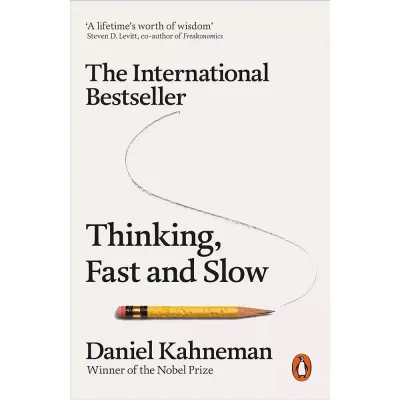
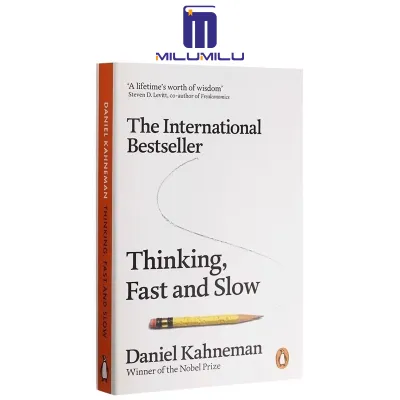
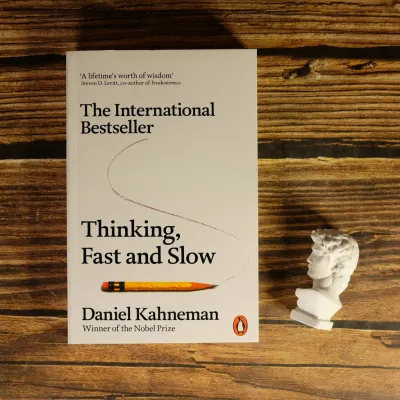
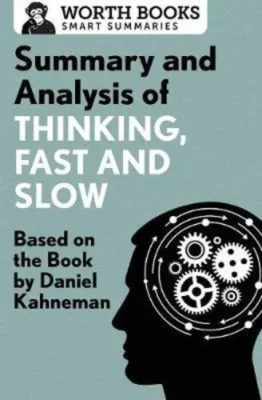
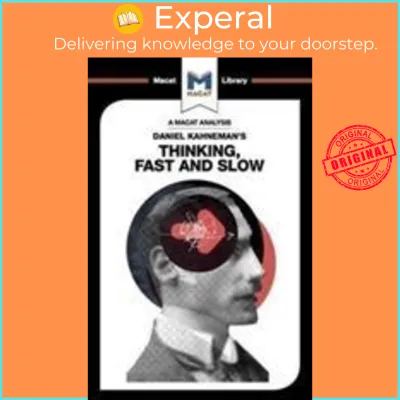
Prices are valid at publication and may change. Please refer to the product page for the latest price.
System 2, by contrast, is slow, deliberate, and analytical. It handles complex calculations, critical thinking, and conscious choices, such as filling out a tax form or checking the validity of a complex argument. System 2 requires mental energy, and because our brains are naturally inclined to conserve energy, we often rely on System 1 even when a situation demands the careful scrutiny of System 2.
This reliance on System 1 leads to cognitive biases and heuristics—mental shortcuts that help us make quick decisions but often distort reality. Kahneman details several of these, such as the anchoring effect, where an initial, often irrelevant number heavily influences subsequent estimates. Another is the availability heuristic, which causes us to overestimate the likelihood of events that are easily recalled from memory, such as plane crashes or economic downturns.
By understanding these mechanisms, you learn to recognize the inherent limits of human rationality. The book demonstrates that we are not the perfectly rational decision-makers we often believe ourselves to be, and that our choices are highly susceptible to how information is framed and presented.
The Reading Experience: Is It Too Academic for Casual Readers?
For casual readers, the reading experience of Thinking, Fast and Slow can be challenging. Kahneman writes with the precision of a researcher, packing chapters with descriptions of psychological experiments, statistical data, and academic terminology. This academic rigor provides immense credibility, but it also means the book cannot be breezed through in a single weekend.

The structural pacing of the book varies significantly. The opening chapters introducing System 1 and System 2 are highly engaging and accessible, offering immediate insights. However, the middle sections—particularly those dealing with statistical regression, risk assessment, and prospect theory—can feel dense and dry. Many readers find themselves slowing down or losing momentum during these chapters, which read more like a university textbook than a popular self-help guide.
Managing your expectations is crucial before starting. There are no bulleted summaries at the end of each chapter telling you exactly how to change your life, nor is there any motivational fluff. The book is descriptive rather than prescriptive; it explains how your mind works but leaves the task of applying these insights to your daily life entirely up to you.
Who Should Read It (and Who Should Skip It)
This book is ideal for readers who enjoy deep intellectual challenges and want to understand the underlying mechanics of human behavior. If you work in finance, management, marketing, or any field that requires strategic decision-making, the insights on risk and bias are invaluable. It is also highly suited for those interested in behavioral economics and cognitive psychology who prefer evidence-based science over anecdotal self-help.
Conversely, you should probably skip this book if you are looking for lightweight, highly actionable reading. If you prefer books that offer immediate daily routines, simple frameworks, or emotional inspiration, the academic density of Kahneman’s work may lead to frustration. It is not a book designed for quick consumption during a busy commute.
If you find the full text too overwhelming but still want to learn these concepts, alternative approaches are highly recommended. You might start by reading curated summaries or exploring lighter, more application-focused books first. These can introduce you to the core ideas of behavioral economics in a more digestible format before you commit to the full, original text.
How to Read It for Maximum Practical Value
To get the most out of this book without burning out, adopt a strategic reading approach. Do not feel obligated to read every single page with equal intensity. It is entirely acceptable to skim the highly technical, statistical sections once you have grasped the core behavioral message of a chapter. Focus your energy on the real-world examples and the cognitive experiments, which are often the most illuminating parts.
To bridge the gap between theory and daily application, actively look for ways to apply bias awareness to your personal life. For instance, when managing personal finances or planning investments, consciously check if you are falling victim to loss aversion—the tendency to fear losses more than you value equivalent gains. When planning projects at work or home, account for the “planning fallacy” by deliberately adding a buffer to your time and budget estimates.
Another highly effective method is to pair your reading with a decision journal. When faced with a major choice, write down your reasoning, the assumptions you are making, and the potential biases that might be influencing you. This practice forces you to slow down and engage your deliberate System 2 thinking, turning the book’s theoretical concepts into a practical tool for personal growth.
Frequently Asked Questions (FAQ)
Audiobook vs. Physical Copy: Which Format Is Better?
Because of the book’s conceptual density and the inclusion of various mental puzzles, the physical copy or e-reader format is generally superior for most readers. Having the text in front of you allows you to pause, re-read complex sentences, and study the statistical examples at your own pace. The audiobook format can be convenient for passive listening, but many listeners find it difficult to retain the detailed scientific explanations without visual reference. If you are considering the audio version, it is wise to check sample chapters on audiobook platforms or local online bookstores to test your comprehension before purchasing.
How Does It Compare to Other Behavioral Psychology Books?
Thinking, Fast and Slow is the foundational text upon which many other popular self-improvement and behavioral psychology books are built. While books like Atomic Habits focus on practical daily routines and Nudge focuses on choice architecture, Kahneman’s work provides the deep scientific theory that explains why these practical strategies work. It is more academic and comprehensive than its peers, making it less of a quick guide and more of an essential reference manual for understanding human decision-making. If you want a quick, practical application, other books may suit you better, but if you want to understand the core science, this is the definitive choice.
Community discussion
Share your experience or ask a question. Comments are reviewed before publication.