
Deciding whether to invest your time and money in a self-improvement book requires matching its core philosophy with your actual cognitive hurdles. Thinking in Bets by Annie Duke approaches decision-making through the lens of professional poker, emphasizing that decision quality and outcome quality are not the same. If you are navigating complex career choices, managing personal investments, or making high-stakes business commitments, this book offers a framework designed to help you embrace uncertainty.
By viewing decisions as bets, the author challenges the conventional way we evaluate our choices. This guide will help you diagnose your current decision-making pain points, evaluate the book’s core frameworks against your learning goals, and determine if its probabilistic approach is the right fit for your personal or professional development before you commit to a purchase.
Identify Your Current Decision-Making Challenges
To determine if this book will benefit you, it is helpful to analyze how you currently evaluate your successes and failures. A common cognitive trap is “resulting,” which is the tendency to judge the quality of a decision solely by its immediate outcome. For instance, if you invest a portion of your savings in S$ into a carefully researched financial asset and the market experiences an unexpected downturn, you might immediately label your choice as a terrible mistake. This book directly addresses this bias, helping you separate bad luck from bad planning.
Products mentioned in this guide
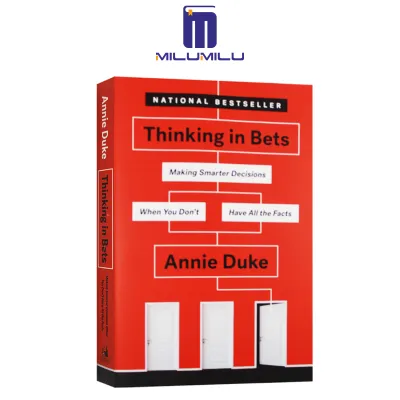
![EBOOK Thinking in Bets Making Smarter Decisions- Annie Duke [Full Version]](https://img.lazcdn.com/g/p/5e521bb784fa853e29ab3bb0af56b341.jpg_400x400q80.jpg_.webp)
Prices are valid at publication and may change. Please refer to the product page for the latest price.
Another major hurdle is the paralyzing need for absolute certainty before taking action. In a fast-paced environment, waiting for perfect information often leads to missed opportunities, whether you are deciding on a property purchase or evaluating a new job offer. If you find yourself stuck in analysis paralysis because you cannot guarantee a perfect result, the concepts in this book are tailored to help you make peace with incomplete information.
Furthermore, many people struggle with intense emotional reactions to negative outcomes, even when they made logical, well-researched choices. This emotional toll can lead to risk aversion or erratic decision-making in the future. Recognizing whether your frustration stems from a flawed process or simply an unfavorable roll of the dice is a crucial step toward building cognitive resilience.
If these specific challenges resonate with your daily life, the book’s core thesis is highly relevant to your needs. However, if your decision-making struggles lie elsewhere—such as managing interpersonal conflicts or organizing daily tasks—the poker-based framework might not address your primary pain points.
Core Frameworks in Thinking in Bets and Who They Serve
The book’s primary value lies in its practical frameworks, which aim to shift your mindset from binary thinking to probabilistic thinking. Instead of asking yourself whether a decision is 100% right or wrong, you learn to assign probabilities to various outcomes. This shift is particularly useful for professionals who must manage risk, allocate budgets, or plan long-term strategies under volatile market conditions.

By separating decision quality from outcome quality, the book provides a healthier way to conduct post-mortems on your projects. In a corporate or entrepreneurial setting, this framework allows teams to analyze failures without pointing fingers at individuals who made reasonable choices under uncertain conditions. It fosters a culture of continuous learning rather than one of blame and risk avoidance.
Another key concept introduced is the formation of a “truthseeking” pod or accountability group. The author explains how surrounding yourself with diverse perspectives can help reduce individual blind spots and confirmation bias. If you are looking to build a network of peers who can offer objective, constructive feedback on your business or personal decisions, this section provides a useful blueprint for establishing those boundaries.
Ultimately, these frameworks serve individuals who operate in environments where risk is inherent and information is fluid. If you are looking to transition from intuitive, gut-based choices to a more structured, analytical approach to risk, these concepts offer a solid foundation.
When This Book Might Not Be the Right Fit
While the book offers valuable perspective shifts, it is not a universal solution for every reader. If you are seeking a highly tactical, step-by-step manual with daily checklists or rigid decision trees, you may find the narrative-heavy style frustrating. The book focuses on reshaping your relationship with uncertainty rather than providing a prescriptive formula for daily productivity.
Additionally, readers looking for highly technical, math-heavy quantitative finance or statistical modeling textbooks will find this material too basic. While the book discusses probability, it does so through accessible analogies rather than complex equations or calculus. If your goal is to master advanced statistical risk analysis for professional trading or engineering, you should look toward academic textbooks instead.
Finally, if you require domain-specific operational advice—such as medical triage protocols, legal compliance frameworks, or specific engineering safety standards—general decision theory will not suffice. These fields rely on strict, standardized procedures where minimizing variance is governed by precise regulations rather than general probabilistic mindsets.
How to Evaluate the Book Before Committing to Purchase
Before purchasing a copy, it is wise to perform a few quick checks to ensure the book matches your reading preferences. Start by reviewing the table of contents and reading a sample chapter through an online marketplace or at a local bookstore. This will help you gauge your comfort level with the author’s writing style, which relies heavily on professional poker anecdotes to explain broader life concepts.
Next, consider which format best suits your lifestyle and learning habits. If you prefer highlighting key passages and taking notes on strategic frameworks, a physical paperback or a compatible e-book format is often the most practical choice. If you choose an e-book, verify that the file format is compatible with your specific e-reader device before completing the transaction.
If you are purchasing the book from an online retailer or international distributor, pay close attention to the specific edition and language. Ensure you are buying an authorized version from a reputable seller to guarantee content completeness, high-quality printing, and accurate translation if you are purchasing a non-English edition. Checking these details beforehand prevents the disappointment of receiving a poorly formatted or unauthorized copy.
Frequently Asked Questions (FAQ)
Do I need a background in poker or mathematics to understand the book?
You do not need any prior experience with poker or advanced mathematics to fully comprehend the concepts in this book. The author uses poker as a relatable metaphor for decision-making under pressure, but she explains the basic rules and scenarios clearly so that non-players can easily follow along.
The mathematical concepts are kept at a foundational level, focusing on basic probability and logic rather than complex formulas. If you understand the general concept of percentages and likelihood, you will have no trouble grasping the book’s core lessons.
Is the audiobook version effective for learning these concepts?
The audiobook format can be highly effective because the book relies on a conversational, narrative-driven style. Listening to the author explain the concepts through real-world stories and poker anecdotes makes the material engaging and easy to digest during a daily commute.
However, because the book introduces several conceptual frameworks, some listeners may find it helpful to have a physical notepad nearby to jot down key ideas. Before purchasing the audio edition, listen to a short sample clip on your preferred audiobook platform to ensure the narrator’s pacing, tone, and clarity align with your listening preferences.
Community discussion
Share your experience or ask a question. Comments are reviewed before publication.