
Many traders spend years searching for the perfect technical indicator, believing that a better entry signal will finally unlock consistent profitability. However, if you find yourself hesitating to take valid setups, moving your stop-losses in the heat of the moment, or overtrading after a painful loss, your primary challenge is likely psychological rather than technical. Mark Douglas’s classic book, Trading in the Zone, is widely regarded as a foundational text addressing these exact behavioral hurdles.
Whether this book is the right purchase for you depends entirely on your current stage of development and the specific nature of your trading struggles. If you already possess a trading strategy with a statistical edge but cannot seem to execute it consistently due to fear or greed, this book offers the exact mental framework you need. Conversely, if you are still searching for a profitable strategy or do not yet understand basic market mechanics, diving into advanced trading psychology may feel abstract and fail to resolve your immediate performance issues.
Identify Your Specific Trading Psychology Struggles
To determine if this book will help you, it is essential to diagnose the root cause of your trading difficulties. Psychological struggles in trading typically manifest as repetitive, self-sabotaging behaviors that occur even when you know what you should be doing. Recognizing these patterns is the first step toward deciding if a mindset-focused resource is your best next step.
Products mentioned in this guide
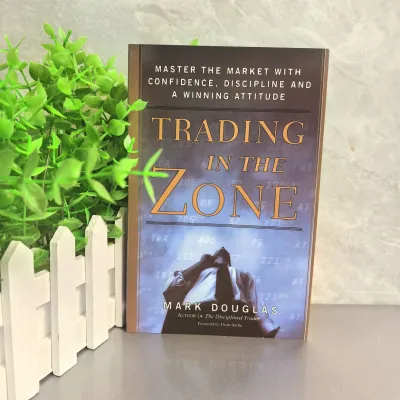
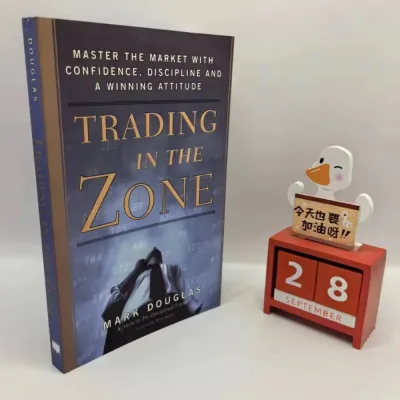
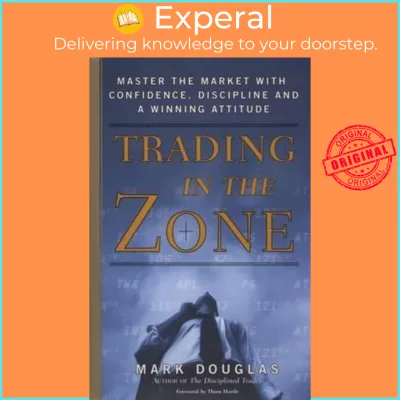
Prices are valid at publication and may change. Please refer to the product page for the latest price.
Fear-based behaviors are among the most common obstacles for developing traders. This often looks like the fear of missing out (FOMO), which drives you to chase a market that has already moved significantly past your entry point. Alternatively, it can manifest as a fear of losing, causing you to hesitate and miss a perfectly valid setup, only to watch the market move in your predicted direction without you.
Discipline issues represent another major category of psychological struggles. You might find yourself engaging in revenge trading, where you immediately enter a new, unplanned position after a loss to try and win back the lost capital. Other common discipline failures include widening or completely removing your stop-loss order because you cannot accept being wrong, or overtrading out of sheer boredom or emotional agitation.
However, you must carefully distinguish between these psychological flaws and a fundamental lack of technical or strategy knowledge. If you do not have a clearly defined trading plan with specific rules for entries, exits, and position sizing, your losses are not necessarily a psychological issue. They are the logical result of trading without a statistical edge, a problem that no amount of mental discipline can fix on its own.
What Trading in the Zone Actually Addresses
If your struggles are indeed psychological, understanding what the book actually teaches will help you decide if its approach aligns with your learning goals. Mark Douglas focuses almost exclusively on reshaping how a trader perceives risk, uncertainty, and the nature of the market.

The core thesis of the book revolves around shifting from a deterministic mindset to a probabilistic one. Most people grow up in environments where hard work and planning lead to predictable outcomes, but the market operates on pure probability. Douglas explains how to accept the inherent randomness of any single trade while maintaining confidence in the long-term statistical edge of your overall strategy.
A major portion of the book is dedicated to helping you overcome the emotional pain associated with taking a predefined loss. By reframing a loss as simply a cost of doing business—much like an inventory expense for a retail store—the book aims to eliminate the hesitation and anxiety that often paralyze traders. This shift allows you to execute your plan objectively, without viewing each trade as a reflection of your personal intelligence or self-worth.
Ultimately, the book provides a framework for building the mental discipline required to execute your trading edge consistently. It teaches you how to operate in a state of mind free from fear or overconfidence, allowing you to flow with the market rather than fighting it.
It is equally important to understand what the book does not cover. You will not find any specific chart patterns, technical indicators, candlestick formations, or mathematical risk-reward formulas within its pages. It is entirely a conceptual and psychological guide, meaning you must look elsewhere if you are seeking a step-by-step technical system.
Self-Check: Is This Book Right for Your Current Trading Stage?
Your readiness for this material depends heavily on where you currently stand on your trading journey. Reading it at the wrong stage can lead to frustration, while reading it at the right moment can be a major turning point.
For absolute beginners, the book’s concepts can often feel overly abstract. If you are still learning basic market mechanics, such as how order books work, what leverage implies, or how to construct a basic trading plan, the psychological discussions in this book may lack practical context. It is generally more effective to build a foundational understanding of market structure and develop a basic strategy before focusing deeply on advanced psychology.
Intermediate traders are the ideal audience for this material. If you have spent months or years backtesting a strategy, understand risk management principles, and know how to read charts, yet still find yourself losing money due to emotional execution errors, this book is specifically written for you. It bridges the gap between knowing what to do and actually doing it consistently.
Advanced traders who are looking for quantitative models, algorithmic programming, or complex macroeconomic analysis will find the book too elementary on those fronts. While the psychological reminders remain valuable for traders of all levels, those seeking highly technical or mathematical optimization strategies will need to look to other specialized literature.
Buying and Reading Considerations
If you decide that this book is the right fit for your current needs, taking a few practical steps before purchasing will ensure you get the most value from your investment.
First, consider which format best suits your learning style. Because the book deals with deep psychological concepts, many readers find a physical paperback or a digital e-book preferable, as these formats make it easier to highlight key passages, write notes in the margins, and easily flip back to reference previous chapters. If you prefer to consume content on the go, an audiobook can be a highly convenient alternative, though you may want to keep a digital notepad handy to jot down key realizations.
Before checking out on any online marketplace or ecommerce platform, verify the specific edition, language, and publisher of the book. Ensure you are purchasing an authorized, complete edition rather than an abridged summary or an unauthorized translation. Checking these details helps guarantee you receive the full, unaltered text as intended by the author.
Finally, if you realize that your primary struggle is actually technical rather than psychological, consider exploring alternative resources first. Investing in books focused on risk management, price action, or market structure, or dedicating time to maintaining a detailed trading journal, may provide the practical foundation you need before you are ready to tackle the advanced psychological concepts of this book.
Frequently Asked Questions (FAQ)
Do I need prior trading experience to understand Trading in the Zone?
Yes, having at least some basic trading experience is highly recommended. While the writing is accessible, the core concepts are designed to solve the specific emotional pain points that only arise once you have risked real capital in the markets. Without a basic understanding of market mechanics and a defined trading strategy, the psychological frameworks may feel too theoretical to apply effectively.
Will this book give me a specific trading strategy to use?
No, this book does not provide any specific trading strategies, technical setups, or indicator configurations. Its sole focus is on the mental approach, probability thinking, and emotional discipline required to execute whatever strategy you already use. You will need to develop or acquire your own technical trading edge separately.
Community discussion
Share your experience or ask a question. Comments are reviewed before publication.