
For business professionals navigating a highly competitive market, Unreasonable Hospitality by Will Guidara is a highly worthwhile read if your goal is to transition from standard transactional service to deep, relationship-driven customer loyalty. The book offers a compelling argument that the next frontier of business differentiation lies not in product features or pricing, but in how humanely and memorably you treat your clients. However, if you are looking for a highly structured, step-by-step technical manual on operational cost-cutting or automated logistics, this book may not align with your immediate tactical needs.
By focusing on the emotional impact of business transactions, the text challenges traditional corporate mindsets that prioritize efficiency above all else. It encourages leaders to rethink how they engage with customers, suggesting that the most sustainable competitive advantage is how a business makes its clients feel. For professionals operating in mature service economies, this perspective provides a fresh framework for brand building and customer retention.
Understanding the Core Philosophy of Unreasonable Hospitality
At the heart of the book is a clear distinction between standard good service and “unreasonable” personalized hospitality. Service is defined as the practical delivery of a product or experience—such as serving food hot, delivering a package on time, or completing a financial transaction accurately. Hospitality, by contrast, is the emotional connection established during that delivery, focusing entirely on how the recipient feels during the interaction.
Products mentioned in this guide


![[Qiafa]Unreasonable Hospitality: The Remarkable Power of Giving People More Than They Expect[Paperback]](https://img.lazcdn.com/g/p/6833005ac064f7d470d4084f824abb94.jpg_400x400q80.jpg_.webp)


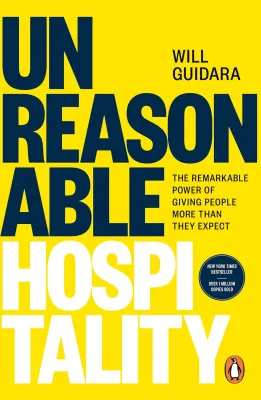
Prices are valid at publication and may change. Please refer to the product page for the latest price.
To be “unreasonable” in this context means intentionally choosing to over-deliver in ways that seem financially or operationally illogical on paper, but yield massive dividends in brand equity. The core principles center on empowering frontline staff, anticipating unspoken needs, and fostering a culture where team members have the autonomy to make spontaneous, delightful decisions for customers. This approach shifts the employee’s role from a executor of rigid tasks to an active creator of positive experiences.
It is equally important to understand what the book does not cover. This is a mindset and culture guide rather than a step-by-step technical manual for operational cost-cutting or lean management. Readers looking for spreadsheets, logistics optimization formulas, or strict cost-reduction strategies will not find them here. Instead, the book serves as a philosophical blueprint for organizations willing to invest resources into human-centric service design.
Is This Book the Right Fit for Your Business Role?
Evaluating whether this book is worth your time depends heavily on your specific position, industry, and organizational goals. Founders, customer experience leaders, and hospitality managers looking to elevate brand loyalty will find the concepts highly actionable. It is particularly valuable for businesses where customer acquisition costs are high and retention is the primary driver of long-term profitability.

Conversely, the book’s teachings are less ideal for highly automated, low-margin transactional businesses where extreme personalization is structurally unfeasible. If your business model relies entirely on self-service portals, automated vending, or high-volume, low-touch logistics where human interaction is intentionally minimized to keep costs low, implementing these principles may create operational friction without a clear path to return on investment.
To help determine if the book addresses your current organizational challenges, consider how your primary business pain points align with the solutions proposed in the text:
| Business Pain Point | Traditional Approach | Unreasonable Hospitality Solution |
|---|---|---|
| High customer churn | Offering discounts and generic loyalty points | Creating unforgettable, personalized recovery experiences |
| Brand commoditization | Engaging in price wars with competitors | Building emotional connections that transcend pricing |
| Low staff engagement | Enforcing rigid SOPs and strict monitoring | Empowering frontline teams with creative autonomy |
Adapting the Principles to Singapore's Competitive Service Landscape
Applying these concepts within a highly developed market like Singapore requires a careful, localized approach. The local business environment is characterized by high operating costs, a tight labor market, and a highly discerning consumer base with global standards. In such an environment, simply telling staff to work harder or spend more time with clients can lead to operational bottlenecks and employee burnout.
To scale extreme personalization successfully, businesses must optimize their existing touchpoints rather than adding administrative complexity. One major friction point to navigate is the balance between deep personalization and local data privacy regulations. Collecting personal preferences to customize experiences must be done transparently and securely, ensuring that customer data is handled with absolute respect and compliance.
Before committing to a full-scale organizational rollout, business leaders should establish clear conditions for testing these concepts on a small scale. Start by allocating a modest discretionary budget—such as a small fund of S$50 per client interaction—to a single department or a specific segment of high-value clients. This allows you to observe how personalized gestures impact customer retention and word-of-mouth referrals before adjusting your broader operational strategy.
Choosing the Best Format and Edition for Your Needs
Selecting the right format for Unreasonable Hospitality depends on your personal learning style and how you plan to share the insights within your organization. Physical copies are highly recommended for corporate offices and leadership teams. A physical book allows for easy annotation, highlighting, and sharing among colleagues, making it an excellent tool for collaborative workshops and team discussions.
For busy professionals who utilize their daily transit times on the MRT or bus, e-books and audiobooks offer excellent convenience. The audiobook format, often narrated with the author’s personal passion, can make the narrative elements of the book highly engaging during a commute. This format is ideal for absorbing the philosophical concepts before translating them into written strategies at your desk.
Before finalizing your purchase from an online marketplace or local bookshop, verify the publisher, language edition, and regional compatibility of the digital file. Ensure that the edition you select is complete and includes any supplementary materials, such as discussion guides or author notes, which can be highly beneficial when introducing these hospitality concepts to your broader team.
Frequently Asked Questions (FAQ)
How long does it take to read 'Unreasonable Hospitality'?
With an average length of approximately 300 pages, most business professionals can complete the book in five to six hours of focused reading. For those with highly demanding schedules, a practical strategy is to focus on the core case-study chapters in the middle of the book first. These chapters illustrate the real-world application of the hospitality mindset, allowing you to gather actionable insights quickly before reading the broader narrative.
Can the concepts be applied to B2B companies, or is it only for B2C?
Yes, the principles of unreasonable hospitality translate exceptionally well to B2B environments, particularly in client relations, account management, and vendor partnerships. In B2B transactions, decisions are still made by individuals who appreciate recognition, clear communication, and thoughtful gestures. B2B leaders should evaluate the lifetime value of their key accounts; if retaining a single major client justifies a higher upfront investment in relationship-building, then applying these concepts is highly viable.
Community discussion
Share your experience or ask a question. Comments are reviewed before publication.