
Spencer Johnson’s classic has been a staple on corporate and personal development bookshelves for decades. It serves as a foundational change-management parable, maintaining long-term popularity because of its sheer simplicity. However, whether it justifies a purchase today depends entirely on what you hope to get out of it.
If you are looking for a quick, accessible mindset shift to help you stop overthinking and start moving, this book offers immediate value. On the other hand, if you are dealing with complex, systemic workplace challenges or deep psychological hurdles, you might find the narrative overly simplistic. It remains an excellent, rapid read for building foundational resilience, but it lacks the nuance required to navigate modern, highly volatile professional landscapes.
The Core Framework: What You Will Actually Learn
To decide if this book aligns with your learning style, it helps to understand its central metaphor. The story takes place in a “Maze,” which represents the environment in which you spend your time—be it your workplace, your community, or your family life. Within this maze, the characters search for “Cheese,” a symbol for whatever you desire in life, whether that is a stable career, financial security, good health, or spiritual peace.
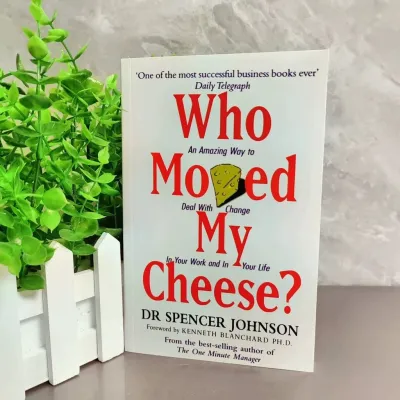
Products mentioned in this guide
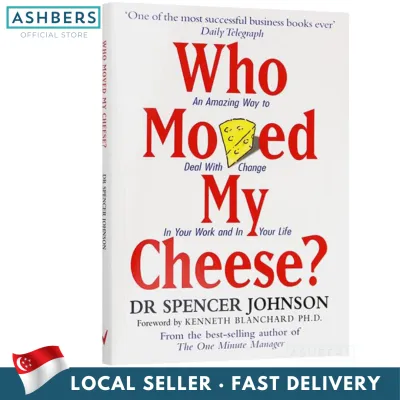
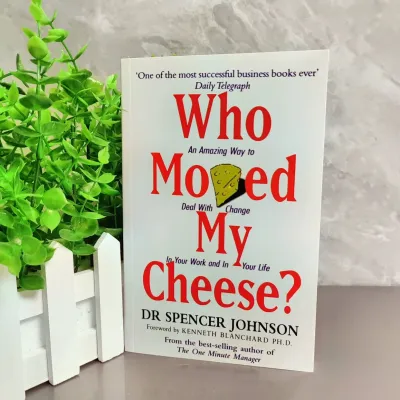
![{ Ready Stock ] Who Moved My Cheese](https://img.lazcdn.com/g/p/a9003a4272a43cd5ea0ba338b6a4786c.jpg_400x400q80.jpg_.webp)
![[eBooks] 4 in 1 Who Moved My Cheese | The Present | I Moved Your Cheese | Out of The Maze](https://img.lazcdn.com/g/p/8ef64d9dc1b613b61ed65985660148d0.jpg_400x400q80.jpg_.webp)
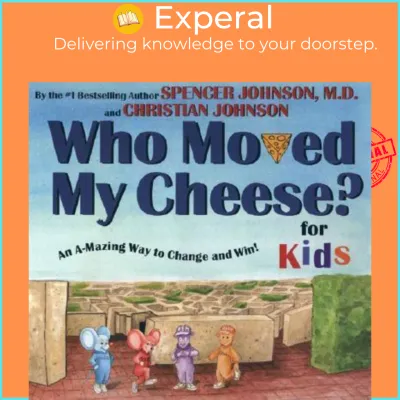
Prices are valid at publication and may change. Please refer to the product page for the latest price.
The narrative follows four characters who represent different facets of human nature when confronted with sudden change. Sniff is an efficient character who sniffs out change early, anticipating shifts before they fully manifest. Scurry represents immediate action, quickly scurrying into motion without overanalyzing the situation.
In contrast, Hem and Haw represent more complex human reactions. Hem resists change out of fear, denying reality and demanding that the old environment return. Haw initially resists but eventually learns to laugh at his own fears, adapting to the new circumstances and documenting his lessons along the way.
Rather than presenting a dense academic treatise or a clinical textbook filled with data, the book delivers these concepts through a short, narrative-driven fable. This format makes the core lessons highly digestible, allowing you to finish the entire story in a single sitting and immediately reflect on which character matches your current behavior.
Where the Advice Still Holds Up Today
Despite being published decades ago, the core principles of the book remain highly applicable to several modern personal and professional scenarios. One of the most common areas where the advice shines is in navigating unexpected career transitions. In an era of rapid technological advancement, industry shifts, and sudden role redefinitions, the book reminds us that holding onto outdated skills or obsolete roles is a recipe for stagnation.

The narrative is also incredibly effective at helping individuals overcome personal paralysis. When familiar routines are disrupted—whether due to a sudden reorganization at work or a shift in personal relationships—it is easy to fall into a state of anxiety. The book encourages readers to confront the fear of the unknown, suggesting that the anticipation of change is often far worse than the reality of exploring new paths.
Furthermore, the story serves as an excellent mirror for self-awareness. By identifying which of the four characters you default to during a crisis, you can begin to recognize your own behavioral loops. If you realize you are acting like Hem—denying that your industry is changing or hoping a defunct project will suddenly be revived—you can consciously choose to adopt Haw’s mindset and start looking for new opportunities.
The Limitations: What the Book Misses in the Modern Context
While the simplicity of the parable is its greatest strength, it is also the source of its most significant limitations. The book operates on the fundamental assumption that new opportunities—the “new cheese”—are always readily available in the maze if you simply have the courage to look for them. In reality, modern professionals often face structural economic barriers, systemic inequalities, and market contractions where simply “looking harder” is not enough to secure a viable path forward.
Additionally, the book completely overlooks the psychological toll of constant adaptation. It lacks any focus on mental health, burnout, or the legitimate need for psychological rest during prolonged periods of uncertainty. In a fast-paced world, telling someone to constantly run through the maze without addressing exhaustion can promote toxic productivity and ignore the necessity of recovery.
Finally, the framework focuses almost entirely on individual adaptation, offering virtually no strategies for collaborative or organizational change. It assumes that the maze is a neutral environment and that the cheese is moved by an external, unquestioned force. In a modern corporate setting, change is often collaborative, requiring open communication, empathy, and collective problem-solving rather than isolated individuals scurrying in different directions.
Buying Decision: Who Should Read It and Who Should Skip
To help you finalize your purchase decision, consider where you currently stand in your personal or professional journey.
- Buy it if: You are looking for a quick, highly motivating mindset reset to break out of a rut. It is ideal if you are facing a major personal transition, such as starting a new degree, moving to a new city, or entering a new industry, and prefer learning through simple, memorable storytelling rather than complex frameworks.
- Skip it if: You are seeking actionable, step-by-step strategic planning tools, deep psychological analysis, or solutions to systemic workplace toxicity. If your primary challenge requires structural restructuring, team leadership strategies, or managing severe burnout, this book will likely feel too superficial.
Before making a purchase, it is highly recommended to check the available formats to see which suits your lifestyle. The book is widely available as an audiobook, physical hardcover, and e-book. Be sure to compare prices in S$ across reputable online bookstores and verify the specific edition, language, medium or file format, regional restrictions, and device compatibility of digital files before finalizing your order. Never infer edition contents solely from a title or cover.
Finding Modern Alternatives for Complex Change
If you decide that the simplified model in this classic is not sufficient for your current challenges, you can explore several alternative categories of resources. For those who want actionable, step-by-step frameworks for behavioral change, books focusing on behavioral science and habit-building are excellent choices. These resources provide practical strategies for restructuring your daily routines based on scientific research rather than parables.
If your challenges are centered around team dynamics, leadership, or corporate restructuring, look toward organizational psychology resources. These books address the complexities of leading teams through transition, fostering psychological safety, and managing collective resistance to change.
When searching for these alternatives on book platforms, always check the publication dates and read recent reader reviews. This ensures that the strategies offered are updated to address current technological realities, remote work environments, and modern economic landscapes.
Frequently Asked Questions (FAQ)
How long does it take to read 'Who Moved My Cheese?'?
Because of its concise format and simple language, the book is exceptionally short. Most readers can easily finish the entire text in one to two hours. The audiobook version is similarly brief, typically running for under an hour and a half, making it an excellent choice for a single daily commute or a short listening session during a workout.
Is the book suitable for teenagers or young adults?
Yes, the simple language and engaging fable format make it highly accessible for younger audiences. It serves as a gentle, non-intimidating introduction to the concept of change. Parents and educators often use it as a tool to discuss major life transitions, such as moving from high school to college, handling academic setbacks, or managing the anxieties of entering the workforce for the first time.
Community discussion
Share your experience or ask a question. Comments are reviewed before publication.