
Deciding whether the Young Scientist Level 4 assessment book is the right choice for your Primary 4 child requires a careful look at their current academic standing, their familiarity with the primary school science syllabus, and their specific learning needs. This book is a widely recognized supplementary resource in Singapore, designed to bridge the gap between basic conceptual understanding and the analytical skills required for school examinations. However, its effectiveness depends entirely on how well its structure, difficulty level, and question formats align with your child’s learning pace. By evaluating these key factors, you can determine if this book will serve as an encouraging learning tool or if a different style of revision resource would better support their academic journey.
To make an informed decision, parents must look beyond the cover and assess how the book handles the transition from the foundational science taught in Primary 3 to the more complex, application-based curriculum of Primary 4. This guide breaks down the structural layout, question difficulty, and syllabus alignment of the book to help you decide if it fits your child’s study plan.
What to Expect from the Young Scientist Level 4 Format
Understanding the structural layout of Young Scientist Level 4 is essential for setting realistic study goals and integrating the book into your child’s weekly revision routine. The book is typically organized around the core themes of the primary school science syllabus, which for Primary 4 students generally includes Cycles, Systems, and Energy. Rather than presenting a random assortment of practice papers, the book groups worksheets topically, allowing students to focus on one specific area—such as the life cycles of plants and animals, the properties of matter, or the characteristics of light and heat—before moving on to more complex subjects.
Products mentioned in this guide
![[STARTER PACK 5 ISSUES] Young Scientists Level 4 perfect holiday gift](https://img.lazcdn.com/g/p/2ea2b5f2689724ab4b173242280299fa.jpg_400x400q80.jpg_.webp)
![[SG STOCK] 2024 Young Scientists Level 4 Collection Set](https://img.lazcdn.com/g/p/43809960aedc64c75e6ddf8c202d782e.png_400x400q80.png_.webp)
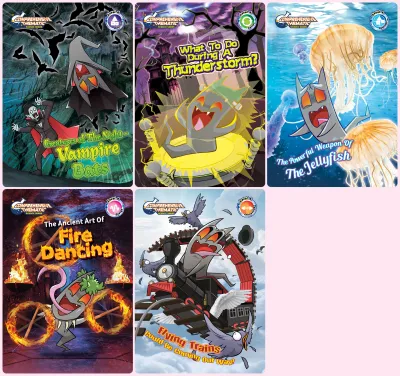
Prices are valid at publication and may change. Please refer to the product page for the latest price.
When opening the book, you will want to observe the balance between content summary and active practice. A well-structured assessment book should offer concise, easy-to-read revision notes at the beginning of each chapter. These summaries serve as a quick refresher of key scientific concepts, definitions, and classification charts. For a Primary 4 student, these notes should not be overly dense; instead, they should highlight essential vocabulary and core concepts using clear diagrams and bullet points. If your child struggles to recall facts from their school textbook, these introductory pages can serve as a helpful reference point before they attempt the exercises.
Beyond basic theory, the format of Young Scientist Level 4 emphasizes the development of science process skills. The primary science curriculum requires students to do more than memorize facts; they must be able to observe, compare, classify, infer, and predict. Look for worksheets that feature experimental setups, line graphs, and classification tables. These visual aids are designed to mimic real-world scientific investigations, prompting students to analyze data and draw logical conclusions. Understanding how the book structures these observation tasks will help you determine if it provides enough practice for the practical, inquiry-based side of the subject.
Assessing Question Difficulty and Exam Alignment
As students progress through Primary 4, school assessments become significantly more demanding, shifting away from simple recall questions toward higher-order thinking tasks. Evaluating the difficulty level of the questions in Young Scientist Level 4 is crucial to ensure it prepares your child adequately for their weighted assessments and end-of-year examinations. The book’s questions should be analyzed in two distinct categories: Multiple-Choice Questions (MCQs) and Open-Ended Questions (OEQs).

For the MCQ section, pay close attention to the quality of the options provided. Effective assessment books use plausible distractors—incorrect options that reflect common student misconceptions. For example, in a question about the properties of matter, a distractor might confuse mass with volume, or heat with temperature. If the distractors are too obvious, your child may score well through simple elimination without truly understanding the concept. High-quality MCQs force students to read carefully, analyze the given scientific scenario, and apply precise conceptual knowledge to identify the correct answer.
Open-Ended Questions present a different challenge, as they require students to construct coherent answers using specific scientific keywords and structured answering techniques. In Primary 4, students are expected to use precise vocabulary, such as “good conductor of heat,” “rate of evaporation,” or “flexible,” rather than vague, everyday language. When reviewing the OEQs in Young Scientist Level 4, check if the questions prompt students to explain their reasoning using structured frameworks, such as identifying the cause and effect or linking an observation to a scientific principle. The questions should challenge students to apply their knowledge to novel, real-world scenarios rather than simply asking them to state facts.
Finally, assess whether the book includes application-based questions that test higher-order thinking. These questions often present an unfamiliar experiment or a unique household gadget and ask the student to explain how it works based on scientific concepts they have learned. If the book consists primarily of straightforward, recall-style questions, it may not provide sufficient preparation for the rigorous exam papers set by schools. A healthy balance of moderate and challenging application questions is ideal for building exam confidence.
Deciding if It Fits Your Child's Current Science Foundation
Every child learns at a different pace, and an assessment book that is highly beneficial for one student might cause frustration for another. To determine if Young Scientist Level 4 is the right fit, you must assess your child’s current science foundation and identify whether they need basic reinforcement or an advanced academic challenge.
If your child frequently struggles to remember basic scientific facts, gets confused by core vocabulary, or consistently scores below average on school worksheets, their primary need is foundational reinforcement. In this scenario, introducing a highly challenging assessment book with complex application questions can be counterproductive, leading to anxiety and a loss of interest in the subject. For these students, a topical guidebook with step-by-step explanations and simpler, direct questions is often a better starting point. Once they have mastered the basic concepts, they can transition to a book like Young Scientist Level 4 to build their analytical skills.
Conversely, if your child has a strong grasp of the syllabus, enjoys scientific inquiry, and easily handles basic school homework, they are ready for a book that offers a productive struggle. Young Scientist Level 4 can serve as an excellent tool to stretch their thinking, exposing them to complex experimental setups and multi-step open-ended questions. This level of challenge is essential for students aiming to refine their answering techniques and secure higher grades in their school assessments.
Another factor to consider is whether your child will be using the book for independent self-study or if they will require constant parental or tutor intervention. Open the book to a random chapter and have your child read a short passage or attempt a couple of questions. Observe their reaction. If they can navigate the layout and understand what the questions are asking—even if they do not get every answer correct—the book is likely at an appropriate level for independent or semi-independent study. However, if they cannot make sense of the questions without you explaining every sentence, the book may be too advanced for their current reading comprehension and scientific literacy levels.
Final Checks Before Purchasing the Correct Edition
Before you head to a local bookstore or place an order on an online marketplace, there are several practical checks you should perform to ensure you are purchasing the correct and most useful edition of the book.
First, verify the publication year and syllabus alignment. The Ministry of Education (MOE) updates the primary science syllabus periodically to refine learning outcomes and ensure the curriculum remains relevant. Purchasing an older, outdated edition of an assessment book can lead to confusion, as it may contain topics that have been removed from the current syllabus or omit new concepts that your child is expected to learn. Check the copyright page or the publisher’s notes to confirm that the book is aligned with the latest syllabus guidelines currently in use in schools.
Second, examine the quality and completeness of the answer key. A comprehensive answer key is one of the most valuable components of any assessment book, especially for parents who may not be fully familiar with the specific marking rubrics used in primary schools. For MCQs, a good answer key does more than just list the correct option; it should ideally explain why that option is correct. For OEQs, the answer key must provide detailed marking schemes, highlighting the essential keywords that examiners look for and showing how partial marks are awarded. Avoid books that offer vague, one-word answers for open-ended questions, as they do not help students learn how to structure their explanations properly.
Lastly, consider the physical format and usability of the book. If you are purchasing a physical copy, check the binding quality to ensure the pages lie flat when open, making it easier for your child to write their answers. If you are considering a digital or e-book format, verify its compatibility with your child’s tablet or computer, and check if the interactive features allow for easy annotation and drawing. Taking a few moments to perform these final checks will help ensure that your purchase is a practical, highly effective addition to your child’s study desk.
Frequently Asked Questions (FAQ)
Can Primary 3 students use Young Scientist Level 4 for advanced preparation?
While some parents may consider introducing Young Scientist Level 4 to a Primary 3 student for early preparation, this approach carries certain academic risks. The Primary 4 science curriculum introduces more abstract concepts and requires a higher level of cognitive readiness and reading comprehension than the Primary 3 syllabus. Attempting Level 4 material too early can lead to significant knowledge gaps, as the child may not have mastered the foundational concepts required to understand the advanced topics. Furthermore, facing highly complex questions prematurely can cause academic frustration and diminish a child’s interest in science. Early exposure is only appropriate if a student has already demonstrated complete mastery of the Primary 3 syllabus and possesses the analytical maturity to handle advanced experimental scenarios under close guidance.
Does the answer key provide explanations for wrong options in MCQs?
The level of detail in the answer key can vary depending on the specific edition and publisher of the book. Some editions of Young Scientist Level 4 include detailed explanations that analyze why the correct option is right and why the distractors are incorrect, which is highly beneficial for independent learning. However, other editions may only provide the correct answer key without further elaboration. Before purchasing, it is highly recommended to flip to the back of the book and review the answer section. If the book only provides the correct option numbers, parents will need to play a more active role during grading, helping their child analyze the incorrect options to identify the underlying misconceptions and prevent similar mistakes in future school exams.
Community discussion
Share your experience or ask a question. Comments are reviewed before publication.