
Choosing your first guitar amplifier is a pivotal step in your musical journey, directly influencing how often you practice and how much you enjoy the process. The JOYO Jam Buddy 2 and the Fender Mustang Micro represent two fundamentally different approaches to compact, beginner-friendly amplification. While one is designed as a floor-based, multi-functional pedalboard style amp with built-in speakers, the other is an ultra-portable, plug-on-collar headphone amplifier designed for high portability and silent practice. Deciding between them requires evaluating your typical practice environment, your tolerance for wearing headphones, and whether you want to play out loud or keep your sessions entirely private.
Core Differences in Design and Form Factor
The physical layout of your practice gear dictates where, when, and how often you will pick up your guitar. The JOYO Jam Buddy 2 is built as a standalone unit, resembling a small floor pedal or desktop companion. It features integrated speakers, allowing you to play without any extra accessories or cables cluttering your space. This design is highly suited for casual bedroom practice where you want the physical sensation of sound moving through the room, making it feel more like a traditional playing experience.
In contrast, the Fender Mustang Micro is a dedicated headphone amplifier that plugs directly into your guitar’s output jack. It has no built-in speakers, meaning it is completely silent to the outside world unless connected to headphones or an external auxiliary speaker. This ultra-compact form factor is incredibly lightweight and fits easily into a pocket or gig bag accessory compartment. For players living in shared spaces, such as high-density apartments where thin walls make traditional amplification difficult, this design offers a seamless way to practice at any hour of the night.
Products mentioned in this guide
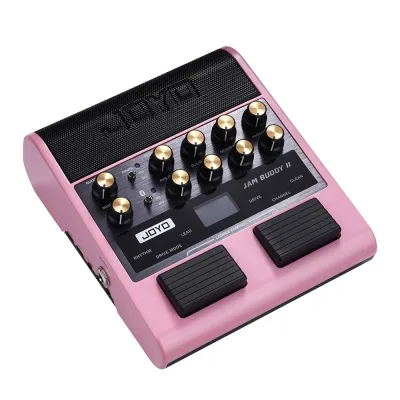
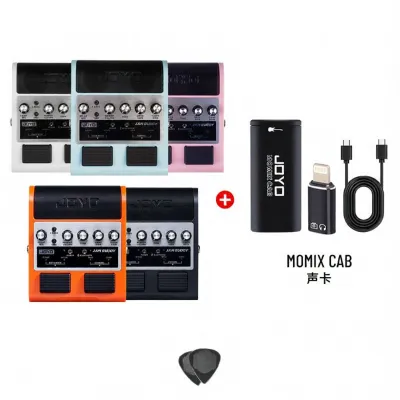
Prices are valid at publication and may change. Please refer to the product page for the latest price.
When comparing these two form factors, you should also consider the physical ergonomics of adjusting your settings. The floor-based or desktop nature of the JOYO unit allows you to look down at physical knobs and switches, which can feel more intuitive for beginners learning how to dial in a tone. The Fender unit, hanging directly off your guitar’s jack, requires you to adjust controls by feel or by looking down at the side of your instrument. Before making a purchase, it is highly recommended to check the exact physical dimensions, weight, and build materials on each manufacturer’s official specification sheets to ensure the device fits your physical setup and comfort preferences.
Sound Shaping and Built-in Effects
A beginner’s amplifier needs to offer enough tonal variety to keep practice sessions engaging without becoming overwhelmingly complex. The JOYO Jam Buddy 2 and Fender Mustang Micro take distinct paths toward tone generation and signal processing. The JOYO unit typically focuses on a straightforward signal path, offering classic channel switching options such as clean and overdrive, alongside fundamental modulation or delay effects. This simplicity allows beginners to focus on playing rather than getting lost in endless menus or digital sub-menus.

The Fender Mustang Micro, on the other hand, leverages digital modeling technology derived from larger amplifier series. It provides a wide array of amp models ranging from vintage clean tones to high-gain modern distortion, paired with a suite of digital effects like reverb, delay, and chorus. This digital approach allows for highly realistic simulations of classic amplifier setups, giving beginners a taste of different historical guitar tones in a single, tiny package.
Adjusting these tones also differs significantly between the two devices. The JOYO unit utilizes physical knobs for gain, tone, and volume, allowing for immediate, tactile feedback as you tweak your sound. The Fender Mustang Micro relies on a series of color-coded LED buttons and side-mounted controls to cycle through presets and adjust parameters. While the physical knobs are often easier for complete beginners to understand initially, the digital preset system offers a wider palette of pre-configured sounds. You should verify the exact number of presets, amp models, and effect types from the official product manuals, as manufacturers occasionally release firmware updates that alter or expand these features.
Connectivity and Daily Practice Features
Modern practice tools are expected to integrate seamlessly with smart devices, learning apps, and backing tracks. Both of these mini amplifiers offer modern connectivity options, but their implementation serves different practice styles. Bluetooth connectivity is a crucial feature for playing along with your favorite songs or instructional videos. You will want to verify the supported Bluetooth versions and audio codecs on the official product pages to ensure stable, low-latency audio streaming from your smartphone or tablet.
The JOYO Jam Buddy 2 utilizes its built-in speakers to play back both your guitar signal and your Bluetooth audio stream simultaneously, turning the unit into a portable playback speaker. This makes it an excellent tool for casual jam sessions or playing along with backing tracks in a room. The Fender Mustang Micro streams Bluetooth audio directly into your headphones alongside your guitar tone, creating an isolated, immersive practice bubble where you can hear every detail of your playing against the backing track without disturbing anyone nearby.
For those interested in recording their progress or using digital audio workstations, USB connectivity is another vital consideration. Many modern mini amps feature USB-C ports that can double as audio interfaces, allowing you to record directly into a computer or mobile device. However, compatibility can vary wildly across operating systems and hardware configurations. It is essential to check device compatibility for iOS, Android, Windows, and macOS directly on each brand’s official support pages before finalizing your purchase to avoid driver or connection issues.
Battery Life and Power Management
Portability is only as good as the power source that sustains it, making battery performance a key factor for mobile musicians. Both devices feature rechargeable internal batteries, freeing you from the constraints of wall outlets and allowing you to practice in parks, on balconies, or during travel. However, the power demands of driving physical speakers versus driving a headphone output are vastly different, which directly impacts how long each device can run on a single charge.
When evaluating these units, you should compare the manufacturer-stated battery life under typical usage conditions rather than relying on generalized marketing claims. A device driving physical speakers at high volumes will naturally deplete its battery much faster than one operating solely through headphones. Additionally, keeping Bluetooth active to stream backing tracks will further accelerate power consumption on both models.
Charging convenience is another practical detail to verify. Most modern portable music gear utilizes standard USB-C charging ports, allowing you to use common phone chargers or external power banks. You should check the official user manuals to see if the devices support pass-through charging—which allows you to play while the unit is plugged into a power source—and to review specific battery care instructions. Proper charging habits, such as avoiding extreme temperatures and not leaving the battery completely depleted for long periods, will help preserve the overall lifespan of the internal cells.
Price Positioning and Beginner Value
For most beginner guitarists, budget is a major deciding factor, and balancing cost against long-term utility is essential. The JOYO Jam Buddy 2 is positioned as a highly accessible, budget-friendly option, offering an all-in-one speaker and pedalboard experience at a lower entry price. The Fender Mustang Micro sits in a more premium tier, reflecting its advanced digital modeling heritage and highly compact engineering. To get an accurate picture of the financial commitment, you should check current S$ retail prices at authorized local music stores in Singapore, as prices can fluctuate based on local promotions and shipping costs.
When assessing long-term value, consider whether you are likely to outgrow the device as your playing skills advance. A budget-friendly option with physical speakers is excellent for immediate, casual play, but you may eventually find yourself wanting more sophisticated digital tones or recording capabilities. Conversely, investing in a premium headphone amp provides high-quality tones that remain useful even as you progress to larger amplifiers, serving as a permanent silent practice tool for years to come.
You must also factor in the cost of necessary accessories that may not be included in the box. Because the Fender Mustang Micro is strictly a headphone amplifier, its performance is heavily dependent on the quality of the headphones you connect to it. To get the best experience, you may need to budget for a high-quality pair of studio monitor headphones. For the JOYO unit, you might want to consider a protective carrying case if you plan to transport it frequently, as its larger physical footprint makes it more vulnerable to bumps and scratches during travel.
Decision Framework: Which One Should You Buy?
To make the final choice, you must align the unique strengths of each amplifier with your personal practice habits, living situation, and budget. Both devices excel in their respective categories, but they cater to different types of beginner guitarists.
Choose the JOYO Jam Buddy 2 if:
- You prefer practicing without headphones and want the convenience of built-in speakers.
- You want a budget-friendly, all-in-one desktop or floor unit with simple, tactile physical controls.
- You enjoy using your amplifier as a portable Bluetooth speaker to play backing tracks out loud.
Choose the Fender Mustang Micro if:
- You prioritize high-quality digital amp modeling and a wide variety of realistic tones.
- You require a completely silent practice solution to avoid disturbing family members or neighbors.
- You want an ultra-portable, pocket-sized device that plugs directly into your guitar for seamless, cable-free movement.
Before making your final decision, verify first if you have specific USB recording needs, require dedicated app integration, or need to confirm hardware compatibility with your existing headphones and smart devices. Visiting a local music retailer to test how each unit feels in hand and how it interacts with your specific guitar can provide clearer guidance before you invest.

Community discussion
Share your experience or ask a question. Comments are reviewed before publication.