
Selecting your first ukulele involves matching your musical goals, budget, and maintenance willingness to the right instrument build. Kala’s extensive catalog can be overwhelming, but it simplifies down to three main paths for beginners. The standard Mahogany series (typically laminate) offers a classic, warm, and highly durable starting point that requires very little maintenance. The Bamboo series provides a bright, modern, and highly sustainable alternative with excellent projection and natural resilience. For beginners who are certain of their long-term commitment and have a more flexible budget, solid-top or premium exotic wood tiers offer upgraded resonance and a richer tone that matures over time. Ultimately, the right series is conditional on your personal priorities, aesthetic taste, and how much care you are willing to put into preserving the instrument.
Understanding Kala's Concert Ukulele Tiers for Beginners
To make an informed decision, it helps to understand why the concert size is so highly recommended for beginners. A concert ukulele sits comfortably between the smaller soprano and the larger tenor. It typically features a scale length of about 15 inches (38 cm) and an overall length of 23 inches (58 cm). This physical profile offers a perfect compromise for new players. The fretboard is slightly wider and the frets are spaced further apart than on a soprano, providing more physical space for adult fingers to press down complex chord shapes without accidentally muting adjacent strings. At the same time, the larger body cavity naturally amplifies the sound, producing a fuller, warmer, and more resonant tone while still retaining the classic, plucky character of the ukulele.
Kala organizes its concert ukuleles into several distinct tiers to accommodate different budgets and skill levels. The entry-to-mid-level landscape is dominated by the standard Mahogany line, which is widely regarded as the industry benchmark for student instruments. Alongside this traditional option, Kala offers innovative alternative material lines, such as the all-bamboo series, and stepped-up solid-top variants. These solid-top models feature a solid piece of wood for the soundboard, paired with laminate back and sides, bridging the gap between entry-level utility and professional-grade performance.
Products mentioned in this guide


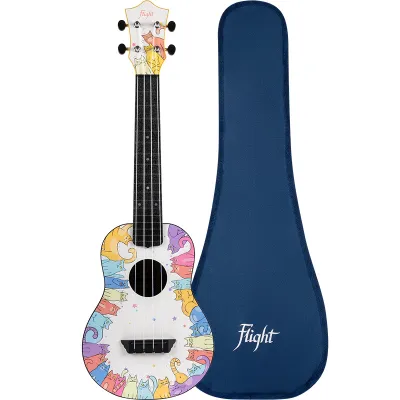
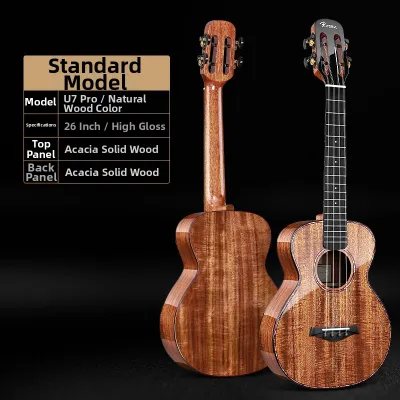
Prices are valid at publication and may change. Please refer to the product page for the latest price.
When shopping, it is easy to get confused by the wide array of alphanumeric model numbers and seasonal bundles found online. These specific codes can vary significantly depending on your region, local distributor packages, or minor cosmetic updates. Instead of trying to memorize specific model numbers, focus your evaluation on the core material, the construction type (laminate versus solid top), and the quality of the hardware. Understanding these structural tiers will give you the confidence to evaluate any Kala model you encounter in a local shop or online catalog.
Comparing Kala Concert Ukuleles: Tonewoods, Build, and Hardware
To choose the right instrument, you must look past the visual finish and understand the physical components that dictate how a ukulele sounds and plays. The performance, durability, and daily playability of a ukulele are determined by three primary factors: the choice of tonewood, the construction method, and the quality of the installed hardware.

Each of these dimensions directly impacts your learning experience. A wood that produces a sound you dislike can discourage you from practicing, while poor-quality hardware that constantly slips out of tune will lead to immediate frustration. By analyzing these elements, you can identify which tier aligns with your expectations, musical preferences, and local environment.
Tonewoods and Sound Profiles
Mahogany is the traditional standard for ukulele construction, celebrated for its warm, balanced, and woody acoustic profile. In its laminate form, mahogany provides a highly consistent and reliable sound that performs exceptionally well across all basic strumming patterns. It emphasizes the mid-range frequencies, giving you that classic, sweet ukulele tone. When you step up to a solid mahogany top, the sound becomes noticeably more resonant and complex. Solid wood vibrates much more freely than laminate, allowing the instrument to produce a wider dynamic range, deeper bass response, and a tone that actually matures and improves as the wood ages and is played over the years.
Bamboo represents a modern, highly sustainable departure from traditional tonewoods. Acoustically, bamboo is exceptionally bright, punchy, and clear. It has a very quick response, meaning the sound projects immediately when you pluck a string. Because bamboo is naturally dense, these instruments tend to be surprisingly loud and carry excellent projection, making them ideal for playing outdoors or in group settings. Visually, they offer a clean, pale, minimalist aesthetic with unique grain lines that stand out from traditional dark woods.
For beginners willing to invest slightly more, solid spruce or solid cedar tops offer distinct tonal directions. Solid spruce is incredibly bright, clear, and dynamic. It provides excellent headroom, meaning you can strum forcefully without the sound distorting or becoming muddy, making it highly favored for modern pop songs and crisp fingerpicking. Solid cedar, on the other hand, is much softer and warmer. It responds beautifully to a light touch, producing a dark, sweet, and intimate tone that is perfect for classical arrangements or gentle vocal accompaniment.
Matching the wood profile to your preferred music genre is a great way to narrow down your choices. If you want to play traditional Hawaiian tunes or classic campfire sing-alongs, mahogany is the natural fit. If you prefer modern, upbeat pop covers or want maximum volume, bamboo or spruce will deliver the necessary brightness and projection. If you lean toward expressive, quiet fingerstyle playing, cedar is an excellent alternative.
Build Quality, Aesthetics, and Hardware
The debate between laminate and solid-top construction is central to your purchase. Laminate instruments are constructed from multiple thin layers of wood glued together, often with a decorative veneer on the outside. This cross-grained structure makes laminate incredibly strong and highly resistant to changes in temperature and humidity. It will not easily crack or warp, making it the ultimate low-maintenance choice. Solid-top instruments feature a single, continuous piece of wood for the soundboard. This allows for superior acoustic vibration and a much richer sound, but the wood remains sensitive to environmental fluctuations and requires more careful handling.
Kala’s entry-level models typically feature a simple, understated satin finish that feels smooth to the touch and allows the wood to vibrate naturally. As you move up the price tiers, you will encounter exotic wood laminates (such as exotic mahogany, flame maple, or koa) which offer striking, highly figured grain patterns. Premium models may also feature elegant edge bindings, custom purfling, and laser-etched rosettes around the soundhole. While these visual upgrades do not directly improve the sound, they can significantly enhance your pride of ownership and desire to pick up the instrument.
The hardware on your ukulele dictates its tuning stability and overall sustain. Beginners should pay close attention to the tuning pegs. Older or very cheap ukuleles sometimes use friction tuners, but almost all modern Kala concert models utilize geared tuners. Geared tuners use a gear mechanism (often a 14:1 ratio) that allows for precise, smooth adjustments and prevents the strings from slipping out of tune. Additionally, check the material of the nut and saddle. Entry-level models may use basic plastic, while mid-to-high-tier models feature synthetic bone materials like Graph Tech NuBone. NuBone is engineered to transfer string vibrations to the body more efficiently, resulting in better sustain and a clearer tone. Always verify these hardware details on the product listing before purchasing.
The Beginner's Decision Matrix: Which Kala Concert Series to Pick
To simplify your choice, let us look at how these options align with different beginner profiles and scenarios.
Choose Standard Mahogany (Laminate) if:
- You want a classic, warm, and highly forgiving ukulele sound.
- You are on a strict budget and want the most cost-effective entry point.
- You need maximum durability for travel, outdoor playing, or casual storage.
- You want a low-maintenance instrument that requires no environmental monitoring.
Choose Bamboo if:
- You prefer a bright, loud, and highly projecting acoustic voice.
- You prioritize environmental sustainability and eco-friendly materials.
- You want a unique, modern, and minimalist visual aesthetic.
- You want an instrument that naturally resists humidity changes while offering excellent clarity.
Choose Solid-Top / Premium Tiers if:
- You are committed to learning long-term and want an instrument you won't quickly outgrow.
- You prioritize tonal depth, resonance, and dynamic expression.
- You have a flexible budget and want to invest in your first "forever" beginner instrument.
- You are willing to perform basic humidity maintenance to protect solid wood.
Neither may fit if:
- You have exceptionally small hands or are buying for a young child; in these cases, a smaller soprano ukulele is often a more comfortable starting point.
- Your immediate goal is to perform live on stage, plug into an amplifier, or record directly into an audio interface; in this scenario, look specifically for Kala's acoustic-electric variants (indicated by "CE" or "E" in the model name), which come equipped with built-in pickups and preamps.
Essential Pre-Purchase Checks for Buying in Singapore
When purchasing a Kala ukulele in Singapore, it is highly recommended to buy from authorized local music retailers or established online stores rather than unverified third-party sellers on general online marketplaces. Authorized dealers ensure that you receive a genuine product, protect you from counterfeit instruments, and provide valid local warranty coverage. They can also assist with after-sales support, such as replacing strings or addressing structural issues.
Singapore’s tropical climate presents unique challenges for musical instruments. The country experiences consistently high relative humidity, often hovering between 70% and 90% year-round. While laminate and bamboo models are highly stable and easily withstand this humid environment without warping, solid-wood instruments are hygroscopic—meaning they absorb moisture from the air. Excessive humidity can cause a solid wood top to swell, raising the action (string height) and making the instrument difficult to play, or even weakening the glue joints. If you choose a solid-top Kala model, you must monitor its storage environment. Consider keeping it in a dedicated gig bag or hard case with silica gel packets or specialized humidity-control packs, or store it in an air-conditioned room or a dry cabinet set to a safe relative humidity level (ideally between 45% and 55%).
Regardless of the series you choose, perform a thorough physical inspection as soon as you receive your ukulele. Check the “action,” which is the distance between the strings and the fretboard. If the action is too high, pressing down on the strings will be painful and may cause the notes to play out of tune; if it is too low, the strings will vibrate against the metal frets, causing an annoying “fret buzz.” Pluck every single note up and down the fretboard to ensure there are no dead spots or buzzing sounds. Test the tuning stability by tuning the instrument, playing for a few minutes, and checking if it holds its pitch. Keep in mind that brand-new nylon or fluorocarbon strings naturally stretch and will slip out of tune frequently during the first few days of playing. However, if the tuning pegs themselves feel loose or slip, they may need to be tightened. If the factory setup is not optimal, a quick visit to a local Singapore guitar technician for a professional setup can dramatically improve the playability of your new instrument.
Community discussion
Share your experience or ask a question. Comments are reviewed before publication.