
Choosing between the Liber Live C1 smart guitar and a traditional acoustic guitar comes down to your personal goals: do you want a fast, gamified path to playing songs, or do you want to master the physical mechanics of a traditional stringed instrument? The Liber Live C1 relies on an app-driven, interactive ecosystem that simplifies chord shapes into button presses or simplified touch pads, whereas a traditional acoustic guitar demands physical finger strength, precise fretboard pressing, and independent tuning. Both paths offer distinct advantages for beginners, but they target entirely different styles of learning and musical expression.
For the Liber Live C1, the initial setup involves pairing the instrument with a compatible smartphone or tablet via Bluetooth, ensuring the companion app is updated, and checking device compatibility. This digital onboarding process requires a stable internet connection and a device with sufficient processing power to run the interactive software without audio latency. For a traditional acoustic guitar, setup requires physical tuning—using a clip-on tuner or a mobile app—and adjusting to the physical tension of steel or nylon strings. Beginners must learn how to turn the tuning pegs slowly to avoid snapping strings, a physical skill that requires patience and a basic understanding of pitch.
In the first week, a smart guitar user is often playing basic song accompaniments almost immediately due to the digital interface, which bypasses the need to press down hard on metal strings. This immediate gratification can be highly encouraging for those who want to sing along to their favorite tracks right away. Conversely, a traditional acoustic beginner spends those initial days managing finger soreness, learning to press strings cleanly to avoid buzzing, and practicing basic open chords like G, C, and D. This traditional path is physically demanding and requires a higher tolerance for early frustration, but it establishes a direct connection between physical touch and acoustic sound.
Products mentioned in this guide

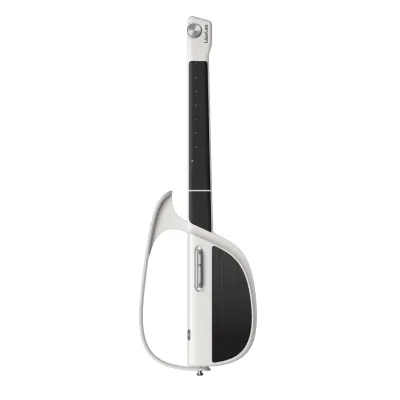
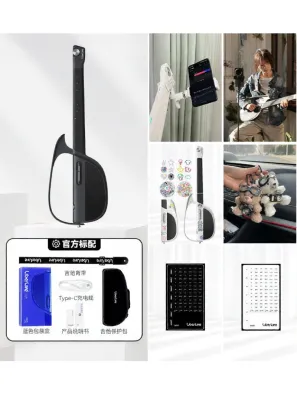
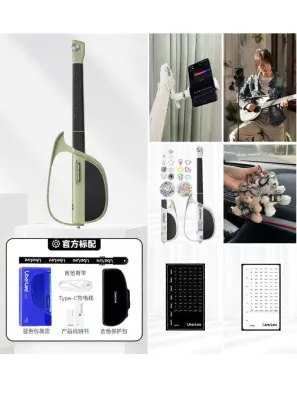
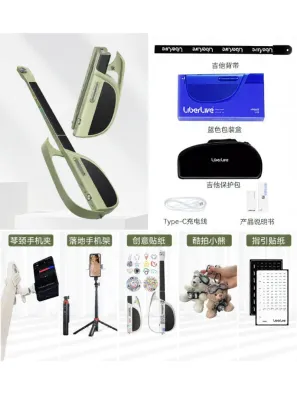
Prices are valid at publication and may change. Please refer to the product page for the latest price.
Technique Building and Physical Adaptation
Traditional acoustic guitars feature a standard neck profile, steel or nylon strings, and a specific action, which is the height of the strings above the fretboard. This setup requires beginners to build finger calluses and develop hand strength to press the strings firmly against the frets. The Liber Live C1, by contrast, utilizes a modified interface that reduces the physical strain on the fingertips, making chord transitions physically easier but delaying the development of traditional finger calluses. If you eventually plan to play a standard guitar, starting with a smart interface means you will still have to go through this physical conditioning phase later on.
Relying heavily on an app screen or visual fretboard indicators can slow down the development of ear training and tactile muscle memory. On a traditional guitar, you must listen to whether a note is buzzing and adjust your finger placement dynamically. This direct physical feedback loop helps you internalize the relationship between your hand position and the resulting sound. Without this sensory connection, players may find themselves dependent on visual cues, making it harder to play without looking at a screen or a chord chart.
To understand how each instrument shapes your physical skills, consider this checklist of fundamental techniques:
- Fretting individual notes: Fully supported on a traditional acoustic guitar, allowing you to play melodies, scales, and solos; limited or simulated on smart interfaces which prioritize chord accompaniment.
- Strumming and rhythm patterns: Supported on both, though a traditional acoustic offers organic dynamic control based on your pick attack, hand angle, and where you strike the strings relative to the soundhole.
- Fingerpicking: Highly expressive on a traditional acoustic, where each finger plucks an individual string to create intricate patterns; requires specific digital mapping or is unsupported on simplified smart controllers.
- Barre chords: A major hurdle on a traditional acoustic that builds hand strength and finger independence; bypassed or simplified on smart systems through digital transposition or button layouts.
Motivation, Feedback, and Practice Consistency
Smart guitars leverage gamified learning paths, real-time pitch detection, and interactive visual feedback to keep beginners engaged. This structured, video-game-like progression can lower the barrier to daily practice, especially for those who struggle with self-directed routines. The app tracks your progress, awards points, and unlocks new lessons, which can make practice feel less like a chore and more like entertainment. Traditional practice, on the other hand, relies heavily on intrinsic motivation, metronome practice, or the external accountability of a music teacher.

While an app can detect if you played the correct pitch at the right time, it cannot observe your wrist angle, thumb placement, or shoulder tension. Poor posture can lead to discomfort or repetitive strain injuries over time, which a digital sensor won’t catch. Beginners using smart systems must remain mindful of their physical form to avoid developing bad habits that could hinder their playing or cause physical strain. A human teacher can instantly correct a collapsed wrist or a tense shoulder, guidance that current software cannot replicate.
To maintain long-term consistency, smart guitar players should occasionally record video of their hands to check their posture against professional tutorials. Traditional acoustic players can use free tuning and metronome apps, or follow structured online video courses, to bring a sense of modern structure to their practice. Combining the structured feedback of digital tools with the physical discipline of traditional methods often yields the most balanced results.
Long-Term Versatility and Musical Growth
A traditional wooden acoustic guitar is a self-contained, highly resonant instrument. Its tone is shaped by the wood type, the body shape, and the player’s touch. This allows for immense dynamic control, subtle tonal shading, and the ability to play unplugged anywhere, from a living room to an outdoor park. The natural resonance of wood reacts to how hard you strum, offering an organic warmth and projection that digital speakers struggle to fully emulate.
The Liber Live C1 is primarily a digital controller and synthesizer. Without a charged battery, an active app connection, or an external speaker or headphones, its acoustic output is minimal. This makes spontaneous unplugged jam sessions with other acoustic instruments difficult, as the digital sound may not blend naturally with traditional wooden instruments without careful amplification. Additionally, exploring genres that rely heavily on acoustic nuances, such as classical, flamenco, or complex fingerstyle blues, is highly limited on a smart interface designed primarily for pop and folk chord accompaniments.
If you start on a smart guitar and later decide to transition to a traditional acoustic or electric guitar, you will face a secondary learning curve. While your sense of rhythm, song structure, and basic chord progressions will transfer seamlessly, you will still need to build the physical finger strength, callus development, and precise finger placement required to ring out clean notes on real metal strings. This transition is entirely possible, but it is best approached with the understanding that the physical mechanics of the two instruments are fundamentally different.
Cost, Equipment, and Maintenance Comparison
A smart guitar like the Liber Live C1 represents a specific digital investment, often requiring a compatible tablet or smartphone to function fully. A beginner acoustic guitar package can range from budget-friendly entry-level models—often starting around S$150 to S$300—to mid-range instruments. However, the traditional route may also require accessories like a tuner, picks, a strap, a gig bag, and potentially private lesson fees which can add up over time. When budgeting, consider whether you already own a compatible smart device, as purchasing one solely for a smart guitar significantly increases the total cost of entry.
In a humid climate like Singapore’s, traditional wooden guitars are highly sensitive to relative humidity. High humidity can cause the wood to swell, raising the string action and warping the neck, requiring dehumidifiers or silica gel packs in a hard case. The Liber Live C1, being largely synthetic and electronic, is less susceptible to humidity-induced wood warping, but it introduces electronic maintenance: managing lithium-ion battery health, performing firmware updates, and ensuring app compatibility with operating system updates. Over several years, a wooden guitar can last a lifetime if properly humidified, whereas a digital instrument’s lifespan is closely tied to its battery health and ongoing software support from the manufacturer.
| Feature | Liber Live C1 | Traditional Acoustic Guitar |
|---|---|---|
| Upfront Cost Structure | Single digital instrument purchase (requires smart device) | Variable (budget entry-level to premium wooden models) |
| Primary Maintenance | Battery charging, firmware updates, app compatibility | String changes, neck adjustments, tuning |
| Sensitivity to Climate | Low (synthetic materials resist humidity) | High (requires humidity control to prevent wood warping) |
| Lifespan & Upgradability | Dependent on software support and battery life | Decades-long potential; highly repairable by luthiers |
Decision Framework: Which Path Should You Take?
Choose the smart guitar if:
- You want to play songs quickly without the physical pain of building finger calluses.
- You live in a shared space or apartment where silent practice with headphones is essential.
- You enjoy gamified, app-driven learning and want immediate visual feedback.
Choose a traditional acoustic if:
- You want to learn authentic guitar techniques that transfer to any standard acoustic or electric guitar.
- You prefer the natural, organic resonance of wood and want to play unplugged anywhere without worrying about batteries or screens.
- You want to develop deep muscle memory, ear training, and hand strength from day one.
Verify first if:
- Your smartphone or tablet meets the minimum operating system requirements for the companion app.
- You can visit a local music store to feel the neck profile and body size of a traditional acoustic to ensure physical comfort.
- The retailer's return policy allows for a trial period, especially for digital instruments, to ensure the learning interface suits your style.

Community discussion
Share your experience or ask a question. Comments are reviewed before publication.