
Choosing between the Liberlive C2 smart guitar and a traditional acoustic guitar depends on whether you prioritize immediate playability or the long-term mastery of a classic instrument. For beginners who want to sing along to their favorite songs quickly without the physical pain of steel strings, the Liberlive C2 offers an accessible, app-assisted entry point. However, if your goal is to develop authentic finger strength, learn traditional music theory, and enjoy the natural resonance of wood, a standard acoustic guitar remains the irreplaceable foundation. Both paths offer distinct advantages, and understanding how they align with your lifestyle, space, and musical goals is key to making the right investment.
Core Differences in Learning Curve and Playability
The physical interface of an instrument dictates how quickly a beginner can produce a pleasing sound. A traditional acoustic guitar features six steel or nylon strings tensioned across a wooden fretboard. Pressing these strings down requires significant finger pressure, which often leads to soreness and calluses during the first few weeks. Beginners must memorize complex finger shapes to form basic chords, a process that demands both physical coordination and muscle memory. This steep initial learning curve can be discouraging, and many aspiring players pause their journey before they can play a complete song.
In contrast, the Liberlive C2 smart guitar redefines the fretboard interface by replacing traditional strings with a button-based or simplified tactile key system on the neck, paired with short, low-tension strings on the body for strumming. This design virtually eliminates the finger pain associated with steel strings, allowing beginners to practice for longer periods without physical fatigue. Instead of memorizing traditional chord shapes, players interact with a simplified layout where chords are often triggered by single presses or guided by built-in visual indicators. While this makes playing immediate and highly accessible, it bypasses the physical conditioning and spatial awareness required to navigate a standard fretboard.
Products mentioned in this guide
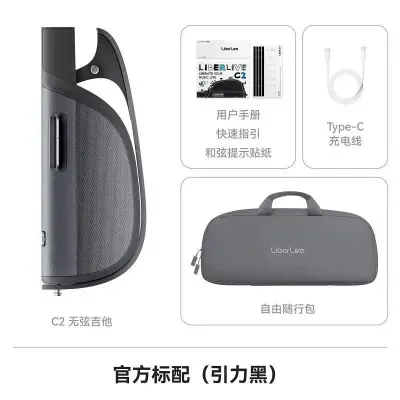
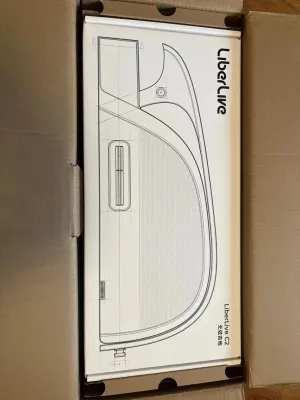
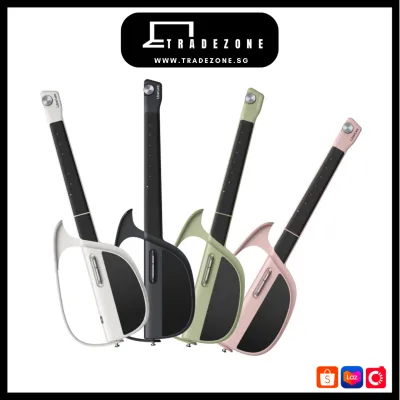
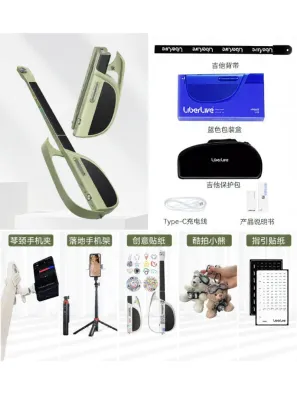
Prices are valid at publication and may change. Please refer to the product page for the latest price.
Sound Quality and Acoustic Experience
The auditory feedback of these two instruments represents a fundamental split between organic acoustics and digital synthesis. A traditional acoustic guitar relies on physical resonance. When you pluck a string, the vibration transfers through the bridge to the wooden soundboard, projecting a rich, complex tone that is unique to the instrument’s materials and construction. This natural projection provides immediate, dynamic feedback; how hard you press and how you strike the strings directly shapes the warmth, volume, and sustain of the sound. For many, this organic connection to the wood is the essence of playing music.

The Liberlive C2, as a digital smart instrument, generates sound electronically. It utilizes built-in speakers and digital sound synthesis to replicate acoustic guitar tones, along with various virtual effects and accompaniment styles. While this digital generation offers impressive versatility, it lacks the physical vibration and organic warmth of a hollow wooden body. However, the digital nature of the smart guitar provides a massive advantage for modern living environments, such as compact HDB flats in Singapore. With built-in volume control and a dedicated headphone output, players can practice silently at any hour of the night without disturbing family members or neighbors, a feat that is impossible on a standard acoustic guitar without using specialized, tone-muffling accessories.
Portability, Practice Convenience and Setup
Integrating practice into a busy daily routine requires an instrument that is easy to manage, store, and transport. Traditional acoustic guitars are relatively bulky, requiring a dedicated stand or a large gig bag for protection. They are also highly sensitive to environmental factors like humidity and temperature fluctuations, which can warp the wood and affect tuning stability. Beginners must learn to tune their instrument manually using a clip-on tuner or smartphone app before every practice session, and strings must be replaced periodically as they rust or lose their tone.
The Liberlive C2 is designed with modern portability and convenience in mind. Its compact, often folding or modular body shape makes it significantly easier to store in tight spaces or carry on public transport. Because it does not rely on traditional wooden construction or high-tension strings, it is highly stable and does not require constant tuning or environmental monitoring. However, this convenience comes with a reliance on technology. The smart guitar operates on a rechargeable battery, meaning you must keep it charged to play. If the battery dies mid-session, the instrument cannot produce sound, whereas a traditional acoustic guitar is always ready to play, requiring no electricity or cables.
Long-Term Skill Transferability
A critical consideration for any beginner is how their initial investment of time will translate to other musical opportunities in the future. Learning on a traditional acoustic guitar builds a universal foundation. The finger strength, calluses, muscle memory, and hand coordination you develop are directly transferable to any other acoustic guitar, classical guitar, or electric guitar. Once you master a chord shape on a standard fretboard, you can pick up almost any six-string instrument in the world and play it instantly.
Starting on the Liberlive C2 offers a different developmental path. Because the smart guitar simplifies chord execution and eliminates traditional string tension, players do not build the finger calluses or hand strength necessary to play a standard guitar. The transition from the button-based or simplified interface of the C2 to a traditional fretboard requires starting almost from scratch regarding physical technique. While you will carry over your sense of rhythm, timing, and basic song structure, you will still face the physical hurdles of string buzzing, finger soreness, and complex chord shapes if you ever decide to pick up a traditional acoustic or electric guitar.
Pricing and Value Considerations
When evaluating the financial commitment, beginners must look beyond the initial purchase price to consider the total cost of ownership. In Singapore, a decent entry-level traditional acoustic guitar typically ranges from S$150 to S$400. This initial investment usually includes the instrument itself, and players may need to spend an additional S$30 to S$80 on essential accessories like a gig bag, a tuner, a strap, and spare strings. There are no ongoing subscription fees, and a well-maintained wooden guitar can last for decades, retaining a modest resale value on local secondhand marketplaces.
The Liberlive C2 smart guitar represents a higher upfront financial commitment, often positioned in the premium consumer electronics price bracket, typically ranging from S$500 to S$800 depending on local retail import costs and promotions. While this package generally includes the smart instrument, a dedicated carrying case, and charging accessories, the true value of the device is tied to its software ecosystem. Beginners should verify whether access to the companion app’s full library of interactive lessons, backing tracks, and firmware updates requires an ongoing subscription or if it is included with the hardware purchase. Additionally, as a digital device, its long-term durability is tied to battery health and software compatibility, and its resale value may behave more like consumer electronics than a traditional musical instrument.
How to Decide: Choose Liberlive C2 or Acoustic?
To make the right choice, you must align the instrument’s capabilities with your personal lifestyle, learning goals, and physical preferences.
You should choose the Liberlive C2 if your primary goal is to accompany your singing quickly, play casual sing-alongs, and enjoy a gamified, low-friction learning experience. It is the ideal choice for those living in shared spaces or compact apartments where silent headphone practice is a necessity, and for individuals who want to avoid the physical discomfort of building finger calluses. Before purchasing, ensure your smartphone or tablet meets the operating system requirements of the companion app, as the smart features rely heavily on this digital connection.
You should choose a traditional acoustic guitar if you want to learn the art of guitar playing, develop genuine finger strength, and appreciate the organic, unamplified resonance of a wooden instrument. This path is best for those who value long-term skill transferability, wish to play a wide variety of musical genres using traditional techniques, and prefer an instrument that does not rely on batteries, software updates, or screen time.
Frequently Asked Questions (FAQ)
Can I play standard acoustic songs on the smart guitar?
Yes, you can play the chord progressions of standard acoustic songs on the Liberlive C2, as its digital system is designed to replicate the standard chord structures used in popular music. However, the physical execution will feel very different. Because the smart guitar simplifies chord fingerings and does not have traditional individual strings running down the entire neck, advanced acoustic techniques such as fingerstyle picking, percussive body tapping, string bending, and complex hammer-ons or pull-offs cannot be performed in the same manner as on a traditional acoustic guitar. It is primarily optimized for rhythm accompaniment and strumming.
Do I need a smartphone or tablet to use the smart guitar?
While the Liberlive C2 can perform basic strumming and play pre-loaded sounds offline without any external connection, a smartphone or tablet is highly recommended to unlock its full potential. The companion app is essential for accessing interactive video lessons, customizing the digital sound profiles, updating the instrument’s firmware, and accessing a wider library of song chord charts. Before purchasing, you should check the manufacturer’s specifications to ensure your mobile device’s operating system is fully compatible with the latest version of the companion app.
Is the smart guitar suitable for children or players with small hands?
The Liberlive C2 can be highly suitable for players with smaller hands or younger learners because it eliminates the high string tension and wide finger stretches required by traditional acoustic guitars. The simplified chord interface reduces the physical strain on smaller fingers. However, the overall body size, weight, and neck width of the smart guitar should still be verified against the manufacturer’s physical specifications to ensure a comfortable fit, especially for very young children. For traditional acoustic guitars, younger players often start with 3/4-size or travel-size models to accommodate their reach.

Community discussion
Share your experience or ask a question. Comments are reviewed before publication.