
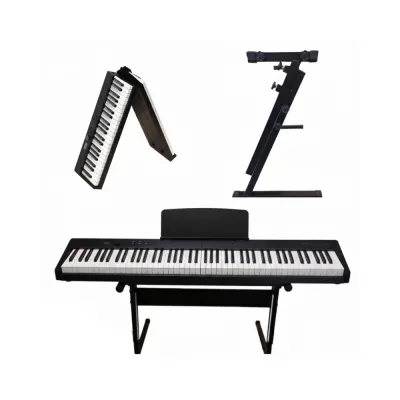
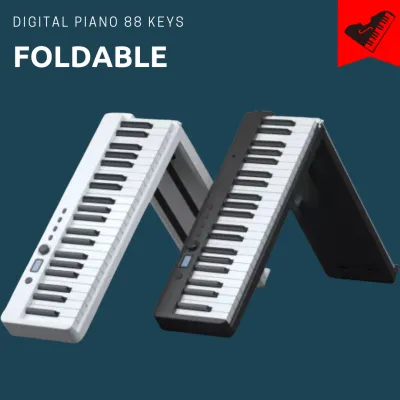
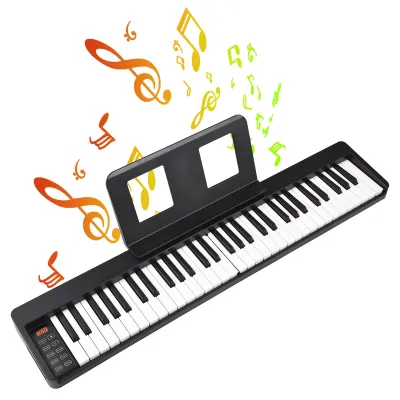
The manning foldable piano offers a highly portable, space-saving, and budget-friendly entry point for absolute beginners, casual hobbyists, and those living in space-constrained environments like Singapore’s HDB flats. It serves as an excellent “proof-of-concept” instrument to test your interest before committing to a larger financial and spatial investment. However, because it features lightweight, non-weighted keys and a flexible folding chassis, it cannot fully replicate the tactile response, dynamic control, or structural rigidity of a traditional digital or acoustic piano. For students aiming to pursue formal classical training or graded examinations, a foldable keyboard is best used as a temporary practice tool rather than a long-term primary instrument.
Deciding on your first keyboard requires balancing your living space, budget, and learning goals. By understanding how the design of a foldable instrument impacts your technique development, you can make an informed decision on whether this innovative format aligns with your musical journey.
What Beginners Actually Need in a First Keyboard
When starting to learn the piano at home, the technical specifications of your instrument directly shape your physical technique, muscle memory, and musical expression. The most critical hardware requirement for any beginner is a full-size, 88-key layout. An 88-key keyboard ensures that you develop correct spatial awareness, allowing your brain to map the physical distance between the bass register on the far left and the treble register on the far right. Learning on a shorter keyboard, such as a 61-key or 76-key model, quickly limits your progress as you attempt to play two-handed classical pieces, contemporary arrangements, or exercises that span multiple octaves.
Products mentioned in this guide
Prices are valid at publication and may change. Please refer to the product page for the latest price.
Beyond the number of keys, the mechanical action of the keybed is the single most important factor in building finger strength and proper hand posture. Traditional acoustic pianos use a complex system of wooden hammers and gravity to create resistance when a key is pressed. To replicate this, high-quality digital pianos utilize fully weighted hammer-action keybeds. For beginners, practicing on weighted keys is essential because it builds the intrinsic hand muscles needed to control the speed and depth of each keystroke. Without this resistance, players accustomed to light keys often struggle with collapsed finger joints and tension in their wrists when transitioning to an acoustic piano.
Touch sensitivity, also known as velocity sensitivity, is another non-negotiable feature for effective learning. A touch-sensitive keyboard detects how quickly or firmly you strike a key, translating that physical force into a corresponding volume level. This capability allows you to play dynamically, executing delicate pianissimo (soft) passages and powerful fortissimo (loud) chords. Without touch sensitivity, every note sounds at the exact same volume regardless of your touch, which prevents you from developing musical phrasing, expression, and emotional nuance.
Finally, a beginner’s keyboard must support essential connectivity options and accessories to facilitate daily practice. A dedicated input for a sustain pedal is vital, as pedaling is a fundamental technique used to blend notes together smoothly. A headphone jack is equally important for silent practice, allowing you to practice at any hour without disturbing family members or neighbors in close residential quarters. Lastly, a USB-MIDI or Bluetooth-MIDI connection enables the keyboard to communicate with modern learning applications, interactive software, and digital audio workstations, transforming your practice sessions into engaging, visual lessons.
Evaluating the Manning Foldable Piano for Home Practice
Evaluating the manning foldable piano requires looking closely at how its physical design translates to daily practice sessions at home. The primary appeal of this instrument lies in its split-body construction, which allows a full-length keyboard to fold in half for easy storage. However, this folding mechanism introduces specific design characteristics that differ significantly from standard stationary digital pianos.

Key Action and Tactile Feedback
The key feel of the manning foldable piano is designed to be lightweight and highly responsive, leaning closer to a semi-weighted or synth-action feel rather than a heavy, fully weighted hammer action. While this lighter resistance is gentle on the fingers of young children and casual players, it does not provide the substantial physical feedback required to build classical finger strength. Beginners should note that while they can easily learn note layouts, scales, and basic chords on this keybed, they will need to adapt their finger pressure when playing on an acoustic instrument. To understand the exact keybed construction of the specific model you are considering, always verify the specifications in the manufacturer’s official product manual.
Structural Stability and Hinge Integrity
A critical aspect of any foldable instrument is the structural integrity of its central hinge. When unfolded, the keyboard must be placed on a completely flat, rigid surface—such as a sturdy table or a dedicated keyboard stand—to ensure the keybed remains level. If placed on an uneven surface or a flimsy stand, the central joint may experience slight flexing or bouncing during energetic, two-handed play. This minor movement can affect the alignment of the keys across the split seam, so careful setup is required to maintain a consistent playing plane.
Audio Performance and Sound Engine
Because foldable pianos must maintain an ultra-slim profile to fold cleanly, their built-in speaker systems are naturally compact. The internal sound engine delivers a clear, recognizable grand piano tone that is perfectly adequate for learning notes and practicing rhythm. However, the small physical size of the built-in speakers means the audio output can lack the deep bass resonance and rich acoustic warmth found in larger digital pianos. For a more immersive and acoustically satisfying practice experience, utilizing a pair of high-quality headphones or connecting the instrument to an external keyboard amplifier is highly recommended.
Learning Features and Smart Connectivity
To support home learners, these instruments frequently include built-in practice tools such as an adjustable metronome, a variety of instrument voices, and pre-programmed demo songs. Many models also feature integrated Bluetooth MIDI or USB-MIDI connectivity, allowing you to link the keyboard wirelessly to tablets, smartphones, or laptops. This connectivity makes it simple to use popular interactive learning apps, which track your playing in real-time and provide instant feedback on your note accuracy and timing. Before purchasing, check the manufacturer’s documentation to confirm that the keyboard’s wireless protocols are fully compatible with your specific mobile device and operating system.
Foldable vs. Traditional Keyboards: Weighing the Trade-Offs
Choosing between a foldable keyboard and a traditional, fixed-body digital keyboard involves weighing several practical trade-offs. Each design excels in different environments, and understanding these differences will help you select the instrument that best fits your lifestyle, home layout, and long-term musical goals.
| Feature / Dimension | Foldable Keyboards (e.g., Manning) | Traditional Fixed-Body Keyboards |
|---|---|---|
| Portability & Storage | Excellent; folds to half-length, fits in closets or backpacks | Limited; requires dedicated vehicle transport or large gig bag |
| Physical Footprint | Minimal; easily cleared off tables after practice | Permanent; requires a dedicated stand or desk space |
| Keybed Rigidity | Moderate; can flex slightly at the central hinge | High; solid, single-piece chassis with uniform key alignment |
| Key Weight & Action | Typically light, semi-weighted, or synth-action | Often fully weighted hammer action (simulates acoustic feel) |
| Long-Term Durability | Moderate; folding joints and internal ribbon cables experience wear | High; no moving structural joints or folding components |
| Typical Weight | Very lightweight (often under 2 to 3 kg) | Heavy (typically 10 to 25 kg for weighted models) |
In urban living environments where residential space is at a premium—such as compact apartments and HDB flats in Singapore—the portability of a foldable piano is a massive advantage. Traditional 88-key digital pianos require a permanent footprint of approximately 1.3 meters in width, which can crowd a small bedroom or living room. A foldable piano can be set up on a dining table for a quick practice session, folded back up in seconds, and tucked away under a bed or inside a wardrobe, keeping your living space completely clutter-free.
However, this extreme portability comes at the expense of structural rigidity and long-term mechanical durability. A traditional fixed-body keyboard features a solid, single-piece plastic or wooden chassis that protects the internal electronics and keybed from physical stress. In contrast, a foldable piano relies on a central hinge and a flexible internal ribbon cable that transmits electrical signals between the left and right halves of the keyboard. Every cycle of folding and unfolding subjects these components to physical wear and tear. Over several years of frequent use, the mechanical joints and internal connections of a foldable model are naturally more susceptible to wear than those of a stationary, solid-body keyboard.
Furthermore, the physical depth of a traditional digital piano allows for longer key pivots and heavier counterweights, resulting in a far more authentic piano action. Foldable keyboards must prioritize a thin, lightweight profile, which limits the physical space available for complex hammer mechanisms. If your primary goal is to master classical piano repertoire with demanding dynamic control, the structural stability and realistic key action of a traditional, non-folding digital piano will provide a more stable foundation for your technical development.
Who Should (and Shouldn't) Choose a Foldable Piano
To determine if the manning foldable piano is the right investment for your household, it is helpful to look at specific user profiles and match them against the strengths and limitations of the instrument.
The Ideal User Profiles
- The Space-Constrained Learner: If you live in a shared room, a small apartment, or a highly active household where dedicating permanent floor space to a piano is impossible, a foldable keyboard solves your spatial dilemma.
- The Casual Hobbyist or Adult Beginner: If you are picking up the piano as a relaxed hobby, want to learn basic chords to accompany singing, or want to play popular melodies without the pressure of formal classical training, the lightweight action and low entry cost of a foldable piano are highly appealing.
- The Traveling Musician or Commuter: If you need an instrument that you can easily carry on public transport, bring to school, take to outdoor gatherings, or pack in your luggage for travel, the ultra-lightweight, battery-powered nature of a foldable piano is unmatched.
- The Budget-Conscious Explorer: For those who are unsure if they or their children will stick with the instrument long-term, a foldable piano offers a low-risk financial entry point (typically ranging from S$120 to S$250) compared to mid-range digital pianos that cost upwards of S$800 to S$1,500.
Who Should Look Elsewhere
- Graded Exam Candidates: If you or your child are preparing for formal classical music examinations, such as those conducted by the Associated Board of the Royal Schools of Music (ABRSM) or Trinity College London, a foldable keyboard is not recommended as a primary instrument. These rigorous curricula require students to perform on fully weighted acoustic or high-end digital pianos. Practicing exclusively on non-weighted, folding keys can severely hinder a student's ability to control tone, dynamics, and articulation during an official exam.
- Experienced Pianists: Players who have already developed their finger strength and are accustomed to the deep, expressive response of an upright or grand piano will likely find the shallow key travel and light resistance of a foldable model unsatisfying for expressive classical repertoire.
The Transition and Upgrade Phase
For many families, a foldable piano serves as an excellent “stepping stone.” It allows a beginner to master the basics of music theory, note reading, hand coordination, and simple repertoire over the first six to twelve months. Once the student demonstrates sustained interest, commitment, and progresses past the introductory stages, they can confidently upgrade to a dedicated, home-based digital piano with graded hammer-action keys, knowing that their initial investment in the foldable model served its purpose perfectly.
Pre-Purchase Checklist for the Manning Foldable Piano
Before finalizing your purchase of a manning foldable piano, running through a practical checklist will ensure that the specific model you choose aligns with your technical requirements, home setup, and local safety standards.
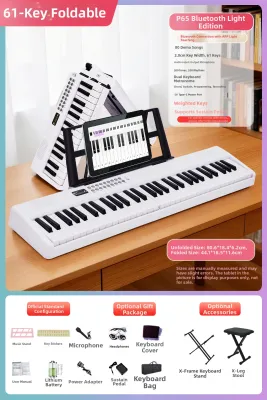
- Confirm Key Count and Layout: Ensure the model you are purchasing is a full 88-key version if you plan on taking standard piano lessons. Some compact travel models are sold in 61-key configurations, which may limit your ability to play advanced beginner pieces.
- Verify Power Specifications and Safety: Check whether the keyboard operates on a built-in rechargeable lithium-ion battery, direct DC power, or both. If it includes a USB wall charger or a DC power adapter, verify that it is compatible with Singapore's local voltage standards (230V, 50Hz) and features a safety-certified plug design.
- Inspect the Accessory Bundle: Review the product listing carefully to see what accessories are included in the package. Ideally, a starter bundle should include a basic sustain pedal, a clip-on music sheet rest, a USB charging cable, and a padded carrying gig bag to protect the central hinge during transport.
- Check Pedal Jack Compatibility: Verify whether the keyboard uses a standard 1/4-inch (6.35mm) sustain pedal jack or a proprietary mini-jack. A standard 1/4-inch jack is highly preferred, as it allows you to easily upgrade to a more realistic, metal piano-style sustain pedal in the future if the included plastic foot-switch pedal feels too light.
- Review Warranty and Local Support: When purchasing through online marketplaces or local distributors, check the warranty coverage. Ensure the seller offers a clear return policy and a local warranty of at least six to twelve months, which protects you against any manufacturing defects in the folding hinge, key sensors, or internal wiring.
- Test Device and App Compatibility: If you plan to use interactive learning software, double-check that the keyboard's Bluetooth MIDI or USB-MIDI output is officially supported by your tablet or smartphone's operating system (iOS, Android, or Windows) to avoid connectivity headaches.
Frequently Asked Questions (FAQ)
Can I use a foldable piano for graded music exams?
No, foldable pianos are generally not suitable for formal graded music examinations, such as those administered by ABRSM or Trinity College. Exam boards require candidates to perform on instruments that feature fully weighted, touch-sensitive keys that accurately mimic the mechanical action of an acoustic piano. While a foldable piano is an excellent tool for learning note reading, practicing rhythm, and studying music theory at home, students preparing for exams should practice on a digital piano with graded hammer action or an acoustic piano to develop the necessary finger strength, dynamic control, and keybed response required by examiners.
Do foldable pianos support standard sustain pedals?
Yes, most foldable pianos support sustain pedals, but the type of connection can vary by model. Many models feature a standard 1/4-inch (6.35mm) auxiliary input jack, allowing you to connect standard third-party sustain pedals. However, some budget or ultra-slim models may use a smaller 3.5mm mini-jack or a proprietary connection interface, which limits you to using the specific pedal supplied by the manufacturer. Before purchasing a separate, piano-style sustain pedal, always check your keyboard’s product specifications to confirm the input jack size and polarity compatibility.

Community discussion
Share your experience or ask a question. Comments are reviewed before publication.