
Mastering the art of spending is not about tracking every single cent or living in a state of constant deprivation. Instead, it is about aligning your financial choices with your personal values. For beginners, personal finance books offer a structured pathway to transition from mindless consumption to intentional wealth building. The right book acts as a roadmap, helping you navigate the emotional triggers of spending while establishing practical systems to manage your cash flow.
The best books for beginners are those that balance psychological mindset shifts with actionable, structured systems. Specifically, The Psychology of Money by Morgan Housel and Your Money or Your Life by Vicki Robin are unmatched for mastering the behavioral aspects of spending, while I Will Teach You to Be Rich by Ramit Sethi and The Simple Path to Wealth by JL Collins provide the ultimate tactical blueprints for automating cash flow and building long-term wealth. By exploring these foundational texts, you can develop a personalized strategy that balances enjoying your life today with securing your financial future.
How to Choose the Right Personal Finance Book for Your Goals
Before purchasing or borrowing any personal finance book, it is essential to identify what you actually need to learn. Financial literature generally falls into two distinct categories: behavioral finance and tactical finance. Behavioral finance focuses on the psychology of money, helping you understand why you spend, how your childhood influences your financial habits, and how to overcome financial anxiety. Tactical finance, on the other hand, provides step-by-step instructions on budgeting, debt payoff, and investing mechanics. If you struggle with emotional spending, a highly tactical book on stock analysis will not solve your core problem; you need a behavioral guide first.
Products mentioned in this guide
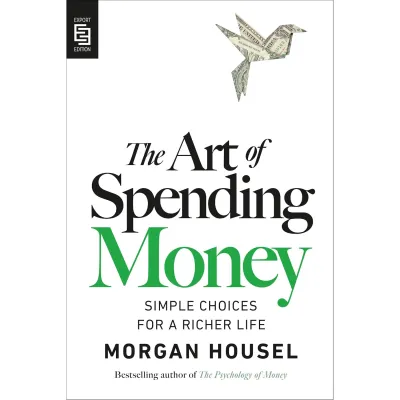
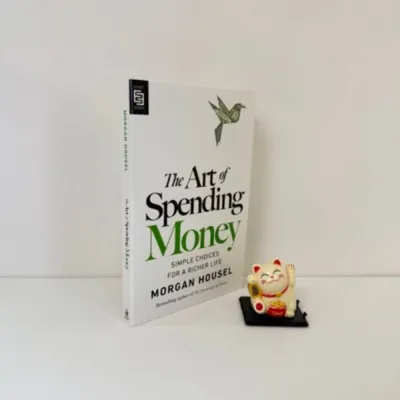
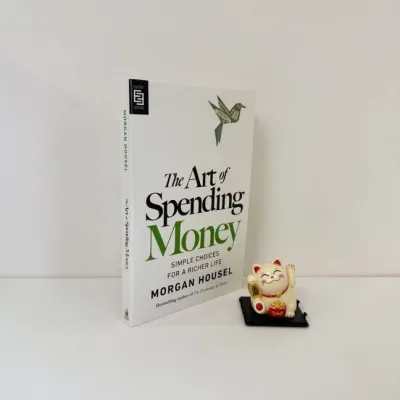
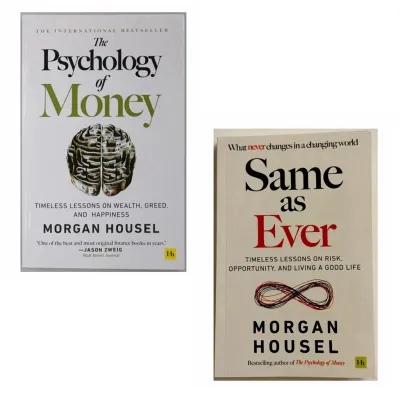
Prices are valid at publication and may change. Please refer to the product page for the latest price.
Evaluating the author’s background and core methodology is another crucial step. Some authors are self-made individuals who achieved financial independence through extreme frugality, while others are professional financial planners or behavioral psychologists. Their backgrounds heavily influence their advice. For example, a methodology centered on strict frugality might teach you how to cut every possible expense, but it can also lead to a scarcity mindset. Conversely, a methodology focused on conscious spending encourages you to identify what truly brings you joy and allocate your funds accordingly, cutting costs ruthlessly on things that do not matter to you.
Your current life stage should also dictate your choice. A university student or first-jobber in Singapore will have different financial priorities than someone in their mid-career looking to optimize their tax strategies or plan for retirement. A beginner-friendly book should offer foundational principles that are easy to comprehend without requiring a degree in economics. Look for books that address your immediate pain points, whether that is credit card debt, a lack of savings, or anxiety about the future.
Finally, consider the balance between timeless principles and current economic contexts. While the fundamental art of spending intentionally remains stable over decades, tactical details like interest rates, investment platforms, and tax laws change rapidly. When evaluating a book, recognize that you may need to separate the timeless behavioral advice from the outdated technical details. The best book for you is one that resonates with your personal values and inspires you to take immediate, actionable steps toward financial clarity.
Top Picks for Mindful Spending and Behavioral Finance
Developing a healthy relationship with money starts in the mind. The following books excel at breaking down the emotional and psychological barriers that prevent people from managing their finances effectively. They do not just teach you how to save; they teach you how to think about saving.

The Psychology of Money by Morgan Housel
Morgan Housel’s The Psychology of Money is a modern classic that shifts the focus of personal finance from mathematical equations to human behavior. The core premise of the book is that doing well with money has surprisingly little to do with how smart you are and a lot to do with how you behave. Housel presents nineteen short stories that explore the strange ways people think about wealth, greed, and happiness, making complex psychological concepts highly accessible to beginners.
This book is the ideal starting point for anyone who experiences financial anxiety, struggles with impulsive spending, or constantly compares their lifestyle to others. In a highly competitive environment like Singapore, where luxury goods and status symbols are highly visible, Housel’s insights offer a grounding perspective. He explains how our personal experiences with money shape our financial worldviews, helping readers recognize that no one is actually crazy; we are all just making decisions based on our unique histories.
One of the most valuable takeaways is the distinction Housel draws between getting wealthy and staying wealthy. Getting wealthy requires taking risks, optimism, and putting yourself out there, whereas staying wealthy requires the exact opposite: humility, fear that what you made can be taken away, and an acceptance that some of your success is due to luck. He also introduces the concept of “reasonable” financial decisions over “rational” ones, arguing that aiming to be cold-heartedly rational is a mistake because humans are emotional creatures who need peace of mind.
Key Limitations to Consider:
- Lack of Tactical Guidance: The book is heavily narrative and philosophical. It does not provide a step-by-step budgeting template, a debt-reduction plan, or advice on how to build an investment portfolio.
- No Localized Mechanics: Because it focuses on universal human behaviors, it does not cover specific financial accounts, tax laws, or investment platforms.
Your Money or Your Life by Vicki Robin and Joe Dominguez
For those seeking a profound shift in how they view work and consumption, Your Money or Your Life is a transformative read. The book’s core philosophy is built on the concept of treating money as “life energy”—the actual time you trade to earn that money. By calculating your real hourly wage, which subtracts the hidden costs of working such as commuting, professional wardrobe, and decompression activities, you gain a clear picture of what your purchases truly cost you in terms of your life.
This approach naturally curbs mindless spending. When you realize that a new designer handbag or a high-end gadget is not just costing you S$1,000, but rather fifty hours of your life energy, your perspective on consumption changes. The book outlines a rigorous nine-step program designed to help readers achieve financial independence by tracking every cent, calculating their net worth, and optimizing the gap between their income and expenses to build a self-sustaining investment engine.
The ideal reader for this book is someone who feels trapped in the corporate grind and wants to reclaim their time. It challenges the societal norm of working to spend, proposing instead that true fulfillment comes from alignment, sufficiency, and freedom. It is particularly relevant for those interested in the FIRE (Financial Independence, Retire Early) movement, offering a structured framework to transition from consumerism to conscious living.
Key Limitations to Consider:
- Tedious Tracking Methods: The original tracking and graphing methods recommended in the book can feel incredibly tedious for modern readers. Manual paper-and-pencil tracking is less appealing in an era of automated banking.
- Outdated Investment Advice: Some of the specific investment recommendations in older editions are outdated. Modern readers will need to adapt the core steps using contemporary digital tools and diversified global index funds.
Best Guides for Practical Budgeting and Wealth Building
Once you have established a healthy financial mindset, you need practical systems to manage your cash flow, eliminate debt, and grow your wealth. These books offer actionable, step-by-step blueprints to automate your finances and build long-term security.
I Will Teach You to Be Rich by Ramit Sethi
Ramit Sethi’s I Will Teach You to Be Rich offers a refreshing, no-nonsense approach to personal finance that directly challenges traditional, restrictive budgeting. Sethi’s philosophy centers on “conscious spending”—the idea that you should identify what you love, spend guilt-free on those things, and cut costs mercilessly on the things you do not care about. This framework removes the guilt often associated with spending, making it highly sustainable for beginners.
The book is structured as a practical six-week program designed to help you automate your financial life. Sethi guides readers through setting up automated transfers for savings, investments, and fixed expenses, ensuring that your financial goals are met before you even see your discretionary income. The target audience is young professionals and beginners who want to enjoy their money today while simultaneously securing their financial future.
A key concept in the book is focusing on “Big Wins” rather than sweating the small stuff. Sethi argues that obsessing over the price of a daily coffee is a waste of mental energy. Instead, you should focus on high-impact financial moves, such as negotiating a higher salary, choosing the right high-yield savings accounts, optimizing your credit cards, and keeping your housing and transportation costs low.
Key Limitations to Consider:
- US-Centric Financial Systems: The book relies heavily on specific US financial structures, such as 401(k) retirement accounts, Roth IRAs, and US credit scoring systems.
- Required Translation for Singapore Readers: Readers in Singapore must actively translate these concepts to the local market. For example, US tax-advantaged accounts should be mapped to the Supplementary Retirement Scheme (SRS) and the Central Provident Fund (CPF), while credit card optimization strategies must be adapted to local banking options.
The Simple Path to Wealth by JL Collins
If you are intimidated by the stock market, The Simple Path to Wealth by JL Collins is the ultimate antidote. Originally written as a series of letters to his daughter, Collins’s book demystifies investing by presenting a remarkably straightforward, low-stress approach to long-term wealth accumulation. His core strategy is simple: avoid debt, maintain a high savings rate, and invest your savings into low-cost, broad-market index funds.
Collins introduces the empowering concept of “F-You Money”—a financial cushion that grants you the freedom to walk away from a toxic job, take a career break, or pursue a passion project without financial panic. This book is perfect for beginners who are overwhelmed by complex stock picking, day trading, or high-fee financial advisors. By demonstrating that a single, diversified index fund can outperform the vast majority of professional money managers over the long term, Collins instills confidence in novice investors.
The book simplifies the art of spending by linking it directly to your freedom. Every dollar you do not spend on unnecessary consumer goods is a dollar that can be invested to buy back your time. This direct relationship between spending habits and personal autonomy provides a powerful incentive to live below your means without feeling deprived.
Key Limitations to Consider:
- Narrow Focus: The book is primarily an investing guide. It does not offer detailed frameworks for daily budgeting, managing complex debt situations, or navigating short-term financial goals.
- US-Specific Fund Recommendations: Collins heavily advocates for Vanguard's VTSAX (a US total stock market index fund). Singapore-based investors will need to look for globally diversified, tax-efficient alternatives, such as Ireland-domiciled UCITS ETFs (like VWRA or ISAC) to minimize dividend withholding taxes.
What to Check Before Buying or Borrowing Finance Books
Before you purchase a physical copy, download an e-book, or borrow a title from the National Library Board (NLB) in Singapore, it is important to perform a few quick verification checks. This ensures you are consuming the most accurate, relevant, and actionable information possible.
Verify the Edition and Updates: Financial regulations, tax brackets, and investment platforms evolve constantly. Always check if you are acquiring the latest edition of a book. For instance, Ramit Sethi’s I Will Teach You to Be Rich has been updated to reflect modern digital banking tools and shifting economic climates. Reading an outdated edition might lead you to seek out financial products or strategies that are no longer available or optimal.
Evaluate Regional Applicability: The vast majority of popular personal finance books are written by American authors for an American audience. When you encounter terms like 401(k), Roth IRA, HSA, or FICO scores, do not get discouraged. Instead, focus on extracting the underlying financial principle:
- 401(k) or Roth IRA matching represents tax-advantaged retirement saving. In Singapore, the equivalent is maximizing your Central Provident Fund (CPF) contributions or utilizing the Supplementary Retirement Scheme (SRS) for tax relief.
- US credit card debt strategies should be adapted to local credit laws and repayment methods.
- Vanguard mutual funds can be substituted with low-cost global index ETFs traded on local brokerages like Tiger Brokers, Moomoo, or FSMOne.
Check Format and Device Compatibility: Personal finance books often include charts, worksheets, and spending trackers. If you prefer audiobooks, verify whether the publisher provides a supplementary PDF containing these visual aids. If you are purchasing an e-book, ensure that the formatting displays correctly on your e-reader, as complex tables and budgeting spreadsheets can sometimes render poorly on smaller screens.
Assess Language and Translation Quality: If you plan to read a translated version of a finance book, verify the credentials of the translator or publisher. Financial terminology can easily be misinterpreted during translation, which can lead to confusion. If you are comfortable reading in English, it is generally recommended to read the original text to ensure you capture the author’s exact intent and tone.
Frequently Asked Questions (FAQ)
Are personal finance books written for the US applicable in Singapore?
Yes, the core behavioral principles, the psychology of mindful spending, and broad investment strategies are entirely universal. Human psychology does not change across borders; the emotional triggers that lead to impulsive spending or financial anxiety are the same in Singapore as they are in the United States. While you should ignore specific US tax shelters, retirement accounts, and credit score mechanics, you can easily adapt the underlying concepts. For example, automate your savings using local high-yield savings accounts like the UOB One or OCBC 360, and build your long-term wealth by utilizing Singapore’s Supplementary Retirement Scheme (SRS) or investing in globally diversified index funds through local brokerage platforms.
Should I read these books in a specific order?
For the best results, it is highly recommended to read these books in a sequence that matches your financial maturity. Start with behavioral books like Morgan Housel’s The Psychology of Money to build a healthy mindset, address any financial anxiety, and understand the emotional drivers behind your spending. Once you have established a solid mental foundation, move on to tactical guides like Ramit Sethi’s I Will Teach You to Be Rich to set up your conscious spending plan, negotiate your recurring bills, and automate your savings. Finally, when your automated systems are running smoothly and you have accumulated an emergency fund, read JL Collins’s The Simple Path to Wealth to master the mechanics of long-term index fund investing and accelerate your journey toward financial independence.
Community discussion
Share your experience or ask a question. Comments are reviewed before publication.