
Selecting the right math model exam prep bundle depends entirely on matching the student’s current academic stage with the specific syllabus, cognitive demands, and exam formats of the Singapore Ministry of Education (MOE). Because primary, secondary, and junior college mathematics require fundamentally different problem-solving approaches, a generic study guide is rarely effective. This comparison framework helps you evaluate bundle contents, difficulty progression, and alignment with the current syllabus so you can choose the most appropriate materials for your PSLE, O-Level, or A-Level preparation.
Investing in the wrong resources can lead to wasted study hours and conceptual confusion. For instance, a student struggling with algebraic formulation will not benefit from primary-level visual heuristics, while a junior college student needs advanced calculus modeling rather than basic algebraic drills. By understanding the structural differences between these levels, parents and students can make informed purchasing decisions that directly support academic success.
Understanding the Core Differences Across Exam Levels
The mathematical journey in Singapore schools involves a significant cognitive shift at each major milestone. At the primary level, culminating in the Primary School Leaving Examination (PSLE), the focus is heavily on visual heuristics. Students use bar modeling and concrete-pictorial-abstract approaches to solve complex word problems without formal algebra. This stage prioritizes spatial awareness, logical deduction, and fractional relationships represented visually.
Products mentioned in this guide
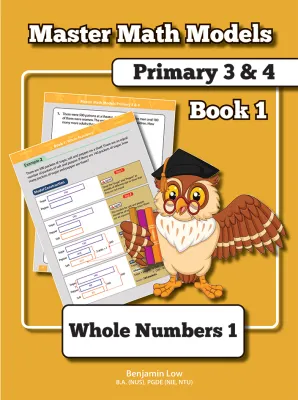
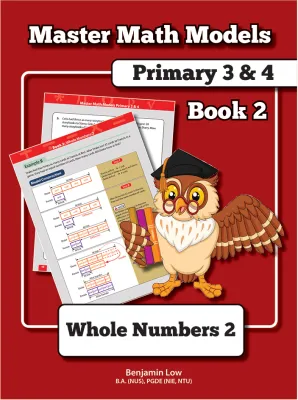
Prices are valid at publication and may change. Please refer to the product page for the latest price.
As students transition to secondary school for the GCE O-Level, the curriculum shifts toward algebraic application, coordinate geometry, and structured proofs. Visual bar models are replaced by algebraic equations, requiring students to translate word problems into symbolic representations. The cognitive demand shifts from drawing relationships to manipulating variables, solving simultaneous equations, and interpreting coordinate planes.
At the junior college level, preparing for the GCE A-Level, mathematics demands rigorous abstract modeling, advanced calculus, and statistical analysis. Students must construct complex mathematical models to represent real-world scenarios, often requiring graphing calculators to analyze functions. The focus here is on mathematical rigor, formal proofs, and the ability to handle multi-variable systems under tight time constraints.
Because of these distinct developmental stages, a math model bundle must explicitly target your specific exam tier. A bundle that claims to cover “general mathematics” without specifying the academic level is highly likely to be inadequate. When purchasing, always check the syllabus year and the specific exam code printed on the cover to ensure the materials align with the current curriculum.
Key Evaluation Criteria for Math Model Bundles
Before investing in any exam preparation bundle, verifying syllabus alignment is the most critical step. Check the publication or reprint year to confirm the content matches the latest MOE syllabus updates and exam formats, as outdated materials may contain obsolete topics or omit new question types. Even minor changes in syllabus codes can mean a shift in how questions are structured or which formulas are provided in the exam booklet.

A comprehensive bundle should offer complete content coverage rather than just a collection of practice questions. Look for packages that include concise topical summaries, step-by-step worked examples, full-length practice papers, and fully worked answer keys that detail how method marks are awarded. Having access to the step-by-step logic behind a solution is far more valuable than simply seeing the final numerical answer.
The format and medium of the bundle significantly impact study habits and usability. Physical books are excellent for realistic exam simulation and easy annotation, allowing students to practice writing under timed conditions. Digital downloads offer portability and instant searchability across multiple topics, but they require checking device compatibility, managing screen fatigue, and considering potential printing costs for practice papers.
Always verify the publisher of the materials before purchasing. Prioritize bundles from established local educational publishers, authorized school-endorsed resources, or reputable tuition centers over unverified online compilations. Professional publishers employ experienced educators who understand the nuances of the national marking schemes, ensuring that the practice questions closely mimic the actual exam standard.
PSLE Math Model Bundles: Focus and Selection Rules
For primary school students, the ideal math model bundle must focus heavily on visual heuristics and the concrete-pictorial-abstract approach. Look for materials that feature detailed bar modeling diagrams and step-by-step breakdowns of complex problem sums, helping students visualize quantities and relationships. These visual aids are essential for mastering topics like ratios, percentages, and fractions.
A well-structured primary bundle should feature a clear difficulty progression. It should begin with standard foundation questions to build confidence and reinforce basic concepts before introducing challenging, multi-step application problems. This gradual increase in difficulty prevents students from becoming overwhelmed and helps them develop systematic problem-solving habits.
Additionally, high-quality PSLE bundles include dedicated sections on common trick questions and misdirection traps. These sections should provide clear, annotated explanations that teach students how to identify clues in the question text and avoid common calculation pitfalls. Learning how to dissect a problem sum and identify the correct heuristic to apply is a crucial skill for scoring well in Paper 2.
O-Level Math Model Bundles: Focus and Selection Rules
Secondary school students preparing for their graduation exams need bundles that emphasize algebraic fluency and structured problem-solving. It is essential to prioritize bundles that clearly separate Elementary Mathematics (E-Math) and Additional Mathematics (A-Math), as their modeling requirements and syllabus scopes differ significantly. E-Math focuses on practical, real-world arithmetic and geometry, while A-Math demands deeper algebraic manipulation and trigonometric proofs.
The selected bundle should feature a strong emphasis on real-world application questions, structured data analysis tasks, and complex graph interpretation exercises. These question types are increasingly common in modern papers, requiring students to apply mathematical concepts to practical scenarios like financial planning, physics, or environmental trends. Practice materials must reflect this shift toward contextual problem-solving.
Furthermore, verify that the answer keys provide detailed marking scheme rubrics. Understanding the distinction between method marks (M marks) and accuracy marks (A marks) helps students learn how to structure their working clearly. This ensures they can secure maximum points for their logical steps even if they make a minor calculation error at the very end of a long question.
A-Level Math Model Bundles: Focus and Selection Rules
At the pre-university level, math model bundles must support rigorous proof, advanced calculus, and complex modeling. Confirm that the bundle explicitly covers the specific H2 or H3 Mathematics syllabus, including essential guidance on graphing calculator (GC) integration. Since the GC is an indispensable tool in the exam, the bundle should provide step-by-step instructions on calculator syntax and function plotting.
The practice problems should include advanced application questions involving kinematics, probability distributions, vectors, and complex differential equations. These topics require students to translate abstract physical and statistical scenarios into solvable mathematical models. The bundle must challenge students to think critically and apply multiple mathematical disciplines to solve a single, comprehensive problem.
To maximize learning, look for bundles that provide alternative solution methods for complex problems. High-quality resources will also highlight common conceptual pitfalls and invalid assumptions, teaching students to critically evaluate the limitations of their mathematical models. This level of analytical training is vital for tackling the novel and unfamiliar questions that frequently appear in the A-Level papers.
Decision Framework: Which Bundle Fits Your Current Stage?
To finalize your choice, evaluate the student’s current academic stage, learning gaps, and preparation timeline. Choose a PSLE math model bundle if the primary focus is mastering visual heuristics, building exam stamina, and navigating multi-step primary school problem sums. These bundles are ideal for upper primary students who need to bridge the gap between basic arithmetic and complex word problems.
Opt for an O-Level bundle if the student needs to strengthen algebraic fluency, transition away from visual models, master real-world application questions, and understand formal marking schemes. This is particularly important for secondary school students who are balancing the distinct demands of E-Math and A-Math and need to refine their exam-writing techniques.
Select an A-Level bundle if the student is in junior college and requires rigorous practice in advanced calculus, vectors, probability distributions, and GC-integrated problem-solving. These materials are designed for the high-level analytical skills demanded at the pre-university level, helping students manage the steep learning curve of the H2 syllabus.
Finally, always verify if the student is in a transition year, taking a combined syllabus, or retaking an exam. Double-check the bundle’s publication details to ensure the contents match the exact current exam code and syllabus version prescribed for their exam year. Matching the study material to the precise exam code prevents preparation gaps and ensures every study hour is highly targeted.
Frequently Asked Questions (FAQ)
Do I need a physical or digital math model bundle?
Physical books are highly recommended for realistic exam simulation, as they allow students to practice handwriting their workings and drawing diagrams directly on the page. However, digital bundles offer excellent portability and instant searchability across multiple topics. If you choose a digital format, ensure your device is compatible with the file format, consider the impact of screen fatigue during long study sessions, and factor in any potential printing costs for practice papers.
How often are Singapore math syllabuses updated?
The Singapore Ministry of Education (MOE) reviews and updates school syllabuses periodically to ensure the curriculum remains relevant and rigorous. These updates can introduce new topics, phase out older concepts, or alter the format of exam papers. To avoid studying outdated material, always check the publisher’s official website or consult authorized educational bookstores to confirm you are purchasing the most current edition of the math model bundle.
Community discussion
Share your experience or ask a question. Comments are reviewed before publication.