
Developing a reliable sense of rhythm is one of the most fundamental aspects of mastering any musical instrument. Whether you are practicing classical piano scales, refining complex jazz syncopations, or keeping a steady beat on an acoustic guitar, a metronome serves as an indispensable training partner. However, choosing between a traditional mechanical metronome and a modern digital alternative can significantly influence your daily practice experience and long-term musical development.
The ideal choice depends on your primary practice environment, your instrument, and your specific learning style. Mechanical metronomes excel in providing a physical, highly visible swinging pendulum and a rich, organic acoustic click without ever requiring batteries or charging cables. On the other hand, digital metronomes offer advanced rhythm subdivisions, unmatched portability, adjustable volume levels, and headphone jacks for silent practice sessions.
By understanding the functional differences, physical mechanisms, and practical trade-offs of each type, you can select the tool that best aligns with your musical goals and daily routine.
Products mentioned in this guide
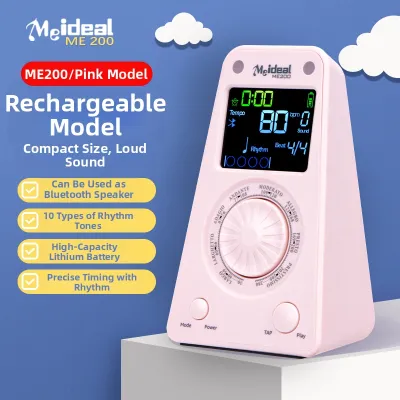
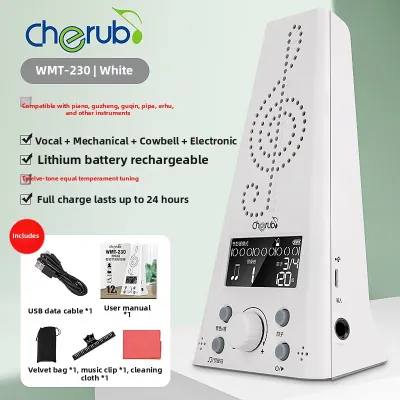
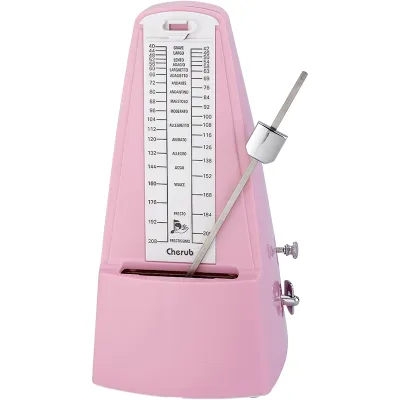
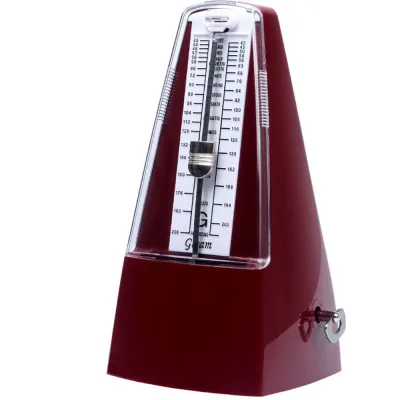
Prices are valid at publication and may change. Please refer to the product page for the latest price.
Quick Answer: Which Metronome Type Fits Your Routine?
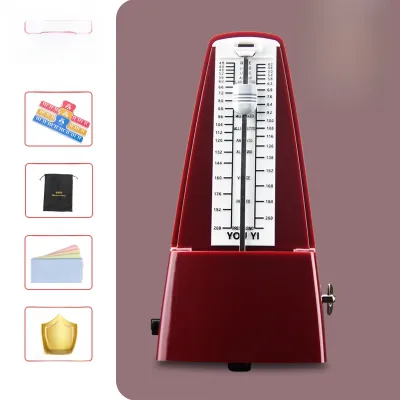
For musicians who practice primarily in a dedicated, stationary space—such as a piano studio or a home music room—the mechanical metronome is often the preferred choice. Its elegant wooden or plastic pyramid casing sits beautifully on a flat surface, and its physical pendulum offers a natural visual cue that helps players anticipate the beat. Because it operates entirely on a wind-up spring mechanism, it is always ready to use and delivers a classic, wood-block acoustic sound that cuts through instrument tones without sounding harsh.
Conversely, if your practice routine involves frequent travel, commuting to music lessons, or playing in shared living spaces where noise must be kept to a minimum, a digital metronome is highly practical. These compact electronic devices fit easily into any instrument case or pocket, run on standard batteries, and feature headphone jacks for silent practice. They also provide advanced technical features, such as complex subdivisions, polyrhythms, and programmable accent patterns, making them highly versatile tools for modern and classical musicians alike.
Core Differences in Operation and Experience
The fundamental difference between these two types of metronomes lies in how they generate time and sound. A mechanical metronome relies on classical physics and clockwork engineering. Inside its casing, a wound mainspring stores potential energy, which is gradually released through an escapement mechanism. This mechanism drives a weighted pendulum rod back and forth. By sliding the metal weight (often called the bob) up or down the pendulum, you alter its center of oscillation, which directly changes the speed of the swing and the frequency of the acoustic clicks.

In contrast, a digital metronome operates on solid-state electronics. It utilizes a quartz crystal oscillator to generate highly stable electrical pulses at precise frequencies. A microchip processes these pulses and translates them into a digital tempo displayed on an LCD or LED screen. Instead of a physical hammer striking a casing, the digital unit produces sound electronically through an internal speaker or a piezoelectric buzzer, synthesizing tones that range from sharp electronic beeps to simulated wood-block clicks.
These differing technologies create distinct tactile and aesthetic experiences. Winding a mechanical metronome and watching its physical pendulum swing creates a deliberate, ritualistic approach to practice that many traditionalists find deeply satisfying. Digital units, while lacking this vintage charm, offer a highly functional, push-button interface that prioritizes speed, precision, and immediate utility.
Key Decision Factors for Your Practice
Choosing the right metronome requires evaluating several practical dimensions of your daily practice sessions, from visual feedback to technical rhythmic requirements.
Visual Cues and Physical Presence
One of the greatest advantages of a mechanical metronome is its swinging pendulum, which provides continuous visual feedback. Just like watching a conductor’s baton, your eyes can track the physical movement of the rod as it travels from side to side. This continuous motion allows your brain to anticipate the exact moment of the beat, helping you internalize the pulse and develop a more natural, fluid sense of timing.
Digital metronomes attempt to replicate this visual feedback using flashing LEDs or moving bars on a digital screen. However, these electronic indicators are often discrete rather than continuous; an LED flashes instantly on the beat, offering no preparatory visual movement. For some learners, this makes anticipating the pulse more difficult, as there is no physical cue leading up to the sound.
Your physical practice environment also plays a role in this decision. A mechanical metronome requires a flat, level, and stable surface to operate accurately. If placed on a tilted piano lid or an uneven desk, the pendulum’s swing becomes asymmetrical, resulting in an uneven, “limping” beat that can disrupt your timing. Digital models are completely unaffected by orientation and can be placed on music stands, clipped to clothing, or rested on soft surfaces.
Portability, Power, and Durability
For musicians on the move, portability and power source are critical considerations. Mechanical metronomes are generally bulkier, heavier, and more delicate. Their internal gears, pivot pins, and pendulum rods can be easily damaged if dropped or subjected to heavy vibrations inside a gig bag. Additionally, in humid tropical climates, the internal metal springs of mechanical units require careful storage to prevent rust, and wooden casings must be kept away from extreme temperature fluctuations to avoid warping.
Digital metronomes are built for the rigors of travel. They are compact, lightweight, and constructed from durable plastics that can withstand being tossed into a backpack or instrument case. Because they have no moving parts, they are highly shock-resistant. They do, however, rely on battery power—whether standard AAA batteries, coin cells, or rechargeable lithium-ion cells. While this means you must occasionally replace or recharge the batteries, it eliminates the need to manually wind a spring every few minutes during a long practice session.
When shopping for a digital unit, it is wise to check the manufacturer’s specifications regarding battery life and the specific battery types required. Some models feature auto-power-off functions to conserve energy, which is a highly useful feature for busy students who might forget to turn the device off after practice.
Tempo Range, Subdivisions, and Audio Options
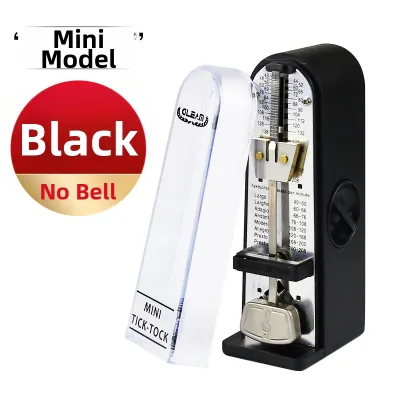
The complexity of the music you play should also guide your choice. Mechanical metronomes are straightforward devices that typically cover standard tempo markings from Largo to Prestissimo (usually ranging from 40 to 208 beats per minute). They provide a single, consistent click on every beat. While some mechanical models feature an integrated bell that can be set to chime on the first beat of a measure (such as 2/4, 3/4, 4/4, or 6/8 time), they cannot handle complex subdivisions or irregular meters.
Digital metronomes offer a vast array of rhythmic tools. They can easily subdivide beats into eighth notes, triplets, sixteenth notes, or syncopated swing patterns. Many models allow you to program complex polyrhythms (such as playing three beats against four) or irregular time signatures (like 5/8 or 7/12). This level of detail is incredibly valuable for advanced classical pieces, jazz improvisation, and contemporary music.
Furthermore, digital units provide superior audio flexibility. They feature adjustable volume controls, allowing you to boost the sound when practicing with loud instruments like brass or drums, or lower it for quiet acoustic guitar practice. The inclusion of a headphone jack is a major benefit for those living in compact apartments or shared housing, enabling completely silent practice sessions that won’t disturb family members or neighbors.
Mechanical vs Digital Feature Comparison
The following table summarizes the core differences between mechanical and digital metronomes to help you quickly identify which features align with your practice style.
| Feature | Mechanical Metronome | Digital Metronome | Best Suited For |
|---|---|---|---|
| Power Source | Manual wind-up spring (no batteries required) | Batteries (AAA, coin cell, or rechargeable) | Traditionalists vs. mobile musicians |
| Visual Beat Indicator | Swinging physical pendulum (continuous motion) | Flashing LEDs or digital screen animations | Visual learners vs. compact setups |
| Subdivision Complexity | Standard time signatures with optional bell chime | Complex subdivisions, polyrhythms, and accents | Classical soloists vs. modern/jazz players |
| Portability | Bulky, delicate, requires a flat, level surface | Compact, lightweight, highly shock-resistant | Fixed home studios vs. traveling performers |
| Audio Output Options | Fixed acoustic click (wood-block tone) | Adjustable volume, headphone jack, multiple tones | Dedicated practice rooms vs. shared spaces |
Final Decision Framework
To make your final decision, evaluate your specific practice habits against the following criteria.
Choose a mechanical metronome if:
- You practice primarily in a fixed location, such as a dedicated piano room or home studio.
- You highly value the continuous visual feedback of a physical, swinging pendulum to help you anticipate the beat.
- You prefer an organic, acoustic wood-block click that blends naturally with acoustic instruments.
- You appreciate classic aesthetics and want a reliable, battery-free device that is always ready to use.
Choose a digital metronome if:
- You travel frequently, commute to music lessons, or need to practice in multiple locations.
- You live in a shared space or compact apartment and require a headphone jack for silent practice.
- You study complex musical genres, jazz, or contemporary pieces that require advanced subdivisions, polyrhythms, or custom accent patterns.
- You play a very loud instrument and need adjustable volume controls or high-output speakers to hear the beat clearly.
Verify first if:
- You are considering hybrid options, such as digital metronomes that feature physical dials or wearable smart metronomes that pulse against your skin.
- You plan to rely on smartphone metronome apps; verify your device's battery consumption and check for potential audio latency issues, especially when using wireless Bluetooth headphones or earbuds during practice.
Frequently Asked Questions (FAQ)
Do mechanical metronomes lose accuracy over time?
Yes, mechanical metronomes can experience a loss of accuracy over time due to the natural wear and tear of their physical components. Because they rely on a mechanical mainspring and gears, factors such as dust accumulation, dried-up lubrication, or spring fatigue can cause the tempo to drift. If the internal mechanism becomes dirty or misaligned, the pendulum may swing unevenly, creating an inaccurate beat.
To maintain accuracy, always follow the manufacturer’s care instructions. Avoid over-winding the spring, and always store the metronome on a flat, level surface. When the metronome is not in use, secure the pendulum rod using the integrated locking hook or slide-on cover to prevent the delicate pivot pins from bending during storage or transport. If you notice significant tempo drift or if the mechanism jams, consult a qualified instrument repair technician rather than attempting to oil the delicate gears yourself, as improper lubricants can attract dust and worsen the issue.
Can I use a digital metronome for acoustic instrument practice without headphones?
Yes, you can use a digital metronome without headphones, as almost all models feature built-in speakers or piezoelectric buzzers. However, the volume, clarity, and tone quality of these speakers vary significantly depending on the size and design of the unit. A small, pocket-sized digital metronome may produce a thin, high-pitched beep that is easily drowned out by loud acoustic instruments such as brass, woodwinds, or acoustic drums.
Before purchasing, check the product specifications for speaker output details or volume adjustment capabilities. If you play a loud instrument, look for digital models that feature larger built-in speakers or dedicated volume boost settings. If the built-in speaker is still too quiet for your practice environment, you can easily connect the metronome’s headphone jack to an external portable speaker or amplifier to achieve the necessary volume level.
Community discussion
Share your experience or ask a question. Comments are reviewed before publication.