
Minecraft is more than just a digital playground; it is an open-ended laboratory where virtual blocks translate directly into foundational skills in electrical engineering, computer science, and architecture. For parents, educators, and self-directed learners looking to bridge the gap between screen time and academic enrichment, finding the right literature is essential. High-quality minecraft guide books transform casual gameplay into structured, goal-oriented learning environments by unpacking the complex systems underlying the game’s mechanics.
Rather than simply showing how to survive the first night or defeat in-game monsters, the best educational guides focus on the “why” and “how” of system design. In Singapore’s academic landscape, where science, technology, engineering, art, and mathematics (STEAM) disciplines are highly prioritized, these books serve as accessible, low-friction entry points to computational thinking and spatial design. By selecting resources that emphasize logic gates, structural planning, and programmatic automation, you can turn a beloved hobby into a powerful developmental tool.
How Minecraft Mechanics Build Real-World Skills
The educational power of Minecraft lies in its sandbox architecture, which mirrors real-world physical and logical systems. Within this digital environment, players interact with three primary systems that map directly to academic and professional disciplines. Redstone, the game’s equivalent of electricity, allows players to build complex circuitry that functions identically to real-world electrical engineering and digital logic. By combining Redstone wire, repeaters, and torches, players construct logic gates that govern automated systems, introducing them to the principles of Boolean algebra and hardware design.
Products mentioned in this guide
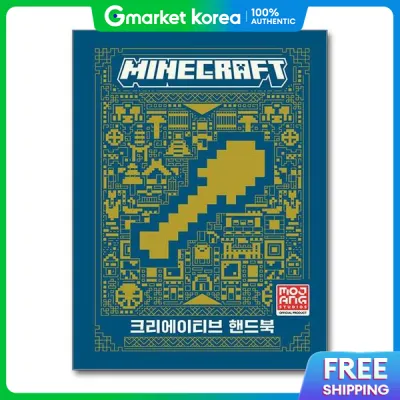
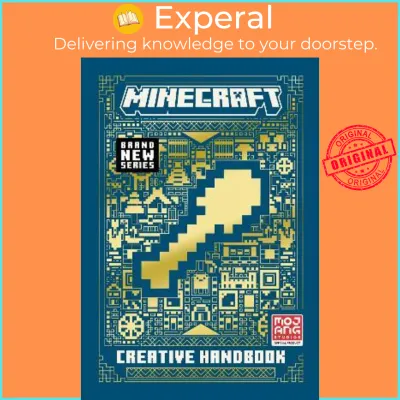
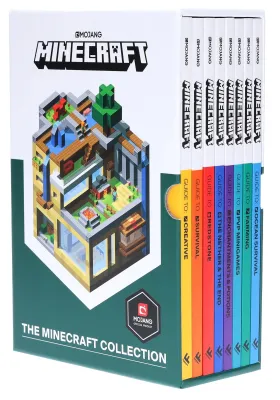
Prices are valid at publication and may change. Please refer to the product page for the latest price.
For those interested in coding, command blocks and external modding APIs provide a direct bridge to software development. Writing commands in Minecraft requires precise syntax, logical sequencing, and an understanding of variables and conditional statements. When players transition to writing scripts in languages like Python or JavaScript to manipulate the game world, they are practicing the exact same computational thinking skills used by professional software engineers.
Beyond technical logic, the game’s building mechanics foster spatial reasoning and architectural design. Constructing a complex structure requires an understanding of scale, proportion, structural integrity, and aesthetic balance. Because the game does not enforce gravity on most blocks, players must self-impose realistic engineering constraints to create visually convincing structures, prompting them to study real-world architectural styles and urban planning.
Unlike passive learning methods, Minecraft’s sandbox environment encourages iterative design and active problem-solving. When a circuit fails to fire or a structure looks disproportionate, the player must systematically diagnose the issue, isolate the variables, and test solutions. Educational guidebooks capitalize on this natural feedback loop by providing the theoretical framework needed to turn trial-and-error experimentation into a structured engineering process.
How to Evaluate if Minecraft Guide Books Actually Teach Real-World Skills
With hundreds of unofficial and official publications available on the market, separating high-quality educational resources from superficial walkthroughs requires a critical eye. Many books target casual players with colorful galleries of impressive builds or basic survival tips, offering very little cognitive depth. To identify books that offer genuine educational value, you must evaluate their pedagogical approach, author credentials, structural design, and target reading level.

First, examine the book’s pedagogical approach by looking at how it presents information. A superficial book relies on “recipe-style” instructions, telling the reader exactly where to place each block without explaining the underlying system. In contrast, an educational guide uses a “principles-first” approach. It explains how a specific component works, demonstrates a simple application, and then challenges the reader to modify or scale the project. Look for books that include troubleshooting checklists, conceptual diagrams, and open-ended design challenges that force the reader to apply what they have learned.
Second, research the author’s credentials and the publishing house. Books written by educators, computer science professionals, or certified STEM instructors are far more likely to feature structured learning curves and clear explanations of technical concepts. Prominent educational publishers, such as No Starch Press or official Mojang partnerships, consistently produce materials designed with learning outcomes in mind. Conversely, books produced rapidly by content farms or casual influencers often lack professional editing, clear formatting, and accurate technical details.
Third, look for explicit alignment with educational standards or computational thinking frameworks. High-quality books often mention STEM/STEAM concepts, algorithmic thinking, or design methodologies in their introductions or product descriptions. This alignment ensures that the activities inside the book are designed to build transferable cognitive skills, such as decomposition (breaking a large build into modular components), pattern recognition, and abstraction.
Finally, consider how the book balances technical vocabulary with age-appropriate reading levels. For younger readers (ages 7 to 10), look for highly visual guides that use annotated diagrams, color-coded blocks, and minimal text to explain basic logic and spatial concepts. For older children and teenagers (ages 11 and up), the book should introduce formal technical terms—such as “conditional loops,” “binary systems,” or “architectural elevations”—accompanied by clear, contextual definitions that demystify professional terminology.
What to Look for in Logic and Engineering (Redstone) Books
Redstone is the gateway to digital logic and mechanical engineering within Minecraft, making Redstone-focused guides some of the most educationally robust books available. When selecting a Redstone guide, look for content that goes beyond simple wiring to teach the fundamental principles of computer hardware and automation.
A high-quality Redstone book must cover the construction and function of basic logic gates, including AND, OR, NOT, and XOR gates. Understanding these gates is crucial, as they form the foundation of all modern digital computing. The book should explain how these gates process inputs to produce specific outputs, eventually leading to more complex projects like binary adders, memory cells, or automated sorting systems. Look for chapters that cover pulse generators, clocks, and mechanical automation using pistons and observers, as these teach players how to manage timing and synchronization in complex systems.
The visual design of a Redstone guide is just as important as its written explanations. Because Redstone circuits are three-dimensional and can be highly compact, look for books that feature clear, high-contrast schematic diagrams. The best guides provide multiple perspectives, such as top-down blueprints and isometric cutaway views, with color-coded lines indicating active and inactive power paths. A dedicated troubleshooting section is another hallmark of a quality guide; it should teach readers how to identify common circuit failures, such as signal degradation over distance, clock burnout, or cross-talk between adjacent wires.
Avoid books that focus exclusively on massive, highly complex builds—such as a working 8-bit computer or a giant automated castle—without breaking them down into modular components. These books often overwhelm readers, leading them to copy blocks mindlessly rather than understanding how the circuit operates. Instead, look for guides that teach modular design, showing how to build small, versatile sub-circuits that can be combined to create larger, custom machines.
Ultimately, the best Redstone books explicitly connect in-game mechanics to real-world electrical engineering and digital logic design. They should explain how a Redstone comparator functions similarly to an analog threshold detector, or how a Redstone repeater mimics a diode or an amplifier. This explicit mapping helps readers transition their in-game knowledge to physical circuit boards and academic engineering concepts.
Choosing Books for Coding and Computational Thinking
Programming is one of the most sought-after skills in modern education, and Minecraft provides an exceptionally engaging medium for teaching it. However, the landscape of Minecraft coding books is highly diverse, spanning various programming environments and skill levels. To choose the right book, you must understand these environments and ensure the book aligns with the reader’s current abilities.
First, distinguish between the three primary coding environments used in Minecraft books:
- In-game Command Blocks: This environment uses Minecraft's native scripting commands. It is excellent for teaching basic syntax, execution order, and coordinate systems without requiring external software.
- Block-Based Coding: Utilizing platforms like Microsoft MakeCode or Scratch, this approach allows readers to drag and drop visual blocks to program actions. It is ideal for younger children or absolute beginners, focusing on programming logic rather than typing syntax.
- External Text-Based Modding: These books teach professional programming languages like Python, Java, or JavaScript. Readers write code in external text editors to interact with a Minecraft server, making this environment perfect for older students ready for real-world software development.
Regardless of the environment, a good coding book must introduce core computational concepts systematically. Look for guides that dedicate chapters to variables, loops (for and while), conditionals (if/then/else), arrays, and event-driven programming. The book should explain these concepts using clear analogies and show how they are applied to solve specific problems within the game, such as using a loop to build a long wall automatically or using a conditional statement to detect block types.
Favor books that utilize project-based learning. Instead of simple exercises that print text to the chat window, look for guides that direct readers to build functional in-game tools, interactive mini-games, or automated resource farms. Projects like a “magic wand” that turns blocks into gold, an automated sphere-builder, or a pathfinding robot provide immediate, visual feedback that reinforces learning and keeps students highly motivated.
A crucial verification step when purchasing coding books is checking the software dependencies and compatibility. Because Minecraft and its external modding APIs (such as Bukkit, Spigot, or Raspberry Pi libraries) update frequently, older coding books may reference deprecated methods or software versions that are difficult to install. Before purchasing, verify which specific coding environment, modding API, or external software the book relies on. Check online reviews or the publisher’s website to ensure that updated installation instructions or code repositories are available, preventing frustrating setup roadblocks.
Finding Guides for Creative Design and Spatial Architecture
While logic and coding focus on the technical side of STEM, Minecraft is also an exceptional tool for developing creative design, spatial reasoning, and architectural appreciation. The right design guides teach readers how to think like architects and urban planners, transforming random block placement into deliberate, structured design.
Look for books that teach fundamental design principles adapted for a block-based environment. A high-quality design guide should cover scale and proportion, explaining how to determine the correct dimensions of a building relative to the player character. It should also cover color theory and texturing, teaching readers how to select complementary block palettes and mix materials to create depth, shadow, and visual interest. Concepts of structural integrity—such as designing realistic support pillars, arches, and foundations—should be emphasized, even if the game’s physics do not strictly require them.
The best architectural guides integrate real-world context into their tutorials. Look for books that introduce historical architectural styles, such as Gothic, Classical, Modernist, or Japanese traditional design, explaining the cultural and functional reasons behind these styles. Some guides also cover urban planning concepts, teaching readers how to design functional infrastructure, manage traffic flow, and integrate their structures harmoniously with the surrounding terrain and natural landscapes.
It is vital to differentiate between “idea books” and true “design guides.” Idea books are essentially picture galleries that showcase beautiful builds but offer little instruction on how to replicate or adapt them. True design guides focus on the planning process. They teach readers how to map out floor plans on grid paper, build simple wireframe outlines in-game, and iteratively refine details from the foundation upward. This emphasis on process over product teaches valuable project management and iterative design skills.
Furthermore, look for books that encourage creative problem-solving by presenting design constraints. Guides that challenge readers to build within limited spaces, adapt to steep mountain cliffs, or use only locally sourced survival resources mirror the real-world constraints faced by professional architects and civil engineers. This teaches flexibility, resourcefulness, and spatial adaptability.
Crucial Pre-Purchase Checks: Game Versions, Editions, and Formats
Before finalizing any book purchase, you must perform several critical technical checks. Because Minecraft is a constantly evolving game with distinct regional and platform-specific versions, buying the wrong edition of a book can lead to complete incompatibility and immense reader frustration.
First, verify game version compatibility. Minecraft receives major updates annually, which frequently alter block behaviors, introduce new mechanics, and deprecate old commands or Redstone features. A book written several years ago targeting an older version of Minecraft may contain Redstone circuits or commands that no longer function in the current version of the game. Check the book’s publication date and the specific game version it targets, prioritizing books that focus on timeless principles or have been updated recently.
Second, understand the critical differences between the Java Edition and the Bedrock Edition of the game. Java Edition is played on PCs (Windows, macOS, and Linux) and features unique mechanics like “quasi-connectivity” and specific block-update behaviors that advanced Redstone builders rely on. Bedrock Edition runs on consoles (Xbox, PlayStation, Nintendo Switch), mobile devices, and the Windows Store version. Redstone physics, command block syntax, and modding capabilities differ significantly between these two editions. If a reader plays on a Nintendo Switch (Bedrock) but tries to follow a Redstone guide written specifically for the Java Edition, many of the circuits simply will not work. Always ensure the book matches the reader’s specific gaming platform.
Third, evaluate the format and media of the book. While physical, hardcover books make excellent gifts and are highly durable for young readers, digital formats (e.g., PDFs or interactive eBooks) offer distinct advantages for technical subjects. Coding and advanced Redstone books often provide links to downloadable world saves, pre-written code snippets, or custom resource packs. Having a digital copy allows readers to copy and paste complex code directly into their programming environments, minimizing syntax errors caused by manual typing.
Finally, pay close attention to language, localization, and authorized sources. When ordering books through online marketplaces or local retailers in Singapore, verify the exact language of the edition. Do not assume a book’s language or content completeness based solely on its cover art or promotional images. Ensure you are purchasing from authorized publishers or reputable distributors to guarantee that you receive complete, high-quality prints rather than poorly formatted, unauthorized reproductions that omit crucial diagrams or code repositories. This is especially important for educational books, which typically fall into a highly accessible S$15 to S$40 price range for physical copies in Singapore.
Frequently Asked Questions (FAQ)
Do children need prior coding experience for Minecraft programming books?
No, prior coding experience is not necessary for most entry-level Minecraft programming books. Beginner-friendly guides typically utilize visual, block-based coding interfaces like Microsoft MakeCode or Scratch, which allow children to grasp core programming logic—such as loops and conditionals—by dragging and dropping colorful blocks. However, if a book focuses on text-based languages like Python or Java modding, the reader will benefit from basic typing proficiency and a foundational understanding of computer file systems, though the best guides will walk them through the initial setup step-by-step.
Can standard Minecraft players use Minecraft Education Edition guidebooks?
Only to a limited extent. While foundational concepts like basic spatial design, logical thinking, and introductory coding overlap across all versions, Minecraft Education Edition contains exclusive features not found in the standard Java or Bedrock survival and creative modes. These features include non-player character (NPC) creation tools, chalkboards, portfolio cameras, and specialized chemistry blocks. Guidebooks written specifically for the Education Edition often structure their lessons around these exclusive tools, which means standard players may find themselves unable to complete certain projects without specific world settings or third-party add-ons.
Community discussion
Share your experience or ask a question. Comments are reviewed before publication.