
For anyone starting their musical journey, choosing the right first instrument is a pivotal decision. At first glance, a mini guitar and a ukulele can look incredibly similar, especially when displayed side-by-side on a music store wall. However, they are fundamentally different instruments with distinct learning curves, physical demands, and sonic characteristics. Understanding these differences is essential to matching your purchase with your personal musical goals, hand size, and preferred genres.
While both options offer compact, highly portable entry points into stringed instruments, they diverge in construction, tuning systems, and the physical effort required to play them. Choosing between them is not simply a matter of scale, but of deciding what kind of musical experience you want to cultivate.
Clarifying the Basics: Are Mini Guitars and Ukuleles the Same?
Despite their visual similarities, mini guitars and ukuleles are not the same instrument. A mini guitar is a scaled-down version of a standard acoustic guitar, typically built to a 1/2 or 3/4 scale length. It is designed to function exactly like a full-sized guitar, preserving the same string count, intervals, and playing mechanics. In contrast, a ukulele is an entirely separate instrument family with its own distinct history, physical architecture, and tuning principles.
Products mentioned in this guide
![[Fasci] Mini 23 Inch Basswood 12 Frets 6 String Acoustic Guitar with Pick and Strings for Kids / Beginners](https://img.lazcdn.com/g/p/bfa1de507cdd2bc42f7d8bb2ff04a703.jpg_400x400q80.jpg_.webp)
![[LK6W] Mini 23 Inch Basswood 12 Frets 6 String Acoustic Guitar with Pick and Strings for Kids / Beginners](https://img.lazcdn.com/g/p/43abac5ef311eb0a9f8125cb2bf1beab.jpg_400x400q80.jpg_.webp)
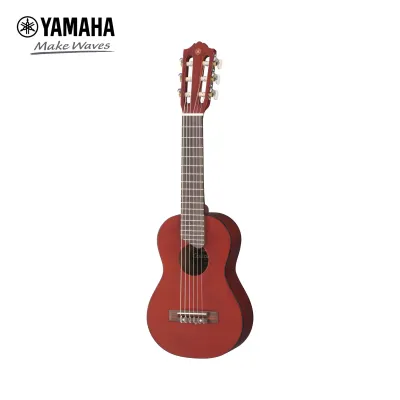
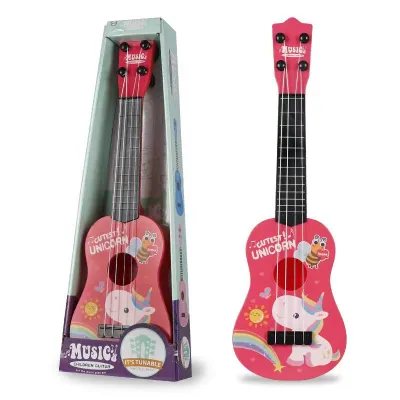
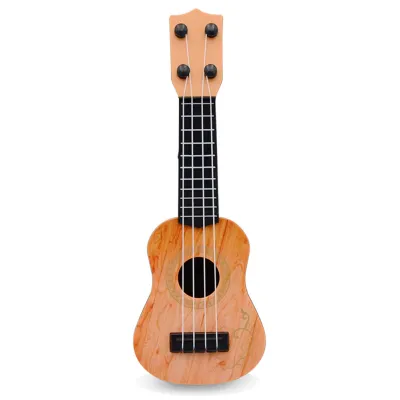
Prices are valid at publication and may change. Please refer to the product page for the latest price.
The most immediate physical distinction lies in the strings and neck width. A mini guitar features six strings, which requires a wider neck to accommodate the extra width and spacing. A standard ukulele features only four strings and a significantly narrower neck. This design difference dramatically changes how your hand wraps around the fretboard and how much space your fingers have to press down on individual notes.
Beneath the surface, the internal engineering of these instruments is also completely different. The internal bracing patterns—the wooden struts glued inside the soundboard—are specifically designed to handle different levels of tension. A steel-string mini guitar must withstand massive structural tension, often exceeding 100 pounds of pull, requiring robust, heavy-duty bracing. A ukulele, designed for low-tension nylon or fluorocarbon strings, uses much lighter, delicate bracing to maximize resonance from its smaller body. Interchanging their structural designs or string types can easily warp or destroy the instrument.
How They Compare: Sound, Playability, and Physical Differences
To appreciate how these instruments differ in daily practice, you must look at how they feel in your hands and how they project sound into a room. The physical differences dictate not only your comfort during long practice sessions but also the style of music you can comfortably play.

Strings, Tuning, and Chord Complexity
The structural layout of each instrument directly shapes its learning curve. A mini guitar utilizes standard guitar tuning (E-A-D-G-B-E from lowest to highest string). Because it has six strings, forming standard chords requires complex finger shapes that often span three or four frets and require pressing down multiple strings simultaneously. Furthermore, many mini guitars use steel strings, which require significant finger strength and can cause temporary fingertip soreness for beginners during the first few weeks of practice.
A standard ukulele, typically tuned to G-C-E-A, offers a much gentler introduction to stringed instruments. It uses a “re-entrant” tuning system where the outer G-string is tuned higher than the middle strings, giving the instrument its signature self-contained, close-harmony sound. With only four nylon strings, the physical tension is remarkably low. Beginners can play basic chords, such as C major or A minor, using just a single finger. This low barrier to entry allows new players to strum along to simple songs within their very first hour of practice, without the intense fingertip fatigue associated with steel-string mini guitars.
Sound Profile and Genre Suitability
The physical volume and tonal range of these instruments differ substantially. A mini guitar, even with its smaller body, produces a relatively full, balanced, and wide frequency range. It retains the deep bass notes and bright trebles of a traditional guitar, making it an incredibly versatile choice. This broad acoustic footprint allows the mini guitar to accompany a wide variety of musical genres, including pop, rock, folk, blues, and intricate fingerstyle arrangements.
The ukulele, by contrast, produces a bright, plucky, and distinctly cheerful tone. Its small acoustic chamber cannot project deep bass frequencies, resulting in a sound that naturally sits in the mid-to-high register. This sonic profile makes the ukulele the perfect accompaniment for acoustic indie covers, traditional Hawaiian music, folk tunes, and upbeat pop songs. While it lacks the dramatic dynamic range and bass presence of a mini guitar, its sweet, percussive quality has a unique charm that instantly brings a relaxed, acoustic vibe to any performance.
Self-Diagnosis: Which Instrument Fits Your Learning Goals?
Making the right choice depends heavily on your long-term musical aspirations, physical traits, and how much time you are willing to invest in the initial learning phase. By evaluating your personal preferences, you can easily determine which path is most rewarding for you.
When a Mini Guitar Is the Better Choice
A mini guitar is the superior option if your ultimate goal is to play standard acoustic or electric guitar. Because a mini guitar uses the exact same tuning and chord shapes as a full-sized guitar, every skill you learn is directly transferable. Transitioning from a 3/4 scale mini guitar to a full-sized dreadnought later on is incredibly straightforward, requiring only a minor adjustment to the larger physical scale.
Additionally, the mini guitar is ideal if you want to play complex melodies, basslines, or fingerstyle arrangements that require a wider range of notes. If you have larger hands, you may also find the wider neck of a mini guitar more comfortable, as it provides more physical space between the strings, reducing the likelihood of accidentally muting adjacent strings with your fingertips.
When a Ukulele Is the Better Choice
The ukulele is the ideal choice if you prioritize immediate fun, extreme portability, and a gentle physical learning curve. If you want to sing and play songs as quickly as possible without spending weeks building up hand strength and calluses, the ukulele’s simple chord shapes and soft nylon strings make it incredibly accessible.
It is also the perfect option for younger children or individuals with smaller hands who might struggle to wrap their fingers around a guitar neck or stretch across multiple frets. Its compact size means you can easily pack it into a backpack or carry-on bag, making it a highly portable companion for travel, outdoor gatherings, or casual beach outings.
The Hybrid Option: Understanding the Guitalele
If you find yourself torn between the portability of a ukulele and the musical versatility of a guitar, the guitalele offers a compelling middle ground. A guitalele is essentially a travel-sized guitar with the body of a baritone ukulele but featuring six strings.
It is tuned a fourth higher than a standard guitar (A-D-G-C-E-A), which matches the tuning of a ukulele on its top four strings while adding two lower bass strings. This setup allows you to use standard guitar chord fingerings, but the instrument projects a higher, sweeter tone that sounds remarkably like a ukulele. Before purchasing a guitalele, always check the manufacturer’s specifications regarding scale length and string compatibility, as they typically require specific nylon classical guitar strings rather than high-tension steel strings to prevent neck damage. If instructions conflict or are unclear, consult a qualified professional before restringing.
Buying Guide: What to Check Before Purchasing in Singapore
When you are ready to make a purchase, navigating the local market requires a practical understanding of how climate and instrument setup affect your investment over time.
Climate and Wood Selection Singapore’s tropical climate presents unique challenges for wooden musical instruments. The high relative humidity, often exceeding 80%, combined with rapid temperature changes from air-conditioned rooms to outdoor heat, can cause solid wood to swell, warp, or crack. For beginners, instruments constructed from high-pressure laminate (HPL) or laminate wood are highly recommended. Laminate materials are significantly more stable, resistant to humidity shifts, and require far less maintenance than solid wood. If you do choose a solid-wood instrument, you must plan to store it in a dedicated case with silica gel packs or a specialized instrument dehumidifier to maintain structural integrity.
Setup and Playability Before buying any instrument, pay close attention to the “action,” which refers to the distance between the strings and the fretboard. If the action is too high, you will have to press down incredibly hard to produce a clean note, leading to severe finger pain and frustration. Conversely, if the action is too low, the strings will buzz against the frets when strummed. Check that the frets are smooth along the edges of the neck; sharp fret ends are a common sign of dry wood or poor manufacturing and can scratch your hands while playing. If you plan to adjust the action yourself, always consult the manufacturer’s instructions or seek help from a professional technician to avoid damaging the neck or fretboard.
Purchasing Channels Whenever possible, visit a physical music store in Singapore to hold the instruments yourself. Testing the neck profile, overall weight, and acoustic tone in person is invaluable. If you prefer to buy online, avoid unverified listings on general e-commerce platforms that offer no quality control. Instead, purchase from established local music retailers who provide professional setup services before delivery. A professional setup ensures the instrument is properly adjusted, in tune, and comfortable to play straight out of the box. Always verify the warranty terms and return policies so you are covered if any shipping damage or manufacturing defects arise.
Frequently Asked Questions (FAQ)
Can I put guitar strings on a ukulele?
No, you should never put steel guitar strings on a standard ukulele. Ukuleles are engineered to handle the very low tension of nylon or fluorocarbon strings. Steel guitar strings exert massive physical tension that can easily warp the ukulele’s neck, pull the bridge completely off the soundboard, or crack the body. If you want a different tone, look for specialized ukulele strings, such as titanium or fluorocarbon, or consult a professional luthier to discuss safe alternatives.
Will learning the ukulele make it harder to learn guitar later?
No, learning the ukulele will not make it harder to learn the guitar; in fact, it acts as an excellent stepping stone. While the chord shapes and tuning systems are different, playing the ukulele helps you master foundational musical skills such as rhythm, strumming patterns, finger coordination, and ear training. When you eventually transition to the guitar, you will only need to focus on learning the new chord shapes and building finger strength for the steel strings, as your fundamental musical coordination will already be well-developed.
Community discussion
Share your experience or ask a question. Comments are reviewed before publication.