
Selecting your first mokugyo—the traditional wooden fish slit-drum used in Buddhist chanting, meditation, and musical ensembles—requires balancing acoustic performance, physical comfort, and material durability. For most beginners in Singapore, a mid-sized wooden mokugyo made of camphor wood offers the ideal balance of warm resonance, manageable volume, and traditional feel. Because this instrument relies entirely on its physical structure to produce sound, understanding how materials, sizes, and craftsmanship interact will help you make an informed choice that supports your practice for years to come.
While the instrument is deeply rooted in liturgical traditions, it has also found a home in modern percussion and mindfulness practices. Choosing the right one involves evaluating how the instrument will fit into your living space, especially when practicing in high-density residential areas. By focusing on key construction details and environmental care, you can find an instrument that produces a clear, soothing tone without requiring excessive striking force.
Understanding Mokugyo Types and Materials
The material of a mokugyo directly dictates its tonal character, durability, and how it responds to changes in the environment. Traditional models are crafted from solid blocks of wood, which are hollowed out through a narrow slit to create a resonant chamber. Modern manufacturing has also introduced synthetic alternatives that offer distinct practical advantages for contemporary users.
Products mentioned in this guide
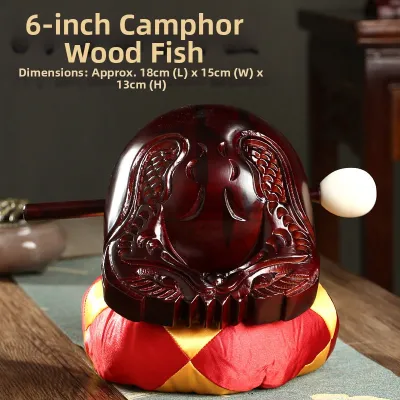
Prices are valid at publication and may change. Please refer to the product page for the latest price.
Camphor wood is the most popular traditional material for beginners. It is relatively lightweight, highly resonant, and possesses a natural, pleasant aroma that acts as a mild insect repellent. Acoustically, camphor wood produces a warm, deep, and mellow tone with a moderate decay, making it highly suitable for repetitive chanting and personal meditation. It is forgiving for beginners, as it yields a pleasant sound even with inconsistent striking techniques.
Rosewood and ebony represent the premium tier of wooden instruments. These dense hardwoods are significantly heavier and harder than camphor wood. Consequently, they produce a much brighter, sharper, and louder projection. The sound carries a distinct clarity that cuts through group chanting or musical ensembles. However, these materials are more expensive and require a more precise striking technique to avoid harsh, overly bright overtones.
Synthetic resin and plastic mokugyo have gained popularity as highly durable, low-maintenance alternatives. These instruments are molded to replicate the shape of traditional wooden fish. While they lack the complex, organic overtones and warm resonance of natural wood, they produce a very consistent, clear, and bright sound. They are also significantly more affordable and virtually indestructible.
| Material | Sound Profile | Durability | Ideal Use Case |
|---|---|---|---|
| Camphor Wood | Warm, deep, mellow resonance | Moderate (sensitive to humidity) | Home practice, daily chanting, meditation |
| Rosewood | Bright, sharp, loud projection | High (dense and heavy) | Group chanting, temples, musical ensembles |
| Synthetic Resin | Consistent, clear, high-pitched | Very High (weatherproof) | Budget-conscious beginners, travel, classrooms |
In Singapore, the tropical climate is a critical factor when choosing a wooden instrument. The high relative humidity, which often exceeds 80%, can cause natural wood to absorb moisture and swell, slightly dampening the sound. Conversely, keeping the instrument in an air-conditioned room can cause the wood to dry out rapidly, leading to warping or cracking along the grain. If you cannot commit to maintaining a stable environment for a wooden instrument, a synthetic resin model provides a worry-free alternative that remains completely unaffected by humidity fluctuations.
How to Choose the Right Size for Beginners
Mokugyo sizes are traditionally measured by the diameter of the widest part of the instrument, often indicated in inches or traditional regional units. Choosing the correct size is not merely a matter of preference; it directly influences the pitch, volume, weight, and the physical effort required to play the instrument.

For home practice in Singapore, where most residents live in close proximity within HDB flats or apartments, a mid-sized mokugyo measuring between 3 inches (approximately 9 cm) and 4 inches (approximately 12 cm) is highly recommended. This size range strikes an excellent balance. It is large enough to produce a satisfyingly deep, resonant sound rather than a dry, high-pitched click, yet quiet enough to ensure your practice does not disturb your neighbors.
Avoid miniature decorative models, which are often under 2.5 inches in diameter. These small pieces are frequently sold as souvenirs and lack the internal volume necessary to create a proper resonant chamber. They produce a very sharp, thin sound and have a tiny striking surface that is difficult for beginners to hit consistently. On the other hand, instruments larger than 5 inches are designed for temple halls or large group settings. They are heavy, take up significant space, and produce a powerful volume that is far too loud for a standard residential room.
The size of the instrument also dictates its weight and stability. A mid-sized mokugyo sits securely on its cushion, resisting the tendency to slide or bounce when struck. This stability allows you to focus on maintaining a steady rhythm and a relaxed grip on the mallet, rather than constantly adjusting the position of the instrument during a session.
Evaluating Craftsmanship and Building Your Shortlist
When compiling a shortlist of potential instruments, you can evaluate their quality by inspecting specific physical characteristics. Even within the same material and size categories, differences in carving and assembly can significantly impact the acoustic output.
First, examine the carving depth and the symmetry of the resonance chamber. The traditional fish-scale patterns and the stylized fish head should be carved cleanly, without rough edges or splintering. More importantly, look closely at the longitudinal slit—the “mouth” of the fish. This opening must be uniform and smooth. Any unevenness, loose wood fibers, or structural asymmetry inside the slit can disrupt the airflow within the chamber, resulting in a dull, muffled sound or unwanted buzzing vibrations.
Next, assess the structural integrity of the wood. High-quality wooden mokugyo are carved from a single, solid block of wood rather than multiple pieces glued together. Multi-piece construction is highly susceptible to splitting along the glue joints over time, especially under the impact of regular striking and the stress of climate changes. Inspect the surface for any fine hairline cracks, particularly near the edges of the slit and around the carved details.
To help you match your specific needs to the right configuration, consider this beginner profile framework:
- The Quiet Home Practitioner: If you practice early in the morning or late at night in an apartment, prioritize a 3-inch camphor wood mokugyo paired with a soft, yarn-wrapped or thick leather mallet. This setup minimizes sharp attack sounds and emphasizes a low, warm hum.
- The Mobile Practitioner: If you travel frequently or attend study groups, opt for a 3-inch synthetic resin model. It is lightweight, highly durable, and requires no special environmental protection during transit.
- The Aspiring Liturgical Chanter: If you are learning traditional chanting tempos and want an authentic experience, choose a 4-inch camphor wood model. This size provides the classic resonance and tactile feedback required for traditional rhythms.
Finally, evaluate the included accessories. A mokugyo cannot be played properly without a matching mallet and cushion. The mallet handle should be made of a flexible material like rattan or bamboo, which absorbs the shock of the strike and reduces strain on your wrist. The mallet head should be wrapped in high-quality leather or rubber; hard wooden heads should be avoided by beginners as they can dent the instrument’s surface and produce a harsh, clacking tone. The cushion must be a firm, ring-shaped donut that supports the rounded bottom of the instrument without dampening its natural vibrations.
Where to Buy a Mokugyo in Singapore
Finding a reliable mokugyo in Singapore involves exploring both specialized local brick-and-mortar shops and reputable online channels. Each option offers distinct advantages depending on whether you prioritize physical inspection or convenience.
Local Buddhist supply stores are the best place to start. These shops are primarily concentrated in cultural and historical districts such as Waterloo Street, Geylang, and Chinatown. Visiting a physical store allows you to handle the instruments directly. You can test the weight, feel the balance of the mallet, and listen to the actual tone of different wood types. Because wood is a natural material, no two wooden mokugyo sound exactly alike; testing them in person ensures you select one with a tone that personally resonates with you.
If you prefer shopping on online marketplaces or specialized musical instrument websites, extra diligence is required. Look for sellers who specialize in traditional percussion or liturgical supplies rather than general novelty stores. Carefully read customer reviews, paying close attention to feedback regarding the accuracy of the material descriptions. Avoid listings that use vague terms like “hardwood” without specifying the exact species, as these are often lower-quality composite woods.
When ordering online, verify the seller’s shipping and packaging policies. Wooden instruments are fragile and can easily crack if subjected to rough handling or extreme temperature drops in cargo holds. Ensure the seller uses robust packaging, such as thick bubble wrap and double-walled cardboard boxes. It is also wise to confirm the store’s return policy in case the instrument arrives with transit damage or structural defects.
For those seeking established craftsmanship, look for authorized distributors of reputable traditional brands. While many mokugyo are unbranded artisan pieces, some specialized manufacturers from Japan and Taiwan are known for highly consistent quality control. Verifying that a local retailer or online seller is an authorized dealer helps guarantee you are purchasing an authentic, solid-wood instrument rather than a cheap imitation.
Care and Maintenance for Your First Mokugyo
Proper maintenance is essential to preserve the acoustic qualities of your mokugyo and prevent the wood from deteriorating. With basic care, a high-quality wooden instrument can last for decades, developing a richer, matured tone over time.
Cleaning should always be done with a dry, soft microfiber cloth. Gently wipe the surface after each use to remove dust and oils transferred from your hands. Never use water, liquid detergents, or household furniture polishes on a wooden mokugyo. Moisture can seep into the unvarnished interior of the resonance chamber, causing the wood to swell, rot, or develop mold. Chemical polishes can strip away the natural oils of the wood or damage the protective lacquer finish.
Managing humidity is the most critical aspect of preserving a wooden mokugyo in Singapore. Store the instrument in a location with stable temperatures, away from direct sunlight, open windows, and the direct draft of air conditioners. If you store the instrument in a closed cabinet, place a small, rechargeable silica gel dehumidifier packet nearby to absorb excess moisture. If you use air conditioning daily, consider keeping the mokugyo in a padded fabric bag when not in use to buffer it against rapid humidity drops.
Do not neglect the accessories. Keep the cushion clean and dry, and rotate it slightly every few weeks so that the weight of the mokugyo does not permanently compress one side. Inspect the mallet regularly; if the leather wrapping begins to unravel or harden, replace it promptly. A worn mallet head can expose the hard inner core, which can bruise or crack the wood of your instrument during play.
Frequently Asked Questions (FAQ)
Do I need a special cushion to play the mokugyo? (FAQ)
Yes, a dedicated ring-shaped cushion is essential for playing the mokugyo. Because the bottom of the instrument is rounded, it cannot sit stably on a flat surface without support. The cushion cradles the instrument securely, preventing it from rolling or sliding during practice. More importantly, placing a mokugyo directly on a hard table dampens its vibrations, ruining the resonance and volume. The soft, dense structure of the cushion isolates the instrument, allowing the entire wooden chamber to vibrate freely and produce its full, natural tone.
Can a mokugyo be used as a standard musical percussion instrument? (FAQ)
Yes, the mokugyo is widely used as a percussion instrument in modern orchestral music, world music, and contemporary ensembles, where it is often referred to generally as a wood block or temple block. When integrated into a musical drum kit or percussion setup, it is typically mounted on a stand rather than placed on a cushion. Musicians often use different types of mallets, such as yarn-wrapped marimba mallets or soft drumsticks, to extract different tonal colors, ranging from sharp, rhythmic accents to soft, atmospheric rolls.
Community discussion
Share your experience or ask a question. Comments are reviewed before publication.