
Selecting the ideal music score stand is a foundational decision for any musician, directly impacting practice consistency, physical comfort, and the safety of sheet music or digital devices. The right stand does more than hold your music; it integrates into your physical environment, supports your instrument’s specific playing posture, and preserves your physical health by promoting proper ergonomics. Whether you are setting up a permanent home studio in a Singapore apartment, preparing for outdoor rehearsals, or optimizing a compact desktop production suite, understanding the structural differences between stand types is essential.
A mismatch between your stand and your practice environment can lead to persistent frustration. A flimsy stand that wobbles under the weight of a heavy anthology book can disrupt your focus, while an overly bulky orchestral stand can clutter a multi-use room and prove impossible to transport. By analyzing your physical space, your primary reading medium, and your instrument’s height requirements, you can select a stand that enhances your practice sessions rather than hindering them.
Assess Your Practice Environment and Instrument Needs
Before evaluating specific stand designs, analyze the physical constraints of your primary practice space. Consider the available floor area and whether the stand will remain permanently assembled or need to be packed away after every session. In shared living spaces or multi-purpose rooms, a stand with a large footprint can quickly become a tripping hazard. Conversely, in a dedicated studio, a solid, non-collapsible stand provides a reliable anchor for your daily routine, eliminating setup time.
Products mentioned in this guide
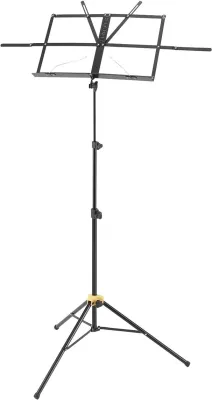
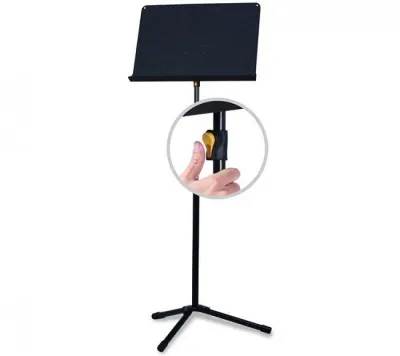
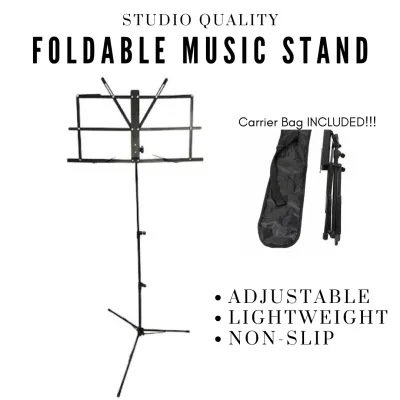
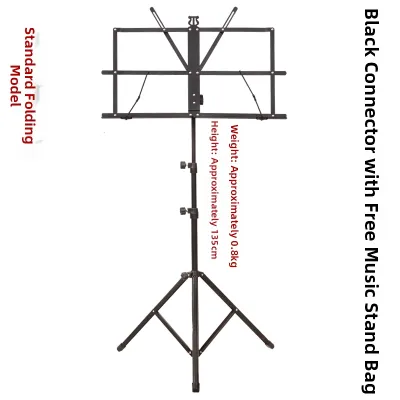
Prices are valid at publication and may change. Please refer to the product page for the latest price.
The physical format of your reading material is the next critical factor. Heavy, spiral-bound method books, thick binders, and oversized orchestral scores require a robust support surface with a deep shelf. If you primarily read from a digital tablet, the weight distribution changes; while a tablet is compact, its concentrated weight and high center of gravity demand a stable base to prevent tipping. Additionally, the shelf depth must accommodate the thickness of your device, especially if it is housed in a protective case.
Your instrument and playing posture dictate the height and angle requirements of the stand. A classical guitarist or cellist practicing in a seated position requires a stand that can adjust to a relatively low height, keeping the music within the natural downward line of sight without blocking the view of the hands. A violinist, flute player, or vocalist practicing while standing needs a stand that extends high enough to keep the head upright, preventing neck strain and supporting proper breathing technique. The stand must allow you to align your eyes, the music, and your instrument’s fingerboard or keys in a single, comfortable field of view.
Orchestral and Heavy-Duty Floor Stands for Fixed Setups
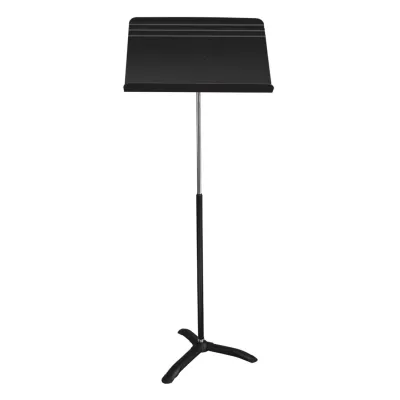
Orchestral stands, characterized by their solid metal construction and non-folding trays, are the gold standard for stability in permanent practice environments. These heavy-duty floor stands are designed to remain assembled, making them ideal for dedicated home studios, music schools, and professional rehearsal spaces. The primary advantage of an orchestral stand is its solid, unperforated tray, which provides a continuous, flat surface that supports single sheets of paper, heavy binders, and digital tablets with equal ease. Because there are no wire gaps, you can easily write annotations directly onto your sheet music while it rests on the stand.

When selecting an orchestral stand, pay close attention to the base design. Most heavy-duty stands utilize either a heavy cast-iron disc base or a wide, three-legged tubular steel base. A cast-iron disc base offers an exceptionally low center of gravity and a compact footprint, making it highly stable and less likely to trip passersby in tight spaces. A three-legged base, while occupying slightly more floor area, provides excellent stability on uneven floors and often allows multiple stands to be nested together when stored. Verify the manufacturer’s footprint specifications to ensure the base fits comfortably within your designated practice corner.
Height adjustment mechanisms on orchestral stands must be robust enough to hold heavy loads without slipping. Many professional models use a friction-lock system, which allows you to raise or lower the shaft simply by pulling or pushing, relying on internal tension to hold the position. Other models feature a threaded collar or a hand-knob tension dial. If you frequently switch between seated and standing practice, or if multiple musicians of different heights share the stand, a reliable friction-lock or quick-release collar is highly beneficial. Check the maximum load capacity specified by the manufacturer to ensure the locking mechanism can support your heaviest anthologies or a combination of a tablet and clip-on accessories.
Portable Folding Stands for Rehearsals and Flexible Spaces
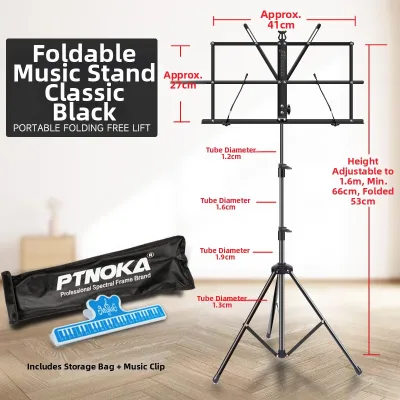
For musicians who travel frequently, attend group rehearsals, or practice in multi-purpose rooms where equipment must be stored away, a portable folding stand is indispensable. These stands are engineered for maximum collapsibility, featuring telescoping shafts, folding tripod legs, and trays that fold down to a fraction of their fully extended size. The primary design goal of a portable stand is weight reduction, often achieved through the use of lightweight aluminum, thin-gauge steel, or durable plastics.
While portability is highly convenient, it often comes at the expense of structural rigidity. When evaluating a folding stand, inspect the locking joints and adjustment collars carefully. High-quality portable stands utilize sturdy metal clamps or heavy-duty plastic tension levers rather than thin, easily stripped thumb screws. The tray construction is also a critical point of inspection; wire-frame folding trays are incredibly light but offer minimal support for single sheets of paper, which can easily flop over or slip through the gaps. If you frequently use individual sheet music, look for a portable stand with a solid or perforated folding aluminum tray that provides a continuous support surface while remaining lightweight.
Transport convenience is determined by the stand’s folded dimensions and overall weight. A stand that folds down to under 50 centimeters can easily fit inside a standard backpack or a dedicated instrument case pocket. Many manufacturers include a padded carry bag with a shoulder strap, which protects the stand’s finish and prevents the metal legs from scratching other gear during transport. Before purchasing, verify the total weight of the stand; a model weighing between 1 and 1.5 kilograms strikes an excellent balance between carrying comfort and structural stability, ensuring it is light enough to carry across town but heavy enough to resist minor drafts.
Desk-Mounted and Clip-On Stands for Restricted Spaces
In modern home studios, small apartments, or production suites where floor space is at a premium, traditional floor stands may be impractical. For keyboardists, desktop music producers, and multi-instrumentalists working at a computer workstation, desk-mounted and clip-on stands offer an elegant, space-saving solution. These stands attach directly to the edge of a desk, a synthesizer stand, or a microphone pole, completely eliminating the need for a floor-based tripod.
A critical factor when choosing a desk-mounted stand is the mounting mechanism. Most models utilize a heavy-duty C-clamp or a spring-loaded clip. You must verify the maximum clamp width to ensure it can accommodate the thickness of your desk or keyboard stand frame. Additionally, look for clamps equipped with dense rubber or felt protective padding; this padding prevents the metal clamp from scratching, denting, or slipping on polished wood, glass, or laminate surfaces. A secure grip is essential, as any wobble in the desk will translate directly to the music stand tray.
Ergonomic adjustability is paramount when using a desk-mounted stand, as the distance between your eyes and the desk is typically shorter than in a traditional floor setup. Look for stands featuring an articulating arm with multiple joints, allowing you to adjust not only the height and tilt but also the depth, bringing the music closer to your face or pushing it back to clear other equipment. The joint tension must be adjustable, usually via hex keys or hand knobs, so you can lock the arm securely in place once you find the perfect viewing angle. This flexibility helps prevent neck strain and eye fatigue during long practice or recording sessions.
Cross-Scenario Compatibility and Essential Accessories
Many musicians find that their practice needs span multiple environments, requiring a setup that can adapt to different situations. While you can purchase separate stands for home and travel, you can also enhance a single stand’s versatility through strategic adjustments and accessories. For instance, if you use a lightweight portable stand but occasionally need to practice outdoors or in drafty rooms, you can stabilize the base by draping a small sandbag or a weighted wrist weight over the tripod legs. This simple addition significantly lowers the center of gravity, preventing the stand from tipping over in a sudden breeze.
The design of the music tray determines its compatibility with various utility accessories. A tray with a wide, flat lip can accommodate clip-on LED stand lights, which are essential for poorly lit rehearsal spaces, orchestra pits, or late-night home practice. If you use loose sheet music, look for a tray that features built-in spring-loaded page arms or purchase separate magnetic page clips to hold your music flat against the tray. For wind players and vocalists, attachable utility trays that clamp onto the stand’s vertical shaft provide a convenient spot to hold pencils, reeds, valve oil, or a water bottle, keeping your practice area organized and clutter-free.
Finally, consider the visual properties of the stand’s material and finish. Matte black powder-coated finishes are the industry standard for a reason: they absorb light rather than reflecting it, minimizing distracting glare from overhead practice lights, stage spotlights, or bright windows. If you practice in a sunlit room or under direct artificial lighting, a high-gloss or chrome-finished stand can create harsh reflections that make reading sheet music difficult. Choosing a non-reflective matte finish ensures that your eyes remain focused on the music, supporting a more productive and comfortable practice session.
Frequently Asked Questions (FAQ)
How do I prevent a portable music stand from tipping over outdoors?
To secure a lightweight portable stand in outdoor environments, start by fully extending the tripod base to its widest possible footprint, which maximizes lateral stability. You can add weight to the base by placing a small sandbag, a water bottle, or a weighted bag over the lower collar of the tripod legs. Additionally, angle the music tray slightly flatter to reduce wind resistance, acting less like a sail, and use spring-loaded page clips or elastic bands to keep your sheet music from blowing away.
Can I use a standard floor stand for heavy tablets and digital devices?
Yes, you can use a standard floor stand for digital devices, but you must verify that the stand’s weight capacity and tray depth are sufficient. A solid-tray orchestral stand is highly recommended for tablets, as it provides a continuous, rigid backing that prevents the device from flexing or falling backward. If you are using a wire folding stand, ensure the bottom lip is deep enough to hold the tablet securely, and consider using a dedicated tablet clamp accessory that mounts directly to the stand’s vertical shaft for maximum security.
Community discussion
Share your experience or ask a question. Comments are reviewed before publication.