
Choosing the right dictionary is a pivotal decision in your child’s language development, directly impacting their reading comprehension, writing quality, and academic confidence. The Oxford School Dictionary (OSD) is designed primarily for native or near-native English-speaking school children, focusing on curriculum-aligned vocabulary, subject-specific terms, and age-appropriate definitions. In contrast, the Oxford Advanced Learner’s Dictionary (OALD) is built specifically for non-native English learners (ESL/EFL) at intermediate to advanced levels, placing its primary focus on grammar, usage, collocations, and extensive contextual examples.
While both reference books are published by Oxford University Press, they serve entirely different educational purposes. The OSD acts as a quick, accessible reference to support daily schoolwork across various subjects, while the OALD serves as a comprehensive language-learning manual that teaches students how to actively produce accurate English. Matching the dictionary to your child’s current language proficiency and academic stage ensures they have the right level of support without being overwhelmed by unnecessary linguistic complexity.
Core Differences at a Glance
To help you quickly evaluate which reference book aligns with your child’s current learning environment, it is useful to contrast their core design principles side by side. Selecting the right volume is not a matter of finding the book with the highest word count; rather, it is about matching the dictionary’s structural support to your child’s cognitive load and academic requirements.
Products mentioned in this guide
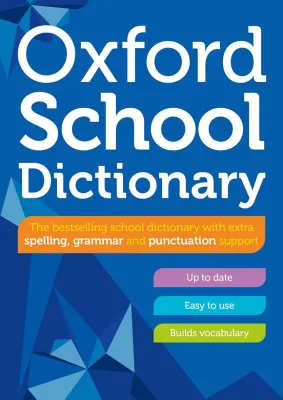
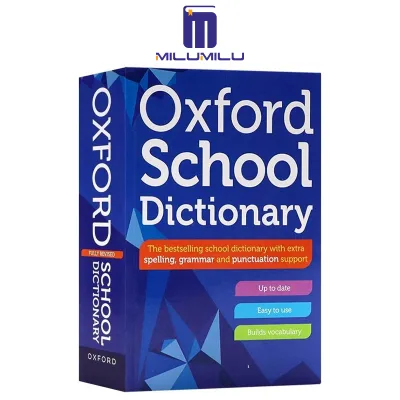
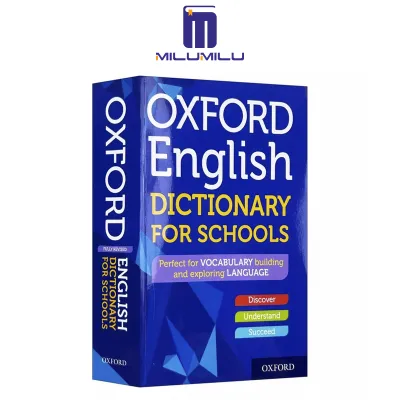
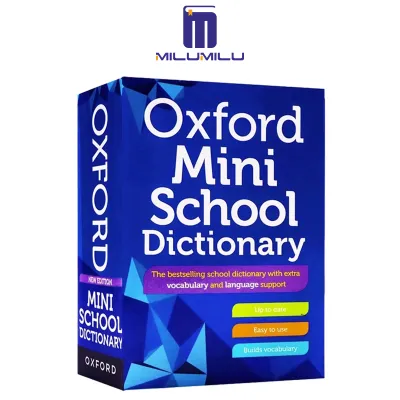
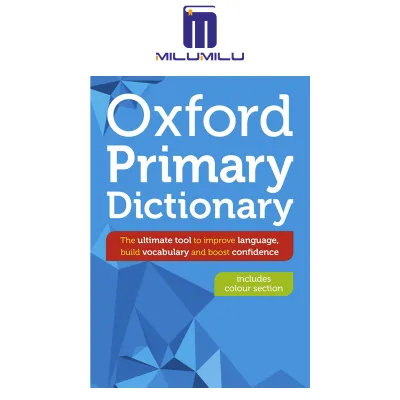
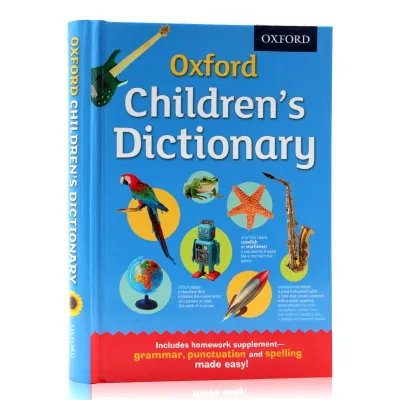
Prices are valid at publication and may change. Please refer to the product page for the latest price.
The following comparison table outlines the primary distinctions between these two widely used educational resources across key decision-making dimensions:
| Dimension | Oxford School Dictionary (OSD) | Oxford Advanced Learner's Dictionary (OALD) |
|---|---|---|
| Primary Target Audience | Primary and early secondary school students (Ages 10–14) | Upper secondary, pre-university, and advanced language learners |
| English Proficiency Level | Native, near-native, or fluent bilingual students | Intermediate to advanced English learners (ESL/EFL) |
| Vocabulary Focus | School curriculum, subject-specific terms, spelling | General English, academic writing, idioms, collocations |
| Definition Style | Simple, direct, age-appropriate language | Controlled vocabulary (using the Oxford 3000/5000 lists) |
| Grammar & Usage Notes | Basic spelling rules, word origins, simple grammar tips | Detailed verb patterns, phonetic scripts, extensive collocations |
| Typical Use Case | Homework support, classroom research, general literacy | Exam preparation (O-Levels, IELTS), essay writing, self-study |
As this comparison shows, the OSD functions as a straightforward reference for daily school tasks, while the OALD serves as a deep language-learning manual. Evaluating your child’s actual reading level and academic goals—rather than just their chronological age—will guide you toward the volume that will actively support their learning journey instead of gathering dust on a shelf.
Oxford School Dictionary: Best for Primary and Early Secondary
The Oxford School Dictionary is specifically engineered to bridge the gap between early childhood picture dictionaries and dense adult reference volumes. It addresses the unique academic challenges faced by students in primary and early secondary school, where they must transition from learning to read to reading to learn.

Key Features and Curriculum Focus
The OSD stands out for its deliberate alignment with school curricula. Unlike general dictionaries, it prioritizes vocabulary that students encounter in their textbooks, literature classes, and daily school assignments. This includes essential terminology from subjects such as science, history, geography, and mathematics. For example, instead of just defining everyday words, it provides clear, accessible explanations for technical terms like “photosynthesis,” “latitude,” or “equation.”
To ensure suitability for younger students, the OSD is typically compiled using specialized children’s language databases. This ensures that the vocabulary included is highly relevant to what children actually read and write in school. The definition style is direct and age-appropriate, avoiding the circular definitions or complex linguistic jargon that can frustrate younger readers. Definitions are written using words that a child in primary school can easily comprehend, ensuring that looking up a word actually resolves their confusion.
Visually, the OSD is designed to be highly readable and engaging. The layout features clear headwords, a generous amount of white space, and distinct panels that highlight spelling rules, word families, and word origins. These visual cues and educational panels help maintain engagement, turning a quick search for a word into an opportunity for broader language discovery.
Ideal User Profile
This dictionary is ideal for primary school students (from around Primary 4 to Primary 6 in Singapore) and lower secondary students who are fluent in English but need a reliable companion for daily schoolwork. It is particularly beneficial for students who are native speakers or highly fluent bilinguals who already have a strong intuitive grasp of English grammar and sentence structure.
For these students, the OSD acts as a confidence booster. Because it does not overwhelm them with complex phonetic symbols, intricate verb patterns, or exhaustive lists of rare archaic meanings, students can find what they need in seconds. This speed and simplicity encourage independent research habits, helping children take ownership of their reading and writing tasks without relying constantly on parental guidance.
Oxford Advanced Learner's Dictionary: Best for Language Learners and Exam Prep
The Oxford Advanced Learner’s Dictionary is a legendary reference work designed with an entirely different objective. Rather than simply defining words, the OALD is built to help students produce accurate, natural-sounding English in both spoken and written forms.
Key Features and Academic Depth
The defining characteristic of the OALD is its focus on the mechanics of the English language. It is specifically designed for English as a Second Language (ESL) or English as a Foreign Language (EFL) students, but its academic depth makes it an invaluable tool for any student aiming for high-level academic writing.
One of its most powerful features is the inclusion of extensive, authentic example sentences. These sentences demonstrate exactly how a word behaves in context, showing the user how to construct their own sentences correctly. Additionally, the OALD provides comprehensive details on collocations (which words naturally go together), phrasal verbs, idioms, and precise grammatical codes, such as whether a noun is countable or uncountable, or which prepositions must follow a specific verb.
To ensure definitions are accessible to language learners, the OALD uses a controlled defining vocabulary known as the Oxford 3000 and Oxford 5000. This means that even highly complex or abstract words are explained using the most common and essential words in the English language. Furthermore, the dictionary includes detailed phonetic transcriptions using the International Phonetic Alphabet (IPA) to assist with pronunciation, along with specialized usage notes that warn students against common grammatical errors.
Ideal User Profile
The OALD is best suited for upper secondary students (such as those preparing for the GCE O-Level examinations in Singapore), pre-university students, and non-native English speakers who need to refine their language skills. At this academic stage, students are expected to write complex essays, use precise vocabulary, and demonstrate a sophisticated command of English grammar.
For these learners, a standard school dictionary is no longer sufficient. They do not just need to know what a word means; they need to know how to use it actively in an essay. The OALD provides the exact tools needed to transition from passive vocabulary recognition to active, high-level language production, making it an essential resource for students aiming for top grades in English language examinations or preparing for international English proficiency tests.
How to Match the Dictionary to Your Child's Proficiency
Choosing between these two excellent resources requires a careful assessment of your child’s current academic stage, language fluency, and learning style. To make the best choice, parents can use a structured decision framework based on specific student needs.
Choose the Oxford School Dictionary if:
- The child is in primary or early secondary school: Students aged 9 to 13 typically find the layout and simplified definitions of the OSD much more approachable.
- They need quick help with homework across multiple subjects: If your child frequently encounters unfamiliar terms in science, geography, or history textbooks, the OSD's curriculum-focused vocabulary is highly effective.
- They prefer a lighter, less intimidating book: The physical size and visual design of the OSD are tailored to younger learners, preventing them from feeling overwhelmed when opening the book.
- They are fluent English speakers expanding their general vocabulary: For children who already speak and write English naturally, the main goal is vocabulary expansion and spelling verification, both of which the OSD handles beautifully.
Choose the Oxford Advanced Learner’s Dictionary if:
- The child is in upper secondary or pre-university: Students preparing for major national exams like the O-Levels, or international exams like IELTS, require the academic rigor and depth of the OALD.
- They struggle with sentence construction and collocations: If your child's teacher frequently points out awkward phrasing, incorrect preposition usage, or unnatural word combinations, the OALD's detailed collocation and usage notes will directly address these issues.
- They are learning English as a second or foreign language: The OALD's systematic focus on grammar codes, phonetic pronunciation, and controlled defining vocabulary is designed specifically to support non-native language acquisition.
- They need to write formal, high-level academic essays: The dictionary's writing guides and extensive contextual examples provide a blueprint for sophisticated written expression.
Verify first before making a final purchase:
Before purchasing either edition, it is highly recommended to verify if your child’s school, department, or tuition center has a specific recommended dictionary list. Some curricula or exam boards permit only specific types of dictionaries in examination halls.
Additionally, consult with your child regarding their format preferences. Some students respond better to physical books because they minimize digital distractions, while others are far more likely to use a digital app or online portal. Always check the publisher’s specifications on the book’s cover or product description to verify if the physical purchase includes a complimentary digital access code or app subscription.
Furthermore, make sure to verify the specific edition, language focus (such as British English vs. American English, as Singapore schools primarily follow British spelling standards), and authorized source before purchase. Never infer the exact contents or included digital features of an edition solely from a title or cover image, as publishers frequently update these volumes with varying accessory access.
Practical Tips for Daily Dictionary Use
Simply owning a dictionary will not improve a student’s language skills; they must learn how to integrate it into their daily study routines. Parents can play an active role in modeling and encouraging these habits.
For students using the Oxford School Dictionary, focus on building independent research habits:
- Encourage active reading: Have your child keep the dictionary nearby during independent reading sessions. When they encounter an unfamiliar word, encourage them to look it up immediately rather than guessing or skipping it.
- Use subject-specific panels: When studying for science or humanities subjects, guide your child to the specialized panels within the OSD to explore related terms, which helps build a holistic understanding of academic topics.
- Practice quick-check spelling: Teach your child to use the dictionary as a quick verification tool during the editing phase of their writing homework, reinforcing correct spelling and basic word forms.
For students using the Oxford Advanced Learner’s Dictionary, focus on active language production:
- Study the collocations: When your child looks up a new verb or noun, advise them to look at the surrounding bold words in the entry. Learning which adjectives or prepositions pair naturally with a word is the fastest way to eliminate awkward phrasing in essays.
- Read example sentences aloud: Have your child read the provided example sentences aloud. This practice helps internalize correct sentence structures, improves oral fluency, and reinforces proper word usage.
- Utilize the digital companion: If your physical OALD came with an online access code or app download, ensure it is set up on your child's tablet or laptop. The digital versions often feature high-quality audio pronunciations in both British and American English, interactive exercises, and writing assistants that can significantly enhance self-study sessions.
Frequently Asked Questions (FAQ)
Can a young native speaker use the Advanced Learner's Dictionary?
While a highly advanced primary school student can technically look up words in the Oxford Advanced Learner’s Dictionary, it is generally not recommended for younger children. The OALD is designed as a dense, highly technical linguistic tool. The inclusion of complex phonetic symbols, detailed grammar codes (such as transitive and intransitive verb indicators), and extensive lists of definitions can easily overwhelm a child who simply wants to know what a word means or how to spell it. For primary and early secondary students, the visual clarity and curriculum-focused simplicity of the Oxford School Dictionary provide a much more encouraging and age-appropriate learning experience.
Should I buy the physical book or the digital app version?
The choice between physical and digital formats depends on your child’s study environment and personal habits. Physical dictionaries are excellent for younger students because they eliminate screen-based distractions, encourage tactile learning, and help children focus entirely on their homework. However, digital app versions offer undeniable advantages for older students, including instant search functions, audio pronunciations, and interactive writing tools. To get the best value, check the product specifications of the physical book before purchasing; many modern editions of Oxford dictionaries include a scratch-off code providing complimentary access to their digital apps or online platforms.
Community discussion
Share your experience or ask a question. Comments are reviewed before publication.