
Choosing between phosphor bronze and 80/20 bronze acoustic guitar strings is one of the first decisions a new player faces. Phosphor bronze is generally the most versatile starting point because of its balanced warmth and longer-lasting tone, especially in humid environments. However, 80/20 bronze offers a bright, crisp alternative that can breathe life into darker-sounding instruments. Understanding how these materials interact with your guitar and your fingers will help you select the ideal acoustic guitar strings set for your first practice sessions.
Material Composition and String Construction
To make an informed choice, it helps to understand what actually goes into an acoustic guitar strings set. The names “80/20 bronze” and “phosphor bronze” refer specifically to the alloy used for the wrap wire, which is wound around a central core. Standard 80/20 bronze is typically composed of 80% copper and 20% zinc, which is technically a brass alloy despite the traditional naming convention. Phosphor bronze consists primarily of copper with a small percentage of tin and a trace amount of phosphorus. Because manufacturers sometimes adjust these ratios slightly to achieve specific characteristics, you should always verify the exact alloy details on the product packaging.
It is also important to remember that the wrap wire is only one component of the string’s overall construction. Beneath this outer winding lies a core wire, which is almost always made of high-tensile hex-shaped or round steel. The core wire provides the structural strength and holds the tension, while the wrap wire adds mass and shapes the vibrational characteristics. Consequently, the overall playability and tension of the string are determined by a combination of the core wire’s thickness, the wrap wire’s material, and the overall string gauge.
Products mentioned in this guide

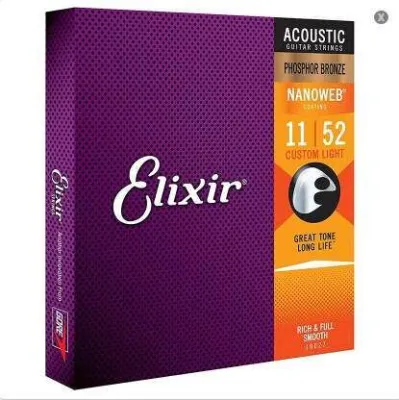
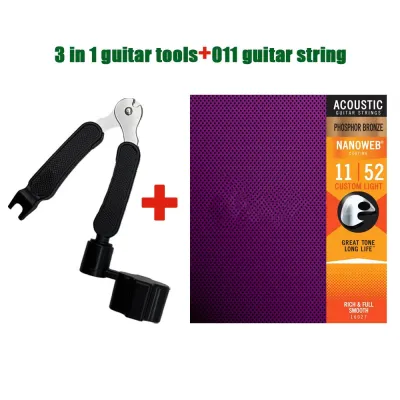
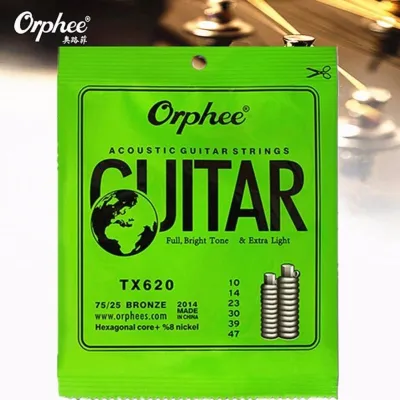

Prices are valid at publication and may change. Please refer to the product page for the latest price.
When browsing for your first set, do not focus solely on the alloy. Pay close attention to the gauge, which refers to the physical thickness of the strings measured in thousandths of an inch. Beginners should look for terms like “light” (typically starting with a .012-inch high E string) or “custom light” (starting with a .011-inch string) on the packaging. Choosing the right gauge is critical for your initial comfort, as heavier strings require significantly more finger pressure to fret cleanly, regardless of whether they are made of phosphor bronze or 80/20 bronze.
Tonal Profiles: Warmth vs. Brightness
The primary reason guitarists debate these two materials is their distinct tonal profiles. When you pluck a string, the alloy’s composition changes how the sound frequencies are projected. Generally, 80/20 bronze strings are celebrated for their bright, sparkling, and highly articulate sound. They offer a crisp high-end response and a clear, cutting attack that makes individual notes stand out. This makes them a popular choice for players who want their guitar to cut through a mix or those who prefer a very vibrant, energetic acoustic sound.

In contrast, phosphor bronze strings are widely recognized for their warm, rich, and dark tonal characteristics. They tend to emphasize the mid-range and low-end frequencies, delivering a more balanced and mellow sound. The addition of phosphorus to the alloy helps smooth out the harsh high frequencies, resulting in a tone that many describe as smooth, woody, and complex. If you prefer a deeper, more intimate sound that blends smoothly during chord progressions, phosphor bronze is often the preferred option.
However, you must keep in mind that these tonal descriptions are not absolute. The actual sound you hear is a product of the strings interacting with your specific guitar. Factors such as the body shape (like a large dreadnought versus a smaller parlor guitar), the tonewoods used for the top and back, and your personal playing technique all play massive roles in the final output. To get a better sense of how these alloys sound in practice, it is highly recommended to listen to high-quality manufacturer audio samples or video demonstrations using a guitar similar to your own before making a decision.
Playability and Finger Comfort for Beginners
A common misconception among new players is that the choice of wrap wire alloy directly affects how much the strings will hurt their fingers. When you are first learning to press down on the fretboard, your fingertips will inevitably experience some soreness as you build up calluses. It is crucial to understand that finger comfort is almost entirely dictated by string gauge and tension, rather than whether the wrap wire is made of zinc or phosphorus. A light-gauge phosphor bronze string and a light-gauge 80/20 bronze string of the same brand will feel virtually identical under your fingers in terms of stiffness.
To minimize finger fatigue and make your daily practice sessions more enjoyable, you should start with “extra light” or “light” gauge acoustic guitar strings sets. These thinner strings require less tension to tune to pitch, making them much easier to press down against the frets. As your hand strength improves and your calluses develop over several weeks, you can experiment with slightly heavier gauges if you desire more volume or a fuller tone.
If you are particularly concerned about finger comfort or the rough texture of traditional roundwound strings, you might want to look into coated or treated strings. Many manufacturers apply an ultra-thin polymer coating over the wrap wire to protect the metal from sweat and oils. This coating not only extends the life of the string but also provides a smoother, slicker feel that can reduce finger squeak and friction. Be sure to read the product descriptions carefully to see if a particular set features a coating, as this can significantly alter the tactile experience for a beginner.
Tone Longevity and Maintenance Requirements
Another practical difference between these two materials is how long they maintain their fresh, out-of-the-box sound. All guitar strings begin to degrade the moment they are tuned to pitch and exposed to the air, but the rate of this degradation varies by alloy. Standard 80/20 bronze strings are known for having a very bright, brilliant initial tone. However, because zinc and copper oxidize relatively quickly when exposed to moisture and sweat, this bright “zing” can fade rather rapidly. Within a few weeks of regular playing, you may notice that 80/20 strings lose their sparkle and settle into a much more muted, mellow tone.
Phosphor bronze strings are generally more resilient. The inclusion of phosphorus acts as an anti-corrosive agent, helping the alloy resist oxidation from acidic sweat and environmental humidity. As a result, phosphor bronze strings tend to exhibit a much more gradual tonal decay. They retain their signature warmth and balanced mid-range over a longer period, making them a highly practical choice for beginners who do not want to change their strings constantly. This longevity is especially beneficial in warm, humid climates like Singapore, where airborne moisture can accelerate rust and grime buildup on untreated metals.
To maximize the lifespan of any acoustic guitar strings set, establishing a simple, low-risk maintenance routine is essential. Always wash and dry your hands thoroughly before picking up your guitar to remove natural skin oils and dirt. After every practice session, take a clean, dry microfiber cloth and wipe down each string individually, sliding the cloth underneath the strings to clean the undersides as well. This simple habit removes sweat and moisture, preventing premature corrosion and keeping your strings sounding fresh for as long as possible.
How to Choose Your First Acoustic Guitar Strings Set
When selecting your very first acoustic guitar strings set, you can use a straightforward, conditional decision framework to guide your purchase. If your guitar has a naturally dark or muddy sound, or if you plan to focus primarily on heavy strumming and flatpicking where you need a bright, cutting tone, 80/20 bronze is an excellent choice. Conversely, if your guitar is naturally very bright, or if you prefer a warm, balanced, and mellow tone that suits fingerstyle playing and gentle vocal accompaniment, phosphor bronze is the more suitable option.
Before you finalize your purchase, always perform a quick verification step. Check your guitar manufacturer’s official website or user manual to find the recommended string gauge for your specific model. Installing strings that are significantly heavier than what the guitar was designed for can put excessive tension on the neck, bridge, and nut, potentially affecting the instrument’s setup or playability. Ensuring your chosen set matches these manufacturer specifications will prevent unnecessary setup issues.
Finally, avoid the temptation to buy strings in bulk when you are just starting out. It is much wiser to purchase a single set of 80/20 bronze and a single set of phosphor bronze in a light gauge. Install one set, play it for a few weeks to get used to the feel and sound, and then switch to the other set during your next string change. This hands-on comparison is the absolute best way to discover which material feels and sounds right to your unique ears and fingers.
Frequently Asked Questions (FAQ)
Do I need to change my guitar setup when switching between these two materials?
If you are switching between 80/20 bronze and phosphor bronze strings of the exact same gauge and brand, you generally do not need to adjust your guitar’s setup. The physical tension exerted on the neck remains virtually identical, meaning your action and neck relief will stay consistent. However, if you decide to change the string gauge—such as moving from an extra-light set to a medium set—the significant change in tension will alter the neck’s bow. In such cases, you may need to have the truss rod or bridge saddle adjusted by a qualified guitar technician to maintain comfortable playability and prevent fret buzz.
Can I mix 80/20 bronze and phosphor bronze strings on the same guitar?
While it is physically possible to mix different string materials on a single instrument, it is generally not recommended for beginners. Mixing alloys across your fretboard creates an uneven tonal balance, where some strings may sound incredibly bright and sharp while others sound warm and mellow. This inconsistency can make it difficult to develop a consistent ear for dynamics and tone. For a balanced, predictable sound and uniform string tension across all six strings, it is always best to install a complete, matched acoustic guitar strings set.
Community discussion
Share your experience or ask a question. Comments are reviewed before publication.