
Finding the right music notes stand is essential for maintaining good posture, protecting your sheet music, and ensuring a comfortable practice session. The ideal choice depends entirely on where you practice, the instrument you play, and whether you read from lightweight sheets, heavy binders, or digital tablets. By understanding the distinct advantages of portable, desk, and orchestral stands, you can select a setup that fits your space and supports your musical journey.
Choosing the wrong stand can lead to frustrating practice sessions, with collapsing wire frames or bulky bases that clutter your room. To avoid these issues, you need to evaluate your specific environment and physical requirements. This guide will help you analyze your practice habits and guide you toward the perfect stand type for your needs.
Quick Diagnostic: Identify Your Primary Practice Needs
Before browsing different models, take a moment to evaluate your current practice environment and habits. Asking yourself a few practical questions will quickly narrow down your options and prevent you from purchasing a stand that does not fit your lifestyle.
Products mentioned in this guide
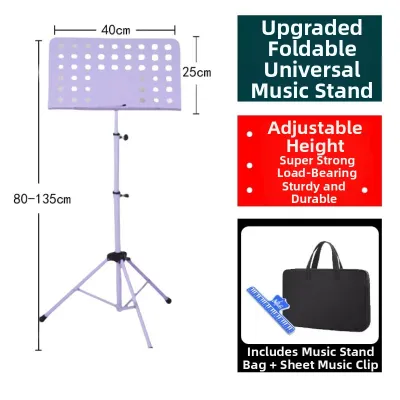
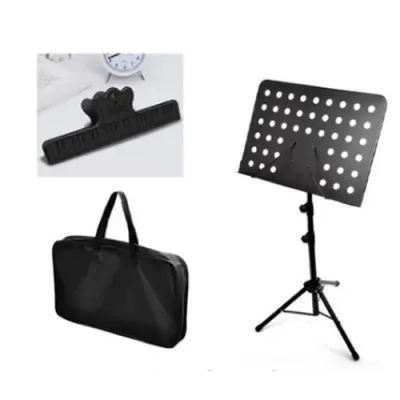
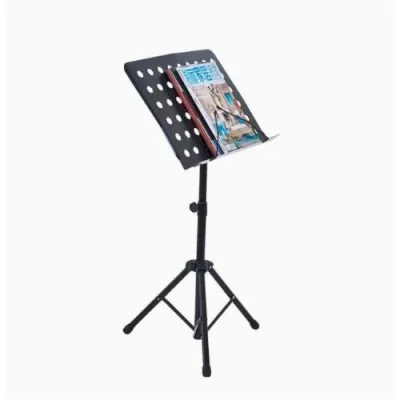
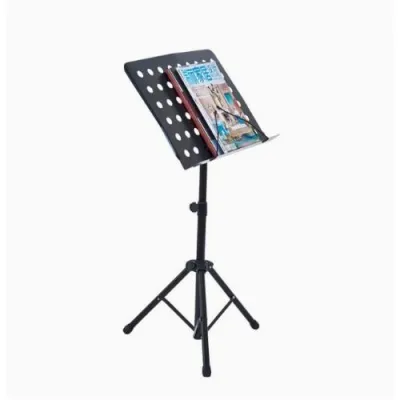
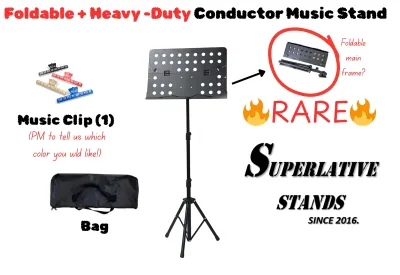
Prices are valid at publication and may change. Please refer to the product page for the latest price.
First, consider your practice location frequency. Do you primarily practice in a single, dedicated room, or do you frequently travel to rehearsals, music lessons, and community gigs? If your stand rarely leaves your home, stability and capacity should be your main priorities. Conversely, if you are constantly on the move, a lightweight design that fits into a gig bag is essential.
Next, assess the physical space available in your primary practice area. In compact living environments, floor space is often at a premium. A bulky tripod base can easily block walkways or interfere with other furniture. If you practice at a desk or have a keyboard setup pushed against a wall, a tabletop model might be the most space-efficient solution.
Finally, identify the heaviest or bulkiest items you place on your stand. A single sheet of paper requires very little support, but a thick anthology, a heavy three-ring binder, or a large tablet computer demands a robust backing and a secure locking mechanism. Knowing the weight and dimensions of your music library will prevent you from choosing a stand that bends or tips over during use.
Portable Music Stands: Evaluating Mobility vs. Stability
Portable stands are designed specifically for musicians who need to transport their gear frequently or store it away when not in use. These stands are highly valued for their lightweight construction and ability to fold down into a compact shape. They are the traditional choice for students traveling to school band practices, outdoor buskers, and musicians with limited storage space at home.

However, the extreme mobility of a portable music notes stand comes with distinct physical trade-offs. Most budget-friendly portable stands feature a wire-frame design. While incredibly light, these wire frames lack a solid backing plate, making it difficult to write annotations on your sheet music during practice. They also struggle to support heavy binders, which can cause the thin metal legs to bend or the entire structure to tip over.
If you require portability but still need to hold heavier books, look for hybrid portable designs that feature a folding solid-board or a reinforced plastic tray. These models offer a flatter, more stable surface while still allowing the legs to collapse. When evaluating a portable stand, always verify the quality of the folding mechanisms, the tightness of the adjustment screws, and whether a dedicated carrying bag is included to protect the stand during transit.
Desk Music Stands: Optimizing for Compact Spaces
Desk music stands, also known as tabletop stands, are designed to sit directly on flat surfaces rather than standing on the floor. This category is highly beneficial for musicians who practice in shared workspaces, home studios, or compact rooms where floor space is unavailable. They are particularly popular among keyboardists, music producers, and acoustic instrumentalists who practice at a desk.
The primary advantage of a desk stand is its space-saving footprint. By eliminating the traditional tripod base, you free up valuable floor space around your chair or instrument pedals. This setup is ideal if you use a digital audio workstation and need your sheet music positioned directly behind your computer keyboard or MIDI controller.
Before choosing a desk stand, it is crucial to measure your available desk depth. The stand’s base must fit securely on your desk without crowding your instrument or blocking your view of other essential equipment. Keep in mind that desk stands offer significantly less height and tilt adjustability compared to floor-standing models. You must ensure that your desk height and seating position naturally align to keep the music at an ergonomic eye level.
Orchestral Music Stands: Prioritizing Stability and Capacity
Orchestral music stands are heavy-duty floor models engineered for maximum stability, durability, and capacity. These stands feature a solid, non-folding metal tray and a robust vertical shaft supported by a heavy tripod or weighted dome base. They are the standard choice for professional rehearsal halls, music schools, and dedicated home practice studios.
If you regularly practice with thick orchestral scores, heavy binders, or multiple digital devices simultaneously, an orchestral stand is the most reliable option. The solid backing plate provides a perfect surface for writing notes, and the heavy-duty construction ensures the stand will not wobble or slide, even when loaded to its maximum capacity.
When integrating an orchestral stand into your home, you must verify the footprint of the tripod base. Because these bases are wide and heavy, you need to ensure they do not interfere with your instrument’s foot pedals, your music stool, or nearby cables. Additionally, check the manufacturer’s specifications for the height adjustment range. A high-quality orchestral stand should adjust smoothly to accommodate both seated playing positions, such as cello or classical guitar, and standing positions for violinists or vocalists.
Final Selection Checklist: Matching Stand to Instrument and Environment
To make your final decision, cross-reference your specific instrument and practice environment with the key features of each stand category. This systematic approach ensures you invest in a tool that enhances your practice rather than causing physical discomfort or distraction.
For standing instrumentalists like violinists, flutists, and singers, height is the most critical factor. Ensure your chosen stand can extend high enough to keep your music at eye level, promoting proper spinal alignment and open breathing. Wind and brass players should prioritize stands with adjustable tray angles to maintain a clear line of sight to both the music and their hands. Keyboard players and cellists, who remain seated, should focus on base clearance and low-height stability.
Next, check the physical dimensions of the tray and its weight capacity against your actual music library. If you use a large tablet, verify that the tray’s lip is deep enough to hold the device securely without blocking the screen. For those living in humid climates, pay close attention to the build materials; powder-coated steel or anodized aluminum joints are highly recommended to prevent rust and maintain smooth adjustments over time.
Frequently Asked Questions (FAQ)
Can I use a portable wire stand for heavy tablet devices?
Using a standard portable wire stand for a heavy tablet is generally not recommended. Because wire stands lack a solid backing plate, a heavy tablet can easily slip through the open frame or cause the top-heavy stand to tip over. If you must use a tablet on a portable stand, verify that the tray has a deep lip and check the manufacturer’s specified weight limits to ensure the joints can support the device safely.
How do I prevent a floor music stand from slipping on smooth tiles?
To prevent a floor stand from sliding on smooth tiled floors, first check if the stand’s legs are equipped with intact rubber feet or anti-slip pads. If the feet are worn down or missing, you can purchase replacement rubber tips. Alternatively, placing a small, textured non-slip mat or a low-pile rug under the tripod base will provide excellent grip without requiring permanent adhesives that could damage your flooring.
Community discussion
Share your experience or ask a question. Comments are reviewed before publication.