
To choose the right score stand, you must balance your physical practice environment against your need for mobility. The ideal decision comes down to where you play, how often you travel, and what kind of music media you use.
Choose a portable folding stand if you regularly travel for rehearsals, teach music at multiple locations, perform at outdoor events, or have limited storage space in your apartment. These stands collapse into a compact, lightweight shape, making them easy to pack into a gig bag or store in a small closet.
Choose a fixed floor stand if you practice primarily in one dedicated room, use heavy or oversized orchestral scores, need to hold multiple books simultaneously, or require absolute stability. These stands offer a solid, non-collapsible desk and a heavy base that resists tipping, even when loaded with heavy binders, reference books, or digital tablets.
Products mentioned in this guide
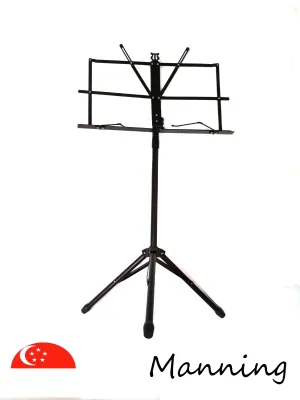
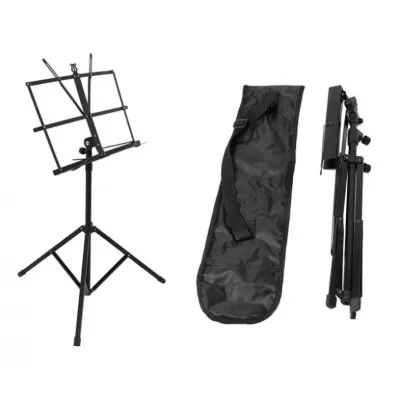
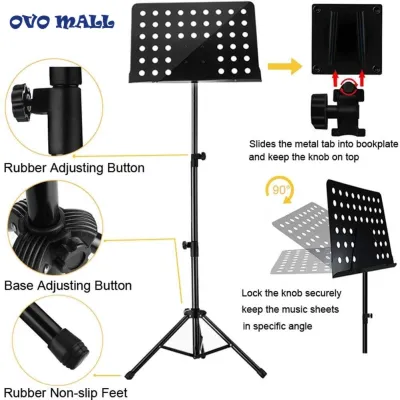
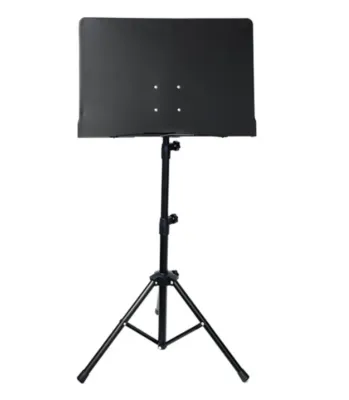
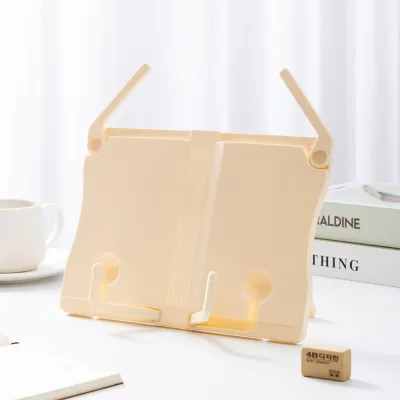
Prices are valid at publication and may change. Please refer to the product page for the latest price.
Neither option is universally superior. The right choice depends on your daily routine, your instrument, and the physical weight of your sheet music. By matching the structural strengths of each stand type to your specific practice habits, you can create a comfortable, ergonomic setup that supports your musical development.
Key Differences at a Glance
When selecting a score stand, understanding the core specifications helps prevent buyer’s remorse. While individual models vary, portable folding stands and fixed floor stands are built for fundamentally different use cases.
The following comparison highlights the primary structural and functional differences between the two categories. Always verify the manufacturer’s specific product manual for exact weight limits and dimensions before purchasing.
| Feature | Portable Folding Stand | Fixed Floor Stand |
|---|---|---|
| Average Weight | Typically 1 kg to 2 kg | Typically 3 kg to 5+ kg |
| Base Stability | Moderate; prone to tipping on uneven ground | High; heavy base resists accidental bumps |
| Setup Time | 1 to 3 minutes (requires unfolding multiple joints) | Instant (always assembled; height adjustment only) |
| Storage Footprint | Minimal; collapses into a thin tube or flat bag | Large; requires dedicated floor or closet space |
| Weight Capacity | Low to Moderate (usually 1 kg to 2.5 kg) | High (often 4 kg to 10+ kg) |
| Ideal Use Case | Gigging musicians, buskers, students on the go | Home studios, rehearsal halls, orchestral pits |
Note that “fixed” does not always mean completely non-adjustable. Most fixed floor stands allow you to adjust the height and the angle of the desk to suit sitting or standing positions. However, they lack the multi-jointed folding mechanisms that allow portable stands to pack down into a carrying bag. This structural difference impacts how you store, transport, and use the stand in your daily practice.
Portability and Storage: The Case for Folding Score Stands
For musicians who commute, travel for lessons, or perform in various venues, portability is the most critical factor. Portable folding stands are engineered specifically to minimize weight and bulk. Manufacturers typically construct these stands from lightweight materials like aluminum or thin-walled steel tubing. The desk portion is often made of open wire frames or perforated metal plates that fold down flat. This collapsible design allows the entire unit to shrink to a fraction of its fully extended size, often fitting neatly into a dedicated carrying bag.

In compact living environments, such as apartments and HDB flats in Singapore, floor space is at a premium. A portable folding stand can be quickly packed away and stored under a bed, in a wardrobe, or behind a door when not in use. This keeps your living area tidy and free of clutter. If you rely on public transport like the MRT or buses to get to rehearsals, a lightweight stand with a comfortable shoulder strap is essential to prevent physical fatigue before you even begin playing.
However, this extreme portability comes with a clear trade-off. To achieve a low weight, these stands use thin metal shafts and multiple adjustment joints. Every joint is a potential point of instability. When fully extended, a lightweight folding stand is more susceptible to swaying, especially if a draft catches your sheet music or if someone brushes past. If you plan to travel frequently, check the folded length and total weight of the stand, and ensure the carrying bag features reinforced seams and comfortable straps to withstand the rigors of transit.
When evaluating a folding model, look closely at the folding mechanism of the desk. Some models feature a “U-shaped” desk that folds in half, while others use a wire matrix that collapses inward like an accordion. The accordion-style wire stands are the most compact but offer the least support for single sheets of paper, which can flop over the edges. Perforated metal folding desks offer a middle ground, providing a solid backing while still allowing the desk to detach and fold flat for transport.
Stability and Weight Capacity: Why Fixed Floor Score Stands Excel
If your practice setup is stationary, stability should be your primary concern. Fixed floor stands, often referred to as orchestral or professional stands, are built to remain rock-solid. They feature heavy-duty steel construction, thick vertical shafts, and solid, non-folding desks. This structural rigidity ensures that the stand remains perfectly still, even when holding heavy anthologies, thick binders, or large digital tablets.
The weight of your music media is a major factor in this decision. Thick orchestral scores, heavy music books, and large tablets like the iPad Pro can easily overload a lightweight folding stand, causing the desk to sag or the entire stand to tip over. Fixed stands are designed to handle these heavy loads without slipping. Additionally, before purchasing digital sheet music or using a tablet on your stand, always verify the device compatibility, weight, and mounting options to ensure a secure fit. Similarly, when buying physical sheet music editions, verify the edition, language, and content completeness before matching it to your stand’s weight capacity.
The design of the base also plays a crucial role in stability. Fixed stands generally use either a heavy, flat cast-iron base or a wide, low-profile tripod base. Flat bases have a very small footprint on the floor, making them ideal for tight spaces where tripod legs might present a tripping hazard. Tripod bases, on the other hand, offer excellent stability on slightly uneven floors. When choosing a stand, consider how the base interacts with your flooring. Heavy metal bases should feature high-quality rubber pads to prevent slipping and protect polished hardwood, parquet, or tile floors from scratches.
Furthermore, the solid desk of a fixed floor stand provides an excellent writing surface. If you are a student or professional who frequently makes annotations, marks bowings, or writes analysis on your scores, you need a desk that does not flex under the pressure of a pencil. A fixed stand offers the rigid backing necessary for clear, comfortable writing, whereas a wire folding stand makes taking notes mid-rehearsal nearly impossible without removing the sheet music entirely.
Adjustability and Ergonomics for Long Practice Sessions
Maintaining proper posture during long practice sessions is essential for preventing physical strain and injury. Both portable and fixed stands offer height and angle adjustments, but the mechanisms they use differ significantly in ease of use and reliability.
Adjustment Mechanisms:
- Knob-Tightened Screws: Common on portable stands. You turn a plastic knob to tighten a bolt directly against the inner metal shaft. While simple, these can strip over time if overtightened, or slip if not tightened enough.
- Friction-Clutch Systems: Often found on high-end fixed stands. These systems use internal spring tension or friction joints. You simply pull the shaft up or push it down, and it stays in place without any knobs to turn. This allows for rapid, one-handed adjustments during rehearsals.
- Trigger or Push-Button Locks: These systems use a spring-loaded lever to lock the shaft into pre-set notches, offering high security but less precise height control.
The angle of the desk is another critical ergonomic factor. To avoid neck strain, the desk should be positioned so that you can read your music comfortably without tilting your head too far down or up. Fixed stands typically feature robust tilt mechanisms that can be locked securely in place. The desk lip must also be deep enough to hold your thickest books without them sliding off. Look for a desk lip with a non-slip surface or integrated page retainers. If the stand includes page-holder pegs or spring clips, ensure they are gentle enough not to tear or damage delicate sheet music pages.
For musicians who play instruments that require different physical heights—such as a cellist who practices sitting down versus a violinist who practices standing up—the speed and range of height adjustment are paramount. A fixed stand with a friction-clutch system allows you to transition between heights in a single second. Conversely, a multi-jointed folding stand requires loosening and tightening multiple knobs along the shaft, which can become tedious if you change positions frequently during your practice routine.
Durability and Build Quality: What to Inspect Before Buying
Investing in a durable score stand saves money and frustration in the long run. Since a stand is subjected to constant adjustment, the quality of its moving parts determines its lifespan.
On portable folding stands, the most common failure points are the hinges, rivets, and tightening screws. Because these stands are designed to fold, they have many moving parts. Over time, rivets can loosen, causing the stand to wobble, and screw threads can strip. To minimize these risks, inspect the thickness of the metal joints and look for models that use heavy-duty nylon or metal collars rather than cheap plastic ones.
For fixed floor stands, the main concerns are the durability of the locking collar and the resistance of the metal to environmental factors. In humid climates, such as in Singapore, unprotected steel can easily rust. Look for stands with high-quality powder coating or chrome plating, which provide a barrier against moisture. Additionally, check the quality of the welds where the legs meet the central shaft, as cheap welds can crack under pressure.
Before making a purchase, read user reviews specifically focusing on long-term wear and tear. Check if the retailer offers a warranty or a clear return policy. Some premium brands offer replaceable parts, such as spare knobs, clutches, or rubber feet. Choosing a stand with readily available replacement parts can significantly extend its service life, making it a more sustainable and cost-effective choice over time.
Additionally, pay close attention to the construction of the desk lip. On cheaper stands, the lip is often welded onto the desk plate with minimal contact points, which can snap if a heavy book is dropped onto it. Higher-quality stands feature a single, continuous sheet of metal where the desk and the lip are bent from the same piece, eliminating the risk of weld failure entirely. If you use magnetic page holders or wind clips, ensure the desk material is magnetic, as aluminum and plastic desks will not hold magnets.
Final Verdict: Matching the Score Stand to Your Practice Environment
Ultimately, the best score stand is the one that fits seamlessly into your daily musical routine. Do not buy a heavy fixed stand if you constantly need to travel, and do not buy a flimsy folding stand just to save money if it will sit permanently in your living room holding heavy books.
Before making your final decision, go through this quick pre-purchase checklist:
- Measure your space: Check the floor area where the stand will sit and ensure it will not block walkways or become a tripping hazard.
- Weigh your music: Weigh your heaviest music book, binder, or tablet to ensure it falls well within the stand's rated weight capacity.
- Assess your mobility: Be honest about how often you will actually move the stand. If it is less than once a month, a fixed stand is almost always the better choice.
If possible, visit a local music store to test different stands in person. Feel the weight, adjust the height, and test the stability of the desk. This hands-on experience will help you make a confident choice that supports your practice sessions for years to come.
Frequently Asked Questions (FAQ)
Can I use a portable folding score stand for heavy orchestral scores?
While some heavy-duty folding stands exist, standard lightweight folding stands are not recommended for heavy orchestral scores. The weight of a thick anthology or a large binder can easily exceed the weight capacity of a folding stand, causing the desk to sag or the entire unit to tip forward. This poses a risk of damaging your sheet music or your instrument if the stand falls. If you must use a folding stand for heavy music, look for specialized models with thick aluminum legs and solid, non-wire desks, or stick to a fixed floor stand.
How do I prevent a lightweight score stand from tipping over?
To improve the stability of a lightweight folding stand, place it against a wall or in a corner to protect it from drafts and accidental bumps. Keep the center of gravity low by avoiding extending the height further than necessary. When placing books on the desk, ensure the weight is centered and not tilted too far forward. Avoid hanging heavy bags or accessories from the adjustment knobs, as this can strain the joints. For safety, never modify the stand with unapproved DIY weights, as this can damage the locking mechanisms and void the warranty.
Are desk-mounted or clamp-on stands a viable alternative?
Yes, desk-mounted or clamp-on stands are excellent space-saving alternatives for musicians who practice at a desk, table, or digital keyboard. These stands clamp securely to the edge of a flat surface, completely eliminating the need for a floor base. They are ideal for home studios with limited floor space. However, they require a sturdy, compatible lip to attach to and are not suitable for glass tables or delicate surfaces. They also lack the height range required for standing practice, so they are best suited for seated musicians.
Community discussion
Share your experience or ask a question. Comments are reviewed before publication.