
Choosing the right music stand is a fundamental yet often overlooked decision that directly impacts your daily practice sessions. If you frequently commute to rehearsals, music lessons, or gigs, or if you practice in a compact living space where gear must be packed away after use, a portable foldable music stand is the ideal choice. Conversely, if you have a dedicated practice corner, rely on heavy music anthologies, or use a large digital tablet, a fixed floor-standing music stand provides the necessary stability and surface area.
The ultimate decision hinges on three main factors: your mobility requirements, the physical space available in your practice environment, and the weight of the sheet music, binders, or digital devices you use. Balancing these factors ensures your sheet music remains secure and at the correct ergonomic height, allowing you to focus entirely on your performance.
Core Differences Between Portable and Fixed Music Stands
Understanding the structural and functional distinctions between portable and fixed music stands helps clarify why each type excels in different environments. These differences primarily lie in material composition, base design, and tray construction, all of which dictate the stand’s overall stability and durability.
Products mentioned in this guide
![[SINGAPORE SELLER] Foldable & Adjustable Quran Stand / Adjustable Rehal / Music Stand / Reading Book Stand](https://img.lazcdn.com/g/p/923b883d7d779b05c6c1f404acefb0c7.png_400x400q80.png_.webp)
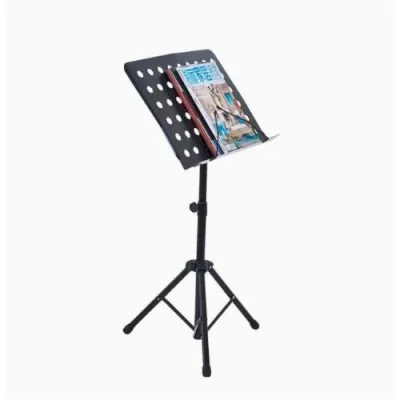
Prices are valid at publication and may change. Please refer to the product page for the latest price.
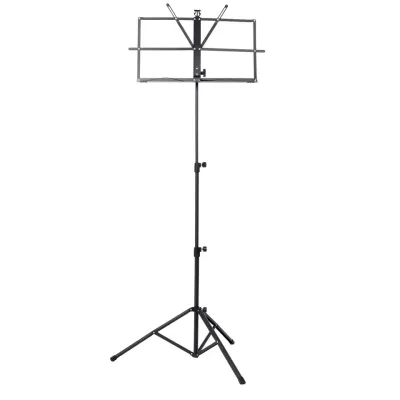
Portable stands typically use lightweight aluminum alloys or thin steel tubing to keep the overall weight low, often weighing under 1.5 kilograms. While this makes them incredibly easy to carry, it also means they lack the structural mass required to resist tipping when bumped. Fixed stands, often referred to as orchestral stands, utilize heavy-gauge steel, solid iron bases, or even finished wood, which significantly increases their weight but provides a rock-solid foundation.
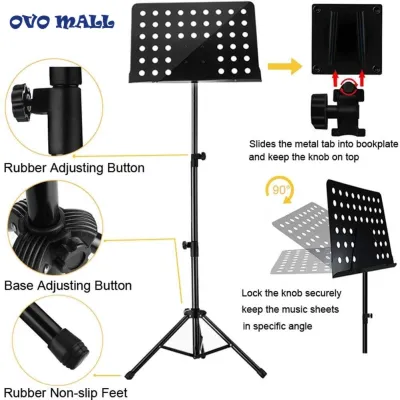
The base design further highlights this trade-off. Portable stands feature collapsible tripod legs that fold parallel to the center shaft for compact storage. Fixed stands, on the other hand, often employ a heavy, solid cast-iron base—either round or U-shaped—or a wide, heavy-duty tripod with thick tubular legs that do not fold down. This heavy base lowers the center of gravity, making the stand highly resistant to tipping.
Tray construction also varies significantly between the two types. Portable stands usually feature a wireframe desk with folding arms that collapse into a small bundle. This open design is lightweight but cannot support single sheets of paper without a folder, nor does it provide a surface for writing. Fixed stands feature a solid, continuous desk made of metal, plastic, or wood, offering a smooth, flat surface that supports individual sheets, heavy books, and digital devices alike.
When to Choose a Portable Foldable Music Stand
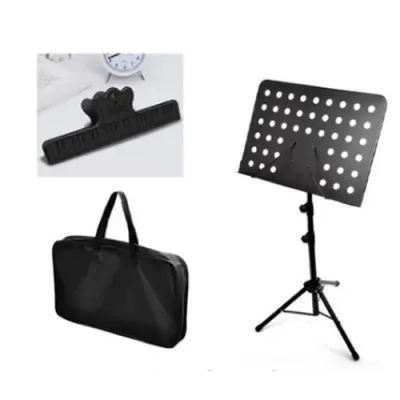
A portable foldable music stand is highly beneficial for musicians whose practice habits require high mobility and space-saving solutions. If you regularly travel for lessons, participate in community ensembles, or perform at various venues, a lightweight stand that fits into a backpack or a dedicated carrying bag is indispensable.

In compact living environments, such as apartments or shared rooms, floor space is at a premium. A portable stand can be set up quickly for a practice session and then folded down and tucked into a closet or drawer immediately afterward. This prevents your living area from feeling cluttered with permanent music gear.
However, choosing a portable stand means accepting certain limitations. These stands have a lower weight capacity and are prone to wobbling, especially when holding heavy hardcover music books or thick binders. They are also highly susceptible to drafts from open windows, fans, or air conditioning units, which can easily blow sheet music off the wireframe tray or tip the entire stand over.
When selecting a portable model, pay close attention to the setup and teardown mechanisms. Look for stands with smooth joints, durable tightening screws, and a high-quality carrying case. Frequent folding and unfolding can wear down cheap plastic joints, so investing in a model with reinforced metal connectors is crucial for long-term reliability.
When to Choose a Fixed Floor-Standing Music Stand
A fixed floor-standing music stand is the preferred choice for musicians with a dedicated practice space who prioritize stability and ergonomic comfort. If your setup is stationary, such as in a home studio, a dedicated music room, or a permanent rehearsal hall, the benefits of a fixed stand far outweigh its lack of portability.
These stands are designed to handle heavy materials without flexing or sliding. If you practice from thick anthologies, heavy binders, or use a large tablet with clip-on page turners, a fixed stand provides a secure platform. The solid desk ensures that your expensive digital devices or heavy books remain safe from accidental falls.
Because fixed stands do not fold down, they require a permanent footprint in your room. You must ensure you have enough physical space to accommodate the wide base and the solid, non-collapsible tray when the stand is not in use. For many, this permanent presence is a positive, serving as a visual invitation to practice.
From an ergonomic perspective, fixed stands offer superior adjustments. The solid desk can be tilted to precise angles and locked securely in place, preventing it from slipping under the weight of your hands when you write annotations on your scores. The robust height adjustment mechanisms, whether using a friction-clutch or a heavy-duty screw lock, ensure the stand remains at the correct eye level throughout long practice sessions.
Key Specifications to Verify Before Purchasing
Before purchasing any music stand, it is essential to evaluate specific, measurable specifications to ensure the model matches your physical setup and accessory needs. Checking these details beforehand prevents compatibility issues and ensures a safe practice environment.
- Maximum Load Capacity: Always check the manufacturer's specified weight limit. A standard fixed orchestral stand can typically support 4 kilograms or more, while a lightweight portable stand may be rated for less than 1.5 kilograms. Ensure the stand can easily support your heaviest music book or tablet.
- Tray Dimensions and Lip Depth: Measure your sheet music or tablet. The tray needs to be wide enough to support the width of your open books. Additionally, a lip depth of at least 5 centimeters is recommended for holding thick binders or preventing tablets from sliding off the edge.
- Height Adjustment Range: Verify the minimum and maximum height of the stand. If you practice both sitting down (such as playing the cello or guitar) and standing up (such as playing the violin, flute, or singing), the stand must adjust smoothly to accommodate both positions comfortably.
- Locking Mechanisms: Examine how the stand adjusts. Friction-grip shafts allow for quick height adjustments simply by pulling or pushing the shaft, but they can wear out over time. Screw-knob locks offer a more secure hold but require manual tightening and can strip if overtightened.
- Accessory Compatibility: If you use accessories like clip-on lights, tuners, metronomes, or pencil holders, ensure the stand's tray can accommodate them. Solid metal trays are excellent for magnetic accessories, while wireframe trays offer limited attachment points.
Decision Matrix: Matching Your Needs to the Right Stand
To help finalize your choice, use the following comparison table and decision framework to match your specific practice conditions to the correct stand type.
| Feature | Portable Foldable Stand | Fixed Floor-Standing Stand |
|---|---|---|
| Primary Use Case | Commuting, travel, small spaces | Dedicated home studios, permanent setups |
| Portability | High (folds down compactly) | Low (bulky, non-collapsible tray) |
| Weight Capacity | Low (typically up to 1.5 kg) | High (typically 4 kg or more) |
| Writing Surface | None (wireframe design) | Excellent (solid, continuous desk) |
| Storage Footprint | Minimal (fits in a drawer or bag) | Permanent (requires dedicated floor space) |
- Choose a Portable Foldable Stand if: You travel frequently for rehearsals, have limited storage space at home, and primarily use lightweight sheet music, thin booklets, or a lightweight tablet.
- Choose a Fixed Floor-Standing Stand if: You practice exclusively in one location, use heavy music books or large tablets, need a stable surface to write notes on your scores, and have dedicated floor space.
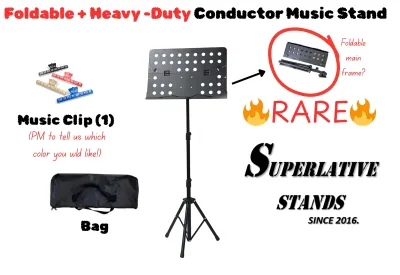
- Verify first if: You are considering a hybrid model, such as a portable stand with a detachable solid plastic tray. Ensure the connection point between the tray and the shaft is robust, and verify that the detached pieces fit comfortably into your transport bag.
Frequently Asked Questions (FAQ)
Can I attach a tuner or metronome to a wireframe portable stand?
Attaching accessories to a wireframe portable stand can be challenging due to the lack of a solid surface. Standard clip-on tuners and metronomes require a flat, rigid edge to clamp onto securely, which thin wire frames do not provide. Additionally, the weight of these devices can cause a lightweight wire tray to tilt forward or sag.
Before purchasing, check the thickness of the wireframe and the clamp size of your accessories. If the stand lacks a solid lip, consider using instrument-mounted clip-on tuners or placing your metronome on a nearby table. Alternatively, look for portable stands that feature a small, solid accessory shelf built into the lower portion of the frame.
How do I prevent a lightweight stand from tipping over?
To prevent a lightweight portable stand from tipping, always ensure the tripod base is fully extended. A partially collapsed base significantly reduces the stand’s footprint and stability. When setting up the tripod, position one of the three legs pointing directly toward you; this counteracts the forward weight of the sheet music on the tray.
Avoid placing heavy items on the stand, and never exceed the manufacturer’s stated weight limit. If you are practicing in a drafty room or outdoors, use elastic bands, wind clips, or heavy-duty page holders to secure your music rather than relying on heavy objects to weigh the pages down. If necessary, you can place a small sandbag or a heavy bag over the base legs to add temporary stability.
Community discussion
Share your experience or ask a question. Comments are reviewed before publication.