
Choosing the right violin mute depends on whether you need to practice without disturbing others or alter your instrument’s tone for performance. A practice mute is designed for extreme volume reduction, making it ideal for late-night sessions or apartment living. A performance mute, on the other hand, is designed to modify the instrument’s timbre for orchestral blending or specific musical passages without significantly lowering the volume. Understanding how each type interacts with your instrument ensures you select the accessory that matches your playing environment and musical goals.
How Practice and Performance Mutes Alter Your Sound
To understand how these accessories work, it helps to look at the physics of the violin bridge. The bridge acts as a transmitter, transferring the vibrations of the strings down into the belly of the instrument and through the soundpost to the back. When you place any mute on the bridge, you add mass. This extra mass dampens the vibrations, restricting the energy that reaches the violin’s body.
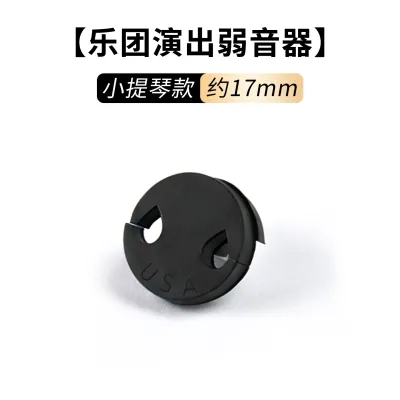
The difference between practice and performance mutes lies in the scale of this added mass. A performance mute is lightweight, typically made of rubber, plastic, leather, or wood. It adds just enough mass to filter out high-frequency overtones, resulting in a warmer, darker, and more focused sound. The overall volume drops only slightly, allowing the instrument to retain its natural resonance and projection.
Products mentioned in this guide
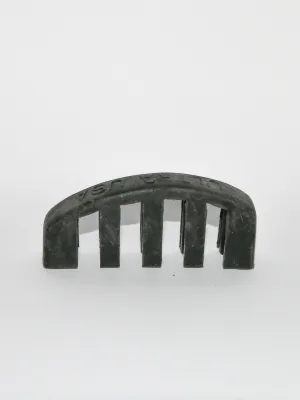
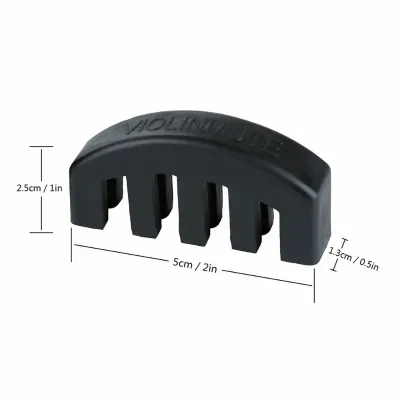
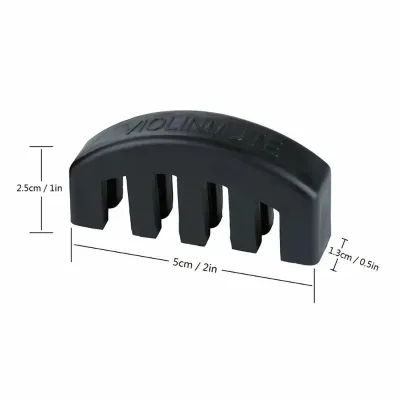
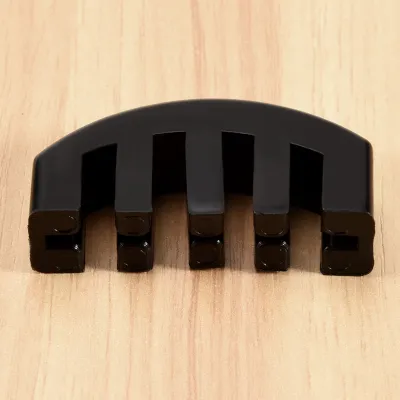

![[Fast life]Rubber Mute 4/4 Violin Fiddle slight Practice Black](https://img.lazcdn.com/g/p/effd77e7d57b6a3be8b737a67c5d6cdf.jpg_400x400q80.jpg_.webp)
Prices are valid at publication and may change. Please refer to the product page for the latest price.
In contrast, a practice mute is heavy, often constructed from dense metal, thick rubber, or metal encased in protective plastic. By adding substantial weight directly to the bridge, it severely restricts vibration. This drastic dampening prevents the soundboard from amplifying the sound, reducing the volume by a significant margin. However, this also strips away the instrument’s natural overtones, leaving a muted, nasal tone with very little sustain.
This difference in mass also changes how the instrument feels to play. A heavy practice mute alters the bow resistance, making the strings feel slightly stiffer under the fingers and requiring adjustments in bow speed and pressure. A performance mute preserves the natural feel of the instrument, allowing you to maintain your usual bowing techniques and dynamic control.
When Maximum Volume Reduction Is Your Priority
A practice mute is indispensable when your primary constraint is your physical environment. If you live in a high-density apartment building, share a home with family members or roommates, or need to practice late at night, a standard violin can easily cause noise complaints. Using a heavy practice mute allows you to practice at almost any hour without disturbing those around you.

This extreme dampening is highly beneficial for technical practice. When you are working on repetitive drills, scales, shifting exercises, or intonation, you do not necessarily need a rich, resonant tone. The quiet output allows you to focus closely on the physical mechanics of your left hand and the precision of your finger placement without the distraction of a loud acoustic response.
However, practicing with a heavy mute comes with distinct trade-offs that you must accept. Because the mute filters out almost all overtones, it is difficult to develop a refined tone concept or practice subtle dynamic variations. The altered bow response can also lead to a false sense of security, as mistakes in bow distribution or contact point are masked by the heavy dampening. For this reason, practice mutes should be used as a supplemental tool rather than a permanent replacement for unmuted practice.
When Tonal Color and Ensemble Blending Matter Most
Performance mutes serve an artistic purpose rather than an environmental one. In orchestral and chamber music, composers frequently write the instruction con sordino (with mute) in the score. This indicates that the player must apply a mute to alter the color of the instrument, creating a hushed, mysterious, or blended texture that contrasts with the unmuted sections (senza sordino).
When playing in an ensemble, a performance mute helps individual instruments blend into a unified section sound. By filtering out the bright, piercing high frequencies, the mute allows the string section to create a warm, velvety cushion of sound that does not overpower soloists or woodwind lines. The goal is not to make the violin silent, but to change its character while maintaining enough projection to be heard in a concert hall.
For soloists, a performance mute offers an additional palette of tonal colors. It can make a bright violin sound sweeter and more intimate, which is particularly useful for specific historical repertoires or expressive passages. The trade-off is that you must maintain precise bow control. Because the volume drop is minimal, you cannot rely on the mute to hide uneven bowing or poor tone production; instead, you must work with the altered resistance to project a clear, muted tone.
Bridge Compatibility and Instrument Safety Checks
Before purchasing any mute, you must verify that it is physically compatible with your violin’s bridge. Bridges are not uniform; they vary in thickness, crown curvature, and string spacing. A mute that is too tight can pinch the bridge, warping the wood over time or pulling it out of its correct alignment. Conversely, a mute that is too loose will rattle during play, creating distracting buzzes and unwanted noises.
Safety is a critical consideration, especially when using heavy practice mutes. Metal practice mutes are highly effective at dampening sound, but they carry a risk of physical damage. If a heavy metal mute slips from your fingers or falls off the bridge during a vigorous practice session, it can easily scratch the varnish or crack the fragile spruce top of your violin. To mitigate this risk, many players prefer heavy rubber mutes or metal mutes that are fully encased in a protective rubber or plastic coating.
You should also evaluate how easily the mute can be attached and removed. In an orchestral setting, you may only have a few beats of rest to apply or remove your mute. A performance mute that clips onto the strings behind the bridge and slides into place quickly is ideal for these situations. For practice mutes, which are applied before you begin playing and removed only when you finish, a secure, multi-pronged design that grips the entire bridge crown is usually the safest option.
Decision Framework: Which Violin Mute Should You Buy?
To decide which mute is right for you, start by evaluating your primary playing environment. If your main goal is to practice quietly in an apartment, dormitory, or shared household without causing a disturbance, a dedicated practice mute is the correct choice. Look for a heavy rubber or rubber-coated metal model that fits securely over the entire crown of your bridge to ensure maximum volume reduction.
If you play in an orchestra, chamber group, or are studying classical repertoire that requires tonal variation, you need a performance mute. A lightweight rubber slide-on mute or a traditional wooden mute will allow you to achieve the required con sordino effect without sacrificing the instrument’s natural resonance. These mutes are designed to remain on the strings behind the bridge when not in use, allowing for quick transitions during a performance.
If you find yourself needing both quiet practice and tonal modification, do not try to make one mute perform both tasks. A lightweight performance mute cannot dampen sound sufficiently for late-night apartment practice, and a heavy practice mute will ruin the acoustic balance required for ensemble playing. In this case, the most practical solution is to purchase one of each type, ensuring you have the correct tool for every musical situation.
Frequently Asked Questions (FAQ)
Can I leave the mute on the violin bridge when not playing?
You should not leave a heavy practice mute on the bridge when your violin is stored in its case. The weight of a practice mute puts continuous pressure on the bridge, which can cause the wood to warp or alter the bridge’s alignment over time. Additionally, if the case is bumped or dropped, a heavy mute can dislodge and scratch the instrument’s top plate. Performance mutes, however, are designed to be left on the strings. Most slide-on performance mutes can be safely pushed back behind the bridge, resting on the non-vibrating portion of the strings, where they can remain permanently without damaging the instrument or affecting its storage.
Are there adjustable mutes that work for both practice and performance?
There are hybrid and adjustable mutes available on the market, but they generally involve compromises. Some designs allow you to add or remove weights, or adjust the contact points on the bridge to vary the level of dampening. While these can be convenient for players who want a single accessory, they rarely match the extreme volume reduction of a dedicated heavy practice mute or the precise tonal clarity of a dedicated performance mute. If you require absolute silence for practice and professional-grade tone control for ensemble playing, using two separate, specialized mutes remains the most reliable approach.
Community discussion
Share your experience or ask a question. Comments are reviewed before publication.