
Preparing for the abrsm grade 2 exam is a significant milestone for any aspiring musician. At this early stage of musical development, students transition from simply reading notes on a page to shaping phrases, managing dynamics, and projecting a distinct musical character. While regular practice sessions and guidance from a qualified teacher form the bedrock of preparation, integrating high-quality classical music CDs into the study routine is one of the most effective ways to accelerate progress. Listening to professional recordings helps bridge the gap between technical execution and true musicality, transforming the way a student approaches their exam pieces.
A primary benefit of listening to professional recordings is the development of aural awareness and the internalization of a steady pulse. In the abrsm grade 2 syllabus, candidates are expected to demonstrate basic rhythmic stability and a clear sense of beat. Beginner students often struggle with maintaining a consistent tempo, frequently rushing through easier passages or dragging during technically challenging measures. By regularly listening to an experienced artist, students absorb a rock-solid temporal framework. This passive and active absorption acts as an internal metronome, helping them feel the natural pulse of the music rather than merely counting it mechanically.
Furthermore, listening to professional recordings is essential for understanding the stylistic differences between the historical periods represented in the syllabus. The ABRSM curriculum is carefully structured into three distinct lists: List A generally features Baroque and Classical pieces, List B focuses on Romantic and expressive works, and List C introduces Modern, jazz, or character pieces. Each of these eras demands a unique touch, tone, and articulation. A Baroque piece requires crisp, detached articulation and a clear, contrapuntal texture, whereas a Romantic piece calls for a warmer, singing tone and subtle expressive timing. Hearing these stylistic nuances executed by a professional allows the student to hear how these abstract historical concepts translate into actual sound.
Products mentioned in this guide
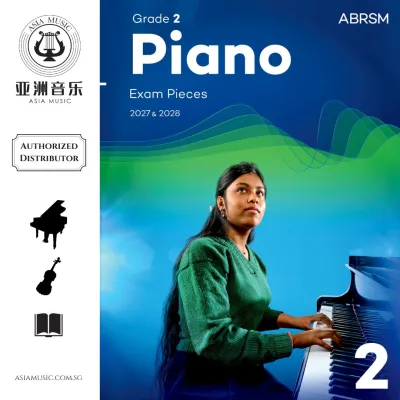
Prices are valid at publication and may change. Please refer to the product page for the latest price.
It is important to emphasize that reference recordings should be used as a pedagogical tool to understand musical character rather than a rigid template to copy note-for-note. Every student possesses a unique musical voice, and the goal of listening is to inspire personal expression, not to encourage mechanical imitation. When a student listens to a professional recording, they should pay attention to how the performer shapes a phrase, where they breathe, and how they balance the melody against the accompaniment. This analytical approach to listening fosters critical thinking and helps the student make informed artistic choices in their own performance, leading to a more convincing and confident presentation in the exam room.
What to Look for When Choosing abrsm grade 2 Reference CDs
Selecting the right reference CDs requires a careful, deliberate approach, as the wrong recording can easily confuse a beginner student. The foremost consideration is absolute syllabus alignment. ABRSM regularly updates its exam syllabi, and pieces are frequently rotated or replaced. Before purchasing any physical media, you must verify that the recording matches the active exam cycle and includes the exact movements, arrangements, or excerpts specified in the syllabus. A CD that features an older version of a piece or a different arrangement will not serve as an accurate reference and may lead to preparing the wrong material.
Another critical factor is the performance style of the recording. For early-grade learners, it is highly beneficial to prefer clear, articulate, and moderately paced interpretations over highly romanticized or extreme-tempo virtuoso performances. While a world-renowned concert pianist’s lightning-fast rendition of a classical sonatina may be thrilling to listen to, it is practically useless—and often discouraging—for a Grade 2 student. Look for recordings where the performer maintains a sensible, achievable tempo that aligns with the pedagogical goals of the grade. This allows the student to clearly hear the individual notes, the precise articulation, and the underlying rhythmic structure.
Audio quality and authentic instrumentation are equally vital when evaluating reference CDs. For piano students practicing in typical Singaporean home environments, such as HDB flats or condominiums, hearing a clear, well-tuned acoustic grand piano on the recording is invaluable. It helps them understand the natural resonance, tonal depth, and touch sensitivity that they should strive to replicate on their own instruments. Similarly, for strings and woodwinds, the recording should feature appropriate ensemble sizes and authentic instruments rather than synthesized accompaniments. High-fidelity audio ensures that the student can distinguish the subtle differences in timbre, bow strokes, or breath control.
Finally, pay close attention to the transparency of the pacing and articulation on the CD. The ideal reference recording is one where the performer’s technical solutions are clearly audible. For instance, the student should be able to hear exactly when the performer lifts their hands to end a phrase, how they execute staccato marks without losing tone quality, and how they manage pedal transitions. If a recording is muddy, overly reverberant, or drenched in excessive acoustic echo, these crucial details will be lost. Transparent recordings act as an auditory guide, showing the student how to navigate the specific technical hurdles of the repertoire.
Best Types of CDs for ABRSM Grade 2 Repertoire
Navigating the vast world of classical recordings can be daunting, but students and parents can simplify the search by focusing on specific categories of CD releases. Rather than searching for obscure individual albums, look for established product lines and series that are specifically designed for educational purposes. These releases are structured to provide reliable, high-quality reference material that directly supports the exam preparation process.

ABRSM Official Recordings and Signature Series
The most direct and reliable resource for any exam candidate is the official range of recordings published by the exam board itself. These are often released as part of the ABRSM Signature Series or as dedicated syllabus CDs that accompany the official sheet music books. These recordings feature professional educators, concert artists, and approved examiners who understand the exact pedagogical requirements of the grade.
The primary advantage of these official CDs is their strict adherence to the printed score and their stylistic accuracy. The performers on these recordings execute the pieces at exam-standard tempos, implementing the exact dynamics, articulation, and ornamentation printed in the ABRSM edition. This makes them an indispensable benchmark for students, as they demonstrate precisely what the examiners are looking for in terms of technical precision and stylistic fidelity. Furthermore, for instrumentalists, these CDs frequently include high-quality play-along backing tracks, allowing students to practice performing their pieces with a professional piano accompaniment, which is excellent preparation for the actual exam experience.
Educational Label Compilations
Another excellent option is to look for graded compilation CDs produced by specialized classical music labels, such as the Naxos Educational series. These labels have a long-standing reputation for producing high-quality, cost-effective recordings specifically tailored to major international exam boards. These compilations are highly practical because they gather a wide selection of List A, B, and C pieces onto a single disc, providing comprehensive coverage of the syllabus.
The value of these educational compilations lies in their breadth and the inclusion of detailed educational liner notes. These booklets often provide historical context for each piece, biographical information about the composers, and practical performance tips. For Singaporean students, who often balance rigorous academic schedules alongside their musical studies, having a single, well-curated CD that covers the entire syllabus—alongside informative reading material—saves time and provides a well-rounded educational experience. It helps them develop a deeper appreciation for the music they are learning, which naturally translates into a more expressive performance.
Composer-Specific Collections for Core Repertoire
In some cases, a student may choose to focus heavily on core classical works by major historical composers, such as Johann Sebastian Bach, Wolfgang Amadeus Mozart, or Dmitri Kabalevsky. When a student’s syllabus selection includes standard classical repertoire, purchasing a full composer-specific CD can be highly beneficial. For example, buying a complete recording of Bach’s Notebook for Anna Magdalena Bach or Kabalevsky’s 24 Pieces for Children provides a wealth of musical context.
Hearing the student’s exam piece performed alongside other works from the same collection helps them grasp the composer’s broader musical language, stylistic conventions, and emotional range. It allows the student to hear how the composer uses specific motifs, ornaments, and rhythmic patterns across different pieces. This contextual understanding elevates the student’s playing, helping them move beyond a mechanical, note-by-note reading of the score to a performance that captures the true spirit of the composer’s style. Additionally, these composer-specific CDs make excellent additions to a permanent classical music library, providing aesthetic enjoyment long after the exam is completed.
How to Verify CD Tracklists Against the Current Syllabus
With numerous classical recordings available on the market, verifying that you are purchasing the correct CD is a critical step. To avoid costly mistakes and ensure that your study materials are fully accurate, you must follow a systematic verification process before making a purchase. Never infer the contents of an edition or CD solely from its cover artwork or simplified online product titles.
The first step is to consult the official, active ABRSM syllabus document. Download the latest version directly from the official ABRSM portal and identify the exact requirements for the current exam cycle. Pay close attention to the specific lists (A, B, and C) and note down the exact details of the pieces your teacher has selected for the exam. Keep this official document on hand whenever you are browsing for recordings.
Next, cross-reference the CD tracklist with the precise metadata of the pieces. Classical music titles can be highly confusing, as many composers wrote multiple works with similar names. For example, a track listed simply as “Minuet in G” could refer to works by Bach, Beethoven, or Paderewski. To ensure accuracy, verify the unique catalog numbers, such as BWV (Bach-Werke-Verzeichnis), Hob. (Hoboken-Verzeichnis for Haydn), K. (Köchel-Verzeichnis for Mozart), or standard Opus and Number designations (e.g., Op. 39, No. 10). If these catalog numbers on the CD tracklist do not match the syllabus exactly, it is likely the wrong piece.
Additionally, you must confirm the specific movement or excerpt required by the syllabus. Many classical works are multi-movement sonatas, sonatinas, or suites. The ABRSM syllabus often specifies that only a single movement is to be performed for the exam (for instance, the Allegro or the Andante). Ensure that the CD track contains the exact movement required, rather than a different movement or a heavily condensed suite version.
Finally, be mindful of syllabus overlaps and carry-over rules. ABRSM occasionally permits pieces from the immediate past syllabus to be performed during transition periods, but these rules are highly specific. Be cautious of buying older “Grade 2” compilation CDs that feature retired pieces. Practicing and performing a piece that has been completely removed from the active syllabus will result in disqualification or a zero mark for that section of the exam. Taking the time to meticulously verify every track against the official syllabus is the only way to guarantee a safe and productive preparation process.
Where to Buy Authentic Classical CDs in Singapore
For music students and parents in Singapore, sourcing authentic, high-quality physical CDs is essential to ensure pristine audio fidelity and complete, accurate track listings. While digital alternatives exist, physical CDs remain highly sought after by collectors and serious students who value physical liner notes and reliable playback. Singapore offers several excellent channels for purchasing authentic classical media.
To find exam-specific inventory, visit specialized local music stores and authorized distributors. Established music retailers in Singapore, such as Yamaha Music showrooms (prominently located in central areas like Plaza Singapura, as well as suburban hubs) and dedicated classical sheet music specialists, carry a curated selection of official ABRSM publications and accompanying CDs. Shopping at these physical stores allows you to inspect the CD packaging directly, verify the publisher details, and consult with knowledgeable staff who understand the local music exam landscape.
If you prefer online shopping, prioritize the official webstores of major classical record labels or authorized local distributors. Purchasing directly from these authorized channels guarantees that you receive a genuine, factory-pressed CD rather than a low-quality bootleg. When browsing general online marketplaces in Singapore, exercise extreme caution. Avoid listings with unusually low prices, pixelated cover images, or vague descriptions. Always check the seller’s credentials, read user reviews, and ask the seller to confirm the exact publisher and barcode before finalizing your purchase.
Before completing any transaction, remember to verify the edition, language, medium or file format, regional restrictions, device compatibility, content completeness, and authorized source of the media. Ensure that the CD format is compatible with your home playback equipment, whether you are using a dedicated CD player, a computer drive, or a high-fidelity sound system. Investing in authentic physical media from authorized sources protects you from the frustration of skipping tracks, missing movements, or poor-quality audio, ensuring your exam preparation is supported by the best possible acoustic reference.
Frequently Asked Questions (FAQ)
Can I use streaming platforms instead of buying physical CDs for exam prep?
While streaming platforms offer undeniable convenience and instant access to vast music libraries, they present significant risks when used as a primary reference for formal exam preparation. One of the main challenges is the reliability and accuracy of track listings. User-generated playlists on streaming services are frequently mislabeled, often containing the wrong movements, incorrect arrangements, or even performances of entirely different pieces. Furthermore, streaming platforms host a large volume of amateur, unedited, or low-quality uploads that do not meet the rigorous standards required for pedagogical reference.
In contrast, physical CDs or official digital downloads from authorized sources guarantee content completeness, correct track listings, and high-fidelity, uncompressed audio. Physical CDs also include invaluable liner notes and booklets that provide structural analysis and performance guidance. For a student preparing for a graded exam, the absolute consistency of a physical CD ensures that they are practicing along with the correct, authorized version of the piece every single time, free from the distractions of advertisements, algorithm recommendations, or sudden internet connectivity issues.
Should a Grade 2 student listen to multiple recordings of the same piece?
Yes, listening to multiple professional interpretations of the same piece can be highly beneficial for a student’s musical development, provided it is managed carefully. Hearing how different professional artists approach the same score helps the student understand that classical music is a living art form with room for personal expression. It demonstrates how subtle variations in dynamics, touch, phrasing, and tempo can alter the overall character and emotional impact of a piece, preventing the student from playing in a mechanical or robotic manner.
However, introducing too many conflicting interpretations can easily confuse a beginner student, particularly in the early stages of learning. If one recording features a very fast tempo with sharp staccato, while another uses a slower tempo with a heavy, romanticized legato, a Grade 2 student may struggle to decide which approach to follow. To avoid this confusion, it is best to establish one high-quality recording—such as the official ABRSM syllabus CD—as the primary reference for technical accuracy, tempo, and articulation. Once the student has mastered the basic notes and structure, a second, contrasting professional recording can be introduced to inspire broader musical expression and stylistic maturity.
Community discussion
Share your experience or ask a question. Comments are reviewed before publication.