
Finding the right bass guitar as a beginner in Singapore involves balancing physical comfort, tonal versatility, and structural durability. While the sheer variety of instruments can seem daunting, focusing on established brands with reliable local distribution ensures you receive a well-constructed instrument that can withstand Singapore’s humid climate. A great beginner bass does not require a massive financial investment, but it must have a stable neck, reliable hardware, and comfortable ergonomics to encourage consistent practice. By understanding what to look for in a brand and how to inspect an instrument in person, you can confidently select a bass that will support your musical journey for years to come.
How to Evaluate Bass Guitar Brands for Beginners
When evaluating potential bass guitar brands, the neck profile and overall ergonomics should be your primary considerations. The neck is the part of the instrument you will interact with most, and its thickness, width, and finish directly affect your playing comfort. Beginners often benefit from slimmer neck profiles that allow for easier reach across the fretboard without straining the hand. Additionally, the weight and balance of the body are crucial; a poorly balanced bass can suffer from neck dive, where the headstock pulls downward, forcing your fretting hand to support the weight of the neck instead of focusing on playing.
Hardware stability is another critical factor that separates reliable brands from sub-par options. The tuning machines must hold their tension smoothly, and the bridge saddles must allow for precise adjustments of string height and intonation. Inexpensive or poorly made hardware can lead to frequent tuning instability, which quickly frustrates a beginner trying to develop an ear for pitch. Look for brands that use solid metal components and robust screw threads that will not strip during routine adjustments.
Products mentioned in this guide
![Yamaha TRBX174 Electric Bass Guitar 4 Strings TRBX 174 Beginners Series [LIMITED STOCK/PREORDER]](https://img.lazcdn.com/g/p/744238fcb1c339187523f590422dccab.jpg_400x400q80.jpg_.webp)
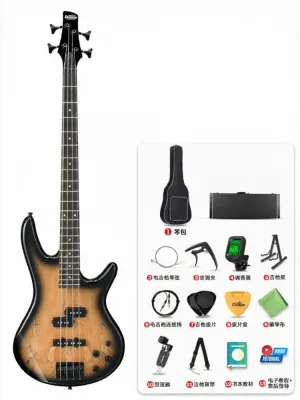
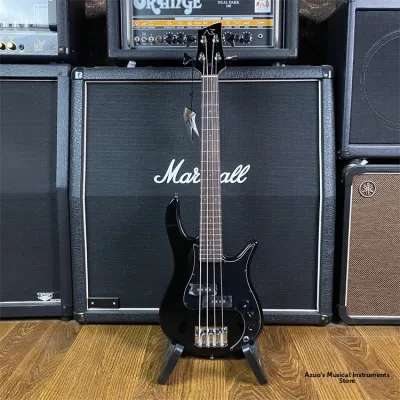
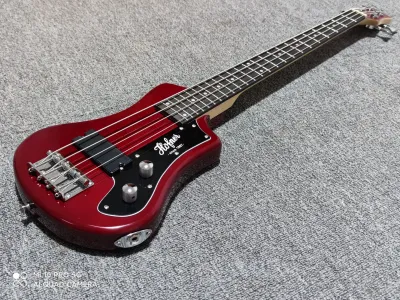
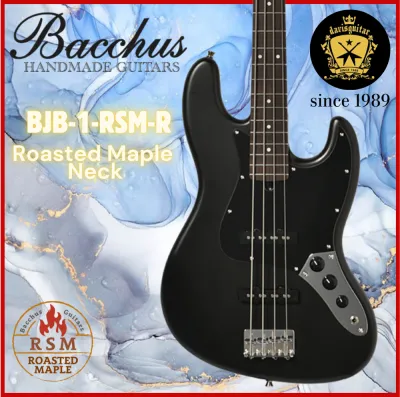
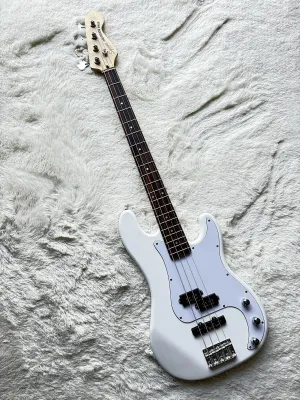
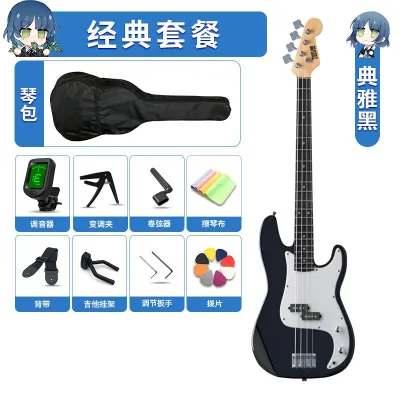
Prices are valid at publication and may change. Please refer to the product page for the latest price.
The pickup configuration determines the tonal versatility of the bass. Many beginner models feature either a Precision (P) style split-coil pickup, a Jazz (J) style dual single-coil setup, or a hybrid P/J configuration. A P-pickup offers a warm, punchy, and thick tone that sits well in classic rock and soul, while J-pickups provide a brighter, more articulate sound suitable for jazz, funk, and modern styles. A hybrid P/J setup offers the best of both worlds, allowing beginners to experiment with a wide range of tones as they discover their musical preferences.
Finally, local warranty coverage and accessible after-sales support are indispensable when purchasing a bass in Singapore. The high relative humidity in Singapore can cause wood to expand, contract, or warp, which directly impacts the instrument’s playability. Purchasing from a brand with authorized local distributors ensures you have access to professional setup services, truss rod adjustments, and warranty repairs if structural issues arise. This local support network provides peace of mind that online-only purchases from overseas retailers cannot match.
Widely Recognized Entry-Level Bass Brands to Consider
Several global manufacturers have established reputations for producing high-quality, entry-level bass guitars that cater specifically to beginners. These brands maintain strict quality control standards even in their budget-friendly lines, ensuring that the instruments are playable straight out of the box. While active electronics and modern body shapes are common across these manufacturers, each brand has a distinct design philosophy. It is highly recommended to visit local showrooms to test these instruments in person, focusing on how the neck feels in your hand and how the body rests against your torso.

Yamaha
Yamaha is widely respected in the musical instrument industry for its exceptionally consistent quality control and robust manufacturing standards. Even their entry-level bass series benefit from the same engineering expertise applied to their professional-grade instruments. This consistency means that a beginner purchasing a Yamaha bass can expect a reliable, durable instrument with minimal structural defects. Their designs often feature versatile pickup configurations, such as P/J setups, making them highly adaptable to various musical genres from pop to heavy rock. When exploring Yamaha models at local music stores in Singapore, pay close attention to the neck finish and the responsiveness of the tone controls. Verifying the specific series specifications and ensuring the store has performed a proper initial setup will help you get the most out of these highly dependable instruments.
Squier by Fender
Squier serves as the official entry-level brand for Fender, offering beginners access to iconic, historically significant body shapes like the Precision Bass and the Jazz Bass. These traditional designs have shaped the sound of popular music for decades, making Squier an appealing choice for players who appreciate classic aesthetics. Squier instruments typically utilize passive electronics, which rely on simple volume and tone knobs. This simplicity is highly beneficial for beginners, as it allows them to understand the foundational mechanics of tone shaping without the complexity of active preamps. When evaluating a Squier bass, it is important to inspect the fretwork along the edges of the neck to ensure there are no sharp ends, and to check that the neck alignment is straight relative to the body and strings.
Ibanez
Ibanez is renowned for its focus on modern ergonomics, characterized by incredibly thin, fast neck profiles and lightweight, contoured bodies. These design choices make Ibanez basses exceptionally comfortable for players with smaller hands, younger students, or those transitioning from the narrower neck of an electric guitar. The brand often incorporates modern hardware designs and sleek, contemporary aesthetics into their entry-level models. However, because some models feature highly lightweight body woods, it is essential to test the instrument on a strap while standing to verify its weight balance. Ensure that the headstock does not pull downward excessively, as a balanced instrument is crucial for maintaining proper playing posture during long practice sessions.
Sterling by Music Man
Sterling by Music Man brings the distinctive designs and powerful tones of classic Music Man instruments to an accessible price point. These basses are characterized by their use of active electronics, which feature an onboard preamp powered by a nine-volt battery. Active electronics provide a highly consistent, powerful signal and offer precise control over bass, middle, and treble frequencies directly from the instrument. This setup is ideal for beginners seeking aggressive, modern tones suitable for rock, funk, and metal. When choosing a Sterling bass, keep in mind that you will need to unplug the instrument cable when not playing to prevent the battery from draining. Additionally, during your in-store test, listen closely for any unwanted hum or interference, which can indicate whether the electronic cavity shielding is sufficient for your home practice environment.
Where to Buy and What to Verify Before Purchasing
In Singapore, beginners have several options for purchasing a bass guitar, ranging from authorized brand distributors to independent boutique music shops and online marketplaces. Authorized distributors generally offer the most reliable warranty coverage, direct access to original replacement parts, and staff who are highly knowledgeable about the specific brand’s lineup. Independent music stores, on the other hand, often provide a curated selection of multiple brands, allowing you to compare different instruments side-by-side. While purchasing from online marketplaces or e-commerce platforms can offer convenience, it deprives you of the essential opportunity to hold, feel, and play the instrument before committing to a purchase.
Before finalizing any purchase, performing a thorough physical inspection of the bass is critical to ensure you are not buying an instrument with structural defects. Begin by checking the neck relief; look down the edge of the fingerboard from the headstock to the body to ensure there is a very slight, consistent curve rather than a severe bow or twist. Next, run your fingers gently along both sides of the neck to check for sharp fret edges, which can occur when the wood contracts in dry environments or during shipping. Play every single note on every string to listen for fret buzz, which indicates that the string height or neck relief needs adjustment.
Additionally, test the electronics by plugging the bass into an amplifier. Turn all the volume and tone knobs slowly to ensure they rotate smoothly without producing crackling or popping noises. Toggle any pickup selector switches and listen for unwanted hum, which should subside when you touch the strings if the instrument is properly grounded. Finally, ask the retailer about their return policies and whether they provide a complimentary setup service. A professional setup—adjusting the truss rod, bridge saddle height, and intonation—is essential for optimizing playability, especially given Singapore’s high humidity levels.
Essential Accessories for Your First Bass Setup
To begin practicing effectively, you must allocate a portion of your budget to essential accessories that ensure your instrument is playable, safe, and properly maintained. The most critical accessory is a bass-specific amplifier. It is a common misconception that you can safely practice bass through a standard electric guitar amplifier. Guitar amplifiers are designed to handle higher frequencies and have speaker cones with limited physical movement. The low-frequency signals produced by a bass guitar require a speaker cone with a much larger excursion; playing a bass through a guitar amp at moderate to high volumes can easily tear the speaker cone or damage the amplifier’s circuitry. A dedicated bass amplifier is voiced specifically to reproduce low frequencies clearly and safely.
In addition to an amplifier, accurate tuning is fundamental to developing your musical ear. A reliable clip-on tuner is an essential tool that attaches to the headstock of your bass, detecting the vibrations of the strings to provide accurate tuning even in noisy environments. A metronome, whether a physical device or a free smartphone application, is equally important for developing the precise timing and rhythm skills required of a bass player.
Protecting your investment requires proper transport and storage gear. A well-padded gig bag is necessary for transporting your bass safely to lessons or practice sessions, shielding it from minor impacts and sudden temperature changes. A sturdy, wide strap is essential for supporting the weight of the bass comfortably across your shoulders when playing standing up. Finally, invest in a high-quality, shielded instrument cable to connect your bass to the amplifier, as cheap cables are prone to developing internal breaks and introducing unwanted static noise into your signal.
Frequently Asked Questions (FAQ)
Is a 4-string or 5-string bass better for a beginner?
For the vast majority of beginners, a 4-string bass is the highly recommended starting point. Standard 4-string basses use traditional tuning (E-A-D-G), which aligns perfectly with almost all beginner instructional books, online tutorials, and chord charts. The neck of a 4-string bass is narrower, making it much easier for beginners to wrap their hands around and develop proper fretting techniques. A 5-string bass adds a lower B string, which widens the neck significantly and requires more advanced string-muting techniques to prevent unwanted noise. Unless you are absolutely certain you need to play genres that heavily rely on lower notes, such as modern metal or gospel, starting with a 4-string bass will make your initial learning process much smoother.
Do I need a specific amplifier for a bass guitar?
Yes, you absolutely need an amplifier designed specifically for bass guitars. Bass amplifiers are engineered with robust speaker cones capable of handling the long physical excursions required to push low-frequency sound waves. They also feature EQ voicings and power sections optimized for low-end clarity. Attempting to play a bass guitar through a standard electric guitar amplifier carries a high risk of permanently damaging the guitar amp’s speaker, as the intense low frequencies can cause the speaker cone to tear or distort beyond repair. For safe home practice, a compact, low-wattage bass combo amplifier is the ideal choice.
Should I buy a short-scale bass if I have smaller hands?
A short-scale bass can be an excellent option if you find a standard 34-inch scale length physically uncomfortable. Short-scale basses typically feature a 30-inch scale length, which results in closer fret spacing and lower string tension. This makes it easier to press down the strings and reduces the physical stretch required to reach between frets, making it highly suitable for younger players or those with smaller hands. However, the lower tension can result in a warmer, rounder tone with slightly less sustain and punch compared to a standard scale bass. It is highly recommended to try both scale lengths in a local music store to determine which feels more natural and comfortable for your body before making a decision.
Community discussion
Share your experience or ask a question. Comments are reviewed before publication.