
Starting a musical journey with a compact stringed instrument offers a unique blend of portability and creative freedom. The guitarlele, a hybrid instrument that merges the compact body of a tenor ukulele with the six-string versatility of a classical guitar, has become an increasingly popular choice for beginners. It allows you to play standard guitar chord shapes and fingerpicking patterns without the bulk of a full-sized guitar, making it an excellent companion for small living spaces, travel, or casual practice sessions. However, navigating the market as a first-time buyer requires understanding what makes an instrument reliable, playable, and durable over time.
Choosing your first guitarlele involves more than simply picking an appealing design or a familiar brand name. Because these instruments feature a shorter scale length and higher string tension than standard guitars, build quality directly impacts how well the instrument stays in tune and how comfortable it is to play. By focusing on key construction elements, evaluating recognized manufacturers, and performing a systematic physical inspection, you can select a guitarlele that supports your learning journey rather than causing frustration.
Key Factors to Evaluate When Choosing a Beginner Guitarlele
When evaluating a beginner guitarlele, the choice of body materials is one of the most critical decisions you will make. Most entry-level instruments are constructed from either laminate wood or solid wood, each presenting distinct trade-offs in terms of durability, maintenance, and acoustic resonance. Laminate wood consists of thin layers of wood pressed together, which makes it highly resistant to environmental changes. In tropical climates like Singapore, where indoor air-conditioning and outdoor humidity levels fluctuate significantly, a laminate instrument is less likely to warp, crack, or suffer from joint separation.
Products mentioned in this guide
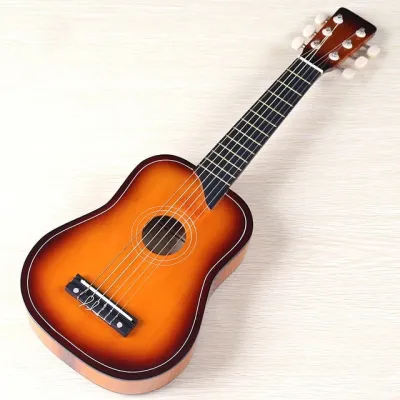
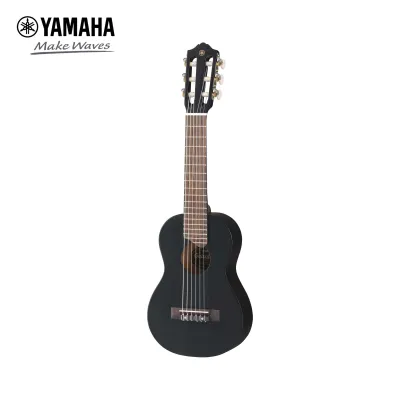
Prices are valid at publication and may change. Please refer to the product page for the latest price.
Solid wood instruments, on the other hand, feature single pieces of natural wood for the top, back, or sides. Solid wood vibrates more freely than laminate, producing a richer, warmer, and more resonant tone that often improves as the wood ages. However, solid wood is highly sensitive to humidity fluctuations and requires careful storage, often necessitating a dedicated hard case and humidification packs to prevent cracking. For most beginners, a laminate body or an instrument with a solid top and laminate back and sides offers a practical balance of tonal warmth and worry-free durability.
The scale length of a guitarlele—the distance between the nut and the bridge—is significantly shorter than that of a standard classical guitar, typically measuring around 17 inches (approximately 43 centimeters). This compact scale means the frets are spaced much closer together, which can feel cramped for players with larger hands but highly accessible for those with smaller fingers. When evaluating different models, pay close attention to the nut width, which determines the spacing between the strings at the headstock. A wider nut width allows for cleaner finger placement during complex chord transitions, reducing the likelihood of accidentally muting adjacent strings.
The neck profile, or the shape of the back of the neck, also plays a vital role in hand comfort and playability. A flatter, classical-style D-shape neck encourages proper thumb placement on the back of the neck, which is beneficial for learning classical techniques. Conversely, a more rounded C-shape neck may feel more familiar to players transitioning from acoustic or electric guitars. It is essential to check how the neck feels in your hand, ensuring you can comfortably wrap your fingers around the fretboard without experiencing wrist strain during extended practice sessions.
Tuning stability is a common challenge for short-scale nylon-string instruments, making hardware quality a primary consideration. The tuning pegs, or machine heads, should operate smoothly without slipping, sticking, or feeling loose. Closed-gear tuners generally offer better protection against dust and moisture, while open-gear tuners are lighter and maintain a traditional aesthetic. Regardless of the style, the gears should have a high enough ratio to allow for precise micro-adjustments when tuning the strings to pitch.
The bridge construction and saddle material also influence how well the instrument retains its tuning and intonation. A securely glued bridge prevents the high tension of six nylon strings from lifting the top wood of the instrument. Synthetic bone materials, such as NuBone or Micarta, are commonly used for the nut and saddle on reliable beginner models because they provide consistent density, helping to transfer string vibrations evenly to the soundboard while preventing strings from binding in their slots.
When budgeting for your first guitarlele, consider whether the instrument is sold as a standalone unit or as part of a starter bundle. A high-quality gig bag is an essential accessory for protecting the instrument from dust, minor impacts, and rapid humidity changes when traveling. Some bundles also include a clip-on chromatic tuner, a strap, spare nylon strings, and instructional materials, which can save you from making separate purchases.
While a bundle can offer excellent value, ensure that the quality of the instrument itself has not been compromised to accommodate the extra accessories. It is often wiser to purchase a higher-quality standalone guitarlele and buy a separate tuner and gig bag than to settle for a poorly constructed instrument packaged with low-grade accessories. Budgeting an additional S$20 to S$50 for a reliable clip-on tuner and a padded bag is a practical approach if the instrument you prefer does not come bundled.
Recognized Guitarlele Brands for First-Time Buyers
Navigating the musical instrument market can be overwhelming due to the sheer volume of options available online and in local shops. For first-time buyers, focusing on established manufacturers with a proven track record in producing small-scale fretted instruments is a reliable way to narrow down your choices. These brands have developed standardized manufacturing processes that ensure consistent quality control, reducing the likelihood of receiving an instrument with structural defects.

When researching current models, look for brands that specialize in classical guitars or ukuleles, as the guitarlele shares construction techniques with both families. Reading manufacturer specifications carefully will help you identify which models use quality components like truss rods for neck adjustment, reliable tuning machines, and durable tonewoods. The following brands are widely recognized for offering dependable entry-level options that cater to different player preferences.
Yamaha
Yamaha is globally recognized for its highly consistent manufacturing standards and rigorous quality control across all levels of musical instruments. For beginners, this consistency means that a guitarlele purchased from an authorized dealer or reputable local music shop is highly likely to be playable straight out of the box, with minimal setup required. Their entry-level models are built to withstand diverse environmental conditions, making them exceptionally durable choices for students and travelers alike.
When inspecting a Yamaha guitarlele, verify the smoothness of the fret edges along the side of the neck, as sharp frets can make playing uncomfortable. Check the neck relief to ensure the fretboard is straight with just a slight, intentional curve to prevent string buzz. Additionally, test the tuning pegs to confirm they turn smoothly without catching, which indicates that the gears are properly aligned and lubricated.
Kala
Kala has built a strong reputation primarily through its extensive lineup of high-quality ukuleles, and this expertise translates directly into their guitarlele designs. Known for creating lightweight, travel-friendly instruments, Kala often incorporates unique aesthetic details and diverse wood finishes that appeal to modern players. Their instruments frequently feature comfortable neck profiles and body shapes that make transitioning from a standard ukulele feel natural and intuitive.
If you are considering a Kala model, it is important to verify the string action height—the distance between the strings and the fretboard. While a lower action makes fretting chords easier for beginners, action that is too low can cause unwanted fret buzz when the strings are plucked firmly. Additionally, check if the model includes a padded gig bag, as Kala frequently packages their travel-oriented instruments with custom-fit bags designed to protect the lightweight body during transport.
Cordoba
Cordoba brings a deep heritage of classical guitar luthiery to the compact scale of the guitarlele, making their instruments highly appealing to players who appreciate traditional aesthetics and classical tone. Their designs often feature wider nut widths and flat fretboards, closely mimicking the feel of a full-sized classical guitar. This makes Cordoba instruments an excellent choice for beginners who plan to eventually transition to standard classical or nylon-string acoustic guitars.
When evaluating a Cordoba instrument, pay close attention to the internal bracing patterns visible through the soundhole, ensuring there are no loose braces or excess glue runs. Verify the tonewood specifications, as many of their models utilize solid wood tops paired with laminate back and sides to deliver enhanced resonance while maintaining structural stability. You should also check the string tension, as classical-style setups may require slightly more finger pressure than lighter, ukulele-style builds.
Luna
Luna is distinguished by its visually striking designs, often featuring laser-etched artwork, decorative soundhole rosettes, and unique body contours inspired by nature and global art. Beyond their artistic appeal, Luna instruments are designed with beginner playability in mind, featuring comfortable, ergonomic neck profiles that accommodate smaller hands. This combination of visual creativity and approachable design makes them a popular choice for expressive players.
When examining a Luna guitarlele, look closely at the overall build weight and balance; the instrument should feel comfortable when held both with and without a strap. Check the intonation by playing an open string and then fretting that same string at the twelfth fret to ensure the pitch remains accurate across the entire length of the fretboard. Finally, inspect the tuning peg stability to confirm that the decorative headstock design does not interfere with the smooth operation of the tuning gears.
Pre-Purchase Checklist for Your First Guitarlele
Before finalizing your purchase, whether in a physical music store or upon receiving a shipment from an online marketplace, conduct a thorough physical inspection of the instrument. Begin by examining the bridge, where the strings are anchored to the body; there should be no visible gaps between the bridge plate and the wooden top, which would indicate the bridge is lifting under tension. Inspect all body joints, including the neck joint and the binding around the edges, looking for any signs of glue separation or finish cracking. Run your fingers gently along both sides of the fretboard to check for sharp fret ends, which can occur if the wood shrinks slightly during shipping or storage.
A playability test is essential to ensure the instrument is comfortable to play and free of mechanical issues. Pluck each string individually at every single fret along the neck, listening closely for any buzzing sounds or dead notes where the string contact is muted. Measure the string action height at the twelfth fret; as a general guideline for nylon-string instruments, the gap should be comfortable enough to press down easily without requiring excessive hand strength, yet high enough to allow the strings to vibrate freely. If you experience significant buzzing or find the strings incredibly difficult to press down, the instrument may require a professional setup or truss rod adjustment.
Understanding the retailer’s policies is just as important as inspecting the physical instrument itself. Confirm the duration of the return window and the specific conditions under which an exchange or refund is permitted, especially when purchasing online where you cannot play the instrument beforehand. Verify the warranty coverage, ensuring it protects against manufacturing defects such as neck warping or joint failure. If you are buying within Singapore, check if the retailer offers local customer support or in-store setup services, as having access to a local technician can save you significant time and effort if your guitarlele requires adjustments in the future.
Frequently Asked Questions (FAQ)
Do I need to tune a guitarlele like a guitar or a ukulele?
A guitarlele is typically tuned to standard A tuning (ADGCEA), which is equivalent to placing a capo on the fifth fret of a standard acoustic guitar. This means the intervals between the strings are identical to a guitar, allowing you to use the exact same chord shapes and scale patterns you would use on a standard six-string instrument. However, because the pitch is transposed a perfect fourth higher, a G chord shape on a guitar will produce a C chord sound on a guitarlele. To ensure accurate tuning, it is highly recommended to use a chromatic tuner rather than a basic ukulele tuner, as a chromatic tuner can detect all twelve pitches of the chromatic scale, making it easy to tune each of the six strings precisely to A, D, G, C, E, and A.
Should I buy a solid wood or laminate guitarlele as a beginner?
For most beginners, a laminate wood guitarlele is the most practical and resilient choice, particularly when living in a highly humid environment like Singapore. Laminate construction is exceptionally stable and resists warping, cracking, and joint separation caused by rapid shifts between humid outdoor air and dry, air-conditioned indoor spaces. While solid wood instruments offer superior tonal depth and resonance that matures over time, they require diligent maintenance, including humidity monitoring and the use of specialized storage cases. If you prefer the tonal benefits of solid wood but want to minimize maintenance, look for a hybrid model featuring a solid spruce or mahogany top paired with laminate back and sides, which provides a balance of enhanced sound quality and structural durability.

Community discussion
Share your experience or ask a question. Comments are reviewed before publication.