
Choosing your first digital piano is a critical decision that shapes your entire learning journey. The Roland FP-10 has established itself as a prominent contender in the entry-level market, particularly for those seeking an authentic acoustic piano experience on a budget. If you are wondering whether this instrument is a suitable fit for your home, the short answer is ‘yes’—especially if your primary goal is to develop proper finger technique and classical playing habits. By focusing its design on key action and core sound quality rather than an overwhelming array of digital buttons, this model provides a streamlined, distraction-free platform for novices.
However, a digital piano is a long-term investment, and what works for one learner might not suit another. While the keyboard feel is highly praised, the instrument does come with specific design compromises, such as limited physical controls and basic connectivity options. Understanding how these features align with your personal space, practice habits, and musical goals will help you determine if this model is a suitable starting point or if you should explore other options in the market.
Why Key Action Matters for Beginners and How the FP-10 Performs
When you begin learning the piano, the way the keys respond to your touch is far more important than any digital sound effect. Acoustic pianos use a complex system of wooden keys, hammers, and felt to strike strings, creating a natural resistance that players must learn to control. If a beginner practices on a keyboard with light, unweighted keys, they will not develop the finger strength, dexterity, or muscle memory required to play on a traditional piano. This can lead to poor habits, such as flat fingers or an inability to control volume and expression when transitioning to an acoustic instrument.
Products mentioned in this guide
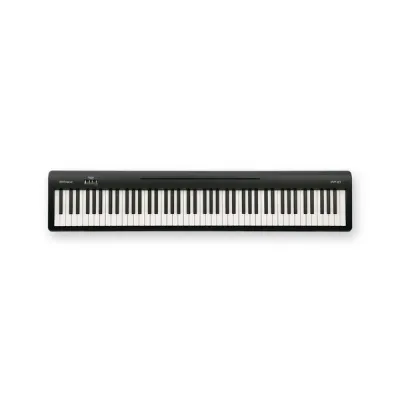
![Roland FP10 Portable Digital Piano Keyboard 88 Keys PHA-4 FP-10 Wooden Stand Sustain Pedal FP 10 The Music Works [LIMITED STOCK]](https://img.lazcdn.com/g/p/5db2ada92dc8a33ee8382f610822149b.jpg_400x400q80.jpg_.webp)
Prices are valid at publication and may change. Please refer to the product page for the latest price.
To address this, the Roland FP-10 features the PHA-4 Standard keyboard mechanism, which utilizes fully weighted, hammer-action keys. This design simulates the physical weight of acoustic hammers, meaning the keys feel heavier in the lower register and lighter in the treble clef, just like a grand piano. For a beginner, this graded weighting is essential for building balanced hand strength and learning how to apply the correct amount of pressure across different octaves.
Another notable feature of this key action is the inclusion of escapement. In an acoustic grand piano, the escapement mechanism allows the hammer to release from the key quickly, preventing it from sticking to the string. This creates a subtle ‘click’ or let-off feel when you press a key down slowly. The PHA-4 action replicates this physical sensation, giving players a highly realistic tactile response that is rare to find in entry-level digital pianos. This subtle feedback helps classical students learn to control soft, delicate passages with greater precision.
The surface of the keys also plays a significant role in your daily practice sessions. Standard plastic keys can become slippery when your fingers sweat, which is a common issue during long practice sessions in warm climates like Singapore. The FP-10 addresses this by applying a matte, moisture-absorbing finish to the white keys, designed to mimic the texture of natural ivory. This textured surface provides a more secure grip, reducing finger slippage and allowing for more confident playing as you tackle faster scales and exercises.
Finally, the instrument offers adjustable touch sensitivity settings, allowing you to customize how the sound engine responds to your physical keystrokes. You can choose from super-heavy, heavy, medium, light, super-light, or fixed touch settings. For young children or beginners with weaker finger muscles, setting the touch response to ‘light’ allows them to produce a full, resonant sound without straining their hands. As their physical strength and control improve, they can transition to the ‘medium’ or ‘heavy’ settings to practice a wider range of dynamics, from quiet pianissimo to powerful fortissimo.
Sound Quality and Built-in Features for Daily Practice
An authentic key action must be paired with a responsive sound engine to create an immersive playing experience. The FP-10 utilizes Roland’s proprietary SuperNATURAL Piano sound engine, which differs significantly from the basic, static samples found in many budget keyboards. Instead of simply playing back a single recording of an acoustic piano at different volume levels, this technology uses advanced modeling algorithms to recreate the complex physical interactions of an acoustic instrument. This includes the way strings vibrate together, how the sound decays naturally over time, and how the tone changes dynamically depending on how hard or soft you strike the keys.

This dynamic tonal variation is crucial for beginners learning to express emotion through their music. When you play softly, the instrument produces a warm, mellow tone; as you strike the keys with more force, the sound naturally brightens and gains brilliance, rather than just getting louder. This seamless transition between different dynamic levels encourages students to listen closely to their tone production and refine their touch.
For daily practice, the built-in speaker system is designed to deliver this rich sound directly to the player. The instrument features two oval speakers housed within the compact chassis, pointing downwards to create a spacious sound field. While these speakers are well-suited for personal practice in small to medium-sized rooms, such as a typical bedroom or a study in a Singapore HDB flat, they may struggle to fill a large living area or cut through a noisy environment. If you plan to perform for others or practice in a larger space, you may need to connect external amplification.
To enhance the learning experience without cluttering the piano’s minimalist frame, the instrument includes built-in Bluetooth MIDI connectivity. This allows you to connect the piano wirelessly to a tablet or smartphone and use the official companion app, the Roland Piano App. Through this digital interface, you can easily access a visual metronome, record your practice sessions to track your progress, and select from a wider variety of instrument voices, including electric pianos, organs, and strings. The app also features built-in sheet music and interactive ear-training exercises, making daily practice more engaging for self-taught learners.
Design, Portability, and Setup Limitations
One of the most appealing aspects of this digital piano is its compact and lightweight design. With a slim depth and a weight of under 13 kilograms, it is highly portable and easy to move around. This makes it an excellent choice for compact living spaces, where a traditional acoustic piano or a bulky cabinet-style digital piano would take up too much floor space. You can easily place it on a portable keyboard stand and store it away when not in use, or move it between rooms as needed.
However, this ultra-compact design comes with several physical and connectivity limitations that buyers should keep in mind. For quiet practice, which is often essential in high-density housing environments, the instrument provides a single headphone jack. While this is sufficient for solo practice, it does not easily accommodate a teacher and student practicing together silently, which would require a headphone splitter. Additionally, the piano lacks dedicated left and right audio line-out ports. If you ever need to connect the instrument to an external PA system, amplifier, or recording interface, you will have to use the headphone jack as an audio output, which can sometimes result in lower signal quality or require specific adapter cables.
Another trade-off of the minimalist design is the complete absence of a built-in display screen. The physical control panel consists of only a few buttons, including the power button, volume controls, and a function button. To change settings on the instrument itself—such as switching voices, adjusting the metronome tempo, or changing the touch sensitivity—you must hold down the ‘Function’ button and press specific keys on the keyboard.
This key-combination system can be confusing and difficult to memorize for beginners. While the companion app provides a highly intuitive visual interface to bypass this issue, it requires you to have a compatible smartphone or tablet nearby whenever you want to adjust deep settings. If you prefer a standalone instrument that does not rely on external smart devices for basic navigation, this interface design might feel frustrating.
Who Should Choose the Roland FP-10 and Who Should Look Elsewhere
The Roland FP-10 is an excellent match for a specific type of beginner: the student who wants to focus primarily on learning traditional piano technique. If your main goal is to play classical music, prepare for graded piano examinations, or transition to an acoustic piano in the future, the combination of the PHA-4 key action and the SuperNATURAL sound engine offers outstanding value. It prioritizes the physical and acoustic fundamentals of piano playing, ensuring that the skills you develop during practice will translate directly to any traditional instrument.
On the other hand, this model may not be the ideal fit for players with different musical aspirations. If you are interested in music production, keyboard performance, or playing in a band, you might find the limited connectivity options and lack of dedicated audio outputs restrictive. Similarly, if you enjoy experimenting with hundreds of different instrument sounds, built-in rhythm accompaniments, auto-accompaniment features, or complex layering options, a dedicated synthesizer, arranger keyboard, or a feature-rich digital piano from another product line would be more suitable.
When preparing to purchase, it is highly recommended to verify the current retail bundles available in your local market. In Singapore, authorized music retailers and official brand stores often offer packages that include essential accessories. Depending on your home setup, you may want to look for bundles that include a sturdy wooden stand (such as the matching Roland KSCFP10 stand) rather than a basic X-stand, which can sometimes wobble during enthusiastic playing. Additionally, check if the bundle includes a high-quality sustain pedal, as the basic plastic switch pedal included in the standard box may slide around on smooth floors and does not support half-pedaling techniques. Comparing these bundle options and verifying local prices in S$ will ensure you get the best setup for your learning space.
Frequently Asked Questions (FAQ)
Does the Roland FP-10 come with a stand and pedals?
The standard box includes the digital piano itself, a music rest for sheet music, an AC power adapter, and a basic plastic sustain switch pedal. It does not come with a keyboard stand. For a complete home setup, you will need to purchase a stand separately. You can choose a portable metal stand or the dedicated wooden stand designed specifically for this model. If you plan to practice advanced pedaling techniques, you should also consider upgrading the basic switch pedal to a more robust damper pedal that supports half-pedaling, as the standard switch pedal only registers simple on/off inputs.
Can I use the Roland FP-10 with online piano lesson apps?
Yes, the instrument is highly compatible with modern educational software. You can connect the piano to your tablet, smartphone, or computer using either the built-in Bluetooth MIDI connection or a standard USB Type-B cable. This allows you to use popular interactive learning platforms, sheet music readers, and music production software. When using Bluetooth MIDI, ensure your device is close to the piano to maintain a stable connection. If you experience any audio latency while using learning apps, connecting your device via a wired USB adapter can help eliminate any delay between your key presses and the app’s response.
Is the Roland FP-10 suitable for advanced players later on?
While the key action is sophisticated enough to handle intermediate classical repertoire and complex finger techniques, advanced players may eventually run into some of the instrument’s technical limitations. The piano features a maximum polyphony of 96 notes, which is plenty for beginners and intermediate students but may lead to dropped notes during highly complex classical pieces with heavy sustain pedal usage. Additionally, the lack of dedicated audio outputs and advanced sound-shaping controls means that as your playing progresses into professional performance or recording, you will likely want to upgrade to a higher-tier model with more robust connectivity and advanced sound customization options.
Community discussion
Share your experience or ask a question. Comments are reviewed before publication.