
Selecting your first digital piano can feel overwhelming when confronted with technical jargon and endless spec sheets. The Roland FP-30X has established itself as a highly popular option for beginners, but understanding which features actually support your learning journey is key to making a smart investment. Instead of getting lost in marketing terms, focusing on the core specifications—specifically key action, sound engine, and polyphony—will reveal how this instrument impacts your daily practice. This guide decodes these essential technical details to help you evaluate whether this model aligns with your musical goals and budget.
Key Action: Does the PHA-4 Standard Feel Like an Acoustic Piano?
The physical feel of the keys is the most critical factor when choosing a digital piano, as it directly shapes your finger strength and playing technique. The Roland FP-30X features the PHA-4 Standard keyboard action, which utilizes weighted keys to simulate the resistance of an acoustic piano. Unlike basic keyboards that rely on simple springs, weighted keys require more effort to press, helping you build the hand endurance needed for expressive playing. This action also includes an escapement mechanism, which replicates the subtle “let-off” click felt when gently pressing an acoustic piano key, allowing for greater control over quiet passages.
Another practical feature of this key action is the textured ivory-feel surface on the keys. In warm or humid environments, such as typical Singapore households, fingers can easily slip during extended practice sessions. This textured finish absorbs moisture and provides a reliable grip, helping you maintain proper hand positioning. However, because key resistance and physical feedback are highly subjective, it is always wise to test the keyboard in person at a local showroom or carefully review the manufacturer’s specifications to ensure the tension feels comfortable for your hands.
Products mentioned in this guide
![Roland FP10 FP30X Portable Digital Piano 88 Keys Weighted Keyboard FP-10 FP-30X FP 10 30 [LIMITED STOCK]](https://img.lazcdn.com/g/p/b40c0a5d1400f3afb2c14a886464b0ef.jpg_400x400q80.jpg_.webp)
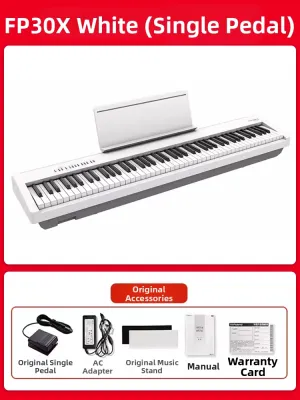
Prices are valid at publication and may change. Please refer to the product page for the latest price.
Sound Engine: Is SuperNATURAL Tone Good Enough for Learning?
A digital piano’s sound engine determines how realistically it responds to your touch, which is vital for developing your musical ear. The FP-30X utilizes Roland’s SuperNATURAL sound technology, which goes beyond basic sampling. While standard sampling simply plays back a static recording of a piano note at different volumes, a modeling-assisted engine calculates the complex tonal changes that occur when you strike a key with varying force. This creates a smoother transition from soft to loud notes, helping beginners learn how to control their dynamics and play with genuine expression.

While the built-in speakers are convenient, the way you listen to your instrument plays a major role in how you perceive its tone. In smaller rooms or high-density living spaces, sound can bounce off walls and create a muddy acoustic profile. Using a high-quality pair of studio headphones can offer a much clearer, more detailed representation of the sound engine’s capabilities. Because tone preference is entirely personal, listening to official audio demonstrations or playing the instrument yourself is the best way to decide if the sound profile appeals to your ears.
Polyphony: Will 256 Notes Cut Off During Your Practice?
Polyphony refers to the maximum number of individual notes or voices a digital piano can produce simultaneously. The FP-30X boasts a 256-note polyphony limit, which might sound like an excessive number for a beginner who only has ten fingers. However, notes are consumed rapidly when you use a sustain pedal, as every decaying note, stereo layer, and background effect continues to count against the limit until it fully fades out. If you run out of polyphony, older notes are abruptly cut off, which can ruin the flow of your music.
With 256 notes of polyphony, you have more than enough headroom to progress from basic exercises to complex classical and pop arrangements without experiencing any note drop-outs. This high limit contrasts sharply with entry-level keyboards or toy instruments, which often feature 32 or 64 notes of polyphony. Investing in an instrument with higher polyphony ensures that your digital piano will continue to support your repertoire as your pieces become more technically demanding over the years.
Specs You Can Safely Ignore When Starting Out
When you are just starting out, it is easy to get distracted by secondary features that do not contribute to core piano skills. Features like Bluetooth audio, built-in rhythm accompaniments, and dozens of non-piano instrument voices are fun additions, but they should not be the primary reason you choose a specific model. These extra functions are convenient bonuses rather than essential learning tools, and they will not help you develop proper finger technique or ear training.
If you do plan to use specific interactive learning software or sheet music apps, it is important to check device compatibility beforehand. You can consult the user manual or the official website to verify how the instrument connects to your tablet or computer, whether via a standard USB cable or wireless Bluetooth MIDI. Prioritizing the core action and sound quality over these digital extras will ensure you invest your budget where it matters most.
Making the Decision: Does the FP-30X Fit Your Beginner Budget?
To determine if the FP-30X fits your beginner budget, you must look beyond the price tag of the keyboard itself and calculate the total cost of ownership in S$. A complete setup requires several essential accessories, including a sturdy stand (either a matching wooden stand or a heavy-duty double-braced metal stand), a comfortable bench to maintain proper posture, and a reliable sustain pedal. Factoring in these additional items from the start will prevent unexpected expenses down the road.
You should also weigh the instrument’s physical build and longevity against your living space and commitment level. A portable slab-style digital piano offers flexibility if you need to store it away, but a permanent setup encourages more frequent practice. Before making your final purchase, visit authorized local retailers to compare warranty terms, return policies, and the availability of after-sales support, ensuring you have peace of mind as you begin your musical journey.
Frequently Asked Questions (FAQ)
Do I need to buy a separate sustain pedal for the FP-30X?
The standard package typically includes a basic plastic foot switch that functions as a simple on-off damper pedal. While this is sufficient for your first few weeks of practice, you will likely want to upgrade to a more substantial, continuous half-damper pedal as you progress. A high-quality pedal offers realistic physical resistance and allows for intermediate pedaling techniques that a basic switch cannot replicate.
Can I connect the FP-30X to learning apps on my tablet?
Yes, you can connect the instrument to various learning and sheet music applications using either a wired USB connection or wireless Bluetooth MIDI. To ensure a smooth setup, always check the compatibility requirements of your specific app and refer to the piano’s user manual for step-by-step pairing instructions, as connection stability can vary depending on your tablet’s operating system.
Community discussion
Share your experience or ask a question. Comments are reviewed before publication.