
Choosing the right electric drum set for home practice is a significant decision that shapes your daily playing experience, skill development, and relationship with your neighbors. Roland and Yamaha have long stood as the two giants in the electronic percussion industry, each offering distinct approaches to design, tactile response, and sound generation. Finding the ideal kit requires balancing your personal playing style with the practical realities of practicing in a residential space.
Quick Answer: Roland vs Yamaha for Home Practice
Your choice between Roland and Yamaha ultimately depends on what you prioritize in a practice instrument. Roland is generally the preferred choice if you want highly adjustable mesh heads that allow you to fine-tune the physical rebound of each drum, alongside a modular system that offers extensive customization and expansion options. This brand is highly suited for players who want their electronic kit to closely mimic the physical setup and customizable tension of an acoustic drum set.
Conversely, Yamaha is the ideal option if you prefer a highly consistent, realistic stick response without the springiness sometimes associated with mesh. Yamaha’s proprietary silicone pads offer a unique playing surface that closely replicates the natural resistance of an acoustic drum head. Additionally, Yamaha modules are celebrated for their natural acoustic drum samples and streamlined, user-friendly training tools. Both brands offer exceptional instruments, meaning the right choice depends on your tactile preferences, space constraints, and specific learning goals.
Products mentioned in this guide
![Roland TD-07DMK 8 Pieces Electronic Drum Kits Compact V-Drums TD 07 Series [LIMITED STOCK]](https://img.lazcdn.com/g/p/0cd0a71dbacc5c4728993ccac11c882f.jpg_400x400q80.jpg_.webp)
![Yamaha DTX6KX Electronic Drums DTX6K-X DTX 6K X Digital Drum DTX 6KX DTX6 The Music Works Store [LIMITED STOCK]](https://img.lazcdn.com/g/p/b6a8ffb94630b560f5e937d7664610bc.jpg_400x400q80.jpg_.webp)
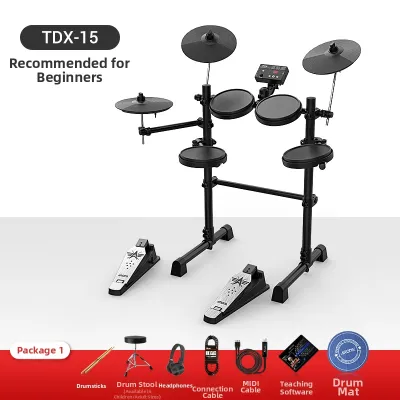
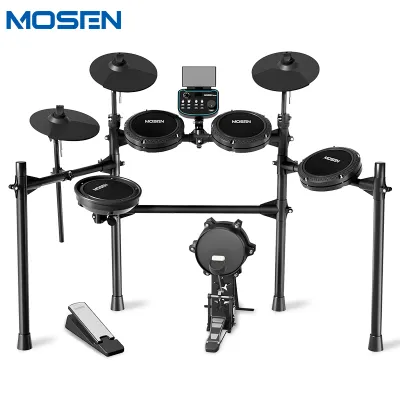

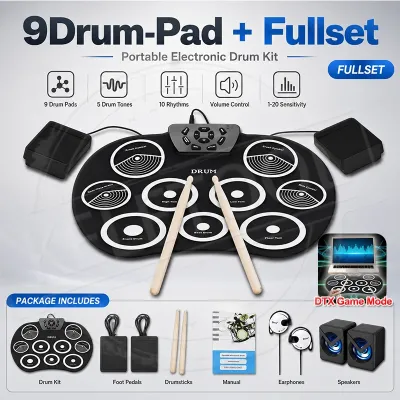
Prices are valid at publication and may change. Please refer to the product page for the latest price.
Pad Feel and Playability Comparison
The physical interaction between your sticks and the drum pads is the most critical factor in maintaining a comfortable and productive practice routine. Roland is famous for pioneering mesh head technology. These heads consist of a woven material stretched over the pad frame, which you can tighten or loosen using a standard drum key. This adjustability allows you to replicate the varying tensions of an acoustic kit, such as a tight snare drum and looser floor toms. While mesh heads offer excellent rebound and extremely low acoustic noise when struck, some drummers find them slightly springier than traditional acoustic heads.

Yamaha takes a different approach with its Textured Cellular Silicone (TCS) pads. Instead of a stretched membrane, TCS pads utilize a proprietary silicone material filled with tiny air bubbles. This design is engineered to absorb the stick strike in a way that mimics the natural “sink” and resistance of a real drum head, reducing wrist fatigue during long practice sessions. While you cannot adjust the physical tension of a TCS pad, the surface remains highly consistent across different temperature and humidity levels. Yamaha also uses traditional rubber pads on its entry-level kits, which offer a firmer feel and slightly more physical noise than silicone or mesh.
When comparing playability, you must also check the manufacturer specifications for pad zones. Single-zone pads only trigger one sound regardless of where you strike them. Dual-zone pads allow you to trigger different sounds from the head and the rim, which is essential for practicing rimshots or cross-sticks. Triple-zone pads, often found on higher-end cymbal pads, let you trigger distinct sounds from the bell, bow, and edge, while also allowing you to choke the cymbal by grabbing the edge. Before making a purchase, it is highly recommended to visit a local showroom to test how the different pad materials feel under your sticks and to observe the physical noise they produce when struck.
Sound Modules and Built-in Features
The sound module, or the “brain” of the electric drum set, dictates the quality of your audio experience and the variety of practice tools at your disposal. For structured home practice, look closely at the built-in coaching functions. Both brands offer metronomes with variable time signatures, but their training suites differ. Yamaha modules often feature highly structured training programs, such as rhythm gates that silence your hits if they are out of time, and stroke counters to measure speed. Roland modules focus heavily on timing accuracy and endurance, offering visual feedback that helps you identify whether you are playing ahead of or behind the beat.
Modern connectivity is another crucial factor for home integration. Check the specifications of each module for USB audio and MIDI capabilities. A module with USB audio class compliance allows you to send both MIDI data and multi-channel audio directly to a computer or mobile device via a single cable. This makes it incredibly simple to record your practice sessions or play along with external software without needing a separate audio interface. Bluetooth connectivity is also increasingly common, allowing you to stream backing tracks wirelessly from your phone directly into your headphones while you play.
When evaluating the sound libraries, do not rely solely on the number of built-in sounds. Check the official spec sheets to see how much control you have over editing those sounds. Roland modules typically offer deep editing capabilities, allowing you to virtually adjust the drum shell depth, head type, muffling, and even the virtual room acoustics. Yamaha focuses on delivering highly realistic, pre-configured acoustic drum samples recorded in professional studios, which require less tweaking to sound excellent right out of the box. Finally, ensure the module has a high-quality headphone output with independent volume control so you can practice silently without sacrificing audio clarity.
Build Quality, Footprint, and Noise Control
An electric drum set must fit comfortably within your living space without causing structural disruption. Rack stability is a key consideration; a flimsy rack will wobble during intense practice, causing pads to shift and triggering accidental sounds. Roland and Yamaha both design robust rack systems, but their footprints vary. Compact, folding racks are excellent for tight spaces or multi-purpose rooms, while heavy-duty four-post racks offer maximum stability but require a dedicated, permanent floor area. Always measure your available space and compare it against the manufacturer’s official dimension diagrams, keeping in mind that you need extra clearance for your drum throne and the outward swing of the cymbal pads.
In high-rise residential buildings, physical noise control is often the biggest challenge for home drummers. While headphones keep the drum sounds silent to the outside world, the physical impact of your sticks on the pads and, more importantly, your feet on the pedals creates low-frequency vibrations. This structural vibration travels through the floorboards and can easily disturb neighbors living downstairs. Roland offers specialized noise-eating accessories designed to decouple the pedals and stand legs from the floor, while Yamaha designs physical kick pads with softer materials to cushion the impact of the beater.
Cable management is another detail that affects both safety and aesthetics in a home environment. Many modern kits use a consolidated multi-pin cable harness that plugs directly into the module, keeping the wiring tidy and reducing the risk of tripping. Higher-end kits may use individual quarter-inch cables for each pad, which makes replacing a single damaged cable much easier but requires more careful routing. Ensure the module placement is easily accessible from your throne so you can adjust settings, plug in headphones, or connect your phone without having to stretch or disassemble your setup.
Pricing and Long-Term Value
Investing in an electric drum set requires understanding the total cost of ownership across different budget tiers. Entry-level kits from both brands offer a compact footprint and essential features for beginners, while mid-range kits introduce better pad materials, such as multi-zone mesh or silicone, and more advanced modules. Flagship models provide full-scale wooden shells and advanced digital triggering systems that mimic the exact physical dimensions of an acoustic kit. When planning your budget, always check current S$ prices at authorized local dealers in Singapore to get an accurate picture of the local market.
Be aware of potential hidden costs when comparing models. Many mid-range and high-end electric drum sets do not include essential hardware in the box. You may need to purchase a kick pedal, a hi-hat stand, a snare stand, a drum throne, and headphones separately. Always read the product specifications carefully to see exactly what accessories are included. Factor these additional purchases into your overall budget to avoid unexpected expenses when your kit arrives.
Long-term value is heavily tied to warranty terms and the availability of replacement parts. Authorized local distributors provide official warranties that protect your investment against manufacturing defects. Because electronic drum pads contain sensitive sensors that wear out over time, check how easily you can source replacement trigger cones, cables, or individual pads through official channels. To ensure you receive genuine parts and reliable customer support, avoid purchasing from unauthorized third-party marketplace listings or parallel importers who cannot guarantee local warranty coverage.
Decision Framework: Which Electric Drum Set Should You Buy?
To finalize your decision, evaluate your personal practice profile against this structured framework:
- Choose Roland if:
- You want the ability to adjust the physical tension of your drum heads using a standard drum key.
- You plan to expand your kit over time by adding more pads and cymbals, utilizing Roland's highly modular ecosystem.
- You enjoy deep-diving into module menus to customize virtual drum dimensions, muffling, and room acoustics.
- Choose Yamaha if:
- You prefer a highly realistic, non-bouncy stick response that closely mimics the natural resistance of an acoustic drum head without needing tension adjustments.
- You want premium, studio-recorded acoustic drum sounds that sound excellent immediately without extensive editing.
- You want highly structured, built-in training programs to systematically improve your timing and speed.
- Verify first if:
- You live in a high-rise apartment with strict noise limits; check if you need to budget for specialized noise-isolation mats or low-vibration pedals.
- Your floor space is limited; verify the exact footprint of the rack system when fully set up with a drum throne.
- You plan to use specific third-party learning apps or recording software; confirm that the module's USB connection is fully compatible with your devices.
Before committing to a purchase, the most valuable step you can take is to visit an authorized local music store. Physically playing on both mesh and silicone pads, navigating the module interfaces, and listening to the sounds through a high-quality pair of headphones will give you the clarity needed to choose the perfect electric drum set for your home.
Frequently Asked Questions (FAQ)
Do I need a special amplifier for home practice?
For silent home practice, a high-quality pair of headphones is entirely sufficient and is often the best way to hear the full detail of your drum module’s sound engine. If you want to play without headphones or share your playing with others in the room, you will need an external speaker system. It is highly recommended to use a dedicated electronic drum amplifier or active studio monitors. Avoid using standard electric guitar or bass amplifiers; guitar amps are not designed to handle the wide frequency range of a drum kit and can easily suffer speaker damage from the low-frequency punch of a kick drum.
How can I reduce kick pedal noise in an apartment?
The physical impact of a kick pedal beater striking the pad creates low-frequency vibrations that travel easily through building structures. To reduce this noise in an apartment, place a heavy-duty, vibration-absorbing mat or a specialized noise isolation board directly under your drum kit to decouple it from the floor. You can also switch to a softer kick beater material, such as tennis-ball style beaters or soft foam beaters, which cushion the impact without sacrificing trigger accuracy. Finally, ensure your kick pedal spring tension is properly adjusted to prevent the pedal mechanism from bottoming out against the frame.
Community discussion
Share your experience or ask a question. Comments are reviewed before publication.