
Choosing between a rubber and a mesh drum practice pad comes down to a fundamental trade-off between high-rebound durability and realistic acoustic simulation. Rubber pads offer a dense, highly resilient surface that excels at building raw wrist strength and endurance through consistent, pronounced rebound. Mesh pads, conversely, utilize woven synthetic fibers that mimic the physical “give” of an acoustic drum head, making them the preferred choice for players who want to preserve their muscle memory for a traditional drum kit while keeping acoustic noise to an absolute minimum.
For drummers practicing in high-density living environments, such as apartments or shared housing, the choice of material directly impacts both your technique and your relationship with your neighbors. While rubber pads are virtually indestructible and highly portable, they produce a distinct, high-pitched “clack” that can easily penetrate thin walls. Mesh pads absorb the physical energy of the stick strike much more effectively, resulting in a significantly quieter acoustic profile, though they require more active maintenance and are susceptible to tearing if struck with damaged sticks.
Material Design: How Rubber and Mesh Surfaces Respond to Strikes
Solid rubber practice pads are constructed from a dense, uniform layer of natural or synthetic rubber bonded to a solid base, typically made of wood or heavy plastic. This non-adjustable surface provides a completely flat, hard plane that does not yield when struck. Because the rubber is solid, almost all the kinetic energy from your drumstick is reflected directly back up, creating a rapid, spring-like rebound. This uniform density ensures that every square inch of the pad responds identically, offering a highly predictable surface for repetitive rudiment practice.
Products mentioned in this guide
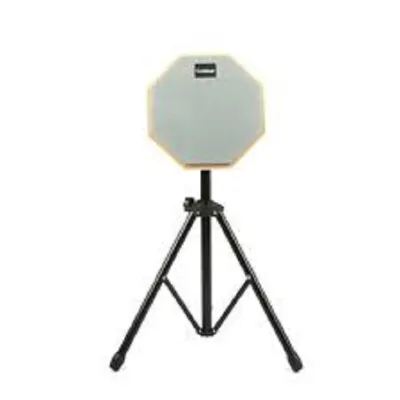
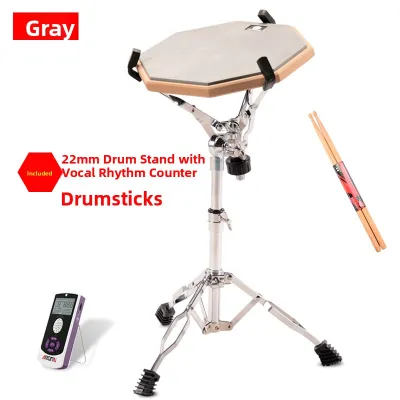
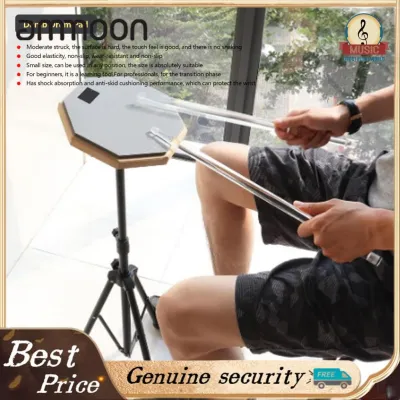
Prices are valid at publication and may change. Please refer to the product page for the latest price.
Mesh practice pads, in contrast, feature one or more layers of woven synthetic fibers stretched tightly over a circular hoop, mimicking the design of a standard acoustic drum head. This construction allows the surface to flex and depress upon impact, absorbing a portion of the stick’s energy before releasing it. Unlike the static nature of rubber, a mesh surface is dynamic; its tension can be adjusted using a standard drum key to tighten or loosen the weave. This physical displacement of the mesh surface changes how the stick sinks into the material, closely replicating the mechanical behavior of a tensioned drum head.
Stick Feel and Rebound: Matching Your Playing Style
Evaluating how a practice pad responds to your sticks is essential for aligning your gear with your technical goals. The rebound characteristics of your practice surface shape your muscle memory, control, and overall hand technique.

Rubber Pads: High Rebound and Articulation
The high, consistent rebound of a rubber pad acts as an amplifier for your stick control, making it an exceptional tool for developing wrist strength, finger control, and speed. Because the rubber surface returns the stick with minimal energy loss, you must actively control the rebound to execute clean, distinct strokes. This makes rubber pads highly effective for practicing fast rudiments, such as double-stroke rolls and paradiddles, where precise stick height and control are paramount.
The uniform consistency of a solid rubber surface also aids in refining stick articulation and buzz rolls. Because there are no soft spots or tension variances across the pad, any unevenness in your rolls is immediately audible, allowing you to identify and correct micro-flaws in your hand-to-hand balance. However, this high level of rebound can sometimes be misleading; it does not accurately simulate the natural “give” of larger acoustic drums, such as floor toms, which have much less tension and require more physical effort to play.
Mesh Pads: Realistic Tension and Acoustic Simulation
Mesh pads excel at providing a realistic playing experience that closely mirrors the physical response of an acoustic drum kit. By adjusting the tension rods around the hoop, you can dial in the exact level of resistance and rebound you prefer, allowing you to simulate anything from a tightly tuned snare drum to a looser rack tom. This adjustability helps prevent the “rubber pad shock” that drummers often experience when transitioning from a highly bouncy rubber pad to a softer acoustic drum head.
The realistic stick absorption and depth of a mesh surface also encourage better dynamic control and expressive playing. Because the stick sinks slightly into the woven fibers, you must engage your wrists and fingers in a manner that matches the physics of a real drum head. This makes mesh pads highly suitable for drummers who actively transition between electronic drum kits with mesh heads and traditional acoustic setups, as the muscle memory developed on a mesh pad transfers seamlessly to the stage or studio.
Noise Output: Evaluating Pads for Your Practice Environment
Noise management is often the primary driver behind purchasing a practice pad, especially for drummers living in close proximity to others. The acoustic impact of your practice routine is determined by two distinct factors: the airborne sound of the stick striking the pad, and the structural vibration transmitted through your floor and walls.
When it comes to airborne noise, the difference between the two materials is stark. Striking a dense rubber pad produces a sharp, high-frequency “clack” that can easily travel through open windows or thin partition walls. While this sound is significantly quieter than an acoustic drum, it can still be highly disruptive in a quiet household or apartment building. Mesh pads, by comparison, produce a muffled, low-frequency thud when struck. The woven fibers allow air to pass through the surface, dispersing the acoustic energy and making the airborne sound of a mesh pad almost negligible.
However, the physical impact of your sticks also creates structural vibrations that travel down the pad’s base, through the mounting hardware or stand, and directly into the floor. In high-density housing, this low-frequency vibration can sound like a dull, repetitive hammering to neighbors living directly below you. To mitigate this, the design of the pad’s base is critical; heavy wooden bases or integrated foam dampening layers help absorb these vibrations before they reach your stand.
Before purchasing a pad, it is essential to evaluate your specific practice environment and verify any noise-reduction claims on manufacturer labels. Look for pads that explicitly detail their dampening construction or offer integrated isolation feet. If you practice in an apartment with strict noise limits, a mesh pad mounted on a sturdy, decoupled stand—or placed on a vibration-dampening mat—will provide the most effective barrier against both airborne noise and structural transmission.
Durability and Maintenance: Observing Wear and Care Requirements
Understanding the long-term durability and maintenance needs of each material ensures you select a pad that will withstand years of daily use without losing its physical properties.
Solid rubber pads are renowned for their exceptional longevity and minimal maintenance requirements. However, they are not entirely immune to wear. Over years of heavy use, rubber can begin to exhibit surface pitting, hardening, or deep stick marks, particularly if you practice with heavy sticks or a high-impact playing style. Environmental factors also play a significant role; exposing a rubber pad to extreme temperature fluctuations or direct sunlight can dry out the material, leading to cracking or a loss of its natural elasticity.
Mesh pads require a more delicate touch and active maintenance to preserve their lifespan. The most common signs of wear on a mesh surface include center sagging, fraying of the synthetic fibers, or a gradual loss of overall tension. Because the surface is under constant tension, a high-impact playing style or using damaged drumsticks with sharp wood splinters can easily puncture or tear the woven mesh. Over time, the mesh will naturally stretch, requiring you to periodically tighten the tension rods with a drum key to maintain a consistent playing feel.
To maximize the lifespan of your practice gear, establish a simple maintenance routine. For mesh pads, regularly check the surface tension and inspect the hoop for even alignment; avoid over-tightening, which can warp the frame or prematurely stretch the fibers. For rubber pads, clean the surface strictly according to the manufacturer’s care instructions—usually with a damp, lint-free cloth and mild soap—and avoid harsh chemical solvents that can degrade the rubber compound.
Decision Framework: Choosing the Right Pad for Your Routine
To finalize your choice, consider how each material aligns with your specific practice constraints, technical goals, and living situation.
Choose Rubber if:
- You prioritize a highly portable, low-maintenance pad that you can easily toss into a backpack without worrying about damaging the surface.
- Your primary technical goal is building raw wrist strength, finger control, and speed through high-rebound rudiment practice.
- You prefer a plug-and-play solution that does not require regular tuning, tension adjustments, or replacement parts over time.
- You practice in environments where the moderate airborne "clack" of rubber will not disturb others.
Choose Mesh if:
- You live in a high-density apartment or shared space where minimizing both airborne noise and structural vibration is your highest priority.
- You want a practice surface that closely replicates the physical "give," depth, and adjustable tension of an acoustic drum head.
- You are actively training to transition between electronic mesh kits and acoustic drum sets, requiring consistent muscle memory.
- You do not mind performing occasional maintenance, such as re-tensioning the head or replacing worn mesh surfaces.
Verify first if:
- The pad's mounting threads or base design are fully compatible with your existing snare stand, cymbal stand, or tabletop setup.
- A dual-sided pad option is available, which may offer a high-rebound rubber surface on one side and a softer, quieter material on the reverse.
- The manufacturer's warranty or the return policy of your local music retailer covers premature tearing of mesh heads or delamination of rubber surfaces.
Frequently Asked Questions (FAQ)
Can I use the same drumsticks for both rubber and mesh pads? (FAQ)
Yes, you can use standard wood or nylon-tip drumsticks on both rubber and mesh pads, but their physical condition is critical for the longevity of your gear. Before practicing, always inspect your stick tips for sharp chips, cracks, or splinters. While a chipped wood tip will merely leave cosmetic marks on a durable rubber pad, it can easily snag, fray, or completely tear the delicate woven fibers of a mesh pad. For mesh surfaces, dedicated nylon-tip sticks or brand-new wood sticks kept exclusively for practice are highly recommended to prevent premature surface damage.
Are dual-sided practice pads worth the investment? (FAQ)
Dual-sided practice pads offer excellent versatility by combining two distinct playing surfaces on a single unit, such as a hard rubber side for high-rebound speed work and a softer rubber or foam side for quiet, low-rebound strength training. However, if you are looking for a true mesh feel, dual-sided units rarely feature adjustable mesh heads due to the structural limitations of mounting a tensioned hoop on a solid base. If you choose a heavier dual-sided model, always verify that your snare stand or mounting hardware has the weight capacity and grip stability to hold the pad securely during intense practice sessions.

Community discussion
Share your experience or ask a question. Comments are reviewed before publication.