
Selecting the right drum stool is one of the most critical decisions you can make for your physical longevity and playing technique behind the kit. Because the stool acts as the central anchor for your entire body, your choice directly influences your balance, leg speed, and spinal health. The decision between a saddle-shaped and a round drum stool ultimately depends on your physical mechanics, playing style, and posture preferences. There is no universal winner; the saddle shape generally favors high leg mobility and a forward-tilted posture, while the round shape offers a traditional, stable base for upright sitting. By understanding how these two designs interact with your body, you can select a seat that supports your performance and keeps you pain-free during long sessions.
For drummers practicing in compact spaces or performing in warm, humid local venues, physical comfort is closely tied to how a stool manages heat and body weight. A poorly matched seat shape can lead to premature fatigue, lower back strain, or restricted leg movement, which can hinder your technical progress. Evaluating the structural differences between these two common shapes will help you identify which design aligns with your natural physical tendencies.
Core Differences in Design and Posture Support
The fundamental difference between a saddle-shaped stool and a round stool lies in how they distribute your body weight and align your pelvis. A saddle stool, which closely resembles a motorcycle seat, features a contoured top with a flared back and a tapered front cutout. This design encourages your legs to drop naturally at a wider angle, which automatically promotes a slight forward pelvic tilt. This pelvic alignment helps maintain the natural lordotic curve of your lower spine, reducing the tendency to slouch or hunch over the snare drum.
Products mentioned in this guide
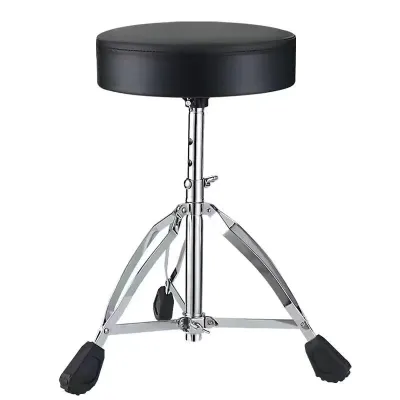
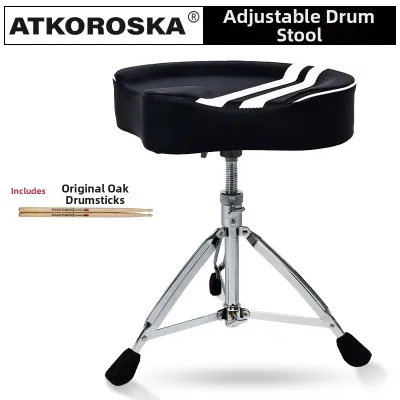
![Yamaha DS550U Drum Stool Light Weight Single Braced Solid and Comfortable [LIMITED STOCK]](https://img.lazcdn.com/g/p/f5be224b180d2c4e46ceb473f69f67ab.jpg_400x400q80.jpg_.webp)
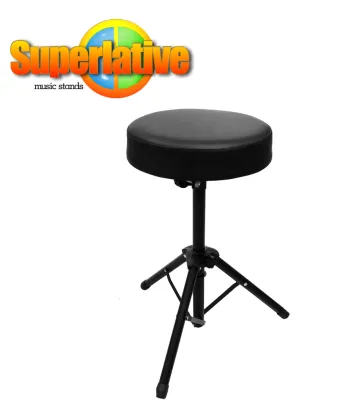
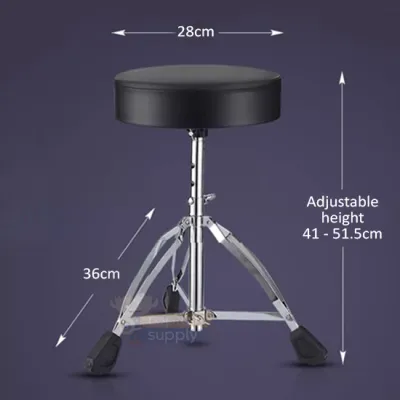
Prices are valid at publication and may change. Please refer to the product page for the latest price.
In contrast, a traditional round drum stool features a uniform, flat, circular surface. This classic design supports an upright sitting position where your weight is distributed evenly across your sit bones (ischial tuberosities). Because there are no contours or cutouts, a round stool allows you to sit on any part of the seat without feeling locked into a single position. However, because the flat surface does not actively guide pelvic alignment, you must rely more on your core muscles to maintain an upright posture and prevent your lower back from rounding.
To determine which structural approach suits you, perform a simple posture check away from your drum kit. Sit on a flat, hard bench and observe your natural resting posture, then try sitting on a contoured or slightly forward-sloping surface. If you find that your lower back naturally rounds on flat surfaces, the pelvic support of a saddle stool may help align your spine. If you prefer the freedom to shift your weight and sit completely upright without your pelvis being guided forward, a round stool will likely feel more natural.
Matching the Shape to Your Playing Style
Your musical genre, pedal techniques, and kit configuration should heavily influence your choice of drum stool. High-mobility playing styles that require extensive footwork benefit greatly from the saddle shape. The front cutout of a saddle stool reduces inner-thigh friction and prevents the seat edge from pressing into your hamstrings. This design is particularly advantageous for drummers executing rapid double-kick patterns or complex pedal work, as it allows the thighs to move vertically and laterally with minimal physical restriction.

For stability-focused styles, such as traditional jazz, orchestral percussion, or studio session work, a round stool is often the preferred choice. These genres typically demand high upper-body isolation and a consistent, centered base of support. A round stool provides a reliable, uniform platform that allows you to anchor your core while executing delicate hand movements or maintaining a steady hi-hat foot. Because your lower body is not constantly in high-speed motion, the potential for thigh friction is significantly lower, making the simplicity of a round seat highly effective.
Kit layout also plays a major role in how each shape performs. If your setup is expansive, requiring you to pivot frequently to reach distant floor toms, auxiliary percussion, or side pads, a round stool offers excellent rotational freedom. You can turn your body in any direction and receive the exact same level of support from the circular seat. A saddle stool, on the other hand, must remain pointed directly forward to function correctly; pivoting your torso while your pelvis is locked into a saddle contour can sometimes twist your lower back uncomfortably if the stool base does not rotate smoothly.
Comfort, Ergonomics, and Long Practice Sessions
During extended rehearsals or live performances, minor physical pressures can escalate into significant discomfort. Round stools can sometimes cause edge pressure on the inner thighs and the back of the knees, especially if the seat is too wide for your frame or if you sit relatively low. This pressure can restrict blood flow and lead to numbness in the legs. A saddle stool mitigates this by centralizing your weight on the wider rear portion of the seat, keeping the thighs free from edge compression.
Circulation and friction are also influenced by the local climate and your choice of upholstery. In warm, humid environments, heat and sweat can build up quickly on non-breathable vinyl surfaces, leading to increased friction between your clothing and the seat. While saddle stools reduce physical contact with the thighs to lower friction, the choice of cover material remains crucial for both shapes. Opting for a stool with a breathable cloth top or a high-quality mesh insert can significantly improve air circulation and comfort during long, intense playing sessions.
When evaluating a drum stool, establish a testing protocol that goes beyond a quick sit-test. Initial plushness can be highly deceptive; a very soft, pillowy seat may feel incredibly comfortable for the first five minutes but fail to provide adequate support over an hour of playing. Look for high-density foam that resists bottoming out, ensuring your sit bones do not make contact with the hard base plate underneath. Test both shapes by mimicking your actual playing movements to observe how your hips, thighs, and lower back feel after several minutes of continuous motion.
Key Features to Verify Before You Buy
Before purchasing a drum stool, it is essential to verify the hardware and adjustment specifications to ensure the unit is stable, durable, and compatible with your physical needs. Use the following checklist to evaluate your options:
- Height Adjustment Mechanism: Verify whether the stool uses a threaded spindle, a hydraulic system, or a manual bolt-and-hole clamp. Threaded spindles offer precise height adjustments and lock securely in place, preventing any slipping during play. Hydraulic or pneumatic systems allow for rapid, on-the-fly adjustments but require checking the seals over time to ensure they do not lose pressure.
- Base Stability: Inspect the leg construction and the footprint of the base. Double-braced tripod legs or quad-pod bases offer the highest stability. Ensure the rubber feet are large, durable, and provide a strong grip on your specific floor type—whether you play on polished tiles, laminate flooring, or a dedicated drum rug.
- Seat Rotation and Tension: Determine if you prefer a seat that spins freely or one that locks completely. Some stools feature adjustable rotation tension, allowing you to find a balance between rotational mobility and a locked-in, stable core.
- Upholstery and Padding: Examine the quality of the cover material and the density of the foam. Look for reinforced stitching along the seams, especially on the high-stress corners of saddle stools, to prevent tearing over time.
How to Decide: A Quick Selection Framework
To finalize your decision, align your physical preferences and playing habits with the specific strengths of each shape. Choose a saddle-shaped drum stool if your playing style involves extensive double-pedal work, if you experience inner-thigh chafing on traditional seats, or if you naturally prefer a forward-tilted pelvic posture that helps keep your spine aligned. This shape is ideal for high-energy genres where leg mobility is the top priority.
Conversely, choose a round drum stool if you prefer a traditional, upright posture, require a consistent center of gravity, or play musical styles that demand high upper-body stability with minimal lower-body shifting. The round shape is also highly suitable if you frequently pivot to access different parts of a large kit and prefer a seat that supports you equally from any angle.
If you have pre-existing physical conditions, such as chronic lower back pain, sciatica, or hip discomfort, verify how each shape affects your symptoms before committing to a purchase. Keep in mind that while a high-quality drum stool can significantly improve your sitting posture, it is not a cure for medical issues. If standard adjustments to your seat height, angle, and shape do not resolve your physical discomfort, consult a medical or ergonomic professional for personalized guidance.
Frequently Asked Questions (FAQ)
Can I use a round drum stool for double bass drumming?
Yes, you can successfully use a round drum stool for double bass drumming, though you must pay close attention to your seat height and positioning. Because a round seat lacks the front cutouts of a saddle design, the front edge can sometimes press against the back of your thighs during rapid pedal work, which may cause friction or restrict blood flow. To mitigate this, try adjusting your seat height slightly higher so your thighs slope downward, and angle your knees slightly outward to clear the edges of the seat.
Does the number of legs on the base affect the seat shape choice?
No, the base construction and the seat shape are entirely independent features. The number of legs—typically a three-legged tripod or a four-legged quad-pod—determines the overall stability and weight capacity of the stool’s foundation, whereas the seat shape determines your pelvic alignment and thigh clearance. You should select your seat shape based on your posture and playing style, and then choose a robust, double-braced base that matches your stability requirements and the floor surface of your practice space.
Community discussion
Share your experience or ask a question. Comments are reviewed before publication.