
Science comics can be highly effective supplementary tools for reinforcing primary school science concepts through engaging visual storytelling. However, because the PSLE Science syllabus follows a specific thematic structure mandated by the Ministry of Education in Singapore, not all general science comics will directly align with exam requirements. This guide helps parents identify the right types of science comic series, evaluate their curriculum alignment, and verify their suitability for upper primary revision.
How to Evaluate Science Comics for PSLE Alignment
To make science comics effective revision tools, you need a systematic way to evaluate them. The first step is to cross-reference the comic’s table of contents or index directly with the official PSLE Science syllabus themes. If a comic covers “forces” but only discusses them in a highly abstract or purely historical context, it may not help a student who needs to understand gravitational force, frictional force, and elastic spring force as defined by the local curriculum.
Target age group and reading level are equally critical. Many science comics are designed for lower primary students, focusing on simple, fun trivia rather than structured scientific concepts. For Primary 5 and Primary 6 students, the material must go beyond basic identification to explain the “why” and “how” behind natural phenomena. Look for books that challenge readers with multi-step processes and cause-and-effect relationships.
Products mentioned in this guide
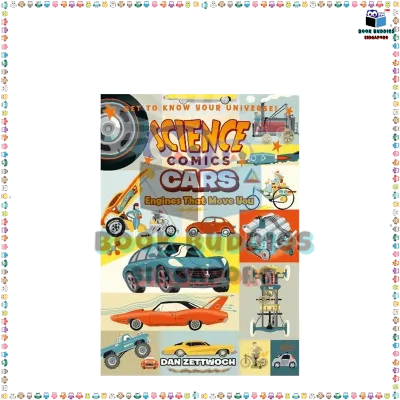
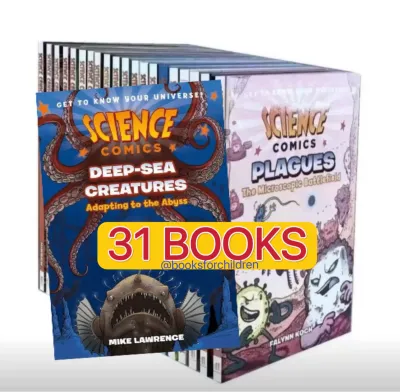
![[SG STOCK] WS E - Science Champs All Titles - Age 6-12+ Children Primary School Science Comic Singapore MOE Syllabus Learning Book](https://img.lazcdn.com/g/p/7b1f0e8148d8e6458f3403cf91c62cac.png_400x400q80.png_.webp)
![[CLEARANCE] WS E - World of Science All Single Books - Age 6-12+ Children STEM Science Primary School Learning Comic Book](https://img.lazcdn.com/g/p/a05ec5a4f6780163151174bb05358c6e.png_400x400q80.png_.webp)
Prices are valid at publication and may change. Please refer to the product page for the latest price.
You must also distinguish between general science trivia and structured scientific inquiry. A comic that lists “100 amazing facts about space” is entertaining but does not teach the inquiry skills required for the PSLE. Effective comics should model the scientific method, showing characters identifying variables, making observations, and drawing conclusions. This approach helps students develop the critical thinking skills needed to tackle challenging open-ended questions in Section B of the exam paper.
Types of Science Comic Series to Explore
Not all science comics are created equal, and different formats serve different learning styles. By understanding the broad categories of educational comics available in bookstores and libraries, you can select the format that best matches your child’s current revision needs and reading preferences.

Graphic Novel Non-Fiction
Graphic novel non-fiction uses a narrative-driven approach to explain natural phenomena, biological concepts, and earth science. These books often feature a continuous storyline where characters embark on journeys, conduct experiments, or explore microscopic worlds. This narrative structure is highly effective for explaining complex, interconnected systems that might otherwise seem dry or abstract in a standard textbook.
When exploring this category, focus on series published by established educational or children’s book imprints known for factual accuracy. These publishers often collaborate with scientific consultants to ensure that the illustrations and explanations are precise. For example, when depicting the human digestive system, the comic should accurately represent the sequence of organs and the specific functions of digestive juices rather than relying on vague, cartoonish simplifications.
Look for topics that naturally align with the upper primary syllabus, such as ecosystems, life cycles, and human body systems. A well-crafted graphic novel can help students visualize how energy flows through a food web or how the respiratory and circulatory systems work together to transport oxygen. Ensure that the scientific explanations remain rigorous, providing clear definitions and logical progressions that support school learning.
Manga-Style Educational Guides
Manga-style educational guides have gained significant popularity among students who appreciate dynamic artwork, expressive characters, and fast-paced storytelling. This format typically features a serialized plot where characters must solve problems or win competitions using scientific principles. The visual conventions of manga, such as step-by-step panel breakdowns and dramatic action lines, are particularly well-suited for explaining physical sciences.
These guides are highly effective for visualizing abstract concepts in physics and chemistry, such as forces, energy transfer, and the states of matter. For instance, a manga panel can dramatically illustrate how heat energy flows from a warmer region to a cooler one, or how magnetic forces act at a distance. This visual breakdown is invaluable for students who struggle to grasp these concepts through text-heavy explanations alone.
However, parents must carefully check if the scientific terminology and spelling in these translated works align with the local syllabus vocabulary. Some international manga series use regional terms or units of measurement that differ from what is taught in Singapore schools. To avoid confusion during exams, verify that key terms like “mass,” “weight,” “evaporation,” and “condensation” are used accurately and consistently according to local curriculum standards.
Curriculum-Specific Comic Workbooks
Curriculum-specific comic workbooks represent a specialized category designed specifically to support national exam preparation. Unlike general educational comics, these workbooks are written and published locally, often by experienced educators or established educational publishers who intimately understand the demands of the PSLE. They directly address the specific learning objectives and assessment criteria set by the Ministry of Education.
These workbooks are typically structured around common exam question types, frequent misconceptions, and exact syllabus topics. They use short comic strips to introduce a concept or highlight a common mistake, followed immediately by practice exercises, multiple-choice questions, or open-ended prompts. This immediate transition from visual learning to active application helps reinforce key concepts and teaches students how to translate visual understanding into exam-appropriate written answers.
When selecting these workbooks, always check the publication year and edition to ensure complete alignment with the latest syllabus updates and formatting changes. The science syllabus undergoes periodic reviews, and using an outdated edition might mean your child is studying topics that have been phased out or missing new areas of focus. Look for recent reprints that explicitly state their alignment with the current examination format.
Mapping Comic Topics to the PSLE Science Syllabus
To maximize the educational value of science comics, parents can actively map the content of various series to the five core themes of the PSLE Science syllabus: Diversity, Cycles, Systems, Interactions, and Energy. This targeted approach ensures that reading time directly supports schoolwork and exam preparation.
Under the Diversity theme, look for comics that explore the classification of living and non-living things, the characteristics of different animal groups, and the properties of materials. A comic that visually compares the physical properties of metals, plastics, and ceramics can help students understand why certain materials are chosen for specific everyday objects—a common topic in primary school assessments.
For the Cycles theme, seek out stories that clearly illustrate life cycles of plants and animals, as well as the water cycle. Visual narratives are exceptionally good at showing the continuous nature of these processes. A comic detailing the journey of a water molecule through evaporation, condensation, and precipitation can help students visualize the role of heat gain and heat loss, which are critical concepts for scoring well in water cycle questions.
The Systems theme benefits greatly from the detailed anatomical drawings found in graphic novels. Look for content that covers the human digestive, respiratory, and circulatory systems, as well as plant transport systems. Comics that show how the heart pumps blood to transport oxygen and nutrients, or how the xylem and phloem transport water and food in plants, help students understand the interdependence of different systems.
Finally, for Interactions and Energy, identify comics that demonstrate physical forces, magnetic effects, and energy conversion in daily life. Visualizing how potential energy converts to kinetic energy as a roller coaster descends, or how frictional force opposes motion, makes these abstract physics concepts tangible. By matching these specific comic chapters to the school’s teaching schedule, you can provide timely reinforcement for each topic.
What to Verify Before Purchasing
Before purchasing any science comic series, performing a few essential quality checks can save time and ensure the material is truly beneficial for your child’s revision. First, confirm that the language of instruction matches the school’s medium and uses standard scientific English. The PSLE requires precise scientific spelling and grammar, so comics that rely heavily on slang, informal language, or non-standard terminology should be avoided or used strictly for leisure reading.
Second, pay close attention to regional editions. Many popular science comic series are translated from other languages or imported from different countries. These editions may use different scientific terminology, measurement units (such as Fahrenheit instead of Celsius), or spelling conventions (such as American English spelling). While these differences might seem minor, they can confuse a student who is trying to memorize specific keywords and definitions for a highly structured local exam.
Third, ensure that the content depth is appropriate for upper primary revision. Some comics present science in a highly simplified manner that is perfect for lower primary students but lacks the depth required for Primary 5 and 6. For PSLE preparation, the comic must explain the underlying scientific principles and mechanisms, not just state interesting facts. Take a moment to flip through the book or read sample pages online to verify that the explanations challenge your child’s thinking and align with the complexity of school worksheets.
Finally, always verify the authorized source and edition of the book. Purchasing from reputable local bookstores or official educational distributors ensures you receive genuine, complete editions rather than unauthorized reprints that may contain printing errors, missing pages, or outdated content. Taking these precautions ensures that your investment in supplementary reading materials directly contributes to your child’s academic confidence and success.
Frequently Asked Questions (FAQ)
Can science comics replace standard PSLE assessment books?
No, science comics cannot replace standard PSLE assessment books. While comics are excellent supplementary tools for building conceptual understanding, sparking interest, and helping students visualize abstract ideas, they do not provide the rigorous practice required for exam success. Standard assessment books are essential for teaching students how to analyze exam questions, manage their time effectively, and structure their answers using the precise scientific keywords required by examiners. Use comics to introduce or reinforce concepts, and then transition to assessment books to practice applying that knowledge under exam conditions.
How do I know if a comic's science facts are accurate?
To verify the accuracy of a science comic, start by checking the book’s credits for the author’s credentials and the presence of scientific consultants or educational advisors. Reputable educational comics will explicitly list the experts who reviewed the content for scientific accuracy. Additionally, you can cross-reference key facts, diagrams, and explanations in the comic with your child’s official school textbooks and MOE-approved learning materials. If you notice discrepancies in terminology or explanations, use it as a learning opportunity to discuss the differences with your child, prioritizing the textbook’s definitions for exam purposes.
Community discussion
Share your experience or ask a question. Comments are reviewed before publication.