
Choosing between a Seiko mechanical and digital metronome depends on whether you prioritize traditional tactile feedback and visual pendulum motion or advanced features, portability, and precise electronic cues. Mechanical models suit foundational practice and aesthetic preference, while digital units offer complex subdivisions and travel-friendly durability. Both types serve the core purpose of keeping time, but they achieve this through entirely different engineering methods that alter how you interact with your music.
Core Differences Between Seiko Mechanical and Digital Metronomes
Understanding the fundamental operational and design distinctions between these two categories is essential. Mechanical metronomes rely on classical physics and clockwork engineering. Inside their traditional pyramid or rectangular casings lies a mainspring that you wind manually using a key. This spring stores potential energy, which is gradually released through a gear train and an escapement mechanism. The tempo is adjusted physically by sliding a metal weight up or down a metal pendulum rod; moving the weight upward slows the swing, while sliding it downward accelerates it. The auditory feedback is a natural, acoustic click produced by the physical impact of the mechanism inside the hollow casing.
In contrast, digital metronomes are entirely electronic devices powered by batteries. They replace the physical spring and gears with a quartz crystal oscillator and integrated circuitry. Instead of sliding a physical weight, you adjust the tempo using digital buttons, rotary dials, or touch interfaces, which instantly update the beats-per-minute (BPM) value on an LCD or LED screen. The visual feedback is delivered via flashing lights or a digital representation of a moving pendulum on the screen, while the audio is generated electronically through a small internal speaker, producing synthetic beeps, clicks, or simulated woodblock sounds.
Products mentioned in this guide
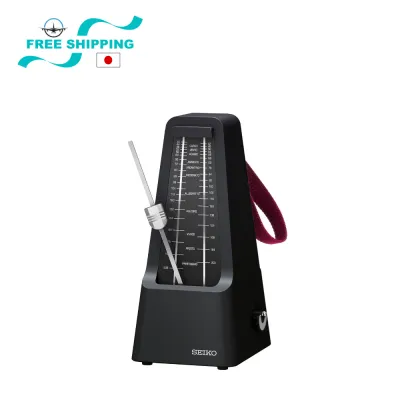
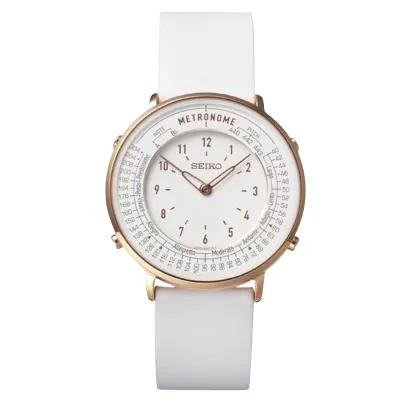

Prices are valid at publication and may change. Please refer to the product page for the latest price.
The physical construction of mechanical models also influences their acoustic properties. Seiko mechanical metronomes often feature carefully designed plastic or wooden outer shells that act as natural sound chambers. When the internal hammer strikes, the sound resonates within this chamber, producing a warm, woody, and highly distinct click that easily cuts through the sound of acoustic instruments like violins or acoustic guitars. Digital models, on the other hand, rely on a small piezoelectric speaker. While some musicians find the electronic beep of digital models slightly clinical or harsh, modern digital units often allow you to switch between different sound profiles, such as a simulated mechanical click, an electronic beep, or a human voice count, offering a level of auditory customization that physical gears simply cannot match.
Evaluating Accuracy and Tempo Stability
Accuracy is a primary consideration for any musician, but the two metronome types handle timekeeping stability differently. Mechanical metronomes are highly reliable for standard practice, but their accuracy depends on physical conditions. Because they rely on a swinging pendulum, they are subject to gravity and friction. As the internal spring unwinds, the torque decreases slightly, which can occasionally lead to minor tempo variations in lower-quality models, though Seiko designs are engineered to minimize this effect. Furthermore, physical wear over years of use, dust accumulation in the gears, or changes in ambient temperature and humidity can subtly alter the mechanical resistance, requiring eventual servicing.

The physics of a mechanical pendulum relies on the principle of isochronism, where the period of the swing remains constant regardless of the width of the arc. However, in practice, as the mainspring unwinds and loses tension, the physical arc of the pendulum can decrease, which may introduce minor timing discrepancies over long practice sessions. Additionally, mechanical parts are subject to wear and tear; over years of use, the pivot points can accumulate microscopic dust particles, increasing friction and slightly slowing down the tempo.
Digital metronomes bypass these physical limitations entirely. By utilizing a quartz crystal oscillator—the same technology used in precision wristwatches—digital models maintain a constant frequency. The microchip divides this frequency to trigger the click at exact intervals, ensuring that the tempo remains identical from the first minute of your practice session to the hundredth, completely unaffected by physical wear or environmental factors. Before purchasing, you should check the manufacturer’s specifications for the exact tempo range and accuracy tolerances of your chosen Seiko model to ensure it aligns with your performance standards.
Portability, Durability, and Practice Environments
The physical design of your metronome dictates where and how you can practice. Traditional mechanical metronomes, with their elegant wooden or high-grade plastic pyramid structures, are relatively heavy and bulky. They are designed to be stationary centerpieces, sitting permanently on top of a piano, organ, or dedicated music shelf. Their internal mechanisms are delicate; a drop from a music stand or a rough journey in a backpack can easily bend the pendulum rod, misalign the gears, or damage the mainspring.
Digital metronomes are built for the modern, mobile musician. They are compact, lightweight, and often small enough to slip into a shirt pocket or an instrument case accessory compartment. Their solid-state electronic construction makes them highly durable and resistant to the occasional bumps and drops associated with travel, rehearsals, and gigging.
Your physical practice environment also plays a role in this decision. Mechanical metronomes require a perfectly flat, level surface to operate correctly. If placed on an incline, the pendulum will swing unevenly, creating an asymmetrical “limping” beat that can ruin your sense of timing. Digital metronomes, however, can operate in any orientation. You can clip them to a music stand, place them on a music book, or lay them flat on a carpeted floor.
For musicians who live in compact urban environments, such as apartments or shared flats, noise management is a constant consideration. The acoustic click of a mechanical metronome, while pleasant, cannot be silenced or adjusted in volume. It will carry through thin walls, potentially causing friction with family members or neighbors during late-night practice sessions. A digital metronome solves this issue completely. With a dedicated volume control dial or a headphone jack, you can practice silently at any hour of the day or night. This makes digital models highly suitable for students living in shared dormitories or musicians who practice in multi-family housing units.
Feature Comparison for Different Practice Requirements
Matching a metronome’s features to your specific musical exercises and learning stage is essential for productive practice. Mechanical metronomes are straightforward and focused. They typically offer a built-in bell mechanism that can be set to chime on the first beat of a measure, supporting basic time signatures like 2/4, 3/4, 4/4, and 6/4. However, they cannot produce complex subdivisions or polyrhythms. The volume of a mechanical metronome is fixed by its physical construction and casing size, which can sometimes be too quiet next to loud brass instruments or too loud during delicate acoustic guitar practice.
Digital metronomes excel in versatility. They offer extensive customization, allowing you to program complex subdivisions, such as triplets, sixteenth notes, syncopated patterns, and custom polyrhythms. Many models feature adjustable volume controls, mute buttons, and headphone jacks, giving you complete control over your auditory environment. Some digital units also include a “tap tempo” function, which lets you tap a button along with a song to instantly determine its BPM—a highly useful tool for transcribing music or practicing ear training.
Visual cues also differ significantly between the two types. For beginners, the wide, physical sweep of a mechanical pendulum is highly intuitive. It allows the eyes to anticipate the exact moment of the beat before it sounds, helping to develop an internal sense of rhythm. Advanced players, on the other hand, often prefer the unobtrusive flashing LEDs or screen-based indicators of a digital unit, which provide clear visual cues without the distracting physical movement of a large pendulum in their peripheral vision.
Decision Framework: Which Seiko Metronome Should You Choose?
To finalize your decision, consider how your primary practice habits align with the following profiles:
Choose a mechanical Seiko metronome if you practice primarily in a stationary environment, value traditional aesthetics, and appreciate the tactile ritual of winding a physical spring. The physical pendulum sweep is excellent for piano students, classical instrumentalists, and anyone who benefits from a strong, organic visual cue to anchor their timing.
Choose a digital Seiko metronome if you are a multi-instrumentalist, a traveling musician, or someone who practices in varied environments. The compact size, headphone compatibility, absolute quartz accuracy, and ability to handle complex subdivisions make it the superior choice for modern genres, band rehearsals, and quiet home practice.
Neither option may fit your needs if you require an all-in-one device that clips directly onto the headstock of a stringed instrument. In such cases, you should look into dedicated tuner-metronome combination units that offer both functions in a single, specialized housing.
Before making your final purchase, always verify the specific Seiko model’s exact BPM range, battery requirements, and physical dimensions. Ensure you purchase from an authorized dealer to guarantee product authenticity and access to manufacturer support.
Frequently Asked Questions (FAQ)
Do mechanical Seiko metronomes require regular maintenance?
Yes, mechanical metronomes require basic care to ensure their longevity. You must avoid over-winding the mainspring; stop turning the key as soon as you feel increased resistance to prevent internal damage. When transporting the metronome, always secure the pendulum rod using the built-in hook or locking mechanism to prevent the delicate pivot points from bending or wearing down. Additionally, keep the protective cover on when the unit is not in use to prevent dust and debris from entering the gear mechanism.
Can I use a digital Seiko metronome with my instrument amplifier?
Many digital Seiko metronomes feature a standard 3.5mm headphone or line-out jack, which allows you to route the audio signal to an instrument amplifier, PA system, or audio interface. However, you must verify the specific model’s specifications to confirm it supports line-out connectivity. When connecting to an amplifier, use an appropriate adapter cable and ensure the volume levels on both the metronome and the amplifier are set to low before turning them on. This prevents sudden signal spikes that could damage your hearing or the amplifier’s speakers.
Community discussion
Share your experience or ask a question. Comments are reviewed before publication.