
Selecting the right A-Level Malay reference books with comprehensive imbuhan coverage requires looking beyond basic vocabulary lists. The most effective books are those that align closely with the current national examinations syllabus, offering systematic breakdowns of morphological structures alongside contextual practice. Because imbuhan dictates word class, meaning, and register in formal essay writing and comprehension, a student’s choice should prioritize resources that balance theoretical grammar rules with practical, exam-style application. Rather than searching for a single universal volume, students often find success by combining a structured grammar guide with targeted exercise workbooks and past-year paper analyses to master the nuances of prefixes, suffixes, circumfixes, and compound affixes.
Key Criteria for Evaluating Imbuhan Coverage
To determine if a reference book offers sufficient depth in imbuhan, you must evaluate it against several specific criteria. First and foremost is alignment with the current Ministry of Education syllabus for H1, H2, or H3 Malay Language. The syllabus dictates not only the vocabulary range but also the grammatical precision expected at each level. A book designed for lower secondary or general communication will not suffice for the rigorous academic writing required at the pre-university level.
Second, assess the depth of morphological explanations. A comprehensive resource must systematically categorize affixes into four primary groups: prefixes, suffixes, circumfixes, and combinations. The book should clearly explain morphophonemic changes—the rules governing how prefixes change form depending on the initial letter of the root word. For example, it should detail how a prefix like meN- morphs into different forms depending on whether the root word begins with a consonant or a vowel, and explain when the initial consonant of the root word is dropped.
Products mentioned in this guide
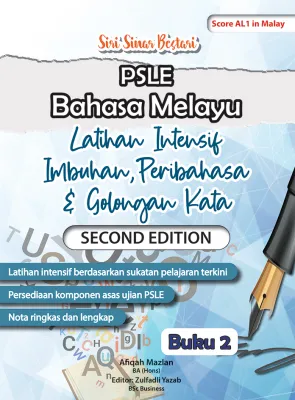
Prices are valid at publication and may change. Please refer to the product page for the latest price.
Third, look for the inclusion of common errors and contextual usage. Mastery of imbuhan is not merely about memorizing lists; it is about understanding how a change in affix alters the meaning, transitivity, and voice of a sentence. For instance, the book should contrast the active voice with the passive voice and explain the subtle semantic differences between closely related circumfixes. Furthermore, the resource should demonstrate how these affixes function within formal writing and reading comprehension, where precise grammar directly impacts your overall grade.
Types of Reference Books and Their Imbuhan Focus
Reference books are not all created equal; different categories serve distinct purposes in a student’s study plan. Understanding how these categories approach affix instruction allows you to select the right tool for your current learning phase. Whether you are building foundational knowledge, analyzing exam trends, or drilling for accuracy, matching your study goals to the correct book type is essential for efficient revision.

Comprehensive Grammar Guides
Dedicated grammar guides serve as the theoretical backbone of your language study. These volumes offer exhaustive lists of affixes, detailed structural rules, and comprehensive explanations of meaning shifts. For example, they will break down the multiple functions of a single prefix, which can denote an accidental action, capability, or a superlative state depending on the context.
These guides are highly valuable for initial learning and deep reference. When you encounter an unfamiliar grammatical structure in class or during self-study, a comprehensive guide provides the detailed linguistic context needed to understand the underlying rule. However, because they focus on theory and exhaustive categorization, they are less suited for quick, last-minute exam revision. They should be treated as long-term reference companions rather than quick-fix study aids.
Past Year Paper Compilations and Analyses
Exam-focused compilations and analyses bridge the gap between theoretical grammar and actual exam performance. These books show you exactly how imbuhan is tested in real A-Level scenarios. They often feature past examination papers, model essays, and detailed examiner reports that highlight common student mistakes.
By studying these analyses, you can identify high-yield grammar patterns and learn where candidates typically lose marks. For instance, examiner reports might point out frequent errors in the use of passive personal pronouns or the incorrect application of circumfixes representing a process versus those representing a result or state. Understanding these nuances through the lens of actual grading expectations helps you refine your writing to meet the precise standards of examiners.
Targeted Exercise Workbooks
To solidify your understanding and build muscle memory, targeted exercise workbooks are indispensable. These books focus on active application through various drill formats, such as fill-in-the-blanks, sentence transformation, and error-correction exercises. Regular practice helps transition your knowledge of imbuhan from passive recognition to active, accurate production.
When choosing an exercise workbook, the quality of the answer key is just as important as the exercises themselves. A high-quality workbook does not simply list the correct answers; it provides detailed explanations of why a specific affix is required in a given context. This feedback loop is crucial for self-directed learners, as it allows you to identify the root cause of your mistakes and correct your grammatical reasoning before the actual exam.
Essential Pre-Purchase Checks for A-Level Materials
Before purchasing any reference materials from physical bookstores or online marketplaces, performing a few essential checks will save you time and money. First, verify the publication or reprint year against the latest syllabus revisions. Language standards, spelling conventions, and exam formats can change over time. Using an outdated book might lead you to study deprecated grammar rules or obsolete vocabulary that could penalize you in the national examinations.
Second, confirm the exact exam tier the book targets. The depth, text complexity, and vocabulary expectations differ significantly between H1, H2, and H3 Malay Language. An H1 student needs functional, clear, and accurate grammar for practical communication, whereas H2 and H3 students require a much deeper appreciation of literary devices, advanced morphology, and nuanced stylistic choices. Using a book designed for the wrong tier can lead to either insufficient preparation or unnecessary cognitive overload.
Third, look for official publisher endorsements or alignments with standard school-prescribed texts. Books written by experienced local educators or published by established educational brands are more likely to reflect the actual difficulty level and style of the national exams. Additionally, if you are considering digital formats, check for device compatibility and digital rights management restrictions. Ensure that the digital version allows you to highlight, annotate, and easily navigate complex grammar tables, as these features are vital for effective study.
How to Verify Imbuhan Mastery Using Your Materials
Owning the right reference books is only the first step; you must use them actively to test, track, and solidify your understanding of complex affixes. Start by creating a self-assessment checklist based on the book’s index or table of contents. As you study each affix category—such as prefixes, suffixes, or circumfixes—mark your progress and note which areas require further practice. This systematic approach ensures you do not leave any gaps in your morphological knowledge.
Next, use your reference books to cross-reference confusing affix pairs or nuanced meaning shifts. When writing essays or completing practice papers, keep a running list of words where you felt uncertain about the correct affix. Look up these words in your grammar guides to compare their root meanings, transitivities, and typical sentence structures. For example, compare the usage of closely related verbs to ensure you are using the correct form in your writing.
Finally, recognize the limits of self-study. While reference books and workbooks are powerful tools, they cannot replace the personalized feedback of an educator. If you encounter highly contextual, stylistic, or ambiguous errors in your essays that your books do not fully resolve, pause and consult your Malay Language teacher or a qualified tutor. Use your reference materials to prepare specific questions, making your consultations far more productive and targeted.
Frequently Asked Questions (FAQ)
Are digital versions of A-Level Malay reference books as effective as print for grammar study?
Digital versions offer convenience, portability, and search functions that make finding specific rules quick. However, print books are often preferred for intensive grammar study because they reduce screen fatigue and allow for easier side-by-side comparison of complex morphological tables. If you choose a digital format, ensure your e-reader supports robust annotation tools so you can write notes directly on the text, and verify any device compatibility or digital rights management restrictions before buying.
How can I tell if a book covers the latest syllabus changes for Malay?
To verify syllabus alignment, check the book’s preface, introduction, or copyright page for references to the current syllabus year. You can also cross-reference the table of contents with the official syllabus document available on the government education portal. If shopping online, visit the publisher’s official website to check for recent editions, or consult school booklists to see which titles are currently prescribed or recommended by teachers.
Community discussion
Share your experience or ask a question. Comments are reviewed before publication.