
To prepare effectively for your ABRSM Grade 3 exam, you should select reference recordings that precisely match your instrument’s current syllabus cycle, offer clear articulation, and maintain standard educational tempos. While official ABRSM audio releases provide the most direct and accurate representation of the exam requirements, high-quality commercial classical recordings from established labels can also offer invaluable artistic context. The key is to verify that the specific performances you choose align exactly with the official score and your chosen physical format, whether you prefer the practical navigation of CDs or the immersive listening experience of vinyl.
Using reference recordings during your practice routine helps bridge the gap between reading sheet music and delivering a musical performance. By listening to professional interpretations, you can internalize the rhythm, phrasing, and stylistic character required to achieve high marks. However, because classical pieces often exist in numerous different editions and interpretations, selecting the correct recording requires a systematic approach to ensure it serves as a reliable guide for your studies.
Identifying Your Exact ABRSM Grade 3 Syllabus Requirements
Before purchasing any recordings, you must pinpoint the exact syllabus requirements for your specific instrument and exam year. ABRSM syllabi operate on multi-year cycles, and the prescribed pieces for Grade 3 can change significantly from one cycle to the next. To avoid practicing outdated material, visit the official ABRSM website to confirm the validity dates of the current syllabus for your instrument, whether you are preparing for piano, violin, flute, cello, or another instrument.
Products mentioned in this guide
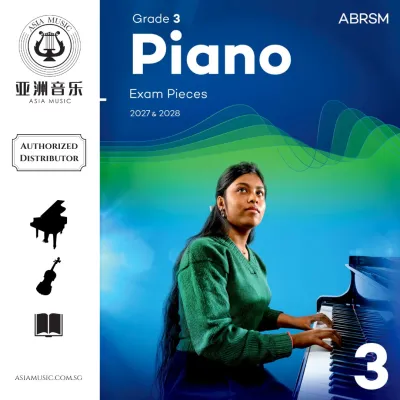
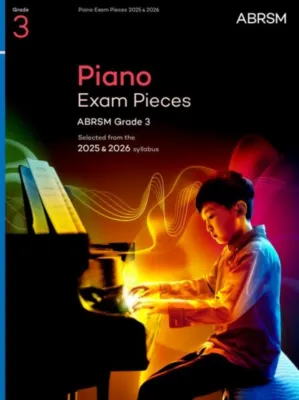
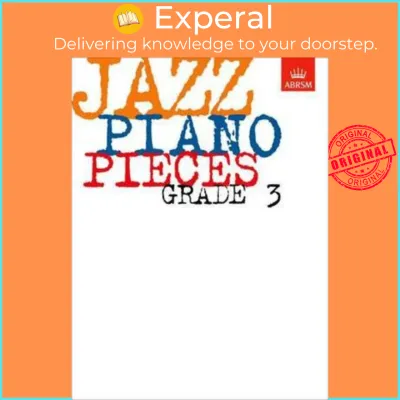
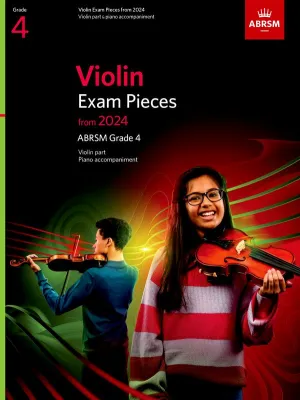

Prices are valid at publication and may change. Please refer to the product page for the latest price.
Pay close attention to transition or overlap periods. When ABRSM introduces a new syllabus, there is typically an overlap period during which pieces from both the old and new syllabi are accepted in exams. If your exam date falls within this overlap, you must be absolutely certain which syllabus cycle you are following so that you purchase the corresponding recordings.
Your Grade 3 repertoire is divided into three distinct lists: List A, List B, and List C. List A generally focuses on historical styles such as Baroque or Classical works, emphasizing technical precision, independence of hands, and clarity. List B usually features more lyrical, Romantic-era pieces that demand expressive phrasing, cantabile lines, and tone control. List C contains 20th-century, 21st-century, or contemporary pieces, often highlighting unique rhythms, syncopation, and character.
Furthermore, the official exam booklet only contains a selection of the available pieces for the grade. ABRSM also lists several alternative pieces for Lists A, B, and C in the back of the syllabus. If you or your teacher decide to perform one of these alternative pieces, you will not find it in the standard ABRSM exam book audio. You will need to search for commercial classical recordings that feature these specific works, making precise identification even more critical.
What to Listen For: Evaluating Classical Recordings for Exams
When evaluating classical recordings for exam preparation, the first element to analyze is tempo. At Grade 3, maintaining a steady, appropriate pulse is fundamental to a successful performance. While professional concert pianists or violinists might perform a piece with extreme rubato or at a blistering speed for dramatic effect, such interpretations can be counterproductive for an exam candidate. Look for recordings where the tempo is stable, clear, and matches the metronome guidelines suggested in the official score.

Articulation is another vital component of the Grade 3 marking criteria. Your reference recording should clearly demonstrate the contrast between staccato (short, detached notes) and legato (smooth, connected notes). If the recording is muddy or the acoustic environment has too much reverb, these fine details can become lost. A high-quality recording allows you to hear exactly how the performer initiates and releases each note, providing a clear model for your own execution.
The tone of the instrument and the overall audio quality also play a major role in your learning. For piano candidates, listening to a recording performed on a well-regulated grand piano provides a clear model of rich tonal depth and dynamic range. For string or woodwind players, the recording must offer a balanced mix where the solo instrument is clearly audible over the piano accompaniment, allowing you to study how the two parts interact harmonically and rhythmically.
Finally, consider the performer’s overall interpretation. For exam preparation, you want to avoid highly idiosyncratic or eccentric performances. Some historical recordings feature legendary artists who take significant liberties with the written score, altering dynamics or rhythms to suit their personal style. For a Grade 3 student, a more faithful, educationally focused interpretation is far more beneficial, as it aligns closely with what the examiners expect to hear on exam day.
Official ABRSM Audio vs. Major Classical Label Releases
Official ABRSM audio releases are specifically designed for candidates. These recordings are typically produced to accompany the official exam books and are performed by experienced educators and concert artists. The primary advantage of official audio is its strict adherence to the syllabus guidelines. The tempos are realistic for a Grade 3 student, the articulation matches the printed score precisely, and the recordings include all three main pieces from Lists A, B, and C.
In contrast, commercial classical label releases—such as those from Deutsche Grammophon, Naxos, or Decca—offer a different set of benefits. These albums feature world-renowned virtuosos performing in premier concert halls. Listening to these recordings exposes the student to exceptional artistry, advanced tone production, and a broader musical context. Hearing a Grade 3 piece performed as part of a complete sonata or suite on a professional album helps the student appreciate the work as a complete piece of art rather than just an exam requirement.
However, using commercial recordings requires careful verification. Commercial albums rarely group pieces by exam grades. To find a specific Grade 3 piece, you must search by the composer’s name, the exact title of the work, and its catalog number (such as an Opus, WoO, BWV, or KV number). For example, if the syllabus specifies a movement from a Clementi sonatina, you must ensure the commercial recording features that exact movement and not a different one from the same work.
Selecting the Best Physical Format: CD vs. Vinyl for Practice
Choosing the right physical format for your reference recordings can significantly impact your daily practice routine. Compact Discs (CDs) remain one of the most practical formats for music students. The digital nature of CDs allows for instant track skipping, precise pausing, and rapid rewinding. Many modern CD players or computer drives also allow you to loop specific tracks or sections, which is incredibly useful when a student needs to listen to a challenging section of a List B melody repeatedly.
CDs also deliver uncompressed, high-fidelity audio (16-bit/44.1kHz) that preserves the full dynamic range of the performance. This clarity is essential for Grade 3 students who need to distinguish between subtle volume changes, such as pianissimo and mezzo-forte, which can sometimes be flattened or lost in highly compressed digital formats.
Vinyl records, on the other hand, offer a highly tactile and engaging listening experience that many collectors and music enthusiasts cherish. Listening to classical music on vinyl can help a student develop a deeper appreciation for the warmth and analog character of the instrument’s tone. However, vinyl is far less convenient for active practice sessions. It is difficult to isolate and repeat a specific phrase on a vinyl record without risking damage to the stylus or the record grooves.
If you choose to use vinyl, it is best reserved for passive listening sessions where the student listens to the entire piece to absorb its overall mood, character, and structure. For active, analytical practice where you play along or dissect specific measures, the CD format is vastly superior. Whichever format you choose, ensure your playback equipment—whether a dedicated CD player or a turntable setup—is paired with high-quality, neutral-sounding headphones or speakers to ensure accurate sound reproduction.
Your Pre-Purchase Checklist for Grade 3 Recordings
Before finalizing your purchase of any Grade 3 reference recording, it is essential to run through a quick verification process to ensure you are buying the correct material.
First, verify the syllabus year and instrument. Double-check that the album or digital release explicitly states it covers the ABRSM syllabus for your specific instrument and the exact year of your scheduled exam.
Second, cross-reference the tracklist with your sheet music. Ensure that the titles, keys, and catalog numbers of the recorded pieces match your selected exam pieces exactly. This is especially important for alternative pieces that are not included in the standard exam books.
Third, check the edition and arrangement. Some classical pieces are arranged or simplified specifically for the Grade 3 level. Ensure the recording features the specific arrangement prescribed by ABRSM, as listening to an original, unsimplified version of a piece can confuse a student regarding notes and rhythms.
Fourth, inspect the physical condition and regional compatibility of the media. If you are purchasing imported CDs, verify that they are compatible with your local playback equipment and that the packaging includes the complete liner notes, which often contain valuable historical and performance commentary.
Frequently Asked Questions (FAQ)
Can I use streaming platforms instead of buying physical CDs or vinyl for exam prep?
While streaming platforms offer immense convenience and instant access to vast libraries of music, they have distinct drawbacks for serious exam preparation. Standard streaming tiers often use compressed audio formats, which can reduce the clarity of subtle acoustic details, such as the decay of a piano note or the delicate bow contact of a violin. Physical CDs provide uncompressed, lossless audio that ensures you hear every nuance of the performance.
Additionally, streaming platforms can introduce distractions, and their search algorithms may easily lead you to the wrong version or arrangement of a piece. However, streaming can be useful for quick reference, creating custom playlists of your exam repertoire, or utilizing playback speed adjustment tools to slow down complex passages during the early stages of practice. For critical, focused listening, a dedicated physical recording remains the gold standard.
How do I handle recordings during an ABRSM syllabus overlap period?
During a syllabus overlap period, ABRSM allows candidates to perform pieces from either the outgoing or the incoming syllabus. To handle recordings correctly during this time, you must first confirm with your teacher which specific syllabus cycle you are officially registered under for your exam date.
Once you have confirmed the correct cycle, ensure that the recordings you purchase align strictly with that chosen syllabus. Avoid mixing pieces from different cycles unless specifically permitted by the overlap regulations. Keeping your reference recordings perfectly aligned with your chosen exam path prevents any confusion during your daily practice sessions.
Community discussion
Share your experience or ask a question. Comments are reviewed before publication.