
Finding the right essay writing framework book for the Singapore-Cambridge GCE A-Level requires moving beyond generic writing advice. The Singapore A-Level curriculum, administered by the Singapore Examinations and Assessment Board (SEAB) in collaboration with Cambridge Assessment International Education, demands a level of critical depth, structural precision, and evaluative maturity that standard international guides rarely cover. To secure top-tier grades, you need resources that teach you how to construct highly responsive, logically rigorous arguments under tight exam conditions. The ideal guidebook does not just offer static templates; it provides dynamic cognitive frameworks that help you dissect complex prompts, organize multi-layered arguments, and integrate evidence seamlessly.
Understanding A-Level Essay Demands Before Choosing a Guide
The Singapore A-Level examination is distinct from other pre-university qualifications due to its heavy emphasis on higher-order thinking skills. Whether you are tackling General Paper (GP) or specialized H2 humanities subjects, the examiners are not looking for a simple regurgitation of memorized facts. Instead, they assess your ability to analyze, evaluate, and synthesize information in a coherent, persuasive manner. Before purchasing any study guide, you must understand that a framework which works for a basic high school essay will likely fall short under the rigorous marking rubrics used by local examiners.
It is crucial to distinguish between the structural demands of General Paper and those of subject-specific essays like Literature in English, History, Geography, or Economics. GP essays require a broad, interdisciplinary approach where you evaluate contemporary global issues and apply them to various societal contexts. Conversely, a History or Geography essay demands strict adherence to disciplinary conventions, such as historiographical debates or spatial-temporal analysis. A generic “one-size-fits-all” essay book cannot adequately address these divergent requirements, meaning you will need targeted resources for different subjects.
Products mentioned in this guide
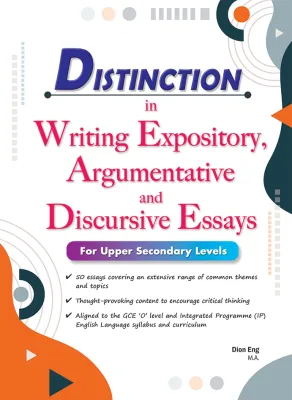
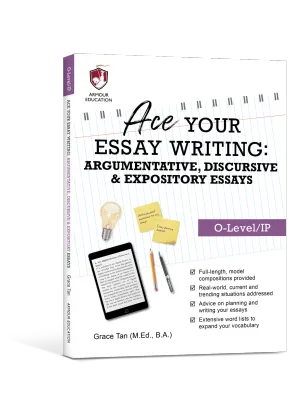
Prices are valid at publication and may change. Please refer to the product page for the latest price.
When evaluating a framework book, look closely at how it addresses the core assessment objectives (AOs) set by SEAB. For instance, the framework must explicitly show you how to balance AO1 (Knowledge and Understanding) with AO2 (Analysis and Evaluation). Many struggling students lose marks because their essays are overly descriptive, spending too much time explaining what happened rather than analyzing why or to what extent a factor is significant. The book you choose should dedicate a substantial portion of its methodology to teaching you how to elevate your writing from descriptive to highly analytical.
Furthermore, you must learn to recognize the difference between descriptive summary templates and true analytical progression frameworks. A descriptive template merely tells you where to put your introduction, body paragraphs, and conclusion, often resulting in formulaic and predictable writing. An analytical progression framework, on the other hand, guides your cognitive process. It teaches you how to transition from a thesis statement to a counter-argument, and finally to a nuanced synthesis or rebuttal that demonstrates intellectual maturity. Avoid books that offer rigid fill-in-the-blank templates, as these limit your ability to handle unconventional or highly specific essay prompts.
What to Look for in a High-Quality Framework Book
To ensure a framework book is worth your time and money, you should evaluate it against a strict checklist of quality indicators. First, check if the book offers clear, step-by-step structural templates that feature subject-specific adaptations. For example, an Economics essay guide should feature frameworks specifically designed for Thesis-Antithesis-Synthesis (TAS) structures, while a History guide should offer frameworks tailored to causal, comparative, or evaluative questions. The templates should be modular, allowing you to adapt the structure depending on whether the prompt asks “to what extent,” “how far,” or “compare and contrast.”

Next, examine the quality and depth of the model essays provided in the book. High-quality guides do not simply print a perfect essay and leave you to figure out why it scored well. Instead, they feature deeply annotated model essays with line-by-line or paragraph-by-paragraph commentary. These annotations should explicitly point out where the writer has applied the framework, how they transitioned between ideas, and where they demonstrated high-level evaluation. Look for books that include both mid-range and high-range essay examples, as comparing these levels helps you understand exactly what elevates an essay from a passing grade to a distinction.
A theoretical explanation of an essay framework is of little use if you cannot apply it under exam pressure. Therefore, ensure the book includes targeted, scaffolded exercises designed for active practice. A good guide will break down the essay-writing process into manageable drills, such as prompt analysis exercises, thesis-drafting tasks, and paragraph-construction challenges. These exercises should gradually build your confidence, moving from guided planning outlines to fully independent timed writing practices.
Finally, assess the physical and digital usability of the book’s layout. Complex frameworks are much easier to digest when they are presented visually through flowcharts, mind maps, or comparative tables. A well-designed book will use clear typographic hierarchy, bullet points, and shaded boxes to highlight key strategies and common pitfalls. If you prefer studying on the go, check if the publisher offers digital companion resources, such as downloadable planning sheets or interactive essay-planning tools, which can supplement your physical study sessions.
Matching Frameworks to Your Specific A-Level Subjects
Different A-Level subjects require entirely different cognitive approaches, and your choice of framework books must reflect this specialization. For General Paper, your primary focus should be on books that teach robust argumentative structures, systematic evaluation, and the synthesis of diverse global perspectives. The GP essay demands that you engage with counter-arguments genuinely rather than dismissing them superficially. Look for books that teach frameworks like the “Pros vs. Cons with Rebuttal” or the “Spectrums of Agreement” approach, which help you construct a balanced, mature, and highly nuanced argument.
In the humanities, such as History and Geography, the essay frameworks must emphasize rigorous evidence integration and disciplinary reasoning. A History essay framework book should guide you through the process of analyzing primary and secondary sources, evaluating historical perspectives, and structuring arguments around themes like political, economic, and social impacts. For Geography, the framework must help you structure multi-scalar arguments, showing how local phenomena connect to global processes, and how environmental factors interact with human systems. The book should teach you how to weave case studies naturally into your paragraphs rather than tacking them on as isolated examples.
Literature in English demands a highly specialized set of essay-writing frameworks that prioritize thematic analysis, close textual reading, and critical interpretation. When choosing a Literature guide, look for frameworks that teach you how to construct a thesis based on literary devices, authorial intent, and historical-cultural contexts. The framework should show you how to weave textual evidence—such as quotes, structural choices, and poetic devices—directly into your analytical sentences. Avoid guides that treat Literature essays as simple character studies or plot summaries; instead, select books that help you analyze how form, structure, and language create meaning.
Economics essays require a unique blend of qualitative analysis and quantitative reasoning, often involving the integration of economic diagrams. A high-quality Economics essay book should teach you how to structure your answers using frameworks that seamlessly combine theoretical explanations, real-world examples, and diagrammatic analysis. The framework must guide you on when and how to reference your diagrams within the text, ensuring that the visual aid directly supports your written argument rather than acting as a disconnected illustration. Look for books that emphasize the “Explain, Illustrate, Evaluate” (EIE) framework to ensure you meet all assessment criteria.
Verifying Syllabus Alignment and Edition Currency
The Singapore A-Level syllabus undergoes periodic reviews and updates by SEAB and MOE to ensure the curriculum remains relevant and rigorous. Consequently, using an outdated essay guide can be highly detrimental to your preparation, as you might practice frameworks that no longer align with current assessment rubrics or question formats. Before purchasing any book, cross-reference its publication year and the stated syllabus code with the official syllabus documents available on the SEAB website. For example, ensure a General Paper guide is explicitly updated for the latest syllabus code to avoid practicing obsolete question types.
It is also essential to verify the credentials of the book’s author or editorial team. The most reliable essay framework books are written by educators who have deep, firsthand experience within the Singapore education system. Look for books authored by former Junior College lecturers, Ministry of Education (MOE) curriculum specialists, or highly experienced local tutors who have a proven track record of preparing students for the national exams. These authors possess an intimate understanding of local marking standards, common student misconceptions, and the specific nuances that examiners look for when awarding distinction-grade marks.
Another critical factor to check is the presence of local and regional context within the book’s examples and case studies. While international essay guides can offer decent general writing tips, they often lack the specific contextual examples required for the Singapore A-Level, particularly in subjects like General Paper, Geography, and Economics. A high-quality local guide will feature case studies relevant to Singapore’s socioeconomic landscape, regional dynamics in Southeast Asia, and global issues viewed through a local lens. This contextual relevance is vital for demonstrating the local and global awareness expected of top-performing students.
Finally, consider the distribution and availability of the book to ensure you are purchasing an authorized, high-quality print. Many of the best local A-Level resources are published by established Singaporean educational publishers and are distributed through major local bookstores, school bookshops, or official publisher websites. Be cautious when purchasing secondhand copies or digital scans from unverified online marketplaces, as these may be missing crucial pages, contain outdated syllabus information, or lack the supplementary digital resources provided with new editions. Expect to invest around S$15 to S$40 per guidebook, and treat this as a direct investment in your academic preparation.
Frequently Asked Questions (FAQ)
Can I use international essay guides for Singapore A-Levels?
While international essay guides can help you master basic grammar, sentence structure, and general paragraph organization, they are rarely sufficient on their own for the Singapore A-Level exams. The Singapore-Cambridge GCE A-Level has unique assessment rubrics, higher-order thinking requirements, and specific syllabus constraints that international guides do not address. If you must use an international guide, focus strictly on its advice for general clarity and style, but always adapt its structural frameworks to match the specific SEAB syllabus requirements and the analytical depth demanded by local examiners.
Should I rely solely on a framework book for preparation?
No, a framework book should be viewed as a structural tool to guide your writing process, not a complete substitute for active practice and personalized feedback. While a book can teach you the theory of a good essay structure, you must actively apply these frameworks through timed practice sessions using past-year papers. Furthermore, self-assessment has its limits; it is essential to seek regular feedback from your Junior College tutors or qualified educators who can point out subtle flaws in your logic, evaluation, or evidence integration that a book cannot detect.
How do I know if a framework is too rigid for top grades?
A framework is too rigid if it forces you to fit every argument into a predetermined mold regardless of the specific nuances of the essay prompt. To achieve distinction-level grades, your writing must show intellectual flexibility and a willingness to engage with complex, unconventional questions. Look for books that teach scaffolding rather than templates—meaning they provide a supportive structural outline but actively encourage you to adapt, reorder, or expand your paragraphs to address the unique demands of the question.

Community discussion
Share your experience or ask a question. Comments are reviewed before publication.