
Preparing for the ABRSM Grade 5 piano exam is a significant milestone for any aspiring pianist. At this intermediate level, the syllabus demands more than just technical accuracy; it requires a deep understanding of musical style, historical context, and expressive nuance. While hours of diligent practice at the keyboard are indispensable, listening to high-quality reference recordings on physical media like CDs and vinyl records is one of the most effective ways to internalize these musical elements. A well-chosen reference recording acts as an auditory map, helping you grasp the ideal tempo, articulation, and tonal balance of your chosen pieces before you even play your first note.
However, finding the right recording is not always straightforward. The market is flooded with diverse interpretations, ranging from historically informed performances on period instruments to highly romanticized concert hall renditions. For a Grade 5 candidate, selecting a recording that aligns with pedagogical standards is crucial. This guide explores how to evaluate, select, and utilize reference recordings on CD and vinyl to enhance your exam preparation, ensuring your listening sessions translate directly into higher marks on exam day.
Understanding the Role of Reference Recordings in Exam Prep
At Grade 5, the Associated Board of the Royal Schools of Music (ABRSM) expects candidates to demonstrate a clear grasp of different musical eras, from the structured polyphony of the Baroque period to the expressive lyricism of the Romantic era and the rhythmic vitality of contemporary works. Listening to reference recordings helps bridge the gap between the black-and-white notes on the page and the living, breathing music. It allows you to hear how professional pianists manage complex phrasing, balance the melody against the accompaniment, and execute ornaments like trills and turns with clarity and ease.
Products mentioned in this guide
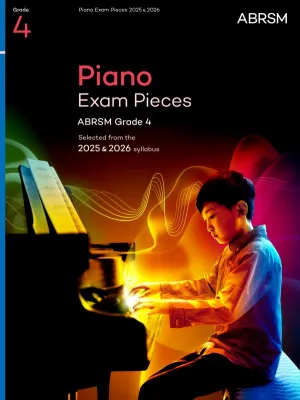
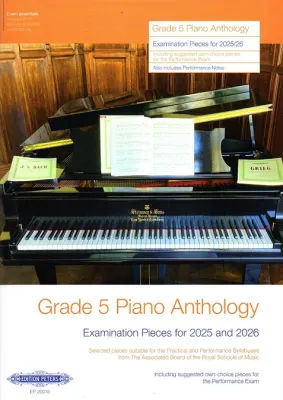
Prices are valid at publication and may change. Please refer to the product page for the latest price.
When sourcing these recordings, it is essential to differentiate between official ABRSM syllabus recordings and general commercial releases. Official recordings, often produced directly by the board or authorized partners, are tailored specifically for candidates. They feature performances that strictly adhere to the tempo indications, dynamics, and editorial decisions found in the official exam books. Commercial releases by renowned concert pianists, on the other hand, offer valuable artistic perspectives but may feature highly individualistic interpretations that depart from the standard pedagogical guidelines. Both have their place, but they must be used with distinct goals in mind.
A critical step in this process is matching your reference recording to the specific edition of the sheet music you are using. Different publishers may interpret historical manuscripts differently, leading to variations in phrasing marks, dynamics, and even actual notes. For instance, a Baroque piece by Johann Sebastian Bach might have minimal markings in an urtext edition, leaving articulation decisions to the performer, whereas an ABRSM-edited version will provide specific suggestions. If your reference recording features a pianist playing from a different edition, you may find yourself confused by conflicting musical cues. Always verify the edition details, language, and content completeness on the CD liner notes or album metadata before committing to a specific performance as your primary study model.
Finally, it is vital to remember that reference recordings should serve as interpretative guides rather than rigid templates to copy note-for-note. The ABRSM examiners do not award high marks for mechanical mimicry; instead, they look for a personal connection to the music and an understanding of stylistic conventions. Use the recording to understand the boundaries of the style—such as how much rubato is appropriate for a Romantic piece versus a Classical sonata movement—and then work within those boundaries to develop your own musical voice.
Key Criteria for Evaluating Piano Reference Recordings
Not all classical music recordings are created equal, especially when it comes to exam preparation. To ensure a CD or vinyl record is a suitable learning tool, you must evaluate it against several pedagogical and technical criteria. The first and most important criterion is the pianist’s adherence to the urtext or ABRSM-recommended edition. Pay close attention to how the performer executes ornaments, staccato and legato passages, and sudden dynamic changes. If a recording features non-standard ornamentation or ignores written dynamics for the sake of personal expression, it can lead to bad habits that may be penalized in the exam room.

Audio clarity and balanced mixing are equally critical, particularly for intermediate students who are still developing their analytical listening skills. In a high-quality piano recording, you should be able to hear every voice clearly. This is especially important for Baroque pieces, where the left hand often plays an independent melodic line (counterpoint) rather than a simple accompaniment. If the bass line is muddy or the inner voices are drowned out by an overly dominant right hand, the recording loses much of its educational value. Look for recordings engineered with a clean, natural acoustic that captures the full tonal range of the instrument without excessive artificial reverb.
Furthermore, candidates should actively avoid recordings that feature excessive rubato, heavy pedaling, or non-standard arrangements. While a concert pianist might use dramatic tempo fluctuations (rubato) to create a highly emotional performance in a large hall, such an approach can distort the underlying rhythmic structure for a student. At Grade 5, maintaining a steady pulse is paramount. Similarly, excessive use of the sustaining pedal can mask poor finger legato and muddy the overall texture of the piece. A good reference recording should demonstrate clean finger work and precise pedaling that enhances, rather than obscures, the written articulation.
To help you evaluate potential recordings, consider using the following checklist before making a purchase:
| Evaluation Criterion | Ideal Characteristic | Red Flags to Avoid |
|---|---|---|
| Tempo & Rhythm | Steady pulse, moderate and controlled tempo | Extreme speed, erratic tempo changes, excessive rubato |
| Articulation | Crisp staccatos, smooth legatos, clear phrasing | Muddy textures, slurred passages, over-pedaling |
| Ornaments | Executed clearly and in accordance with the period style | Omitted ornaments, non-standard or overly complex variations |
| Audio Balance | Clear separation between left and right hands, audible inner voices | Boomy bass, muffled treble, excessive room echo or reverb |
| Edition Match | Aligns with the ABRSM syllabus or urtext edition | Heavily modified arrangements, simplified versions |
Navigating CD and Vinyl Formats for Practice
Choosing between CD and vinyl formats for your exam preparation involves balancing practical convenience against listening engagement. Compact Discs (CDs) have long been the standard for educational audio, and for good reason. Their primary advantage is convenience. A CD player allows you to skip directly to a specific track, pause instantly, and rewind to a precise second to analyze a difficult passage. Furthermore, CDs can easily be ripped into high-quality digital formats (such as WAV or FLAC) on a computer, allowing you to transfer the tracks to a portable device or use slow-down software to practice along with the recording at a reduced tempo.
Vinyl records, by contrast, offer a highly tactile and immersive listening experience that can foster deeper focus. Because you cannot easily skip tracks or loop a specific five-second phrase on a turntable, vinyl encourages you to sit down and listen to an entire piece or album from start to finish. This holistic listening is incredibly beneficial for understanding the overall structure and narrative arc of a piece. However, vinyl requires a dedicated setup, including a turntable, amplifier, and speakers, which must be properly calibrated. In Singapore’s humid climate, physical care is paramount; vinyl records must be stored vertically in a cool, dry place, and regularly cleaned with an anti-static brush to prevent dust buildup and mold growth, which can permanently damage the grooves and degrade audio quality.
Another major consideration is catalog availability. Because the ABRSM syllabus changes periodically, official syllabus recordings are almost exclusively released on digital formats and CDs. Finding a specific, current Grade 5 syllabus piece on a newly pressed vinyl record can be exceptionally difficult, as vinyl releases tend to focus on complete works, famous historical recitals, or legendary pianists. If you choose the vinyl route, you will likely be sourcing historical recordings of standard classical repertoire—such as Beethoven’s bagatelles or Bach’s inventions—rather than a single compilation album containing all your exam pieces. For comprehensive coverage of the syllabus, CDs remain the far more practical and accessible physical format.
How to Build Your ABRSM Grade 5 Listening Shortlist
Building a highly effective listening shortlist requires a systematic approach to ensure you are investing in the right physical media. The first step is to cross-reference the current ABRSM Piano Syllabus. The syllabus is highly specific, listing not just the title of the piece, but also the composer, the specific movement (if applicable), and the required edition. For example, if you are playing a movement from a classical sonatina, make sure your shortlist target is that exact movement and not a different section of the same work. Write down these details clearly before you begin your search.
Once you have your exact list of pieces, search for recordings through authorized music retailers, official ABRSM channels, and reputable classical music platforms. In Singapore, specialized local music shops and academic bookshops often stock official ABRSM CD compilations, which typically retail around S$20 to S$40 depending on the syllabus year and import availability. These are the safest and most direct option for exam preparation. If you are looking for broader commercial recordings on CD or vinyl, look for established classical labels known for their high editorial and engineering standards. These labels frequently release comprehensive anthologies of intermediate piano literature that cover many Grade 5 standards.
Before purchasing any physical album, it is wise to verify its pedagogical value. You can do this by reading professional classical music reviews in dedicated publications or, most importantly, by consulting your piano teacher. Show the tracklist and artist details to your teacher to confirm that the interpretation is appropriate for a student at your level. A quick consultation can save you from purchasing a beautiful but highly idiosyncratic recording that might confuse your practice sessions.
To streamline your decision-making process, use this step-by-step verification framework when evaluating a potential CD or vinyl purchase:
- Verify the Syllabus Details: Double-check the composer, title, key, and catalog number (e.g., BWV, Hob, Op.) against the official ABRSM syllabus.
- Check the Performer and Label: Research the pianist and the record label to ensure they are respected in the classical music community for stylistic accuracy.
- Assess the Format Practicality: Decide if a CD is needed for daily analytical practice (looping and skipping) or if a vinyl record is preferred for deep, focused listening sessions.
- Inspect the Physical Condition: If buying secondhand CDs or vinyl, inspect the discs for scratches, warping, or mold, which can affect playback and audio fidelity.
- Consult Your Teacher: Get final approval from your instructor to ensure the recording's tempo and style align with your lesson plans.
Frequently Asked Questions (FAQ)
Can I use streaming services instead of buying physical CDs or vinyl?
Streaming services offer undeniable convenience and access to an almost limitless catalog of classical music, making them a tempting option for quick reference. However, physical media like CDs and vinyl records offer distinct advantages for serious exam preparation. Streaming platforms often suffer from compressed audio, which can obscure subtle details in dynamics and touch that are clearly audible on a high-quality CD. Additionally, user-uploaded platforms frequently feature incorrect track labeling, unauthorized arrangements, or amateur performances masquerading as professional recordings. If you do use streaming services for convenience, always cross-reference the album and artist details against official syllabus recommendations to ensure you are listening to an authorized, high-quality performance.
What should I do if I cannot find a recording for my chosen piece?
If a specific piece on your Grade 5 syllabus does not seem to have a readily available commercial recording on CD or vinyl, do not panic. Your first step should be to check the official ABRSM compilation CD for the current syllabus cycle, which is designed to include a wide selection of the exam pieces. If the piece is still missing, look for recordings of the complete work, such as the entire suite, sonata, or collection from which your piece is extracted, as individual movements are rarely sold on their own. Finally, consult your piano teacher. They can provide a live demonstration during your lesson or create a high-quality custom recording of the piece, allowing you to observe their hand posture, pedaling, and phrasing up close.
Community discussion
Share your experience or ask a question. Comments are reviewed before publication.