
As artificial intelligence continues to reshape industries globally, business professionals in Singapore face a unique challenge: filtering through an overwhelming volume of literature to find actionable, high-quality insights. The local business ecosystem demands a sophisticated understanding of technology that goes beyond mere hype. To stay competitive, you must identify books that do not just explain what AI is, but demonstrate how to strategically deploy it within your organization.
Finding the right AI books requires a systematic approach. Rather than relying on generic bestseller lists, you must evaluate literature based on its technical accuracy, strategic depth, and relevance to your specific professional responsibilities. This guide establishes a comprehensive framework to help you select, evaluate, and source the most impactful AI business books available in the Singapore market.
Core Selection Framework for AI Business Books
To build a highly effective professional library, you must establish rigorous criteria for filtering AI literature. The rapid pace of technological advancement means that books can quickly become outdated, while the influx of self-published guides makes quality control essential. Focus on three primary pillars when evaluating any potential addition to your reading list.
Products mentioned in this guide
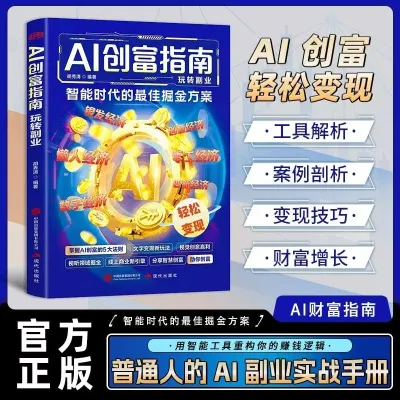
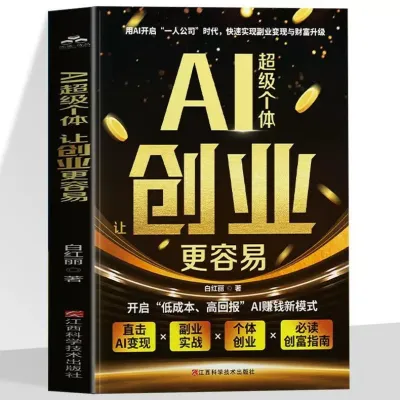
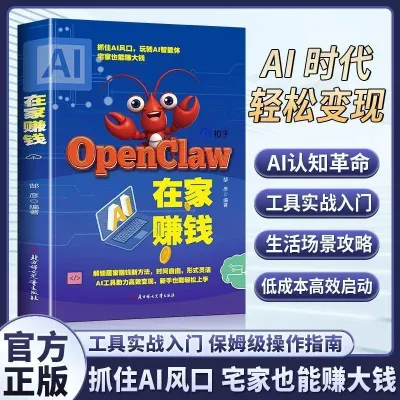
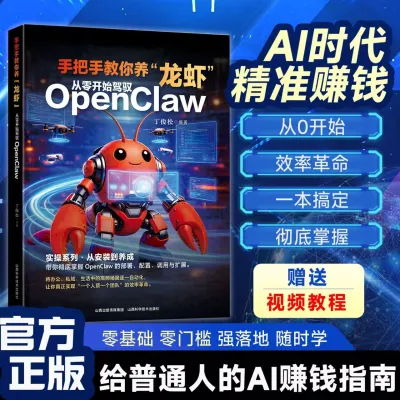
Prices are valid at publication and may change. Please refer to the product page for the latest price.
First, prioritize publication dates and edition updates. The underlying models and commercial applications of AI undergo significant shifts every year. A book published several years ago may focus heavily on predictive analytics while completely missing the strategic implications of generative AI, agentic workflows, or modern retrieval-augmented generation (RAG) systems. Always check the copyright page and search for the most recent edition to ensure the technical contexts and case studies remain highly relevant to today’s market.
Second, scrutinize the author’s professional background. The most valuable AI business books are written by individuals who operate at the intersection of technical engineering and enterprise leadership. Look for authors who have successfully led digital transformation initiatives at established corporations, advised multinational boards, or conducted peer-reviewed research at reputable academic institutions. Avoid authors whose credentials rely solely on speculative trend forecasting without verifiable hands-on implementation experience.
Third, clearly distinguish between theoretical computer science textbooks and applied business strategy guides. If your goal is to make investment decisions, manage cross-functional teams, or design customer experiences, you do not need to master the mathematical proofs behind neural network backpropagation. Instead, seek out books that translate these complex technical mechanisms into strategic business capabilities, organizational design principles, and risk management frameworks. Aligning the book’s depth with your learning objectives prevents cognitive fatigue and maximizes the practical utility of your reading time.
Matching AI Books to Your Business Role
A common mistake is purchasing a highly recommended AI book only to find that its contents do not align with your daily professional responsibilities. The knowledge required to lead an entire enterprise through an AI transition is fundamentally different from the tactical skills needed to optimize a marketing campaign or manage a software development pipeline.

To maximize the return on your reading investment, you must map your literature choices directly to your operational scope and decision-making authority. By adopting a role-specific reading path, you can acquire targeted insights that address your immediate business challenges and long-term career goals.
Strategic Leaders and Executives
For C-suite executives, board members, and senior directors in Singapore, the primary objective is to understand how AI influences macroeconomic trends, industry structures, and competitive advantages. Your reading should focus on books that explore AI-driven business models, platform economics, and long-term strategic positioning.
Look for literature that addresses the complexities of organizational change management. Implementing AI is rarely a purely technical challenge; it requires restructuring workflows, redefining job roles, and fostering a culture of continuous learning. The books you select should provide clear frameworks for upskilling your existing workforce, managing employee resistance, and measuring the return on investment (ROI) of digital initiatives.
Furthermore, ethical governance and regulatory compliance must be central themes in your executive reading list. As Singapore continues to refine its approach to AI governance, leaders must understand how to implement robust risk mitigation frameworks. Prioritize books that offer deep dives into algorithmic bias, data privacy, intellectual property considerations, and transparent decision-making processes.
Product Managers and Operations Leads
If you are responsible for integrating AI into product lifecycles or streamlining internal operational workflows, your reading needs to be highly practical and process-oriented. You require books that bridge the gap between high-level strategy and technical execution.
Focus on resources that detail AI project management methodologies, data pipeline requirements, and the unique challenges of deploying machine learning models in production. Your chosen literature should explain how to foster effective collaboration between data scientists, software engineers, and business stakeholders.
Additionally, look for books that provide structured frameworks for making critical build-vs-buy decisions. Understanding when to develop proprietary AI models in-house versus when to license third-party APIs is essential for managing technical debt and controlling operational costs. The ideal books for this role should also cover model monitoring, drift detection, and the long-term maintenance of AI-enabled systems.
Marketing, Sales, and Customer Success
For professionals in customer-facing roles, the value of AI lies in its ability to drive personalization, optimize lead generation, and improve customer retention. Your reading list should target books that explore the practical applications of predictive analytics and generative AI in modern customer journeys.
Seek out literature that explains how to leverage customer data to create highly personalized marketing campaigns, automate content creation without losing brand voice, and implement intelligent customer service systems. The books should offer concrete examples of how automated journey mapping can identify friction points and improve overall customer satisfaction.
At the same time, these resources must address the critical balance between personalization and consumer privacy. Ensure the books you select discuss data protection compliance, ethical data collection practices, and strategies for maintaining brand authenticity. Understanding how to build trust while utilizing automated systems is vital for sustaining long-term customer relationships in Singapore’s highly regulated market.
Key Dimensions for Evaluating AI Business Books
Before committing your time and capital to a specific title, it is beneficial to run the book through a rigorous evaluation checklist. This ensures that the content is high-quality, accurate, and capable of delivering lasting value.
- Case Study Validity: Carefully examine the examples used throughout the book. High-quality literature relies on verifiable, real-world corporate case studies that detail both successes and failures. Be skeptical of books that rely heavily on hypothetical scenarios, generic examples, or overly optimistic marketing materials from technology vendors. The most valuable insights often come from detailed post-mortems of actual enterprise deployments.
- Technical Accuracy vs. Accessibility: The book must strike a precise balance. It should explain core AI concepts—such as supervised learning, neural networks, and natural language processing—clearly and accurately without resorting to dense mathematical jargon. However, it should not oversimplify these concepts to the point where the strategic advice becomes superficial or misleading. You should emerge from the book with a clear mental model of how the technology works, enabling you to communicate effectively with technical teams.
- Actionable Frameworks: A great business book does not just describe a phenomenon; it provides the tools to navigate it. Look for books that include step-by-step implementation guides, organizational maturity assessment matrices, risk mitigation checklists, and decision-making templates. These structured frameworks allow you to directly translate the author's insights into your own business context.
- Future-Proofing: Evaluate whether the author focuses on enduring strategic principles or merely reviews specific software tools and platforms. Any book that reads like a user manual for a particular software suite or API will quickly become obsolete as the technology landscape evolves. Instead, prioritize books that teach fundamental concepts of data literacy, algorithmic thinking, and strategic adaptability, which remain valuable regardless of which specific tools dominate the market.
Sourcing and Purchasing AI Books in Singapore
Acquiring your chosen AI business books in Singapore requires navigating various retail channels, formats, and regional availability constraints. Understanding your options can help you secure the correct editions efficiently and cost-effectively.
When comparing physical bookstores, local online retailers, and international e-commerce platforms, consider the trade-offs between delivery speed and cost. Local physical bookstores offer the advantage of immediate availability and the ability to browse the physical pages before purchasing, though their selection of niche technical business titles may be limited. Local online retailers often provide a broader catalog with reasonable delivery times. International e-commerce platforms typically offer the most comprehensive selection of specialized titles, but you must factor in shipping costs in S$, potential import fees, and longer delivery windows.
If you prefer digital formats, such as e-books or audiobooks, you must verify format compatibility and regional Digital Rights Management (DRM) restrictions before completing your purchase. Ensure the file format (such as ePub or PDF) is compatible with your specific e-reader or reading application. Some digital platforms enforce regional restrictions that may prevent certain titles from being downloaded or accessed within Singapore. Always read the product details carefully to confirm that the digital license is valid for your region.
To guarantee you are purchasing the correct version of a book, always cross-reference the 13-digit International Standard Book Number (ISBN). Publishers frequently release updated editions of technology books to correct outdated technical references or add new case studies. Relying solely on the book title or cover art can lead to accidentally purchasing an older, less relevant edition.
Finally, explore institutional access options before making a personal purchase. The National Library Board (NLB) of Singapore provides an extensive digital library containing a vast collection of business, technology, and academic e-books and audiobooks accessible to residents. Additionally, check if your employer offers corporate subscriptions to professional learning platforms or digital libraries, which can grant you free access to high-quality AI literature as part of your professional development.
Frequently Asked Questions (FAQ)
How often should I update my AI reading list?
Given the rapid pace of technological change, you should treat your AI reading list as a dynamic resource. While foundational books on strategy, data literacy, and organizational design can remain relevant for several years, books focusing on specific technical applications or tools may require updating annually. To maintain a current understanding, supplement your foundational reading with high-quality industry reports, academic preprints, and reputable technology publications. Additionally, check if the authors of your favorite books provide companion websites, newsletters, or online updates that track industry developments between major book editions.
Are audiobooks effective for learning complex AI business concepts?
The effectiveness of an audiobook depends heavily on the nature of the content. Audio formats are highly effective for absorbing high-level strategic concepts, executive memoirs, and narrative-driven case studies during your daily commute or exercise. However, for books that introduce complex technical frameworks, data structures, or step-by-step implementation matrices, audiobooks can be challenging to follow. For these highly technical or framework-heavy sections, physical books or e-books are superior, as they allow you to study visual diagrams, highlight key passages, and refer back to complex charts at your own pace.
Community discussion
Share your experience or ask a question. Comments are reviewed before publication.