
Selecting an effective Chinese tracing book for Primary School Leaving Examination (PSLE) preparation requires focusing on alignment with the current Singapore Ministry of Education (MOE) primary Chinese syllabus, the inclusion of clear stroke order guides, and the physical quality of the practice grids. Because character writing directly influences scores in both the composition (Paper 1) and comprehension (Paper 2) components, a tracing book must do more than offer repetitive copying. It must actively bridge the gap between passive recognition and active, accurate recall under exam conditions. By choosing a resource that mirrors the vocabulary of the current curriculum and teaches proper structural balance, you can help your child build the muscle memory and writing stamina necessary for exam success.
Understanding PSLE Character Writing Standards
The PSLE Chinese curriculum demands a precise command of written characters. The examination assesses not just the ability to recognize words in a multiple-choice format, but the active retrieval and accurate execution of characters in open-ended sections. In Paper 1 (Composition), students must write cohesive narratives where incorrect strokes or poorly formed characters can lead to immediate mark deductions. Similarly, in Paper 2 (Comprehension), answers written in the open-ended sections must be legible and orthographically correct to secure full marks.
The core vocabulary for the PSLE is strictly defined by the MOE primary Chinese syllabus, often associated with the primary Chinese curriculum. This syllabus categorizes characters into those required for recognition and those required for active writing. When selecting a tracing book, it is critical to ensure that the content focuses heavily on the active writing list. Practicing characters that are only meant for recognition can dilute study efficiency, while missing out on core writing characters leaves gaps in exam readiness.
Products mentioned in this guide
![[SG Stock] Chinese Character Practice Book for Kids Chinese Learning B6 size 田字格本 拼音本 生字本 perfect for kids learners](https://img.lazcdn.com/g/p/7e229dc7f8ef6507243bf39f52099e8a.jpg_400x400q80.jpg_.webp)
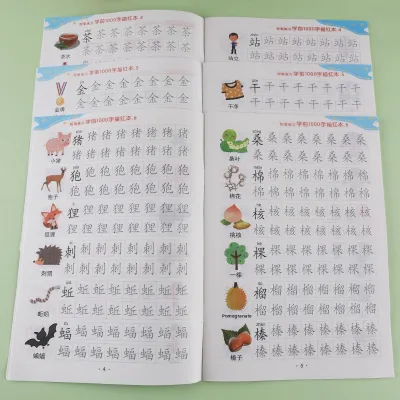
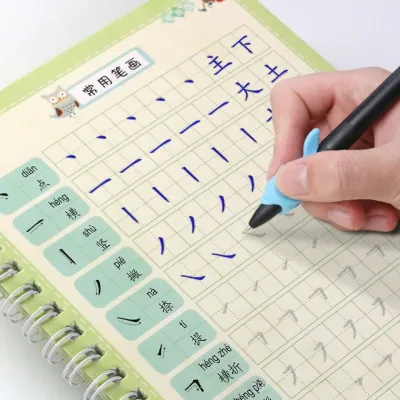
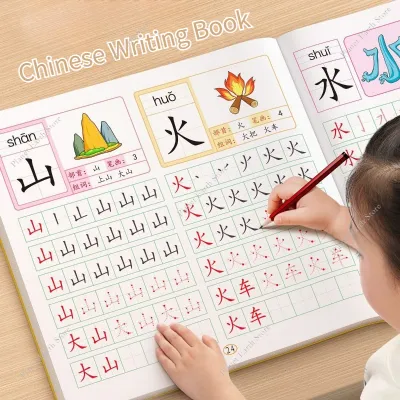
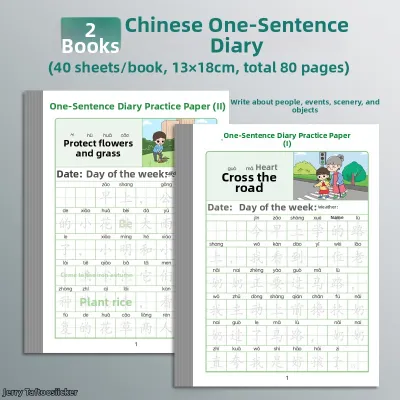
Prices are valid at publication and may change. Please refer to the product page for the latest price.
Standard regular script is the benchmark for exam readability. Examiners grade papers manually, meaning that legibility directly impacts how easily a marker can comprehend your child’s answers. Characters that are written with incorrect stroke orders often look distorted, unbalanced, or completely illegible, even if the student knows the correct word. Regular script emphasizes clear, distinct strokes, proper proportions, and balanced structures within a square space.
There is a profound difference between passive character recognition and active writing recall. Many students can read a passage fluently but struggle to write the same characters from memory during a composition. Tracing books serve as a physical bridge between these two cognitive skills. By physically tracing the correct paths of a character, students reinforce the neural pathways associated with active recall, making it easier to retrieve the correct character structure under the time pressure of the exam hall.
Essential Features of an Effective Chinese Tracing Book
To ensure a tracing book is a valuable addition to your child’s study routine, you must evaluate several key features. The first and most critical feature is absolute alignment with the current syllabus. The primary school Chinese curriculum undergoes periodic updates, which can alter the list of examinable characters. A book that is even a few years out of date might include obsolete vocabulary or omit newly introduced characters. Always verify that the book explicitly states alignment with the latest MOE primary Chinese syllabus.

Another indispensable feature is the inclusion of stroke order guides and radical breakdowns. Chinese characters are not merely collections of random lines; they are built using a highly structured system of strokes and radicals. Writing with the correct stroke order—such as top-to-bottom, left-to-right, and outside-to-inside—is essential for creating balanced characters. A good tracing book should provide step-by-step visual guides for every new character, showing the exact sequence of strokes. Radical breakdowns help students understand the semantic and phonetic components of a character, which aids long-term memory retention.
The physical layout of the practice grids is equally important. For primary school students, especially those in the upper primary years preparing for the PSLE, the transition from large practice grids to standard exam booklets can be challenging. Look for books that utilize the traditional four-quadrant grid or star-pattern grid. These grids provide reference lines that help students identify where to place specific strokes relative to the center of the character.
As students progress, the grid size in the tracing book should gradually decrease. Early practice might benefit from larger grids to master stroke details, but exam preparation requires transitioning to smaller grids that closely match the line spacing of PSLE answer booklets. This transition helps students learn to compress their writing without losing legibility or structural balance, preventing their characters from spilling over the margins during the actual exam.
Choosing the Right Practice Format for Your Child
Not all tracing books are structured the same way, and the right format depends on your child’s current writing proficiency. Single character tracing is the foundational starting point. This format focuses on mastering individual characters, stroke by stroke. It is highly effective for students who struggle with basic character structure, spatial distribution, or stroke order. By focusing on one character at a time, the student can concentrate entirely on the physical mechanics of writing, ensuring that each radical is proportioned correctly within the grid.
Once a student has mastered individual character structures, they should transition to word and phrase copying. In the PSLE, characters are rarely used in isolation; they are combined to form words, idioms, and collocations. Practicing characters in pairs or groups of three and four helps build contextual memory. This format is particularly beneficial for composition writing, as it reinforces how characters function together. For example, tracing common collocations helps students avoid writing grammatically incorrect or unnatural phrases in their essays.
The most advanced format is sentence and paragraph transcription. This involves copying entire sentences or short passages onto lined paper or smaller grids. Paragraph transcription is essential for building writing stamina, which is a common bottleneck for students during the long PSLE Chinese papers. It also teaches students how to maintain consistent character spacing, manage punctuation placement, and keep their writing aligned horizontally without the aid of individual grids. This format closely simulates the actual writing experience of the composition exam.
Integrating Tracing Practice into a PSLE Study Routine
To maximize the benefits of a Chinese tracing book, the practice must be integrated systematically into your child’s weekly study routine. Consistency is far more effective than cramming. A daily practice session of 10 to 15 minutes is ideal. This short duration keeps the student focused, prevents hand fatigue, and ensures that writing practice does not become a tedious chore. Short, focused sessions allow the brain to consolidate muscle memory more effectively than a single, exhausting weekly session.
The ultimate goal of tracing is to transition to independent, freehand writing. Tracing should be viewed as a temporary scaffold, not a permanent crutch. A structured routine should involve tracing a character a few times to understand its shape, followed immediately by writing the character freehand in an empty grid. Over time, the ratio of tracing to freehand writing should shift, with the student doing progressively more freehand practice. You can test this by covering the guided tracing sections and asking your child to write the characters from dictation.
Tracking progress is vital for targeted revision. Encourage your child to maintain an error log or a dedicated notebook for frequently mistaken characters. When reviewing completed tracing pages, look for common errors such as missing strokes, incorrect radical proportions, or strokes that cross boundaries incorrectly. Highlight these characters and schedule them for repeated practice in subsequent sessions. This targeted approach ensures that study time is spent addressing actual weaknesses rather than repeating characters the student has already mastered.
Pre-Purchase Verification Checklist for Educational Books
Before purchasing a Chinese tracing book, running through a quick verification checklist can save time and prevent the frustration of using unsuitable materials. First, verify the publication year and syllabus edition. Look for explicit indications that the book is designed for the current primary Chinese curriculum. If purchasing online, read the product description carefully or ask the seller to confirm the syllabus year, as older editions of assessment books often remain in circulation.
Second, examine the paper quality and thickness. Students preparing for the PSLE typically use gel pens or fine-liner pens, which can easily bleed through thin, low-grade paper. If the ink bleeds through to the reverse side, it renders the next page unusable and creates a messy, discouraging writing surface. Look for books that specify high-quality, thick paper (ideally 80gsm or higher) that can withstand various types of ink without feathering or bleeding.
Third, confirm the binding type of the book. A tracing book must lay completely flat on the desk during writing sessions. If the binding is too stiff or thick, the pages will constantly curve upward, forcing the student to hold the book down with one hand while writing. This awkward posture can lead to hand strain and distorted writing. Look for thread-sewn binding, spiral binding, or specialized lay-flat designs that allow the book to remain open and flat without assistance.
Finally, review the publisher’s stated script type. The standard script for the PSLE Chinese exam is Simplified Chinese. Some tracing books imported from other regions may feature Traditional Chinese or a hybrid script that does not align with local educational standards. Using the wrong script can confuse students and lead to severe mark deductions in the exam. Always double-check that the book features standard Simplified Chinese characters as prescribed by the local curriculum.
Frequently Asked Questions (FAQ)
Can digital tracing apps replace physical Chinese tracing books for PSLE prep?
While digital tracing apps offer interactive features and immediate feedback, they cannot fully replace physical Chinese tracing books for PSLE preparation. Writing on a smooth glass touchscreen with a stylus or finger does not replicate the tactile friction of a pen on paper. Physical writing instruments require precise finger pressure and grip control, which are essential for developing the fine motor skills and muscle memory needed for a written exam. Furthermore, the actual PSLE is a paper-based examination; practicing under identical physical conditions helps students manage their writing speed and hand stamina more effectively. Physical books also eliminate the risk of digital distractions and screen fatigue during study sessions.
How long should a student spend on tracing practice each day?
A student should spend approximately 10 to 15 minutes on tracing practice each day. This duration is short enough to fit easily into a busy primary school schedule without causing mental burnout or physical hand fatigue. The focus of tracing practice should always be on quality and accuracy rather than quantity. Writing five characters with perfect stroke order, correct proportions, and high concentration is far more beneficial than mindlessly filling pages with rushed, sloppy writing. Balancing this short daily practice with active reading, comprehension exercises, and other PSLE subjects ensures a well-rounded preparation strategy.
What should I do if the tracing book uses an unexpected character script?
If you discover that a purchased tracing book uses Traditional Chinese or an outdated character set, stop using it immediately to prevent your child from internalizing incorrect writing habits. Check the book’s cover, copyright page, and introduction to confirm the script type and syllabus alignment. If the purchase was made recently from a local bookstore or an online marketplace, review the return or exchange policy. Many reputable educational publishers and retailers allow exchanges for the correct edition if the book remains unmarked. If an exchange is not possible, it is safer to discard the book and purchase a verified, syllabus-aligned replacement rather than risking confusion before the exam.
Community discussion
Share your experience or ask a question. Comments are reviewed before publication.